12 Preschool Busy Book Printables That Make Learning Playful
A preschool busy book is a quiet-time lifesaver. It’s a collection of interactive, reusable activity pages that build essential skills through hands-on play — no screens needed.
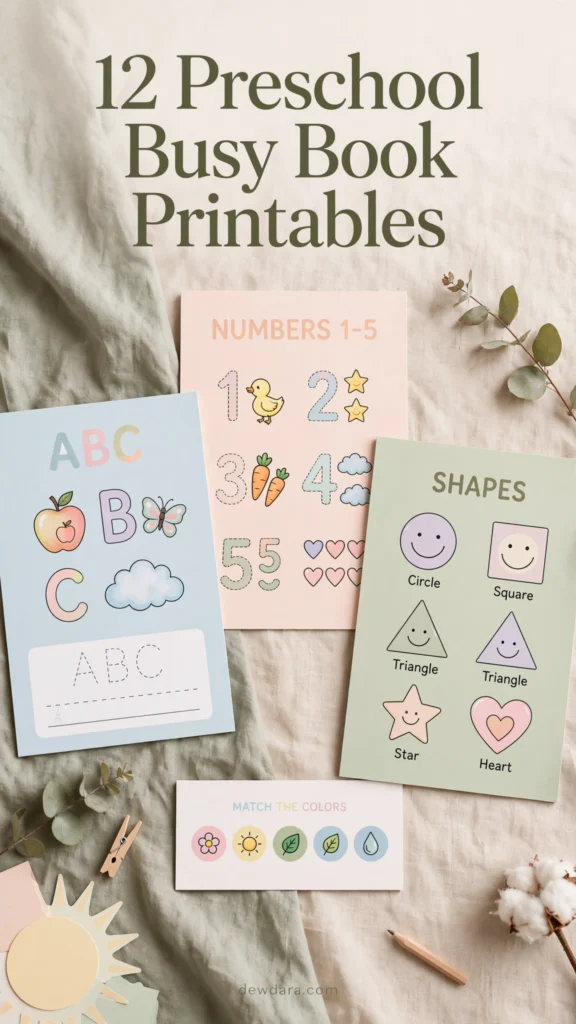
This set of 12 printable busy book pages from dewdara.com was designed for children ages 2-5 and covers the core areas of early learning: literacy, math, colors, shapes, science, and social-emotional development. Each page is intentionally left unfilled so your child can complete it themselves.
How to use this set:
Print on cardstock, laminate for durability, and add velcro dots or use as dry-erase worksheets with markers. Bind them into a book with binder rings or keep them in a zippered binder. Perfect for morning baskets, travel, waiting rooms, and independent play.
1. Alphabet Matching: Uppercase to Lowercase
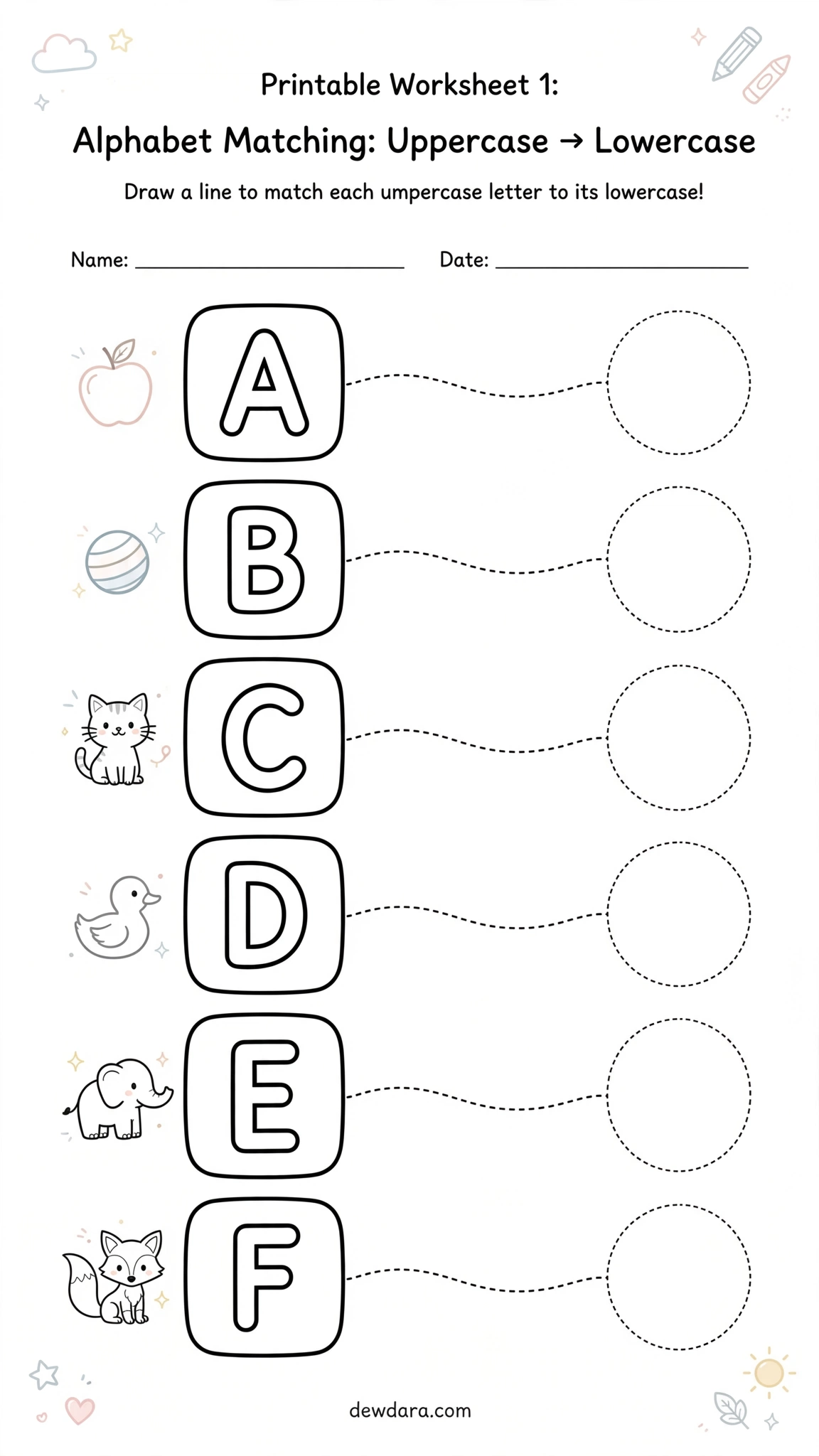
This classic matching activity helps children bridge the gap between uppercase and lowercase letters. The page features large, clear uppercase letters on one side and empty matching spaces for the lowercase set.
Skills developed: Letter recognition, visual discrimination, pre-reading readiness.
How to use it: Cut out the lowercase letters separately, laminate both sheets, and let your child match A-a, B-b, C-c. For beginners, start with just A-F, then expand to the full alphabet. This page is unfilled to encourage active matching rather than passive looking.
2. Numbers 1-10 Counting Objects
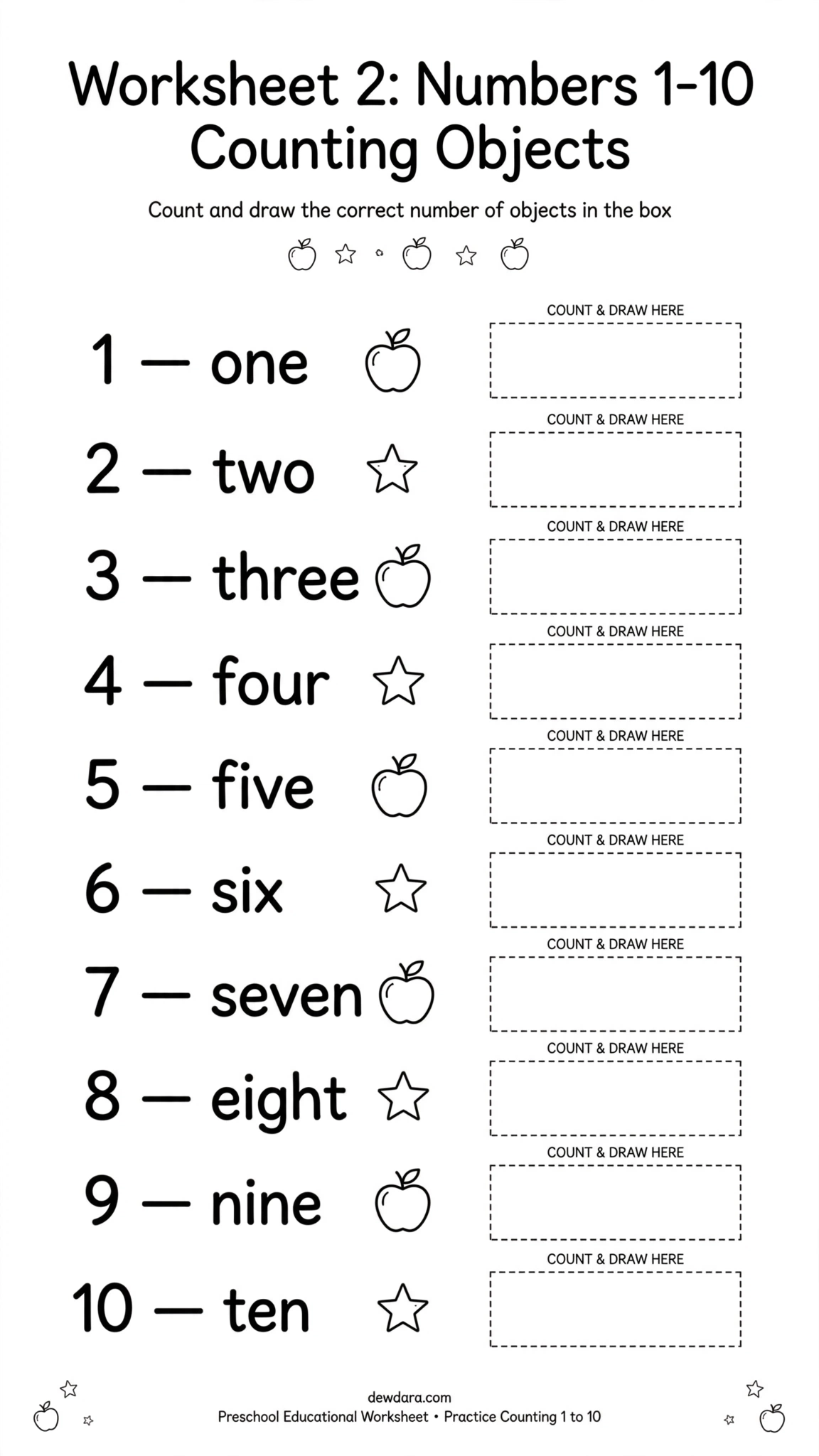
A foundational math page that makes number sense tangible. Each numeral is paired with a space to count real objects.
Skills developed: One-to-one correspondence, counting, number identification.
How to use it: Provide pom-poms, stickers, or let children draw dots or color in the circles to match the number. Ask them to count out loud as they place each item. This hands-on approach solidifies that “3” means three objects, not just a shape.
3. Color Sorting Activity
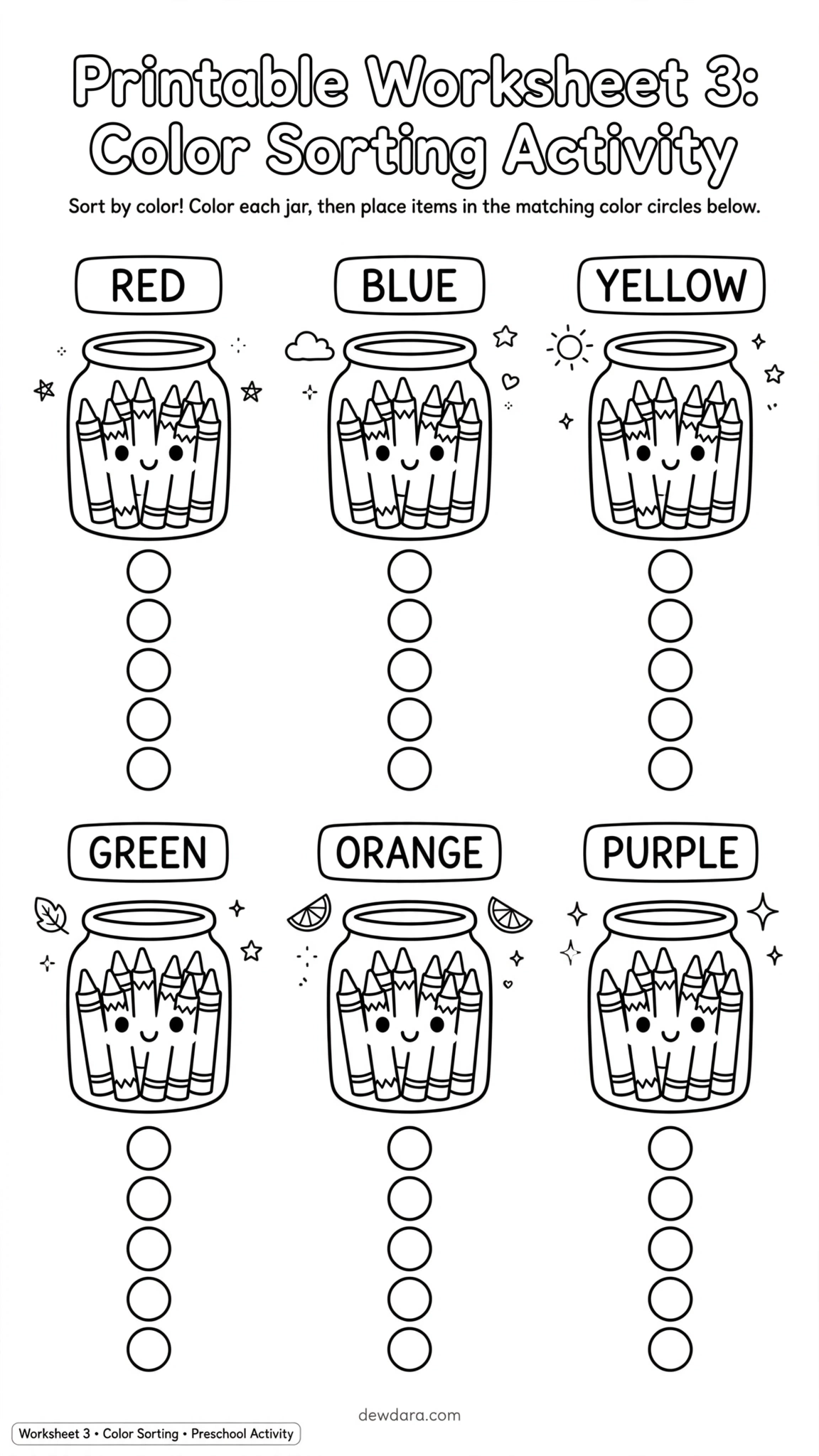
Bright, simple, and highly engaging for toddlers. This page introduces six core colors: red, blue, yellow, green, orange, and purple.
Skills developed: Color recognition, sorting and classification, fine motor skills.
How to use it: Use colored buttons, crayons, or cut-out circles. Children sort the colors into the correct jars. You can extend learning by asking, “Can you find something red in this room?” The unfilled circles give children ownership of the sorting process.
4. Shapes Matching: Shadow Match
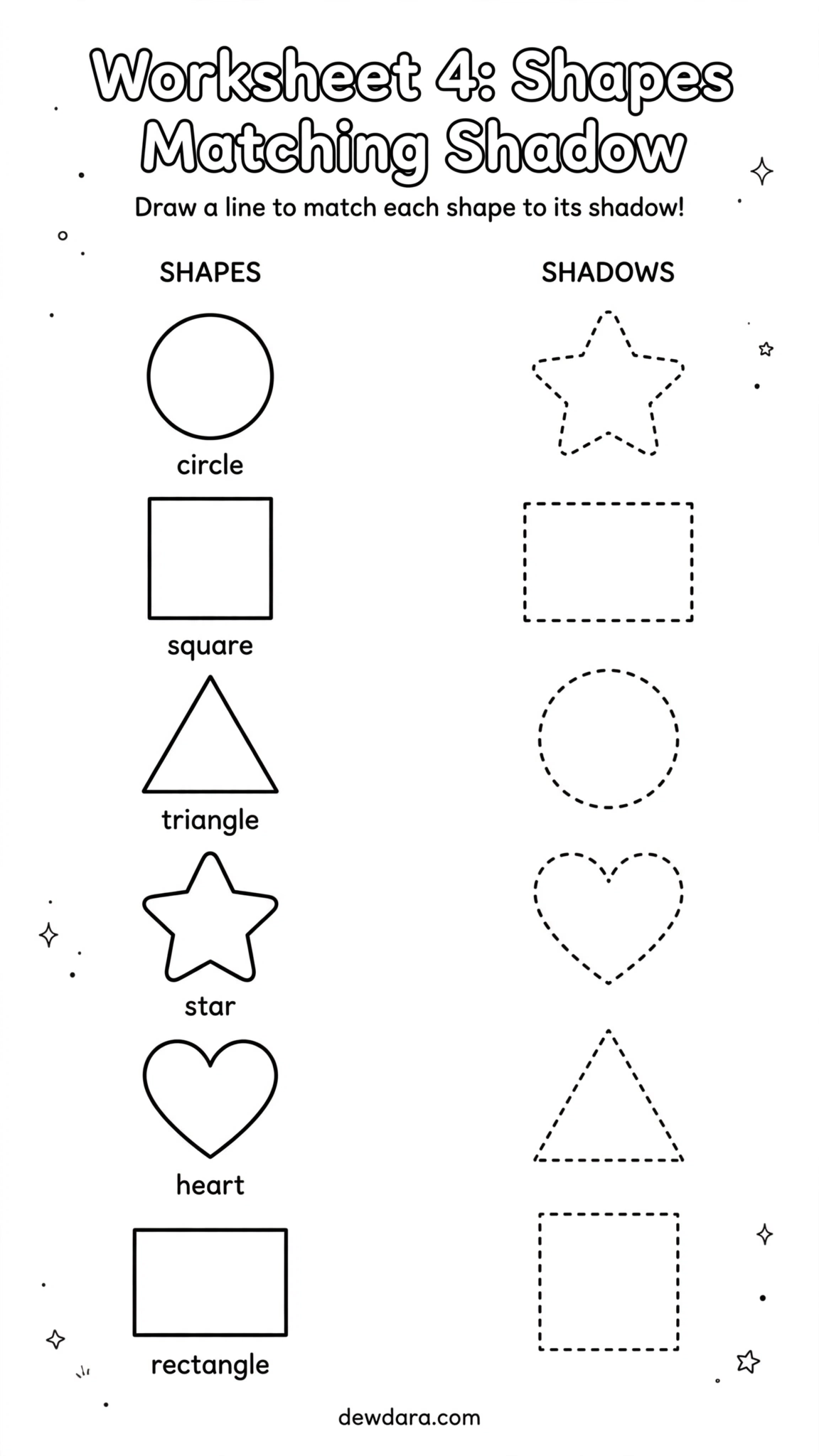
Children love puzzles, and shadow matching is a gentle introduction to geometry. The page includes circle, square, triangle, star, heart, and rectangle.
Skills developed: Shape recognition, visual memory, problem-solving.
How to use it: Cut out the solid shapes and have your child match each shape to its shadow. Use velcro for a true busy book feel. Talk about the properties as they play: “A triangle has three sides.”
5. Four Seasons Sorting
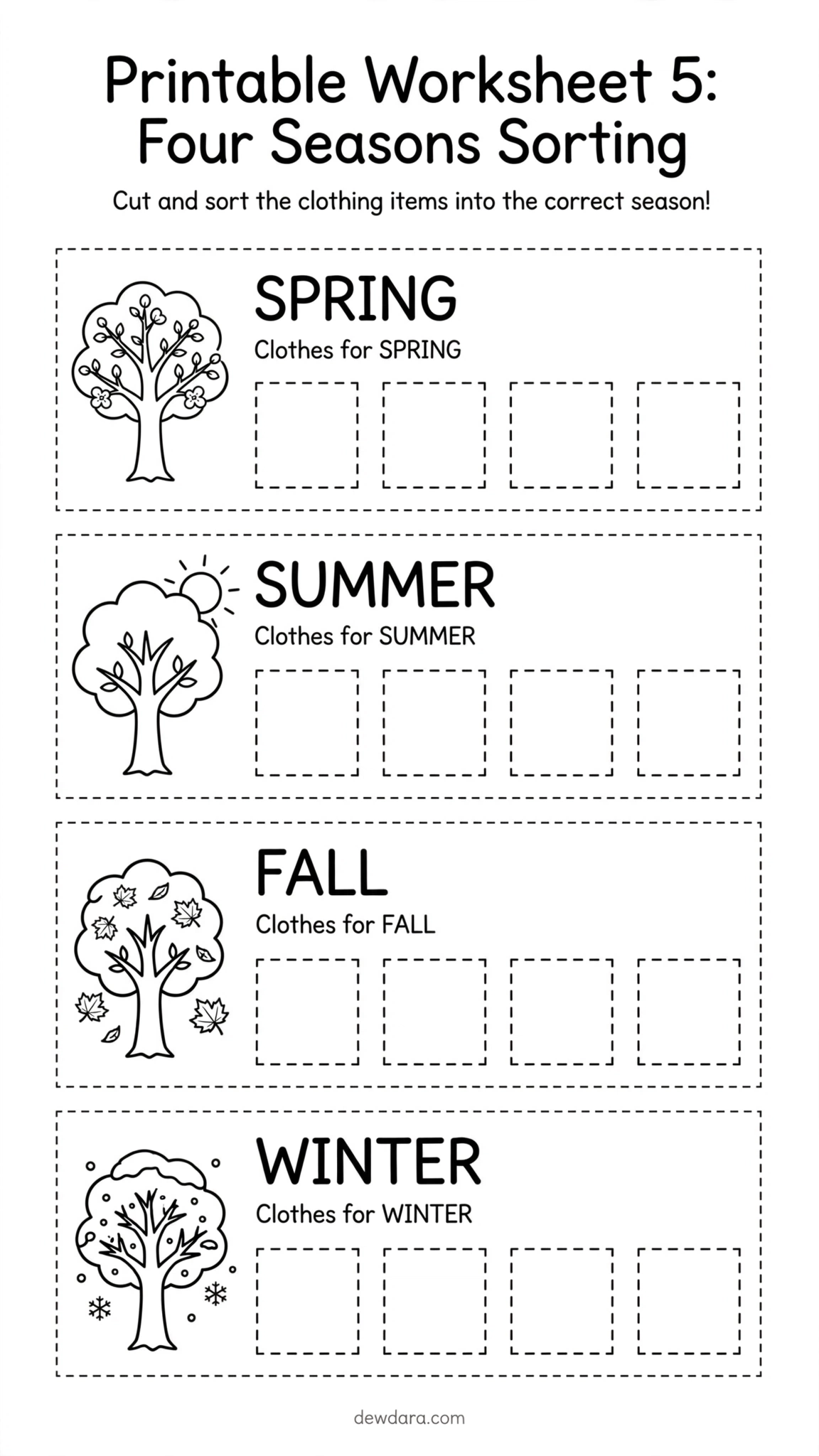
This science and life-skills page introduces spring, summer, fall, and winter through visual cues.
Skills developed: Seasonal awareness, vocabulary, categorization, life science.
How to use it: Provide picture cards of seasonal clothes and activities — swimsuits for summer, coats for winter, rain boots for spring, scarves for fall — and let children sort them into the four sections. It opens up wonderful conversations about weather and nature.
6. Weather Chart Matching
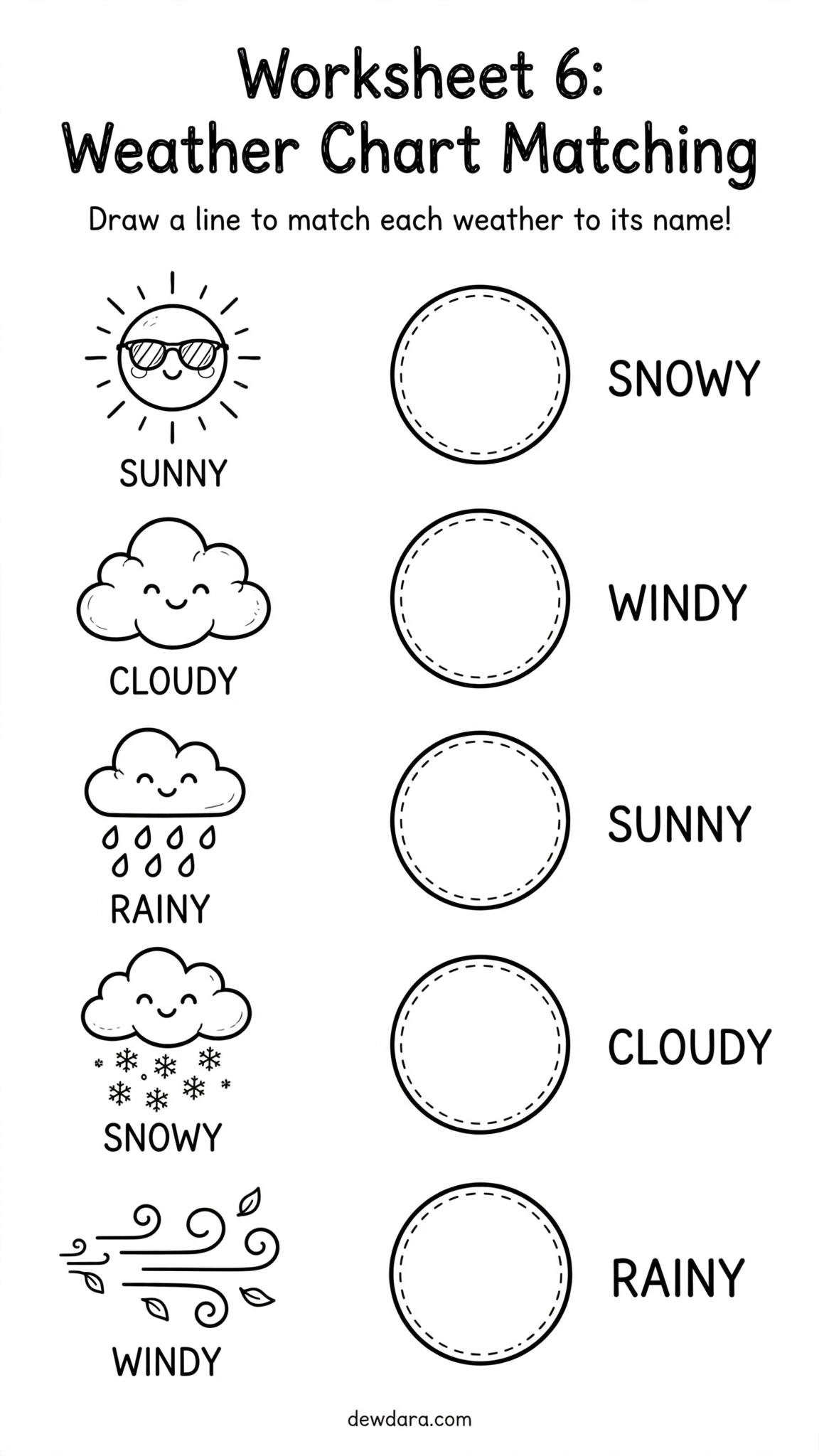
A daily-use favorite. Featuring sunny, cloudy, rainy, snowy, and windy icons, this page helps children observe and talk about the world around them.
Skills developed: Weather vocabulary, observation skills, early science.
How to use it: Laminate it and use it as a daily weather check-in. Each morning, ask your child, “What’s the weather today?” and let them place a marker on the correct icon. The unfilled design keeps the focus on learning, not just coloring.
7. My Body Parts Labeling
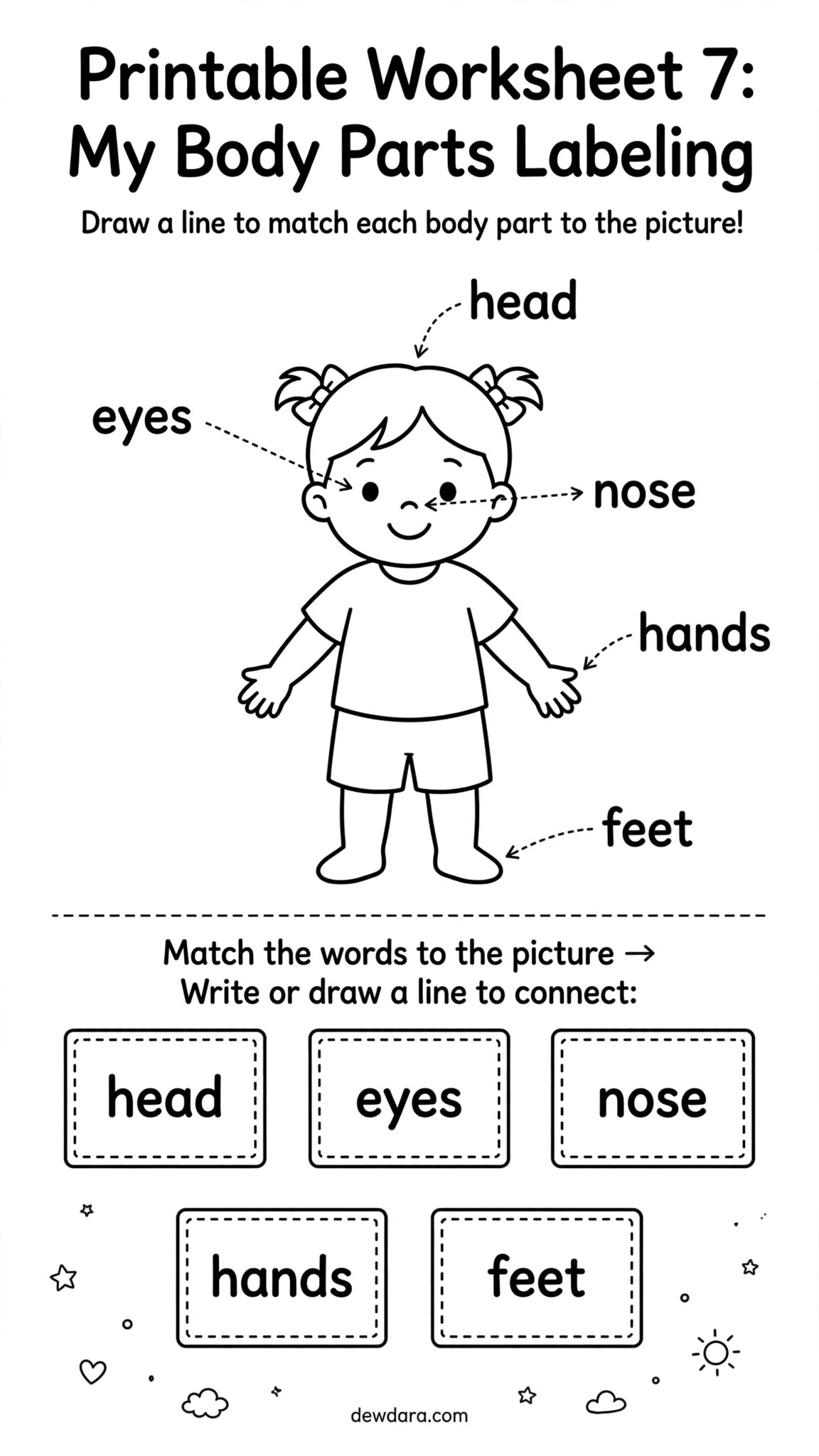
An essential early anatomy page that teaches body awareness with a friendly child outline.
Skills developed: Body awareness, vocabulary, self-concept, fine motor.
How to use it: Children can match word labels like head, eyes, nose, hands, and feet to the correct body part. For younger learners, start with pointing and naming. For older preschoolers, add velcro labels for them to read and place themselves.
8. Farm Animals and Their Babies Matching
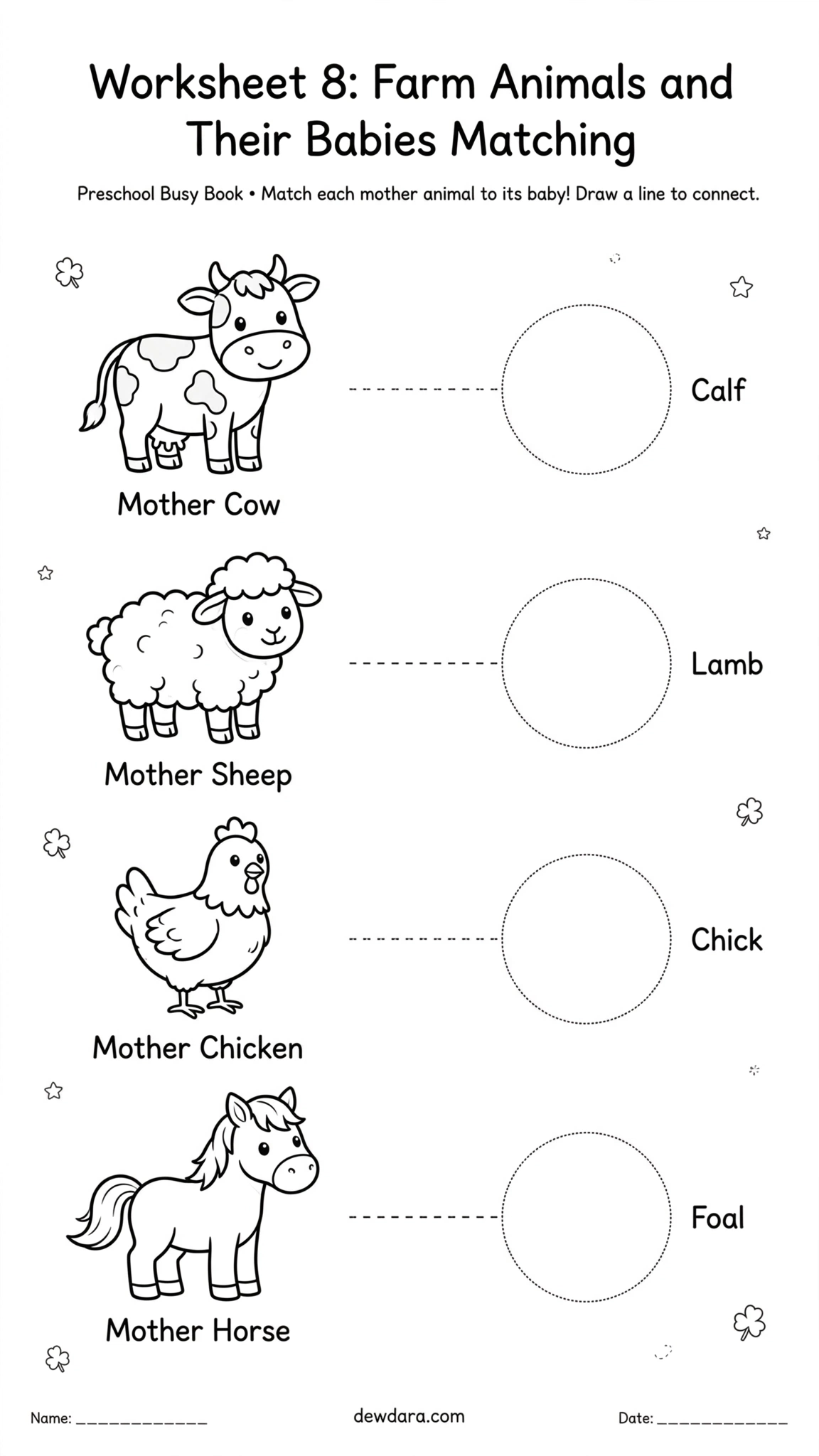
This adorable matching set pairs mama animals with their babies — cow-calf, sheep-lamb, chicken-chick, and horse-foal.
Skills developed: Animal recognition, vocabulary, matching, life science.
How to use it: Talk about animal families and their names. This is perfect for building language: “The baby sheep is called a lamb.” Children love the discovery aspect, making it a page they return to again and again.
9. Alphabet Tracing A to F
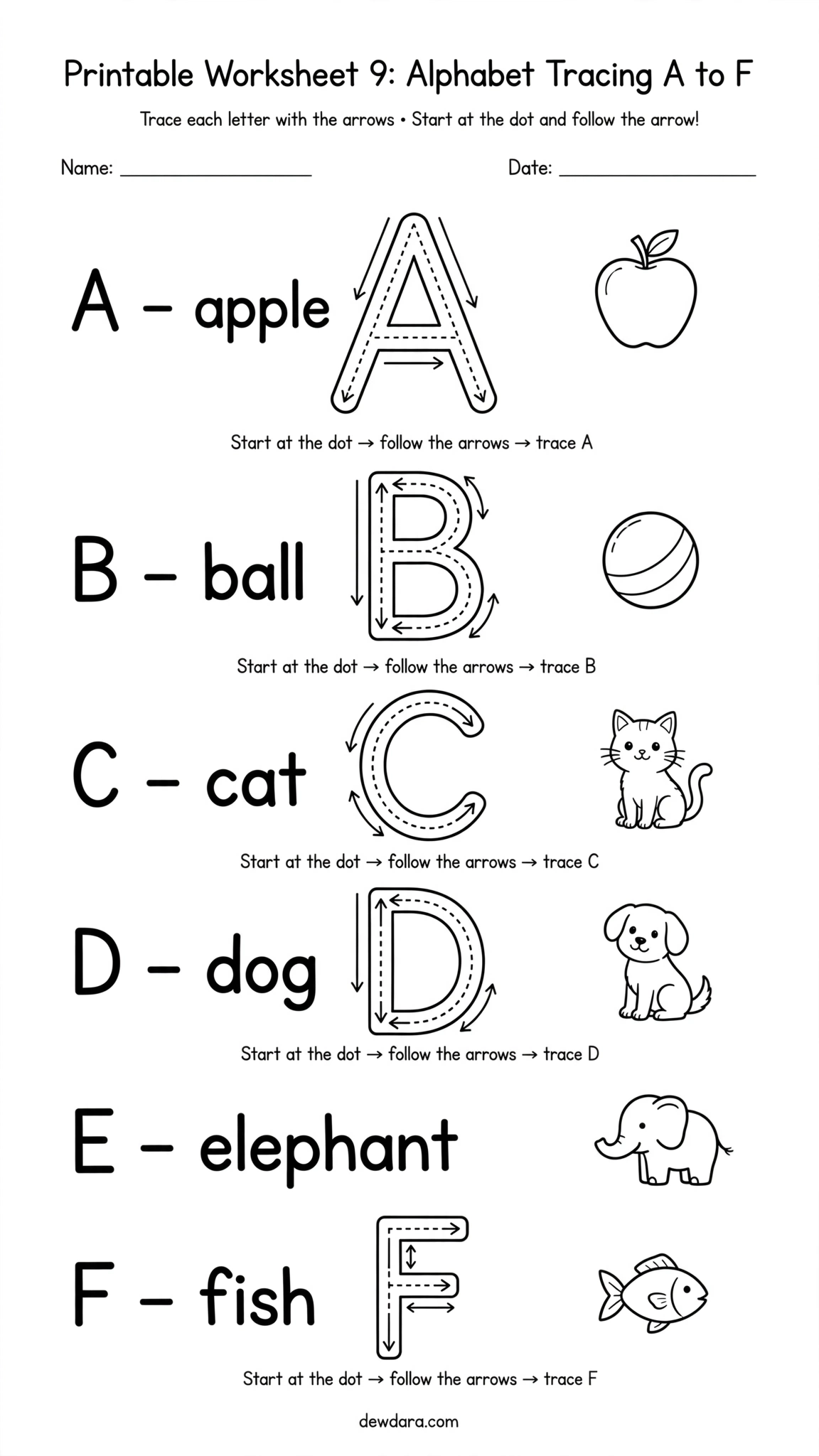
A pre-writing powerhouse. Each letter from A to F includes a dotted traceable letter with directional arrows and a picture clue like A-apple, B-ball, C-cat.
Skills developed: Proper letter formation, hand-eye coordination, phonics.
How to use it: Slide into a dry-erase pocket and use with a dry-erase marker for endless reuse. Encourage children to follow the arrows: “Start at the dot, follow the arrows.” The large, unfilled letters give plenty of space for little hands to practice.
10. Ten Frame Counting 1-10
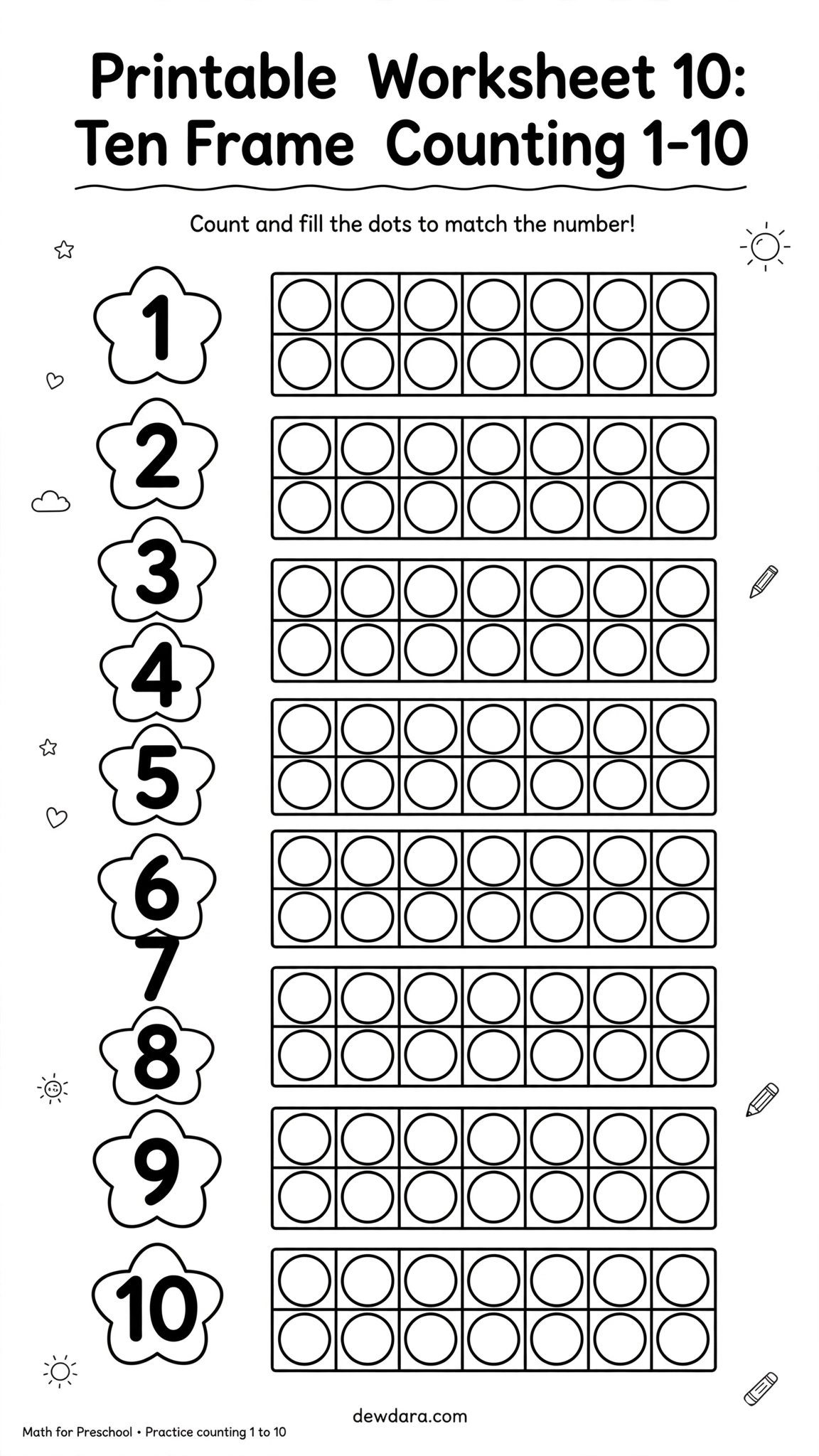
Ten frames are the gold standard for building number sense in preschool and kindergarten. This page presents numbers 1-10 with empty ten frames beside each one.
Skills developed: Subitizing, counting to 10, early addition foundations, math fluency.
How to use it: Have children fill the dots to match the number using dot markers, stickers, or fingerprints with washable ink. It helps them visualize numbers and see how numbers relate to 10 — a critical skill for future math.
11. Emotions and Feelings Matching
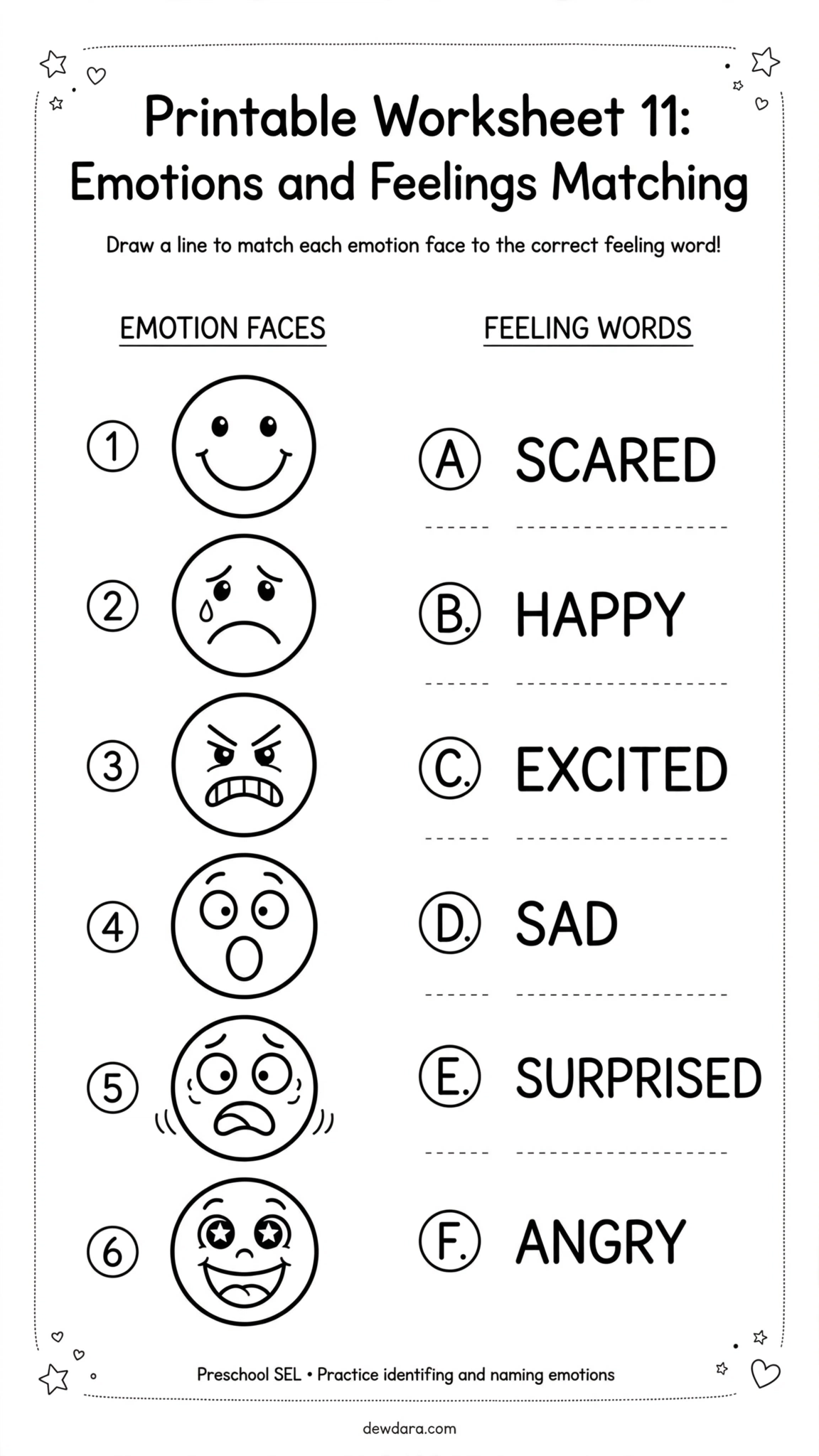
Social-emotional learning made simple and visual. This page shows six clear emotion faces: happy, sad, angry, surprised, scared, and excited.
Skills developed: Emotional intelligence, empathy, self-regulation, language.
How to use it: Ask your child to draw a line to match the face to the feeling word. Extend the play by asking, “When do you feel happy?” and “What helps you feel calm when you’re angry?” It’s a wonderful tool for morning check-ins and calm-down corners.
12. Pattern Completion – AB Patterns
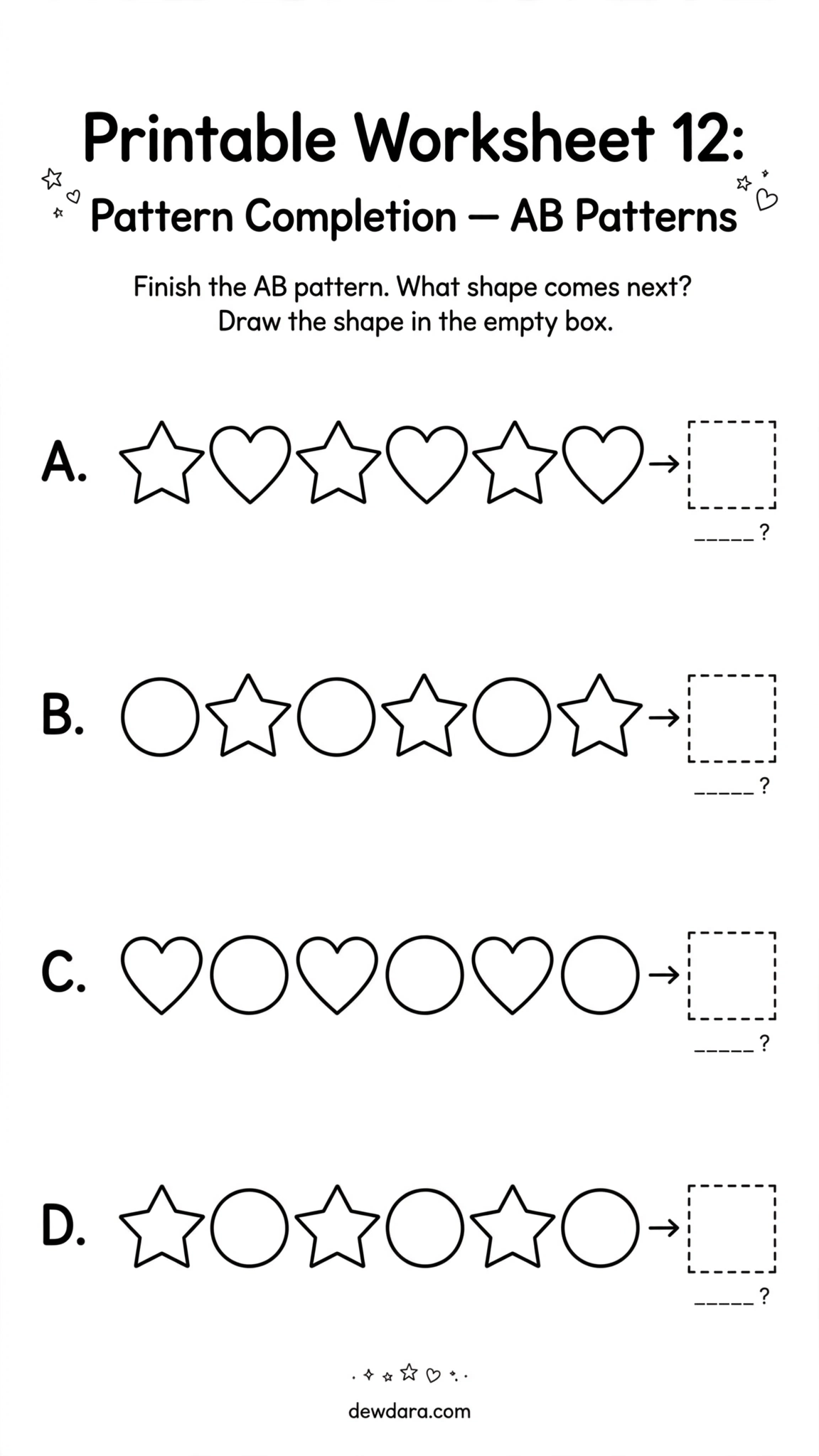
Early logic and math start with patterns. This page features AB patterns using stars, hearts, and circles with one missing element.
Skills developed: Logical thinking, sequencing, prediction, early algebra.
How to use it: Children observe the pattern (star-heart-star-heart) and choose what comes next. Cut out the shape options and let them velcro the correct answer into the empty box. Start by completing the pattern together out loud, then let them try independently.
Conclusion
These 12 preschool busy book printables were created to make learning feel like play. When you assemble them into a single interactive book, you’re giving your child a portable, screen-free learning center that grows with them.
All pages are designed with clean lines and left intentionally unfilled so your preschooler can color, match, trace, and sort on their own. Print them from dewdara.com, laminate, and watch how focused and proud your little learner becomes.