14 Preschool Learning Worksheets Printable – Free Early Learning Pack
Welcome to your complete early learning toolkit! This free pack of 14 Preschool Learning Worksheets is designed to make learning fun, hands-on, and stress-free for children ages 3-5.
Whether you are a parent, preschool teacher, or homeschooler, these worksheets cover the core skills every preschooler needs to build confidence before kindergarten: alphabet recognition, number sense, fine motor control, visual discrimination, colors, shapes, phonics, and logical thinking.
All worksheets are print-ready, unfilled, and in 9:16 vertical format – perfect for standard printing, laminating, or using in busy bags and morning work folders. Just print and let your little learner start tracing, matching, counting, and coloring.
Let’s explore what’s inside.
1. Uppercase Alphabet Tracing
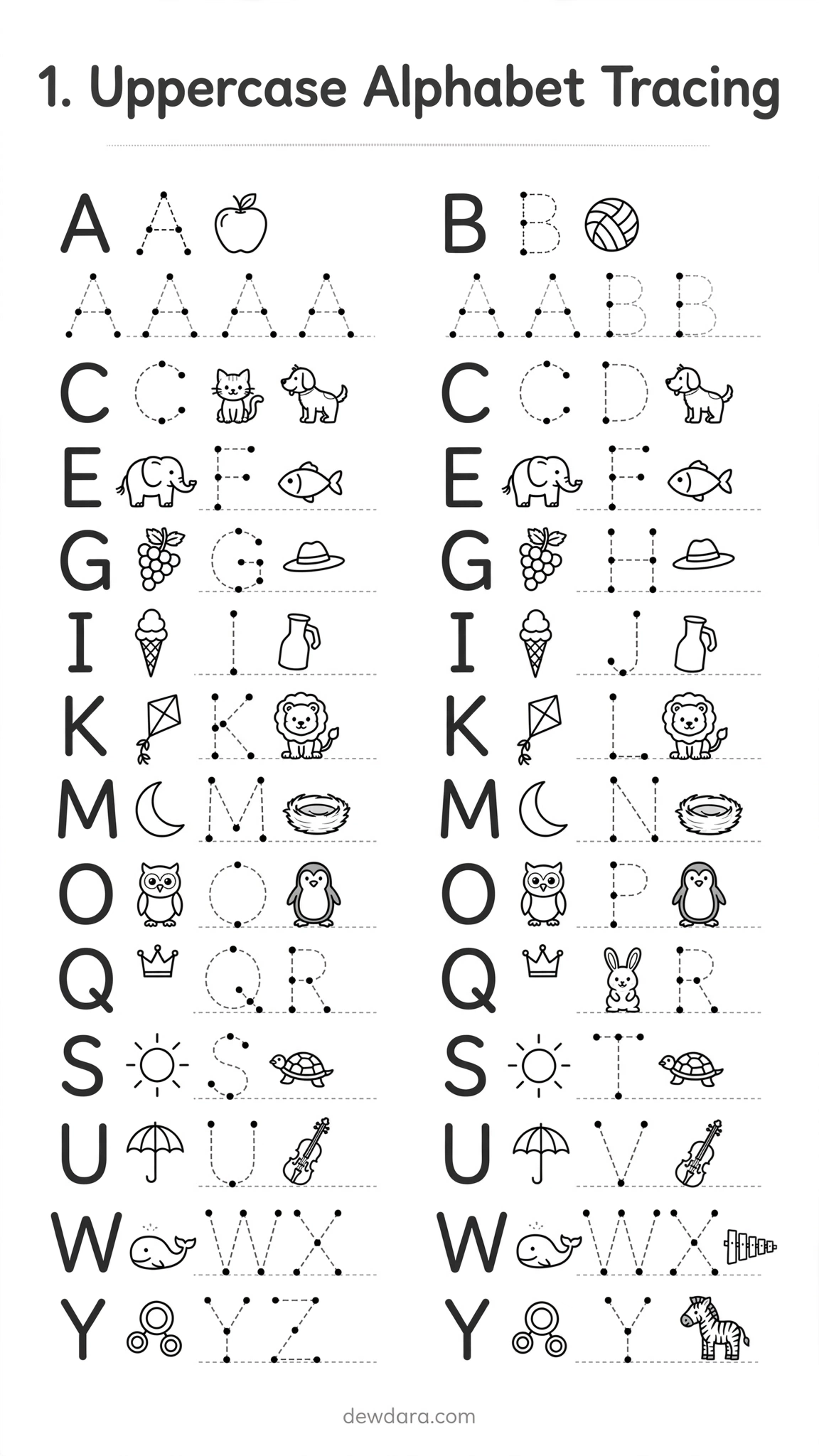
This foundational worksheet introduces children to uppercase letters A-Z with large, dotted traceable fonts. The clear starting dots and spacious lines help develop proper pencil grip and letter formation.
Skills Developed: Letter recognition, uppercase formation, hand-eye coordination, fine motor control.
How to Use: Let your child trace each letter with a pencil, then with a crayon. Say the letter sound out loud as you trace. For extra practice, laminate and use with a dry-erase marker.
2. Lowercase Alphabet Tracing
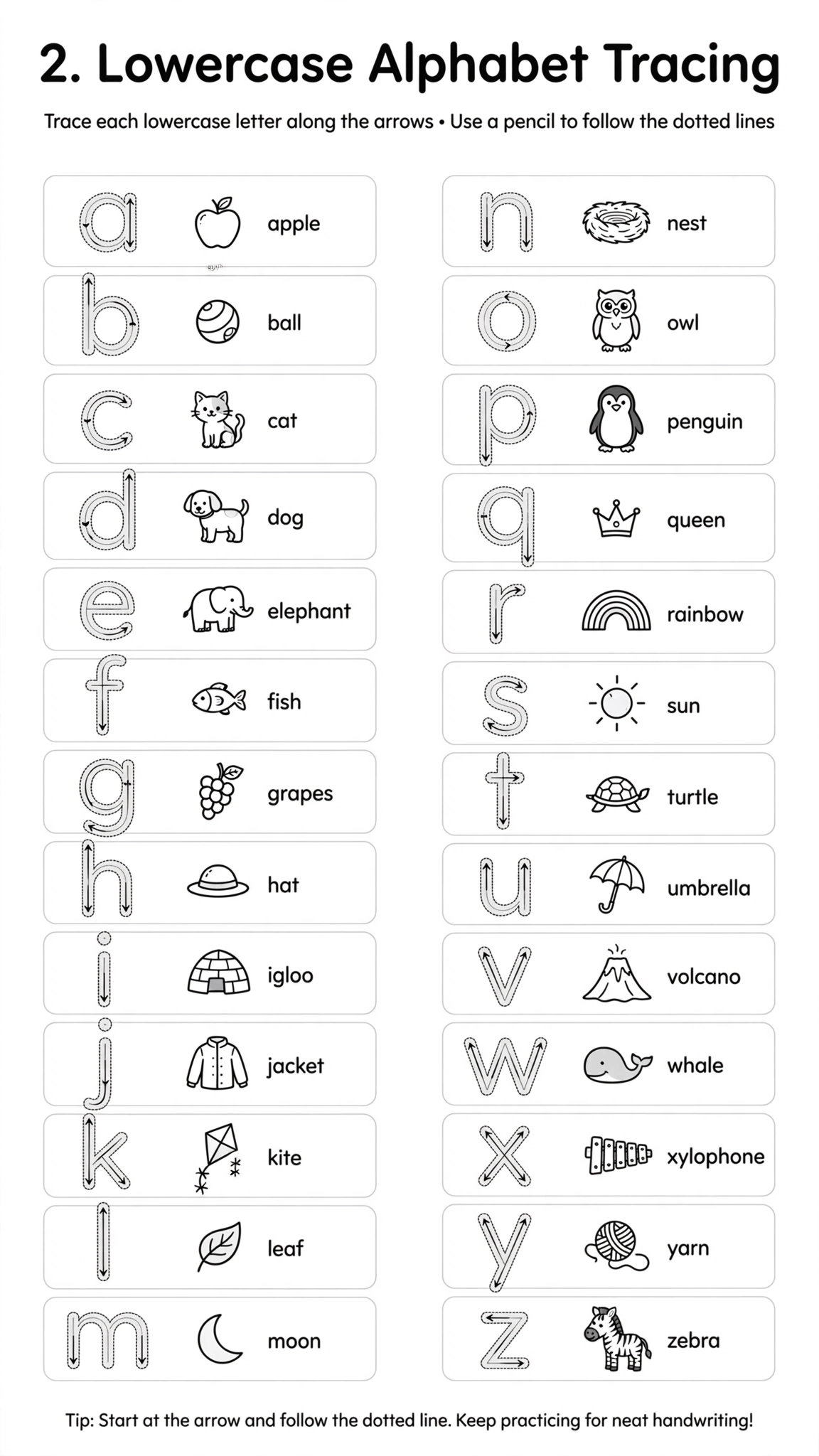
Once uppercase is familiar, lowercase letters are the next step. This worksheet focuses on the small letters children will see most in books and early reading.
Skills Developed: Lowercase recognition, writing fluency, visual memory.
How to Use: Practice 3-4 letters at a time to avoid overwhelm. Encourage your child to point to each letter and say its name before tracing.
3. Number Tracing 1-10
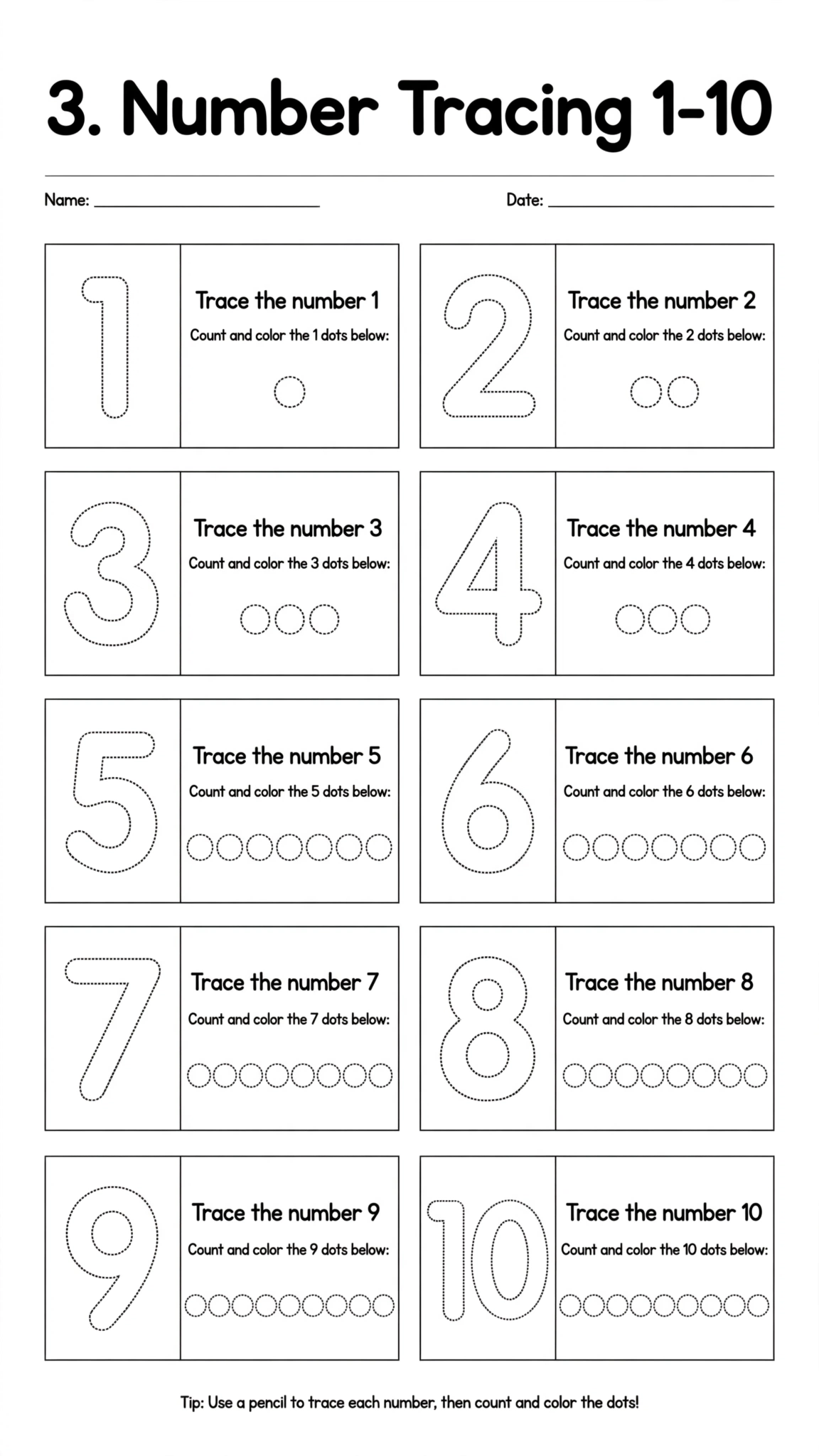
A clean, number-focused worksheet with numbers 1 to 10 in dotted format, paired with counting dots for number quantity association.
Skills Developed: Number recognition, counting, one-to-one correspondence, number formation.
How to Use: Count the dots together first, then trace the number. Ask, “How many?” to reinforce quantity.
4. Count and Write
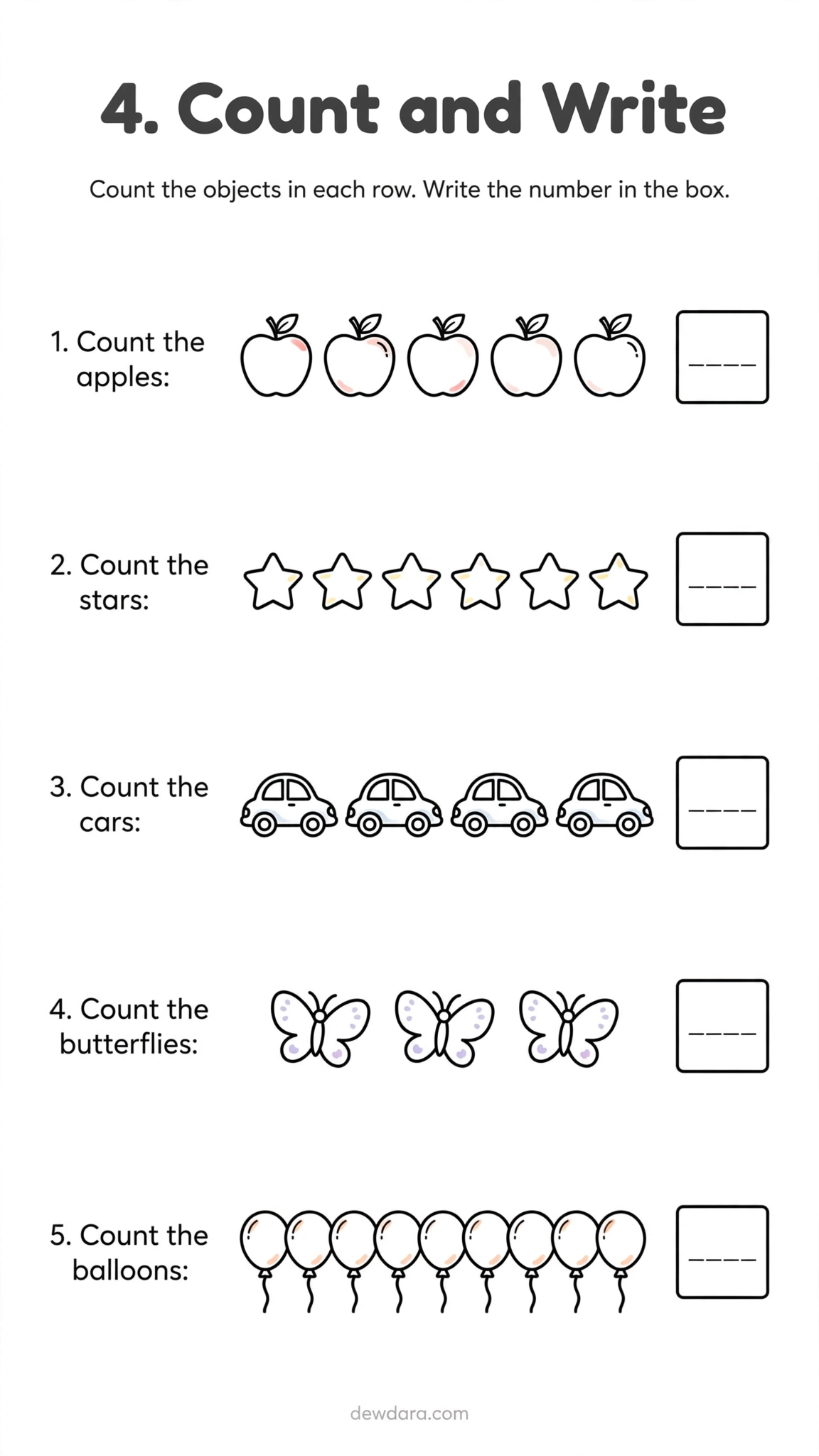
This worksheet moves from tracing to independent counting. Children count cute illustrated objects in each row and write the correct number in the blank box.
Skills Developed: Counting, number writing, visual counting, concentration.
How to Use: Use small manipulatives like buttons or pom-poms alongside to make it tactile. Let children cross out each object as they count.
5. Shapes Tracing and Coloring
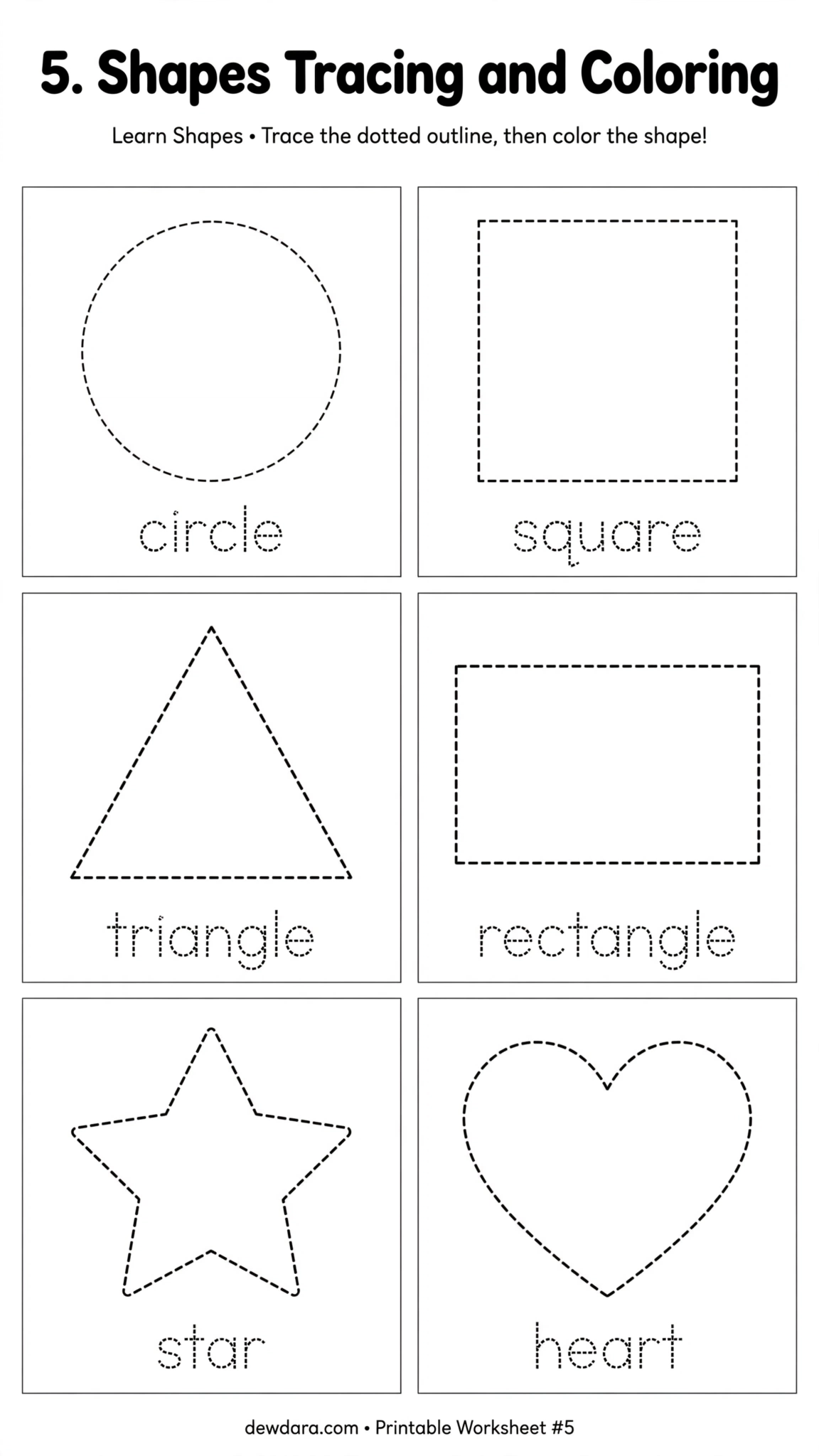
Six essential shapes – circle, square, triangle, rectangle, star, and heart – presented with traceable outlines and names.
Skills Developed: Shape recognition, geometry vocabulary, fine motor skills, coloring control.
How to Use: Trace the shape, say its name, then color it. Take a shape hunt around the house to find real objects that match.
6. Color Recognition
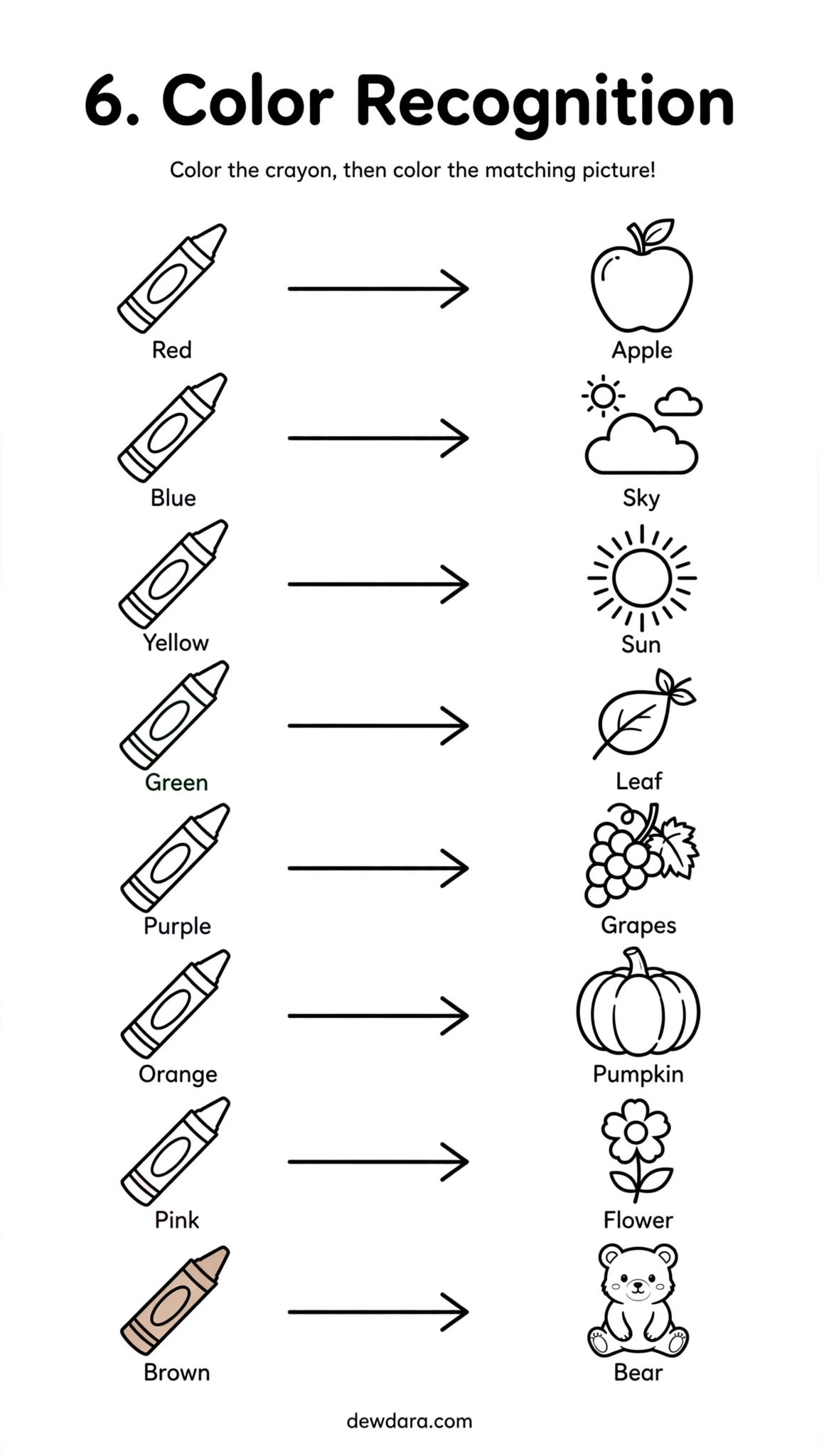
A vibrant yet printable-friendly sheet to practice color names and color-object association.
Skills Developed: Color identification, vocabulary, matching, coloring skills.
How to Use: Name each color crayon first, then color the matching outlined objects. Ask your child to find 3 more things in the room of the same color.
7. Beginning Sounds Match
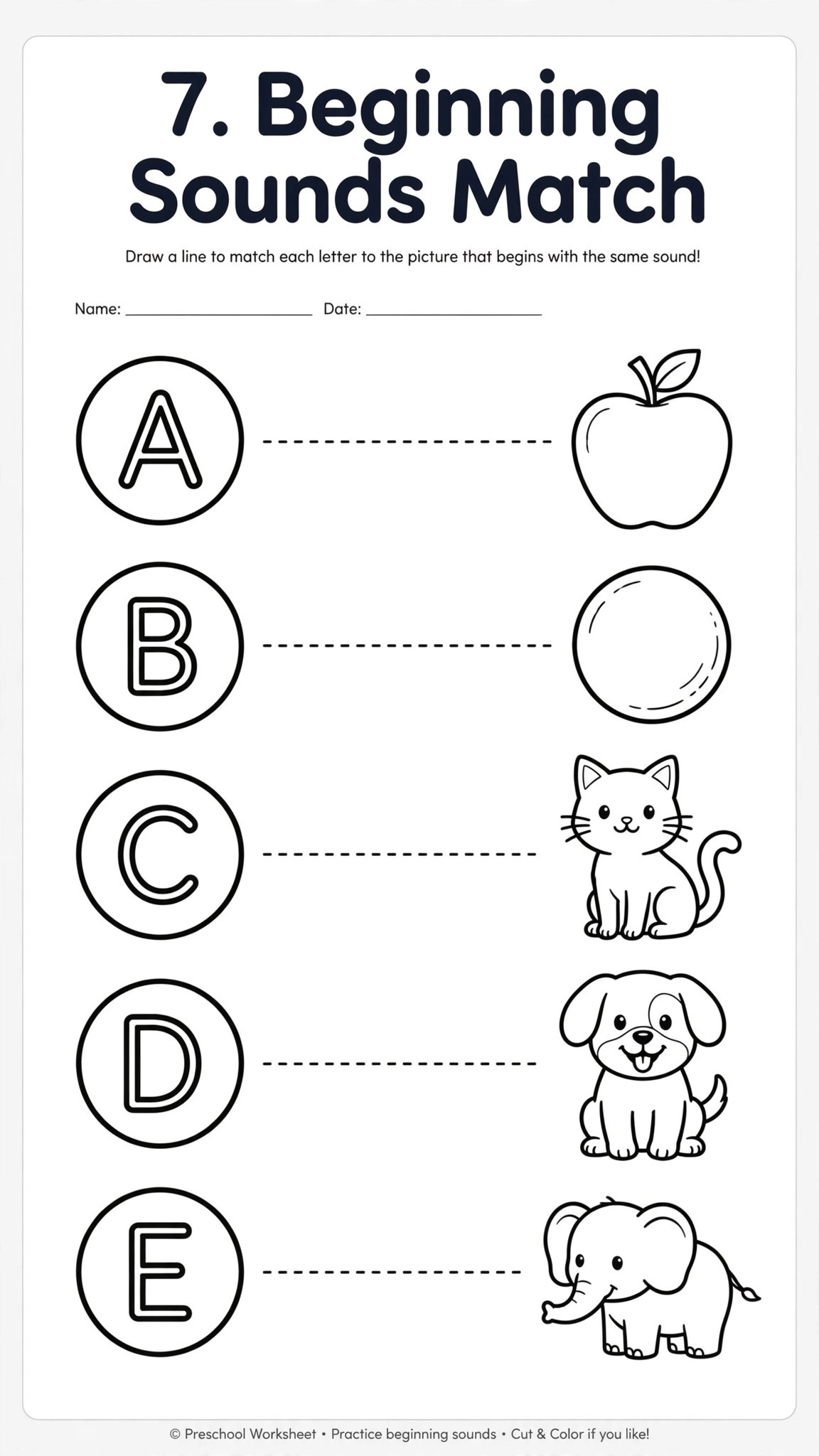
Early phonics made simple. This worksheet connects letters A-E with their beginning sound pictures – Apple, Ball, Cat, Dog, Elephant.
Skills Developed: Phonemic awareness, letter-sound correspondence, vocabulary, matching.
How to Use: Say the letter sound: “/a/ – apple.” Let your child draw a line to match. Extend by brainstorming more words that start with the same sound.
8. Visual Matching – Same and Different
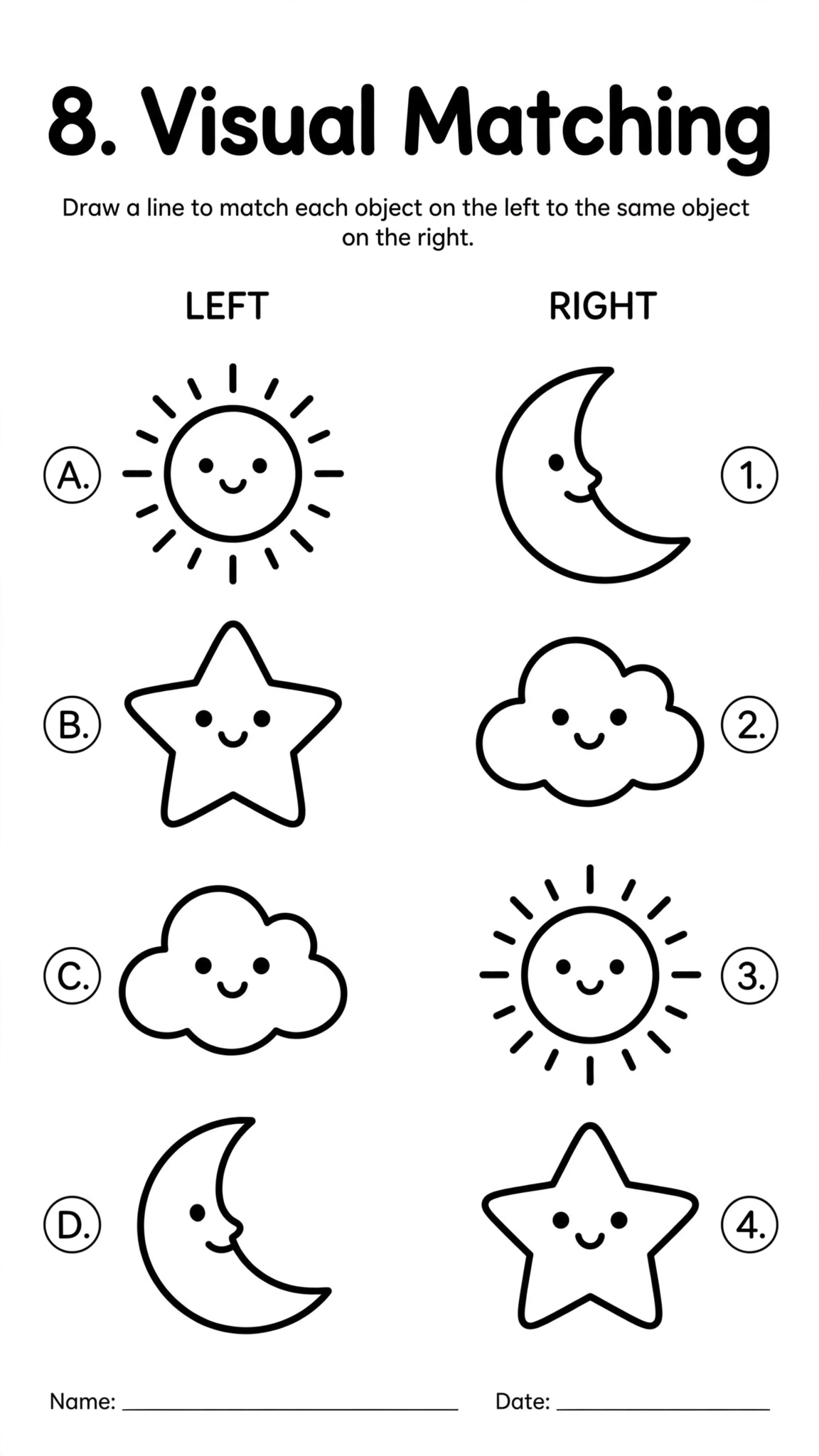
A critical pre-reading skill – visual discrimination. Children match identical objects from two columns.
Skills Developed: Visual perception, attention to detail, logical reasoning, concentration.
How to Use: Encourage your child to look carefully at details before drawing the matching line. Use different colored pencils for each pair.
9. Complete the Pattern (AB Patterns)
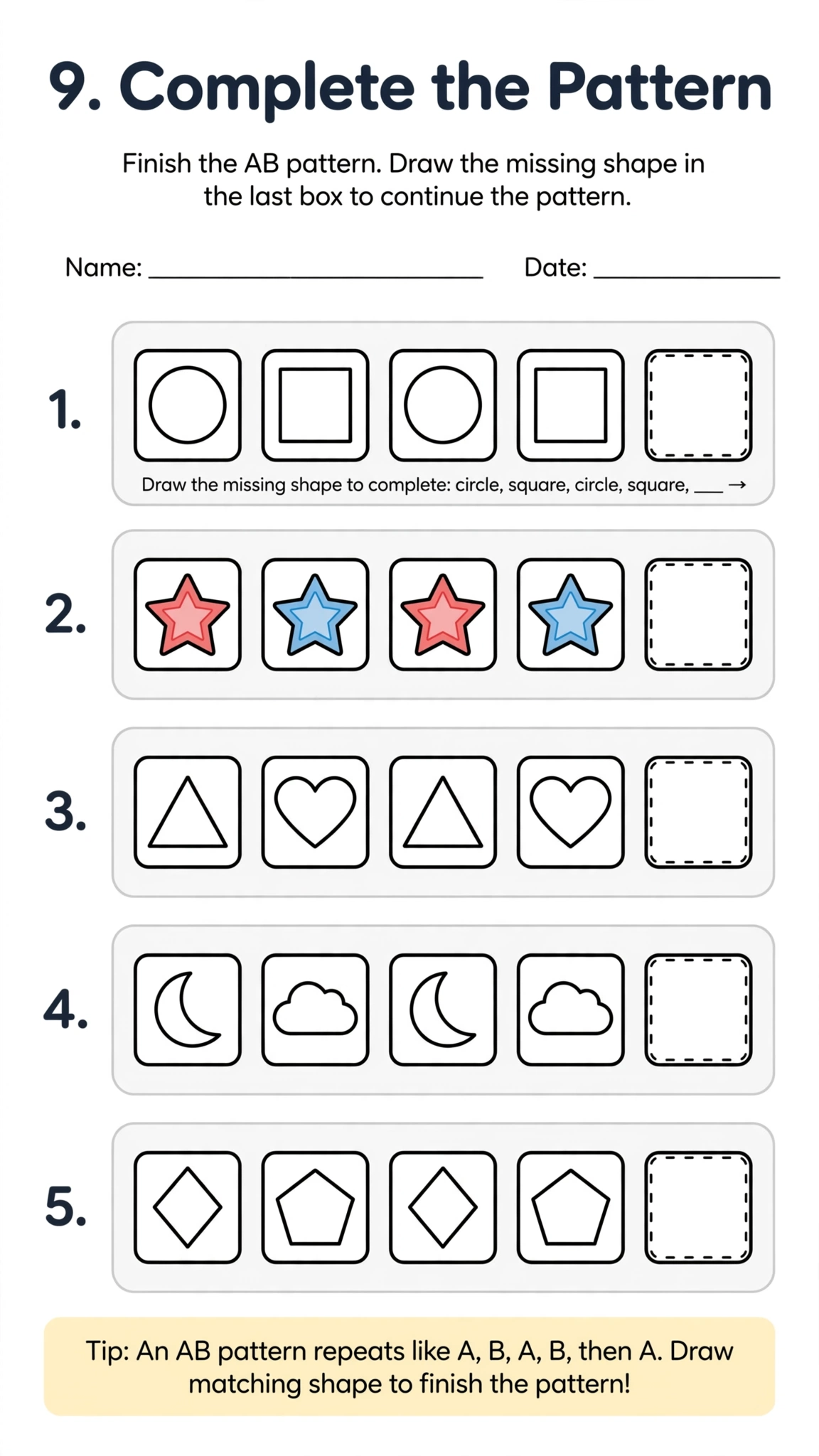
Introduction to patterns using shapes and colors. Each row shows an AB pattern with one missing piece for children to complete.
Skills Developed: Pattern recognition, logical thinking, sequencing, early math reasoning.
How to Use: Read the pattern out loud: “Circle, Square, Circle, Square… what comes next?” Let them draw or circle the correct shape.
10. Big vs Small Sorting
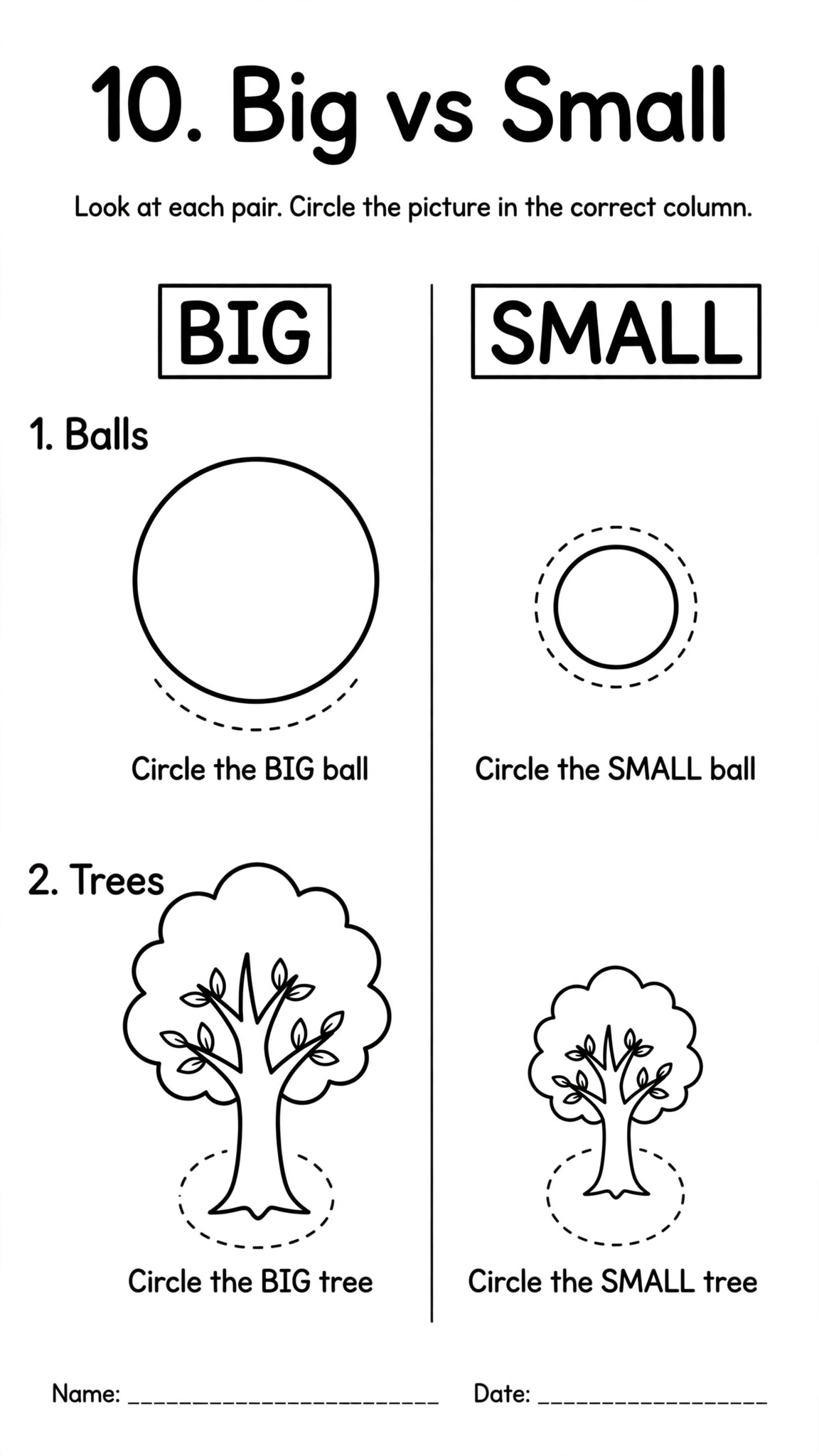
Size comparison concepts made visual with contrasting big and small illustrations.
Skills Developed: Concept of size, comparative language, sorting, observational skills.
How to Use: Discuss real-life examples: “Is an elephant big or small?” Have them circle all the big objects with one color and small with another.
11. Opposites Matching
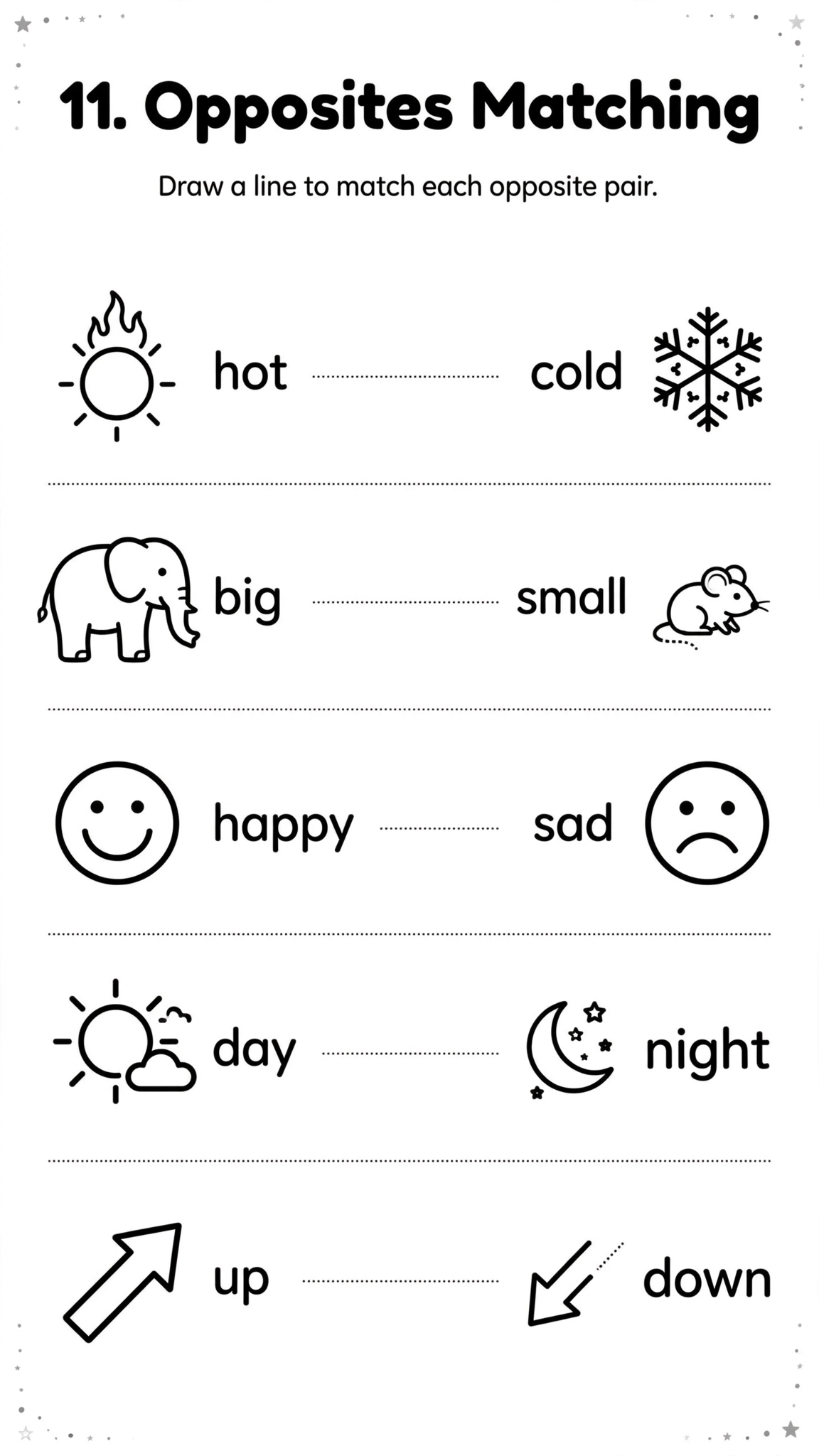
A favorite for preschoolers – learning opposites like hot-cold, big-small, happy-sad, day-night, up-down with clear icons.
Skills Developed: Vocabulary building, concept development, comprehension, matching.
How to Use: Act out each opposite together to make it physical and memorable. Ask your child to use each pair in a short sentence.
12. Dot to Dot 1-10
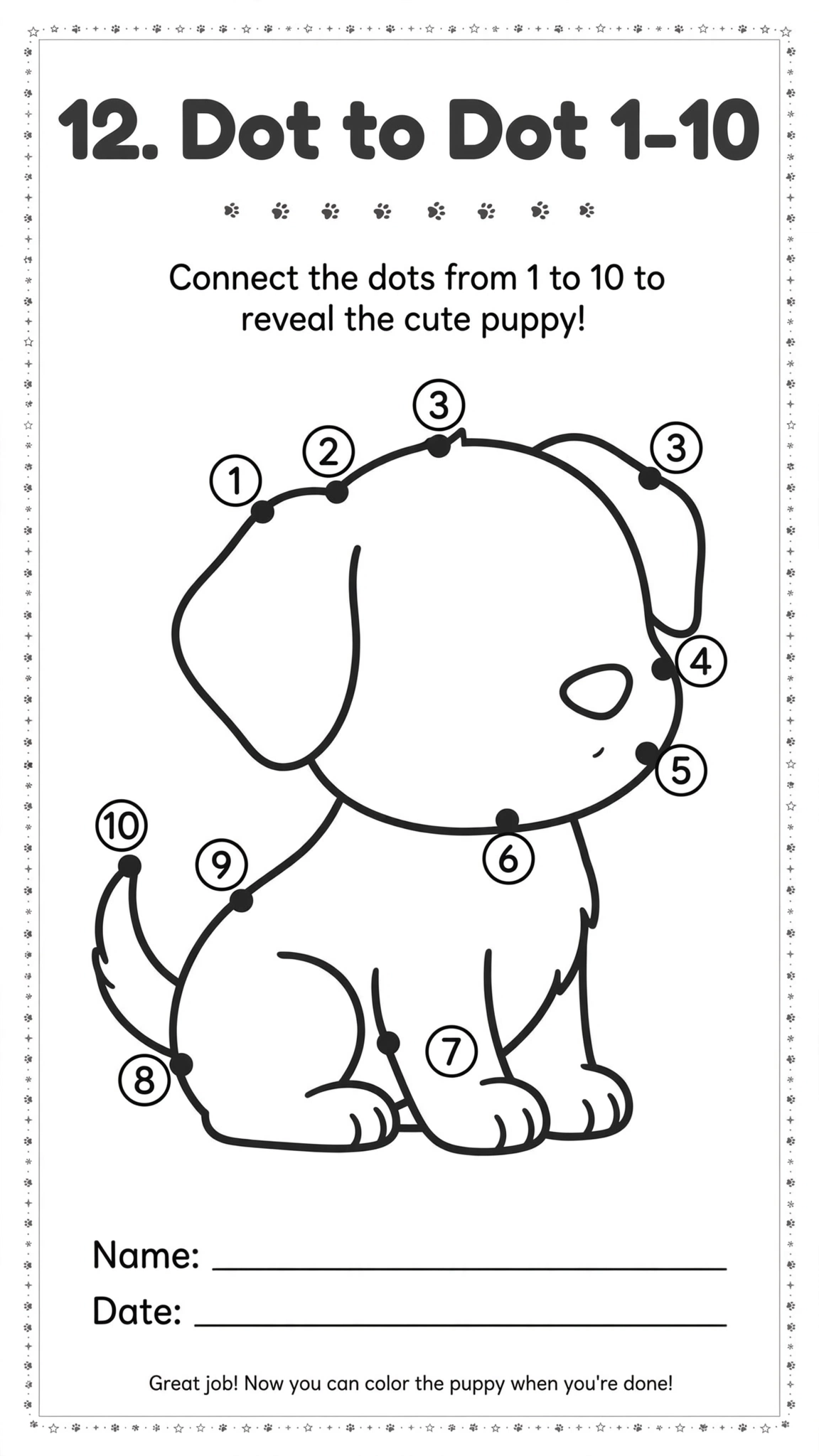
A fun, rewarding worksheet where connecting dots 1 to 10 reveals a cute puppy. It includes name and date lines for classroom use.
Skills Developed: Number order, counting forward, pencil control, fine motor precision, excitement for completion.
How to Use: Guide them to start at 1 and count aloud. Once connected, let them color the revealed picture as a reward.
13. Days of the Week Tracing
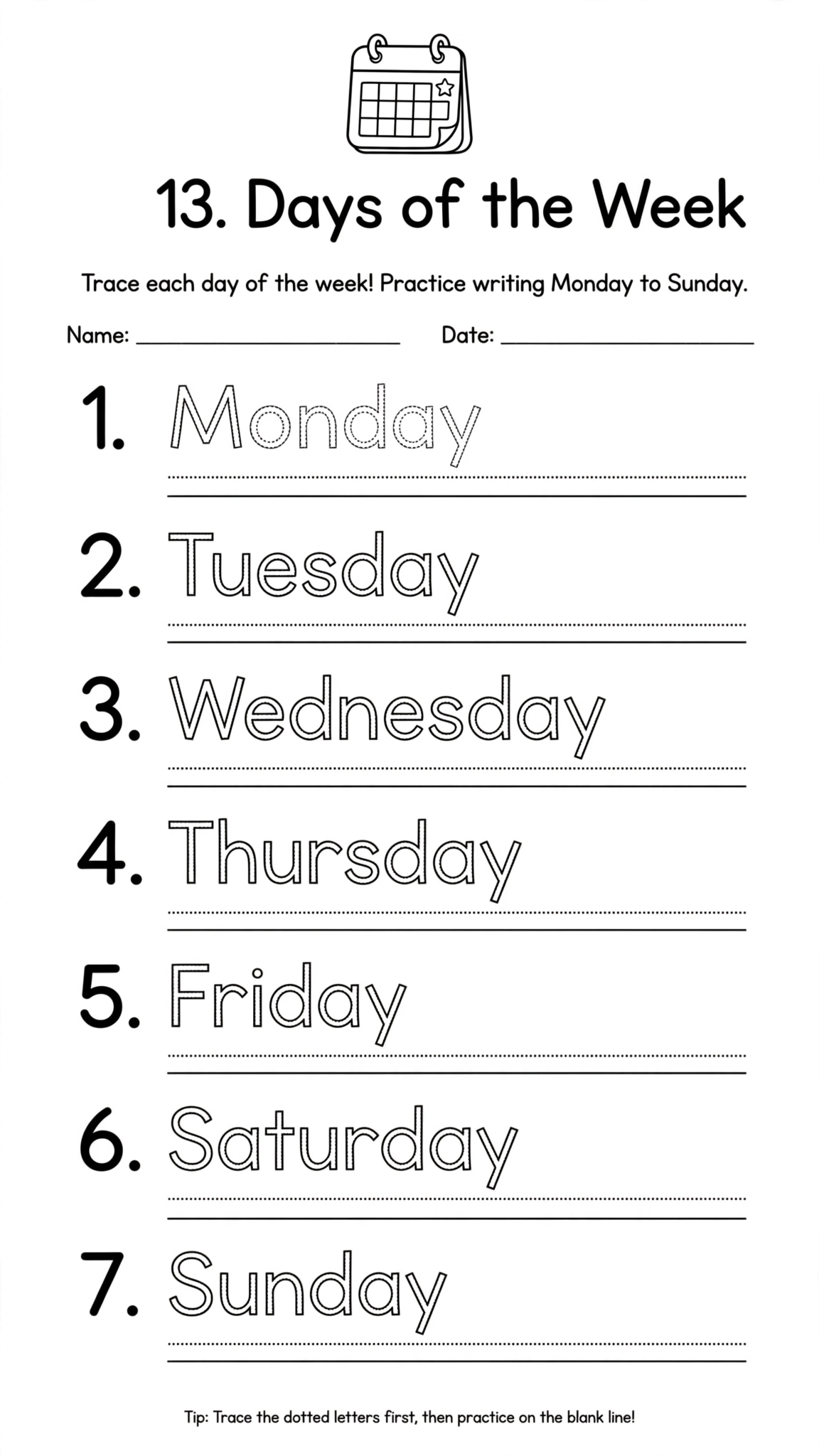
Seven days of the week in dotted traceable format, perfect for daily morning work and calendar time.
Skills Developed: Time concepts, sequencing, handwriting, memorization of weekly order.
How to Use: Trace one day each morning and talk about what you will do that day. Sing the days of the week song while tracing.
14. My First Sight Words
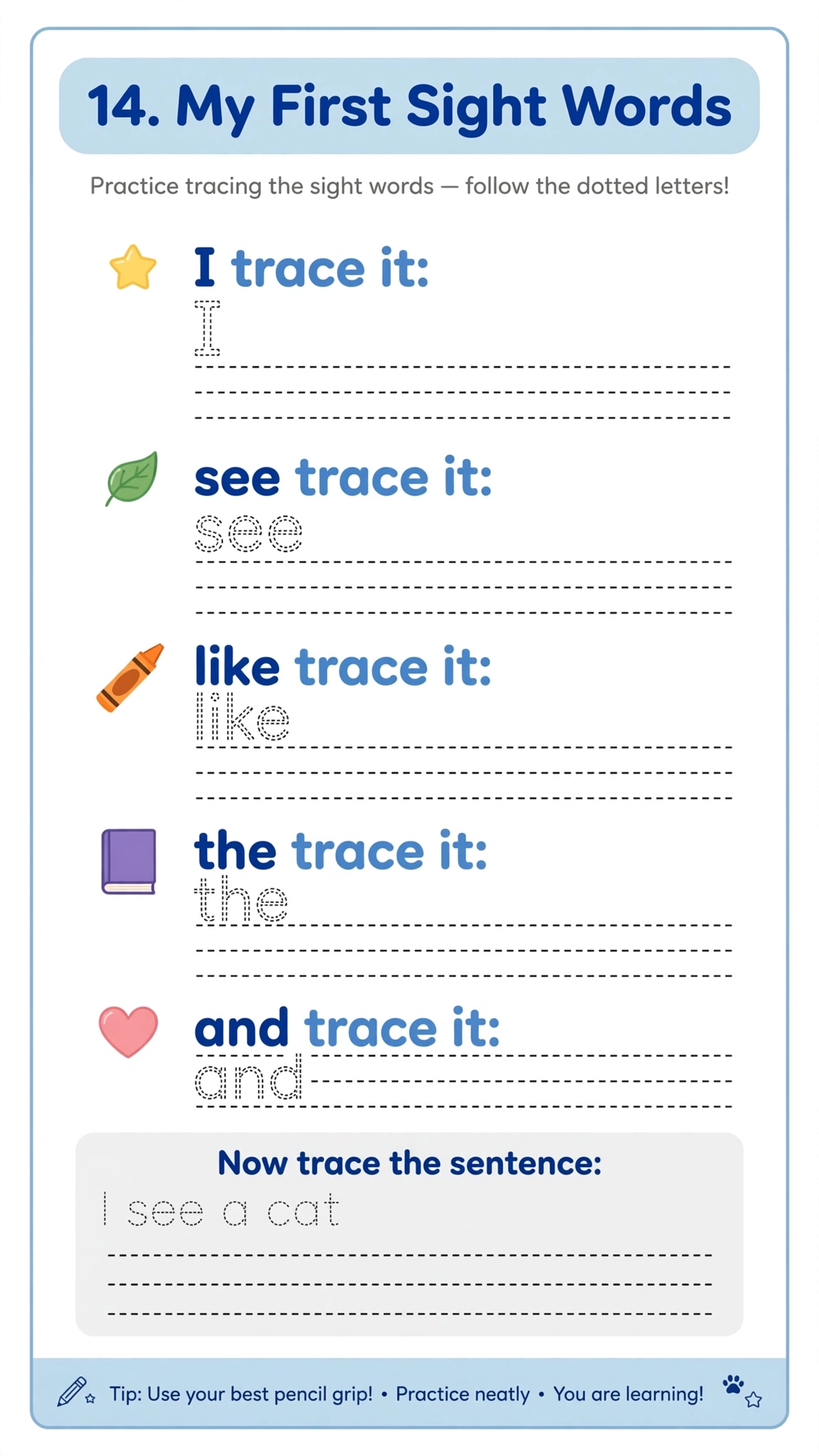
Introduces high-frequency sight words: I, see, like, the, and, plus a bonus sentence “I see a cat” for sentence-level tracing.
Skills Developed: Sight word recognition, early reading fluency, sentence formation, handwriting.
How to Use: Trace, read aloud, then write the word from memory on the blank lines. Practice using each word in oral sentences.
Conclusion
This 14-worksheet printable pack is your go-to resource for building strong preschool foundations without worksheets feeling like work. Each page is intentionally unfilled, clean, and distraction-free so your child can focus, create, and learn at their own pace.
Printing Tips:
- Print on white cardstock for durability
- Laminate for reusable dry-erase practice
- Keep in a binder or folder as a learning portfolio
- Use alongside crayons, markers, and dot stickers for multisensory learning
Download the full set, print as many times as you need, and enjoy watching those little pencils grow more confident every day. For your website, you can easily add your branding “dewdara.com” at the bottom center of each page in Canva or any PDF editor before sharing.
Happy learning!