15 Kids Playroom Ideas Small Space Diy
Transforming a tiny corner or a compact room into a magical play space for kids doesn’t have to be a daunting task. With a touch of creativity and some clever DIY solutions, even the smallest areas can become vibrant hubs for imagination and learning. This guide offers 15 inspiring ideas designed to maximize fun and functionality in limited spaces, ensuring your little ones have a cozy, organized, and stimulating environment without sacrificing precious square footage. Get ready to unlock the full potential of your home with these smart, family-friendly projects!
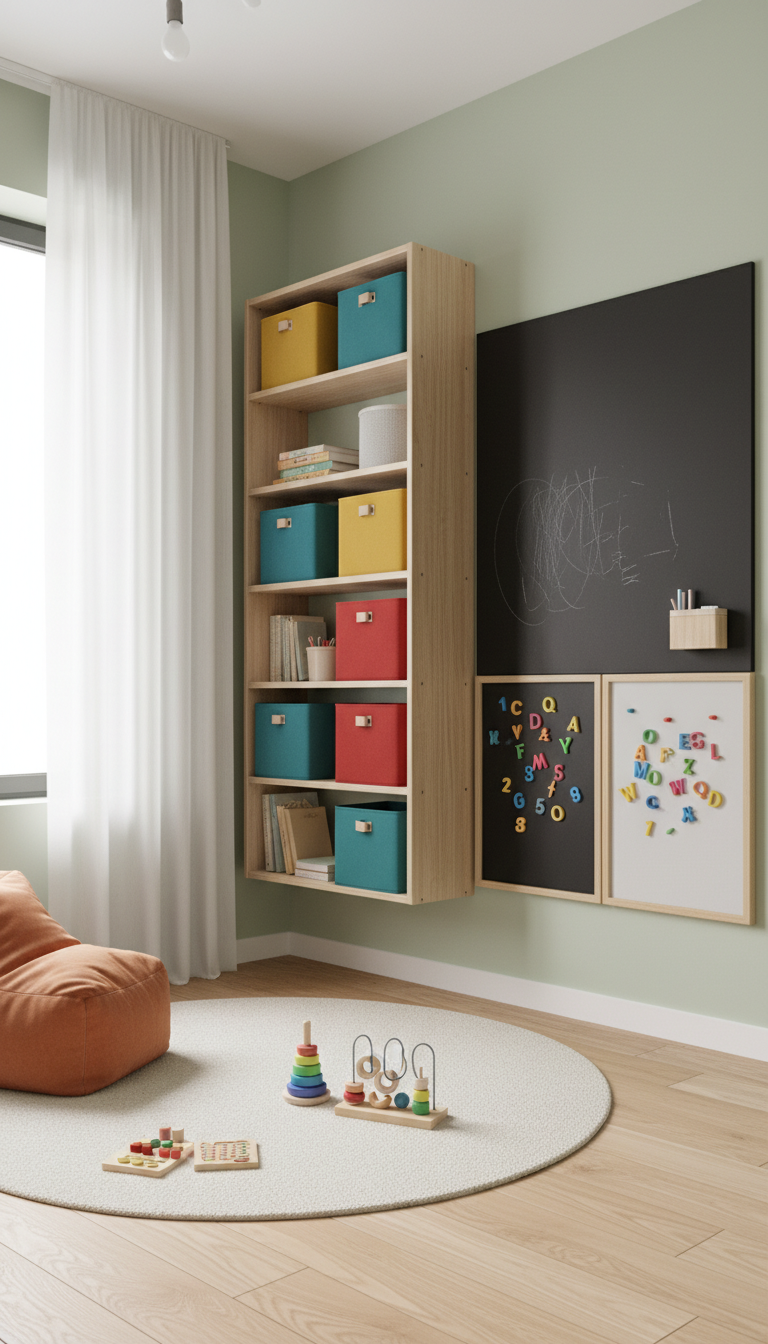
Vertical Storage Wonderland
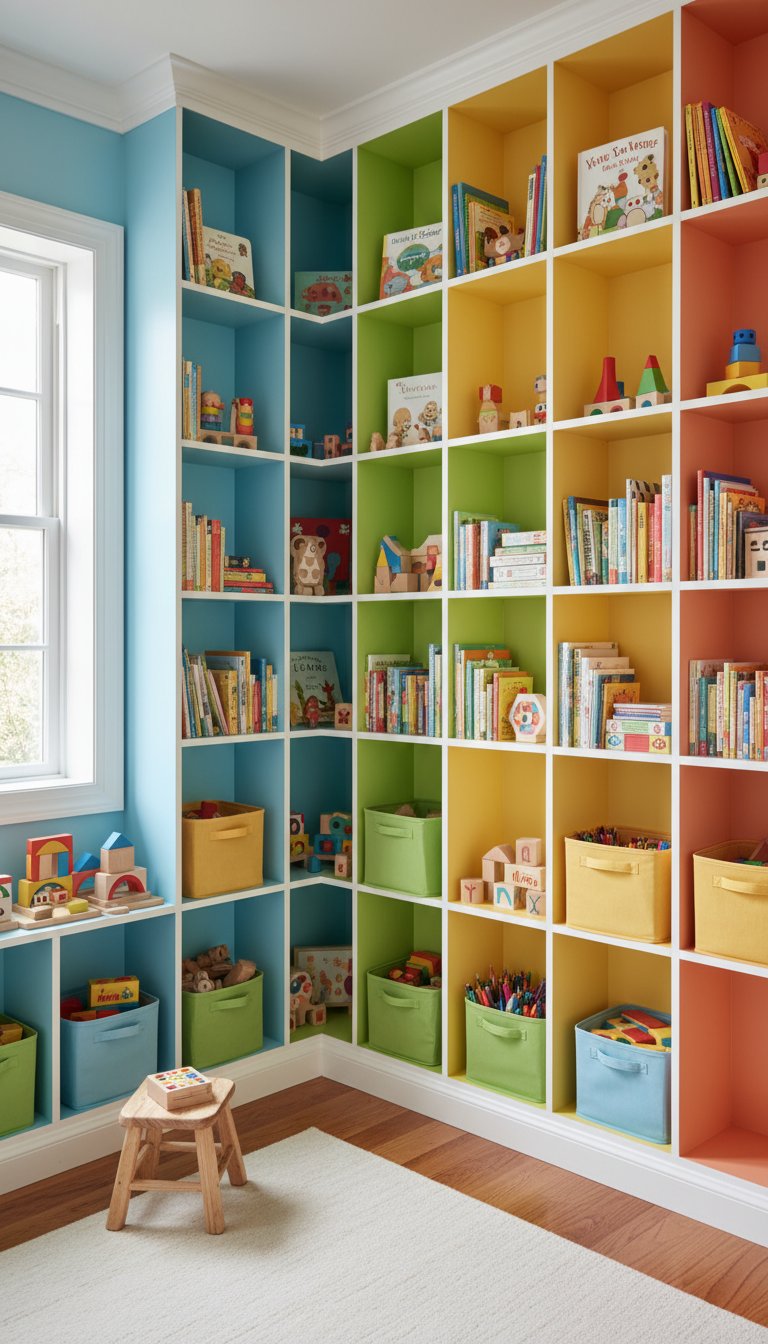
Utilize vertical space with floor-to-ceiling shelving and wall-mounted bins to keep toys off the floor and within easy reach. This approach not only frees up valuable floor space but also teaches children organization skills. Think narrow bookcases, floating shelves, and fabric cubbies attached to the wall. Bright colors can make the storage itself an appealing part of the decor, turning clutter into a visual delight and making tidying up a fun activity rather than a chore.
Fold-Away Fun Zone

For ultimate flexibility, design a play area that can be easily folded or tucked away when not in use. This could involve a wall-mounted activity table that folds down, or a series of modular storage cubes that can be rearranged or stowed. Consider a playmat that rolls up or an easel that collapses flat. This solution is perfect for multi-purpose rooms, allowing the space to quickly transition from playroom to living room or home office, maintaining an uncluttered appearance.
Corner Nook Hideaway

Transform an unused corner into a cozy and inviting hideaway. This can be achieved with a simple reading nook featuring a comfy bean bag chair or a small armchair, flanked by low shelves for books. Add a canopy or string lights above to create a sense of enchantment and privacy. This dedicated space provides a quiet retreat for reading, imaginative play, or simply unwinding after a busy day, feeling like a secret clubhouse within the room.
Under-Bed Play Area

When space is at a premium, look underneath the bed! A loft bed or a bunk bed with space below can be ingeniously converted into a mini-play zone. This area can house a small desk for crafts, a tiny reading corner, or even a ‘secret’ playhouse. Utilize pull-out storage drawers for toys that need to be hidden away, keeping the play area neat when not in use. This strategy maximizes vertical dimensions and creates a distinct, private play space.
Wall-Mounted Activity Panels

Free up floor space entirely by installing activity panels directly onto the walls. These can include magnetic boards, chalkboards, pegboards, or even simple felt boards for creative play. Rotating activities on these panels can keep the play dynamic and engaging. This concept is perfect for narrow walls or areas that don’t allow for bulky furniture, turning blank vertical surfaces into interactive learning and play zones that are easily accessible.
Multi-Functional Ottoman

A storage ottoman is a true small-space hero. Choose one with a removable lid that can store toys, books, or blankets. The top can double as an extra seat, a low table for drawing, or even a sturdy surface for building blocks. Opt for durable, child-friendly fabrics and a size that fits comfortably in your designated play area. This versatile piece of furniture helps maintain tidiness while providing multiple uses for play and relaxation.
DIY Chalkboard Wall

Unleash creativity with a DIY chalkboard wall! Simply paint a section of a wall with chalkboard paint, and voilà – you have an expansive canvas for drawing, doodling, and practicing letters. This idea eliminates the need for a bulky easel and encourages imaginative expression. Pair it with a small ledge for chalk and erasers, and consider magnetizing the surface underneath the paint for even more interactive fun. It’s an easy, low-cost way to add endless entertainment.
Rolling Toy Bins

Mobility is key in a small space. Invest in or DIY rolling toy bins that can be easily moved from one area to another, or tucked away under a bed or table. These can be simple wooden crates with casters, or plastic bins on a wheeled dolly. This flexibility allows for quick clean-up and ensures toys are always accessible where they’re needed most, then neatly stored out of sight when play is over. They are also fantastic for organizing different types of toys.
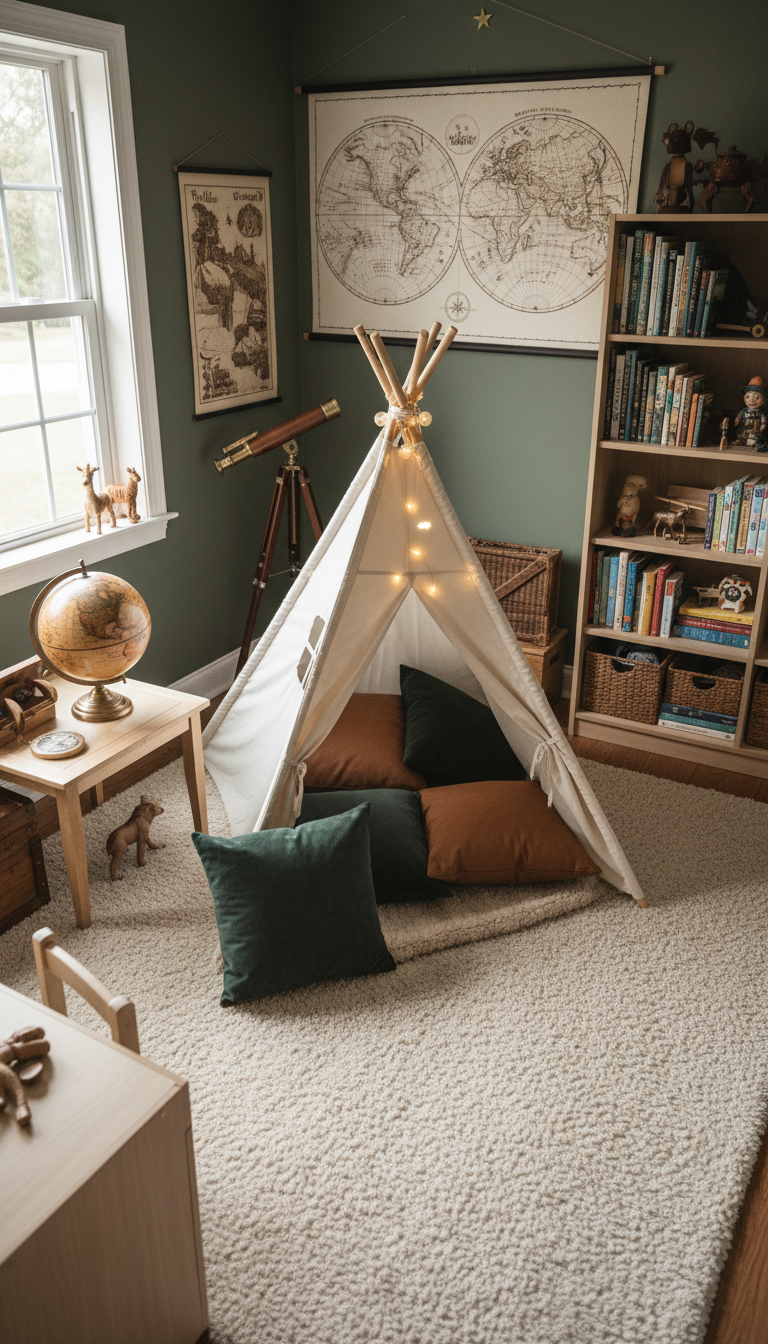
Cozy Reading Teepee

A small teepee or play tent offers a delightful sense of enclosure and wonder without taking up excessive space. It’s a perfect spot for quiet reading, imaginative role-playing, or simply a cozy escape. Position it in a corner or against a wall, and furnish it with soft pillows and blankets. When not in use, many teepees can be easily collapsed and stored away, making them a versatile addition to any small play area. Add fairy lights for extra magic.
Magnetic Play Wall

Install a magnetic strip or paint a section of the wall with magnetic primer before adding a topcoat. This creates an interactive surface for magnetic letters, numbers, puzzles, and art. It’s an excellent way to engage children in educational play without occupying any floor space. Magnetic play fosters fine motor skills and creativity, providing endless hours of fun. This dynamic feature can be easily updated with new magnetic sets to keep things fresh and exciting.
Pegboard Creative Station

A large pegboard mounted on the wall can be a game-changer for organizing art supplies, small toys, and craft tools in a small playroom. With various hooks, shelves, and baskets, a pegboard allows for customizable storage that keeps everything visible and accessible. It’s incredibly versatile, adapting as your child’s interests change, and ensures that every item has its place without cluttering surfaces. This vertical solution is both practical and aesthetically pleasing.
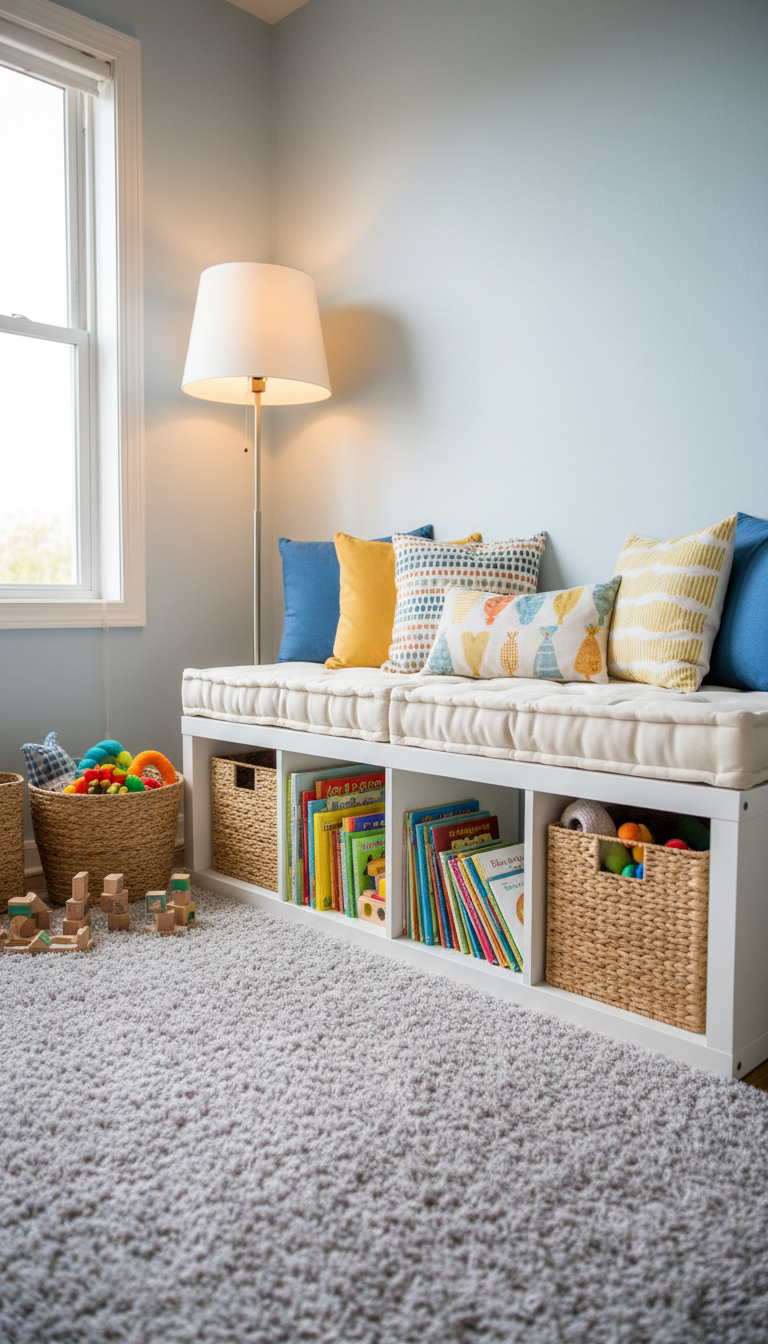
Built-In Bench with Storage

If you have an alcove or a sturdy window area, consider building a simple bench with integrated storage underneath. The top provides comfortable seating for reading or social play, while the compartments below can house a multitude of toys, books, or games. Add some colorful cushions and pillows to make it extra inviting. This clever DIY project maximizes an often underutilized space, offering both comfort and superb organization for a small playroom.
Desk-Under-Loft Bed Combo

For older children in a small room, a loft bed with a desk integrated underneath is an ingenious space-saving solution. This setup provides a dedicated area for homework, creative projects, and computer use, while freeing up floor space for play. The bed above becomes a cozy sleeping haven, completely separate from the ‘work zone’ below. It promotes focus and organization, making the most of vertical square footage in a stylish and practical way.
Portable Playmat Storage

A large, comfortable playmat is essential for floor play, but it can quickly overwhelm a small room. Opt for a roll-up playmat or one that folds compactly and design a dedicated storage solution for it. This could be a large decorative basket, a wall-mounted hook system, or even a slim slot behind a door. This keeps the mat out of the way when not in use, maintaining a tidy appearance and maximizing open floor space for other activities.
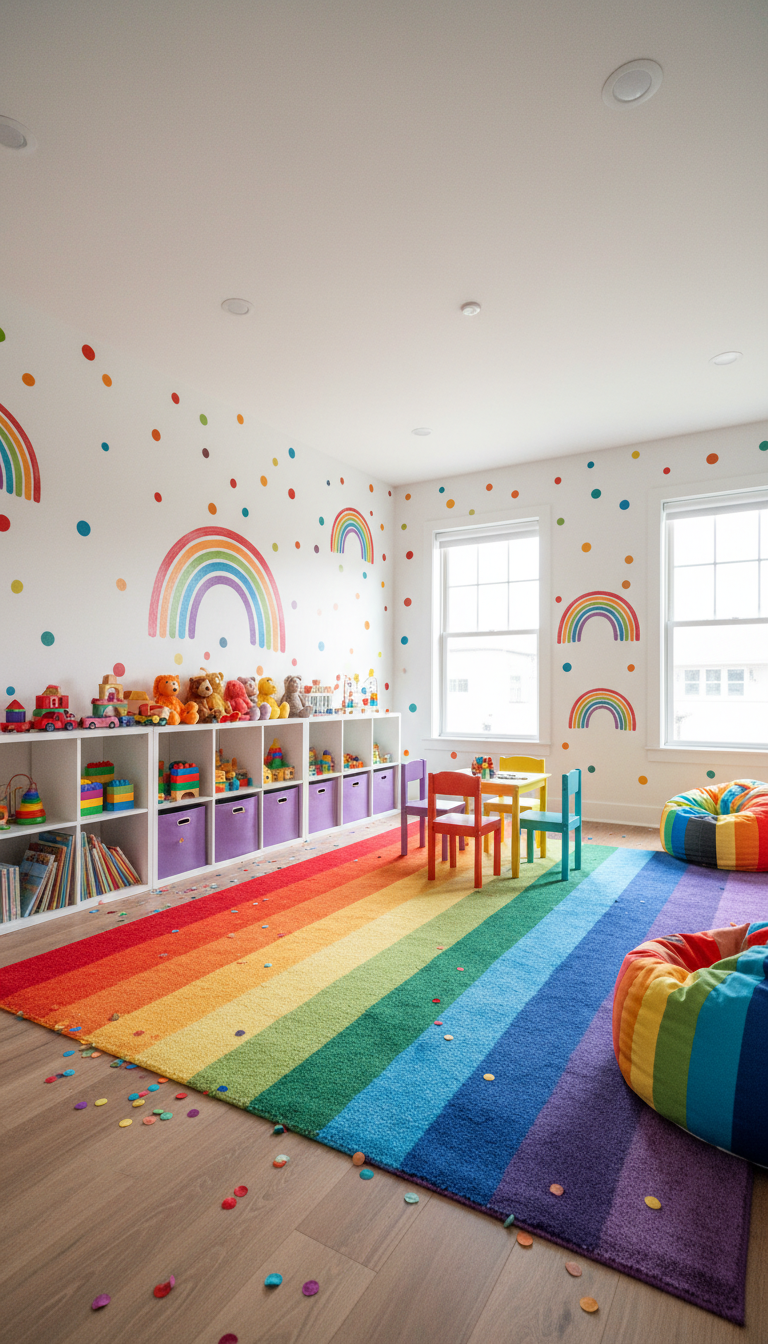
Themed Zone Delimiters

Instead of bulky furniture, use subtle visual cues to define different play zones within a small space. This could be achieved with different colored rugs to mark a reading area versus a building zone, or using removable wall decals to create a ‘road map’ for cars. Low bookshelves or small toy chests can also act as soft dividers without blocking light or flow. These visual distinctions help children understand boundaries and organize play, enhancing the functionality of each micro-zone.
Creating an engaging and functional playroom in a small space is all about smart design, innovative storage, and a little DIY magic. By implementing these 15 ideas, you can transform even the most compact areas into dynamic zones where imagination thrives, learning flourishes, and clutter is kept at bay. Remember, the key is to think vertically, embrace multi-functional pieces, and involve your children in the organization process. With these tips, your small space will become a beloved haven for play and creativity for years to come!