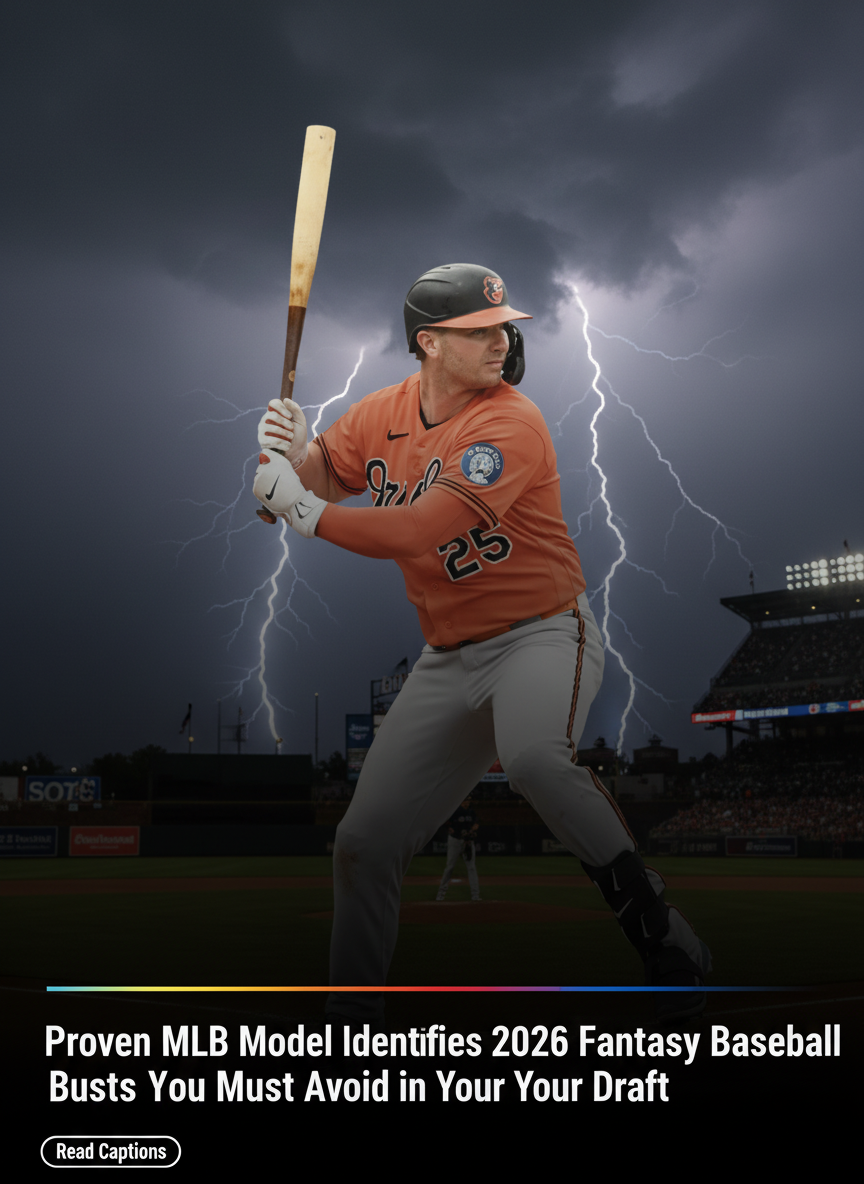
Steer Clear of These Stars: Proven MLB Model Identifies 2026 Fantasy Baseball Busts
As the 2026 MLB season approaches, fantasy baseball managers are diligently scrubbing spreadsheets and studying box scores in hopes of securing a championship. While finding a “sleeper” in the late rounds can provide a boost, the quickest way to sink a season is by using high-draft capital on a star player destined for a regression.
SportsLine has released its comprehensive 2026 Fantasy baseball rankings, powered by a sophisticated computer model that simulated the entire season 10,000 times. This is the same model that famously warned owners about Spencer Strider’s disappointing 2024 campaign well before the first pitch was thrown. Now, the model is sounding the alarm on several high-ADP (Average Draft Position) players who are projected to fall significantly short of their expectations.
The Power of the Simulation
The SportsLine projection model isn’t swayed by name recognition or last year’s highlights. Instead, it relies on a data-driven approach that accounts for player age, injury history, advanced peripheral metrics, and even projected ballpark factors. By simulating the season thousands of times, the model identifies the “median” outcome for a player, often revealing a stark contrast between a player’s perceived value and their actual statistical likelihood.
Last season, the model’s skepticism regarding elite arms proved prophetic. While many managers viewed certain aces as “bulletproof,” the model identified underlying fatigue and velocity dips that foreshadowed a drop in production. Heading into 2026, the data suggests that several perennial All-Stars are entering a “danger zone” where their draft price far exceeds their projected ROI.
Identifying the 2026 “Busts”
In the world of fantasy baseball, the term “bust” is relative. A player doesn’t necessarily have to be unproductive to be a bust; they simply have to fail to justify their draft position. If a player is being drafted in the second round but produces like a tenth-rounder, they become a liability that prevents a roster from reaching its full potential.
According to the 2026 simulations, one of the primary areas of concern involves veteran sluggers whose exit velocities began to plateau toward the end of the 2025 season. Additionally, the model is wary of several starting pitchers who benefited from unsustainable “luck” metrics, such as an unusually low Batting Average on Balls In Play (BABIP) or a high Left On Base percentage (LOB%).
Avoiding the Spencer Strider Trap
The model’s success in calling Spencer Strider’s “down” season remains a benchmark for fantasy analysis. At a time when Strider was considered a consensus top-three pitcher, the model noted mechanical inconsistencies and a heavy reliance on a two-pitch mix that made him vulnerable to adjustments by savvy hitters.
For 2026, the model has identified a similar profile: a high-strikeout pitcher currently being drafted as a “Top 5” arm who the simulations suggest will see a significant spike in ERA and a decrease in innings pitched. Avoiding this single player could be the difference between a playoff berth and a last-place finish.
Draft Strategy for 2026
The takeaway for fantasy managers isn’t to avoid star players entirely, but to be disciplined with valuation. The SportsLine model emphasizes the importance of “value-based drafting”—the practice of selecting players who are projected to outperform their ADP while letting others take the risk on overvalued names.
As the draft season heats up, the model recommends that managers look closely at younger, ascending talents whose underlying data suggests a breakout is imminent, rather than paying a premium for past performance from aging veterans. Following a proven roadmap is essential in a sport as volatile as baseball, where a single injury or a slight dip in spin rate can derail a season.
Conclusion
Success in fantasy baseball is often as much about the players you *don’t* draft as the ones you do. With the 2026 season on the horizon, the SportsLine MLB model provides a data-backed shield against the hype. By identifying the busts before the draft begins, managers can navigate the early rounds with confidence and build a roster designed for the marathon of a 162-game season.