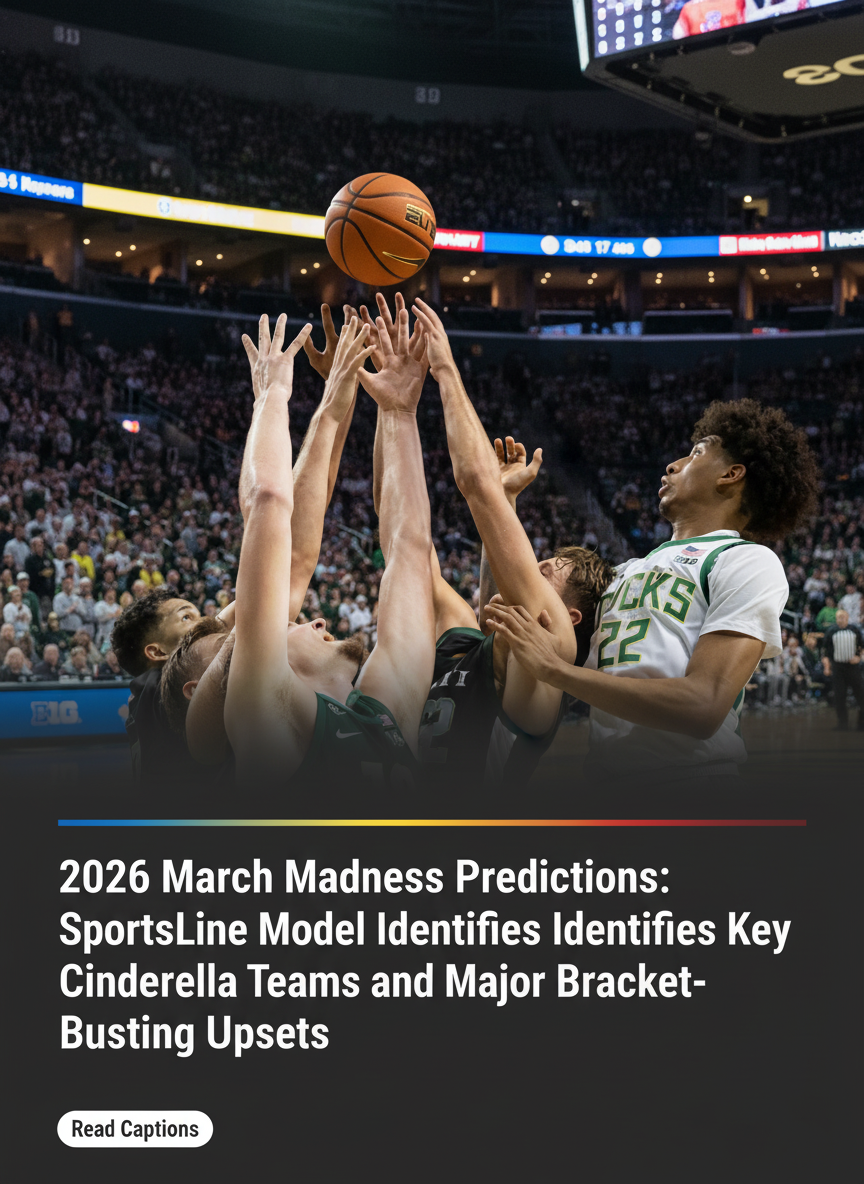
Bust Your Friends’ Brackets: Data-Driven Cinderella Picks for the 2026 NCAA Tournament
The madness has officially arrived. As millions of basketball fans across the country sharpen their pencils and open their spreadsheet tabs, the perennial question remains: which double-digit seed will become this year’s national darling? Finding the right Cinderella isn’t just about rooting for the underdog; it is the difference between winning your office pool and watching your bracket go up in flames by the first Sunday.
To help navigate the chaos of the 2026 NCAA Tournament, the SportsLine projection model has completed a grueling analysis, simulating the entire bracket 10,000 times. After accurately predicting 12 of the 16 teams that reached the Sweet 16 last season, the model is back with a data-driven roadmap to help fans identify the most likely upsets in this year’s field.
The Power of 10,000 Simulations
In a tournament defined by its unpredictability, the SportsLine model relies on raw data and consistency. By running 10,000 simulations, the model accounts for various factors including offensive and defensive efficiency, strength of schedule, and individual player matchups. This approach strips away the “narrative” bias that often leads human bracket-fillers to overvalue traditional powerhouse programs while ignoring mid-major giants hiding in plain sight.
Last year, the model’s efficiency was on full display. By nailing nearly 80% of the Sweet 16 field, it proved that the path to a perfect bracket (or at least a winning one) is paved with analytics. For 2026, the simulations have identified several specific matchups where the higher seed is on high alert for an early exit.
Identifying the 2026 Cinderellas
Every year, the 12-vs-5 matchup is the most scrutinized on the board, and 2026 is no different. The model has identified two specific 12-seeds that are winning their simulations at a significantly higher rate than historical averages. These “Cinderella” candidates aren’t just lucky; they possess the specific statistical profiles—usually high-volume three-point shooting and veteran guard play—that traditionally fuel deep tournament runs.
Furthermore, the model is signaling caution for at least two top-three seeds. While these programs may have high name recognition, the simulations suggest their defensive vulnerabilities could make them susceptible to a “bracket-buster” loss as early as the Round of 32.
Strategic Advice for Bracket Builders
While it is tempting to pick every upset, the SportsLine experts warn against “upset fatigue.” The key to a successful bracket is “calculated volatility.” According to the model, the most successful brackets are those that pick one or two double-digit seeds to reach the second weekend, while remaining conservative with the Final Four picks.
“You don’t win your pool by picking all the favorites,” says the SportsLine analysis team. “But you also don’t win it by picking a 15-seed to win the National Championship. The goal is to find the teams that the public is overlooking but the numbers are embracing.”
Conclusion: Trust the Process
As the clock ticks toward the first tip-off, the pressure to finalize picks can be overwhelming. Whether you are looking for that one massive Round 1 upset or trying to identify which blue-blood program is most likely to stumble, utilizing a proven simulation model provides an edge that “gut feeling” simply cannot match.
The 2026 NCAA Tournament promises to be as volatile as ever. By leaning on the data that predicted last year’s Sweet 16 with uncanny accuracy, you can approach your bracket with the confidence of a seasoned veteran. The only question left is: are you brave enough to pick the underdog?