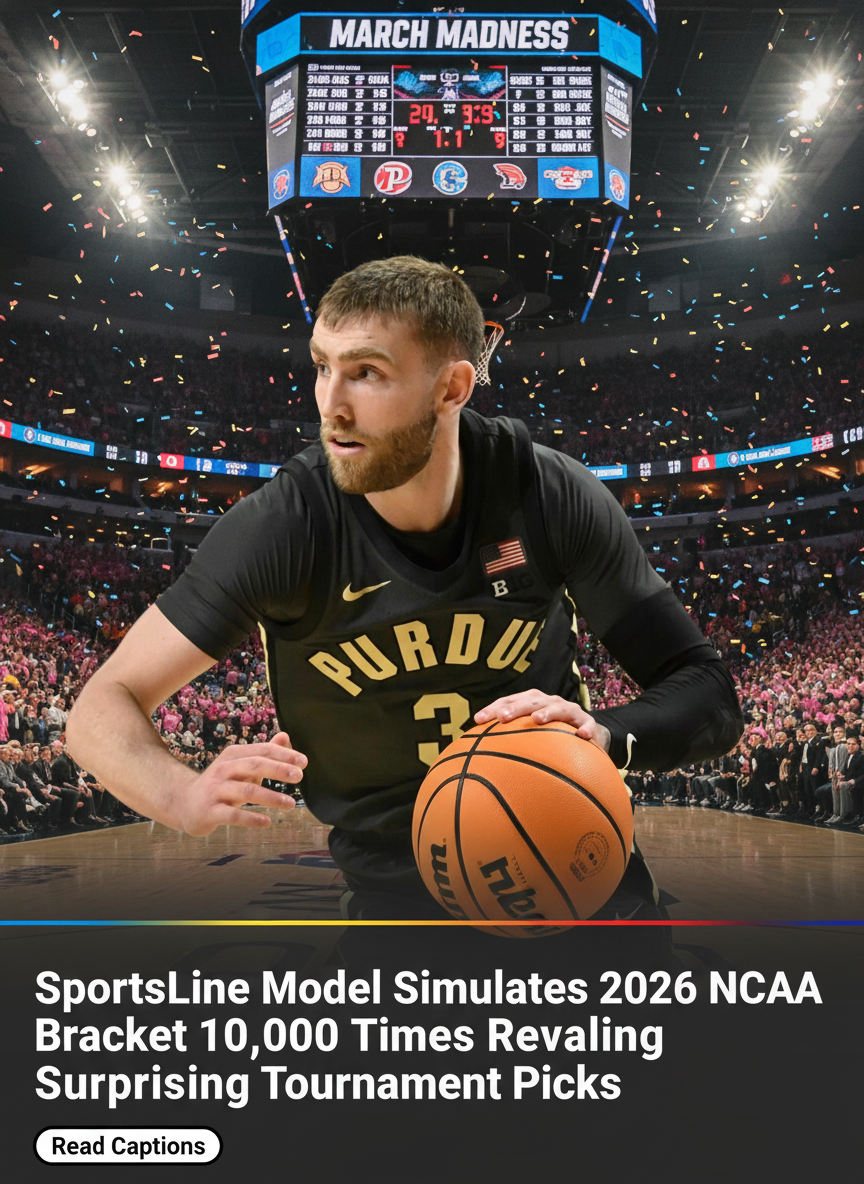
Data-Driven Madness: SportsLine Model Unveils Shocking 2026 NCAA Tournament Bracket Predictions
As the calendar turns to March and “Bracketology” reaches a fever pitch, college basketball fans across the nation are searching for the edge that will propel them to the top of their office pools. This year, all eyes are on the SportsLine projection model, which has just released its comprehensive simulations for the 2026 NCAA Tournament, revealing a series of picks that are sending shockwaves through the sports betting community.
The Power of 10,000 Simulations
The SportsLine model isn’t based on “gut feelings” or historical bias. Instead, it relies on a sophisticated algorithm that simulated the entire 2026 tournament 10,000 times. By crunching thousands of data points—including offensive and defensive efficiencies, strength of schedule, and player injury reports—the model identifies value where the casual observer might see none.
This data-centric approach has built a formidable reputation. Last season, the model correctly identified 12 of the 16 teams that advanced to the Sweet 16, a feat that placed it in the top tier of bracket prognosticators nationwide. For 2026, the model suggests that the path to the Final Four in Indianapolis may look significantly different than what the seedings suggest.
Targeting the “Surprise” Contenders
While many fans naturally gravitate toward the perennial powerhouses and top-seeded favorites, the 2026 model highlights several “surprising” picks that could define this year’s tournament. According to the simulations, multiple double-digit seeds possess the statistical profiles necessary to pull off first-round upsets and potentially make deep weekend runs.
Conversely, the model is sounding the alarm on several highly ranked teams. Despite their impressive regular-season records, certain top-four seeds are showing high vulnerability scores due to specific schematic weaknesses or poor performance against high-pressure defensive units. For those looking to win their brackets, knowing which “giant” to fade is often more important than picking the eventual champion.
Navigating a Wide-Open Field
The 2026 landscape is being described by analysts as one of the most volatile in recent memory. With the transfer portal and NIL rights continuing to parity the talent gap, the distance between a No. 3 seed and a No. 11 seed has never been smaller. SportsLine’s projections lean heavily into this chaos, suggesting that the “safe” bracket is likely a losing one this year.
The model’s simulation results provide a blueprint for identifying “bracket busters” before they become household names. By focusing on teams with elite three-point shooting and veteran backcourts, the model has identified three specific mid-major programs that are projected to advance much further than their seedings would indicate.
Conclusion: Strategy Over Sentiment
As Selection Sunday fades into the rearview and the opening tip-off approaches, the SportsLine model serves as a reminder that March Madness is often a game of probability. While no model can account for a miraculous buzzer-beater or a singular heroic performance, 10,000 simulations provide a statistical foundation that history has shown is hard to beat.
Whether you are a seasoned bettor or a casual fan filling out a single bracket, the 2026 projections suggest that this is the year to embrace the unconventional. The numbers are in, the simulations are complete, and if the model is as accurate as it was last year, the 2026 tournament is set to be one for the record books.