9 Essential Home Inventory Printables to Protect and Organize Your Entire Home
A complete home inventory is one of the most valuable documents a homeowner can own, yet it’s often overlooked until it’s urgently needed. Whether you’re filing an insurance claim after an unexpected event, preparing for a move, managing your estate, or simply trying to get organized, knowing exactly what you own and where it is brings instant peace of mind.
These 9 printable inventory sheets were designed to make the process simple, thorough, and stress-free. Each one focuses on a specific category of your home, so you can tackle it room-by-room without feeling overwhelmed. Print the full set, keep it in a binder or fireproof safe, and update it once or twice a year. All templates are blank — just print and fill by hand.
01. Home Inventory Master List
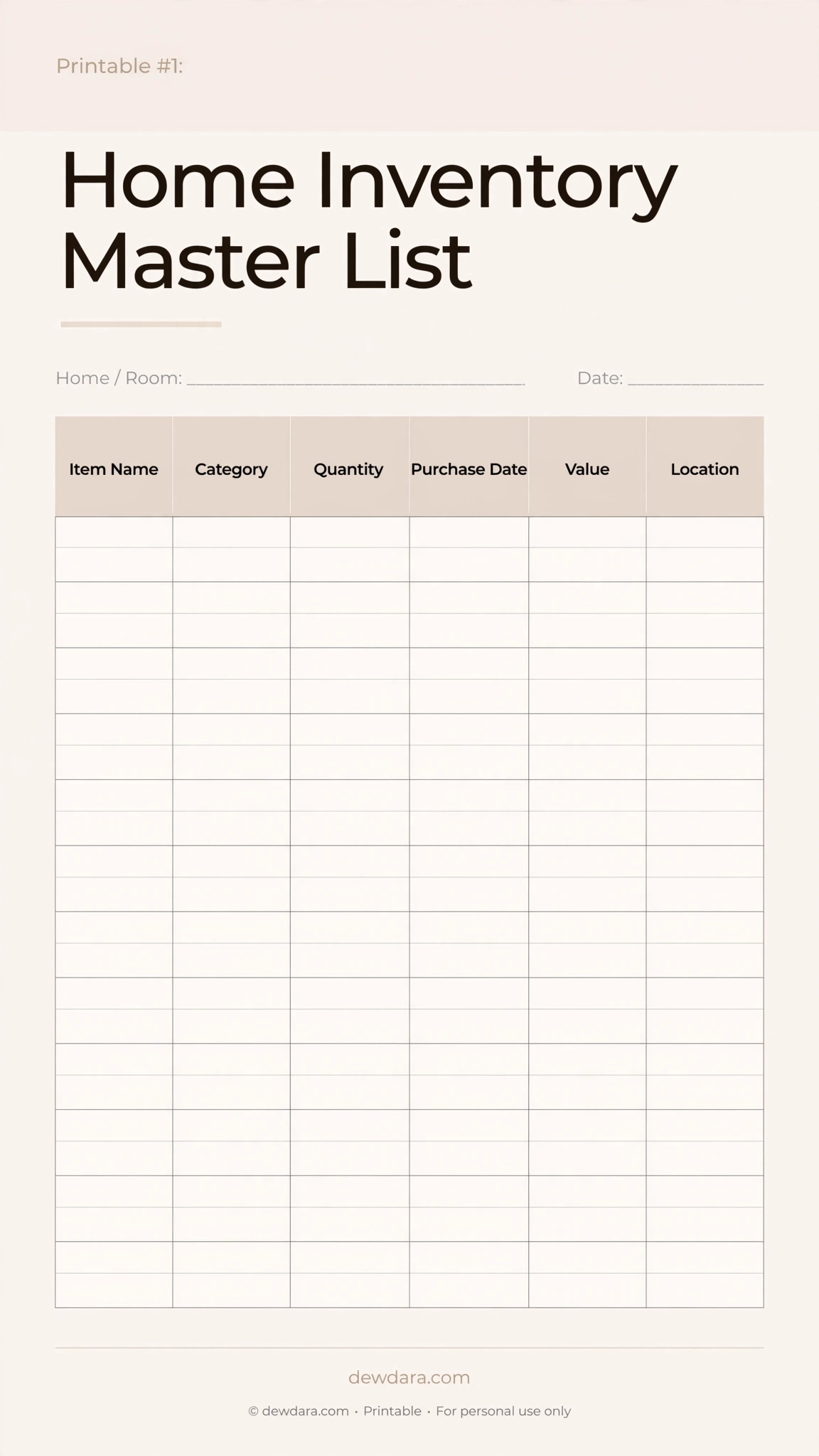
What It Is: This is your all-purpose foundation sheet. It captures Item Name, Category, Quantity, Purchase Date, Value, and Location in one clean overview.
Why You Need It: Perfect for getting a quick snapshot of your entire household. Insurance companies love this format because it proves ownership and value quickly.
How To Use It: Start here. Walk through one room at a time and list everything of significant value. Use the Location column to note exactly where the item lives — e.g., “Primary Bedroom – Closet Top Shelf”. This makes finding things later effortless.
Pro Tip: Write “Home / Room” at the top and use one sheet per room to keep things modular.
02. Room-by-Room Inventory
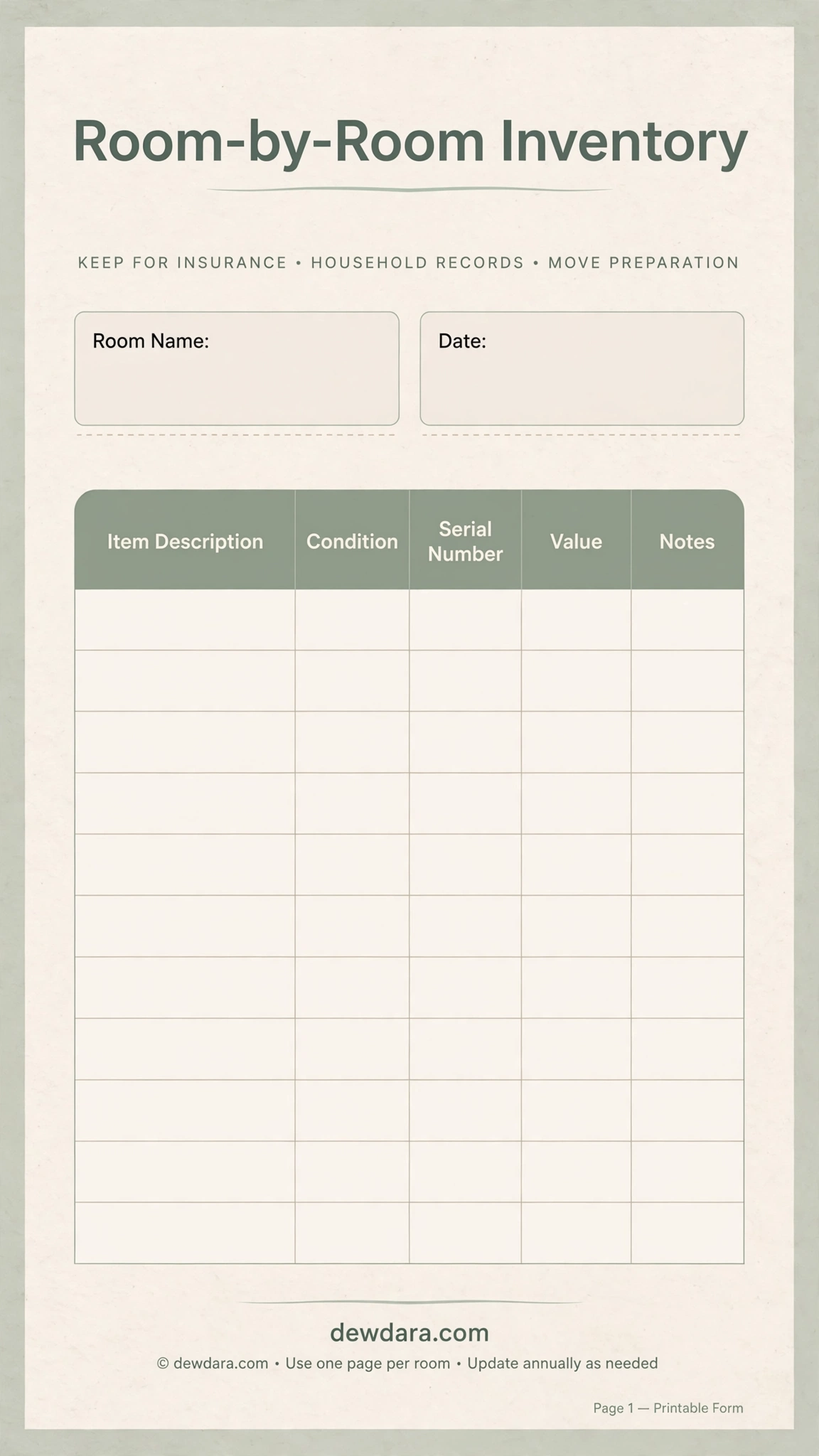
What It Is: A detailed sheet dedicated to a single room, with fields for Item Description, Condition, Serial Number, Value, and Notes.
Why You Need It: This is the most thorough way to inventory. It prevents you from missing smaller items that add up fast, and the Condition column is critical for insurance depreciation calculations.
How To Use It: Tape this to a clipboard and go room by room. Open every drawer and closet. Photograph items as you go and note “Photo Taken” in the Notes column.
Pro Tip: Do this after deep cleaning a room — you’ll be more thorough and motivated.
03. Electronics & Appliances Inventory
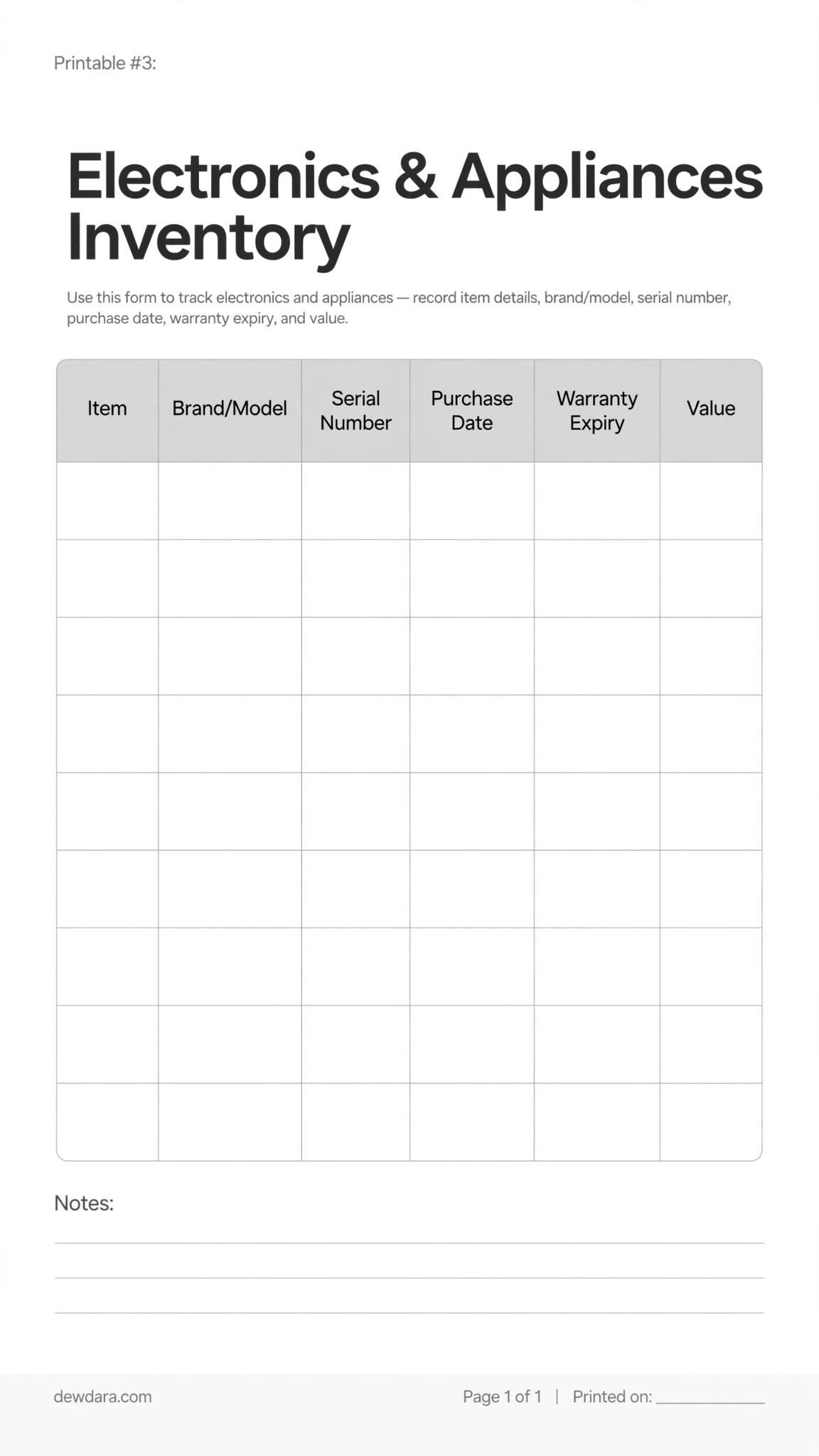
What It Is: A specialized log for everything with a plug or battery — TVs, laptops, kitchen appliances, power tools — including Brand/Model, Serial Number, Warranty Expiry, and Value.
Why You Need It: Electronics have high replacement costs and short warranty windows. Serial numbers are mandatory for police reports and warranty claims.
How To Use It: Flip items over or check settings > about device for serial numbers. Staple receipts to the back of this sheet or note where digital receipts are stored.
Pro Tip: Take a photo of the serial number label — it saves time and prevents transcription errors.
04. Valuables & Jewelry Inventory
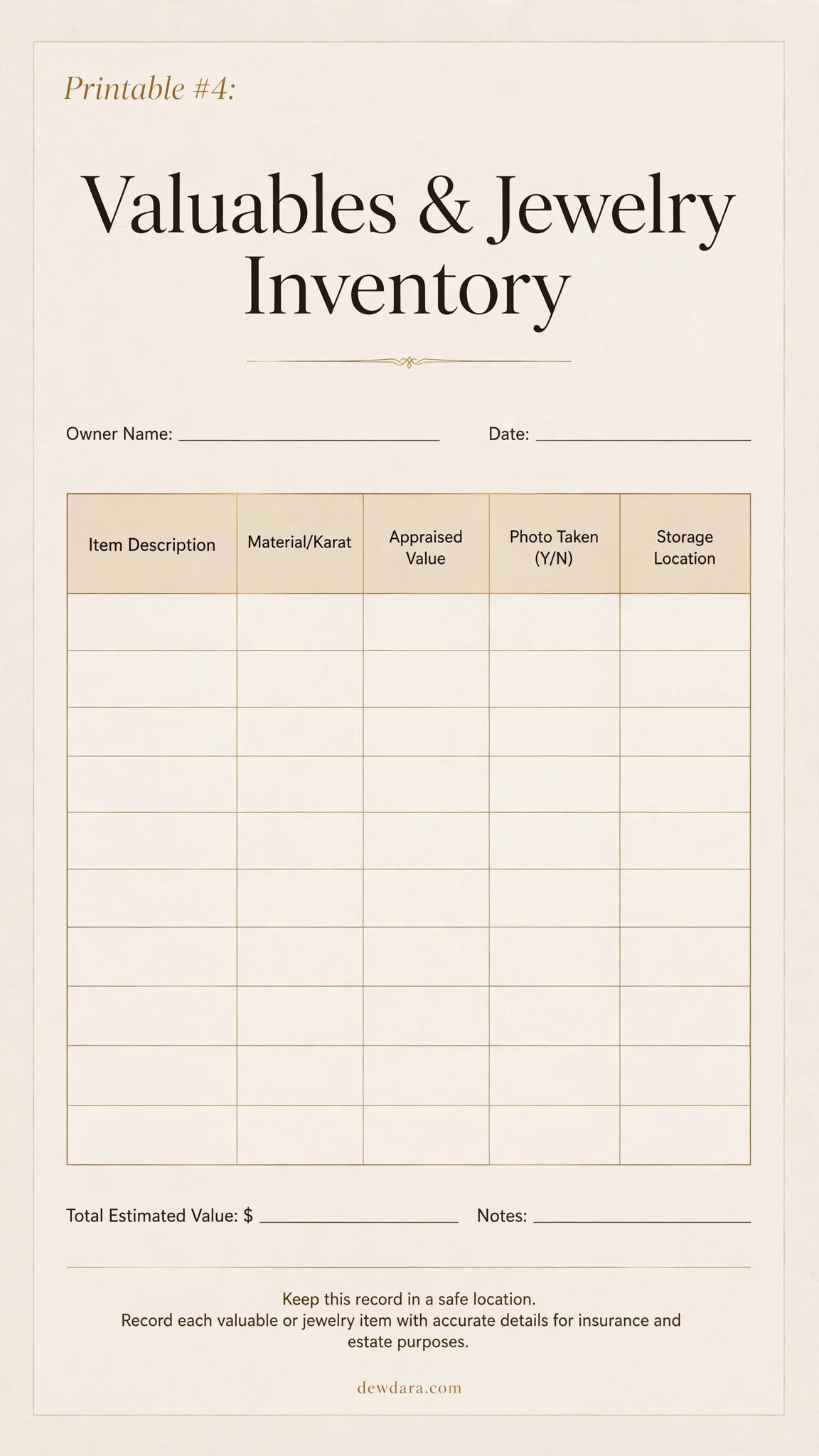
What It Is: An elegant, secure log for high-value items: jewelry, watches, collectibles, heirlooms. Includes Material/Karat, Appraised Value, Photo Taken, and Storage Location.
Why You Need It: Standard homeowners insurance has limits on jewelry. This sheet provides the documentation needed for riders and estate appraisals.
How To Use It: Be specific — “14k White Gold Diamond Studs – 0.75ct” not just “earrings”. Store the completed sheet separately from the valuables themselves.
Pro Tip: Keep appraisal certificates with this sheet in a safe deposit box.
05. Furniture Inventory
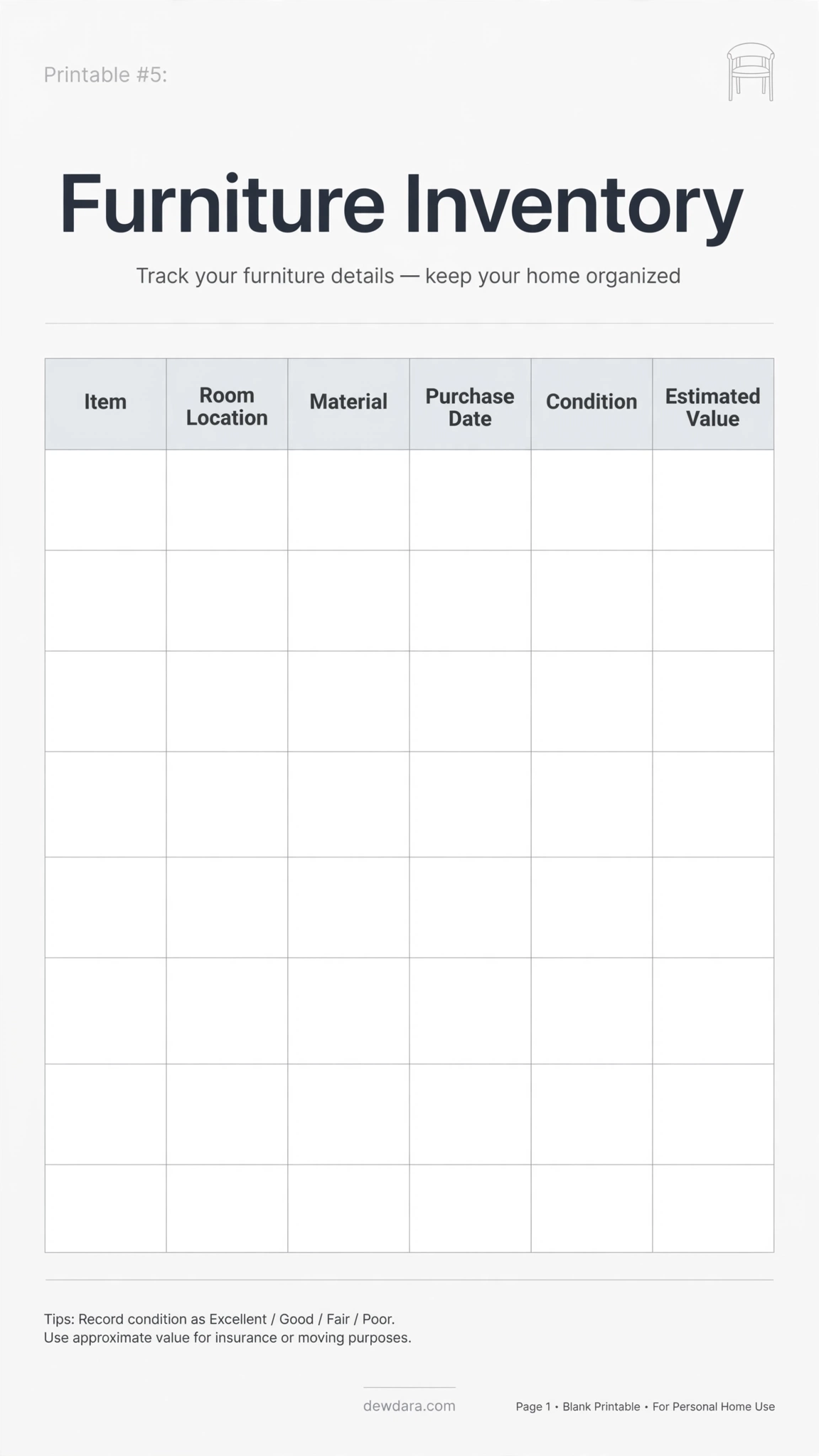
What It Is: A dedicated sheet for large furniture with Room Location, Material, Purchase Date, Condition, and Estimated Value.
Why You Need It: Furniture is often the most expensive category to replace after a disaster and is frequently under-documented. Condition tracking helps with resale or moving insurance.
How To Use It: Measure large pieces and note dimensions in the Notes area if you plan to move. Note the material — solid wood vs. veneer affects value significantly.
Pro Tip: Photograph any existing damage before movers arrive.
06. Important Documents Inventory
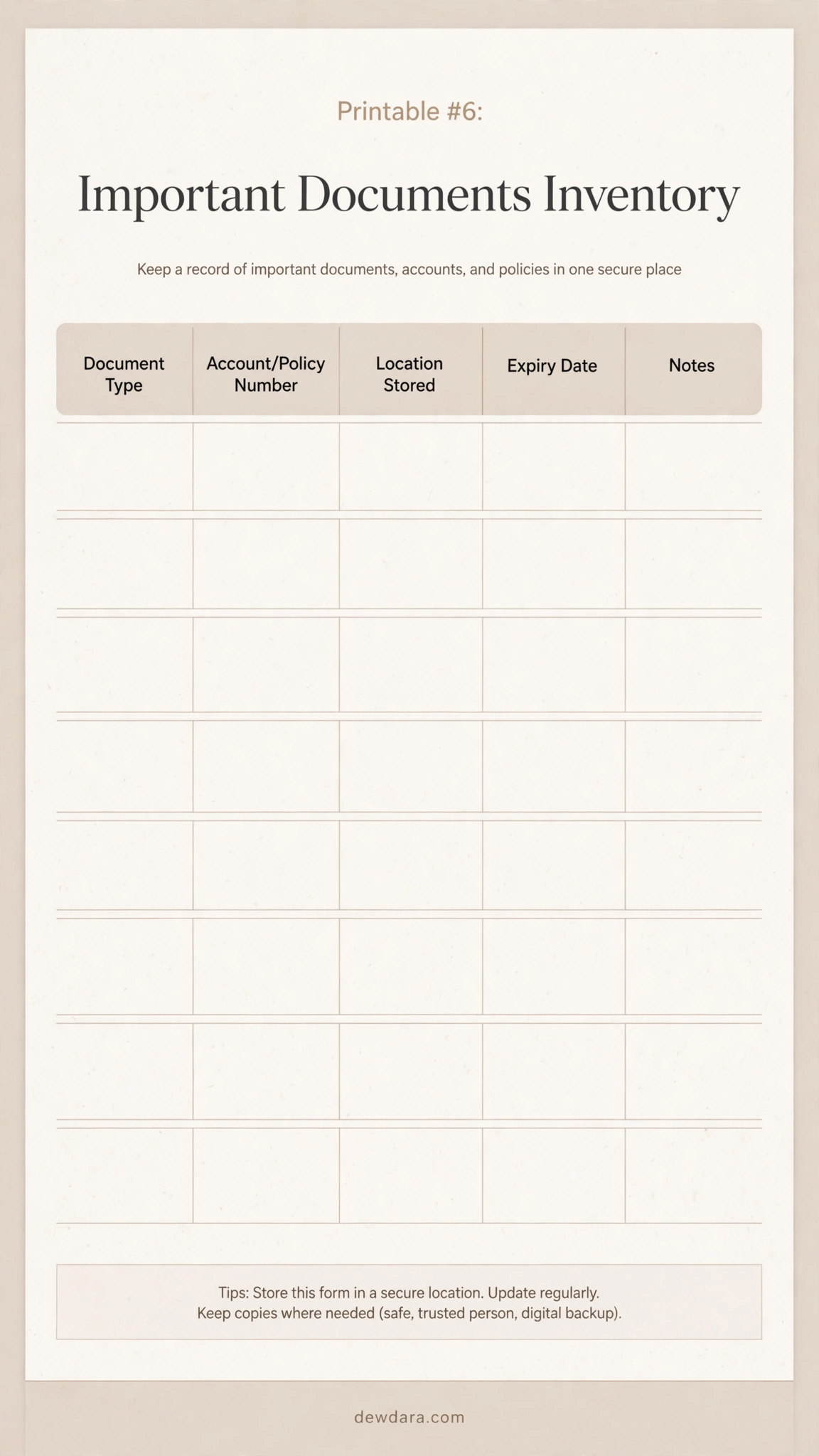
What It Is: A non-physical inventory for passports, deeds, insurance policies, wills, and account numbers. Tracks Document Type, Policy/Account Number, Location Stored, and Expiry Date.
Why You Need It: In an emergency, your family needs to know WHERE your documents are, not just that they exist. This is essential for estate planning.
How To Use It: Never write full passwords or SSNs — write “Password manager – Vault” or last 4 digits only. Note expiry dates for passports and insurance.
Pro Tip: Review this sheet every January — it’s the fastest way to catch expired documents.
07. Insurance Claim Inventory
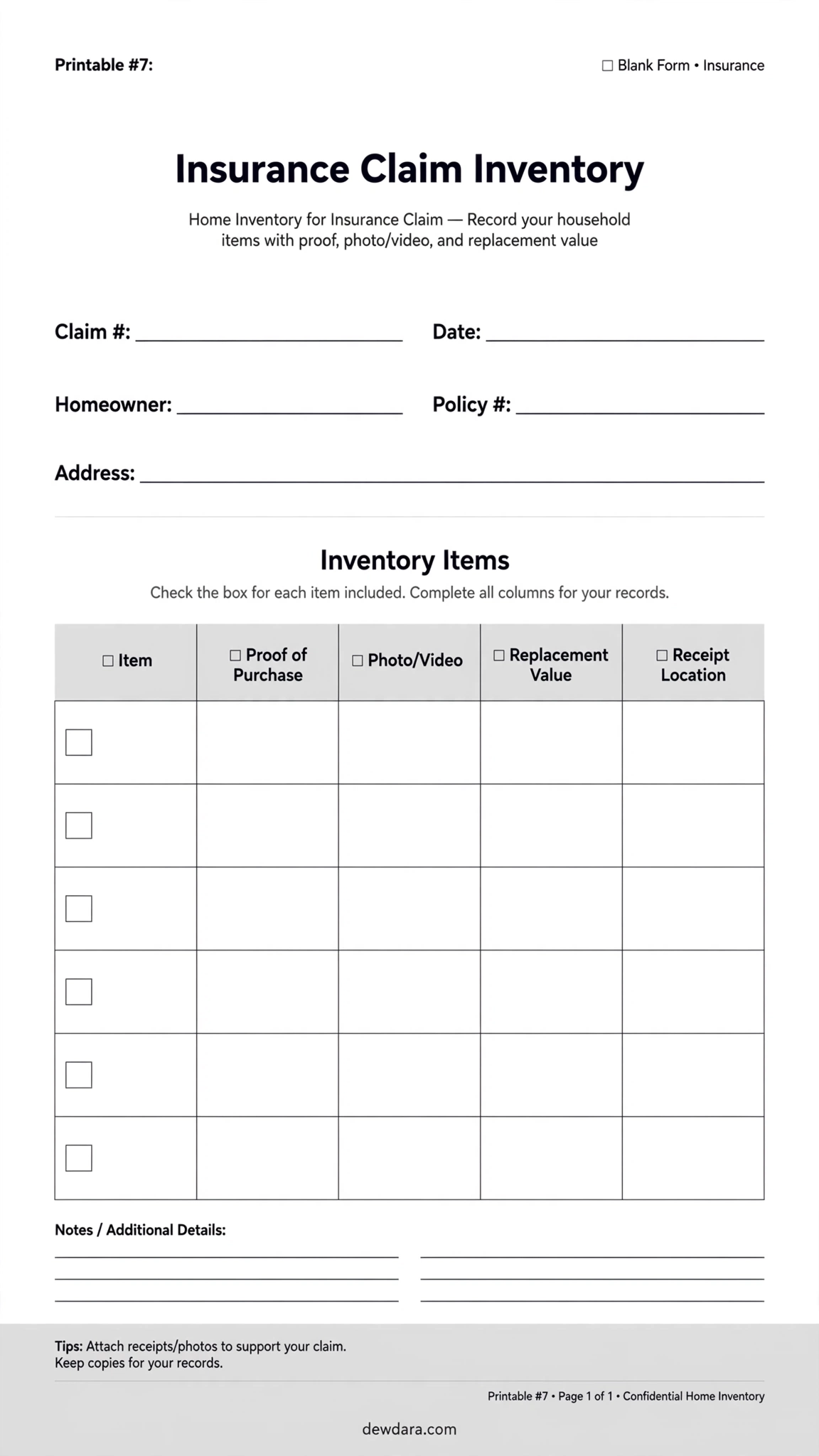
What It Is: A claim-ready format focused on Proof of Purchase, Photo/Video evidence, Replacement Value, and Receipt Location.
Why You Need It: During a claim, adjusters ask for exactly this information. Having it pre-filled can speed up your payout by weeks.
How To Use It: As you fill other sheets, gather receipts in a folder labeled “Home Inventory Receipts” and reference that folder here. The Photo/Video column ensures you have visual proof.
Pro Tip: Do a 5-minute video walkthrough of your home once a year and store it in the cloud — then mark “Video: iCloud 01/2026” on this sheet.
08. Moving Inventory Checklist
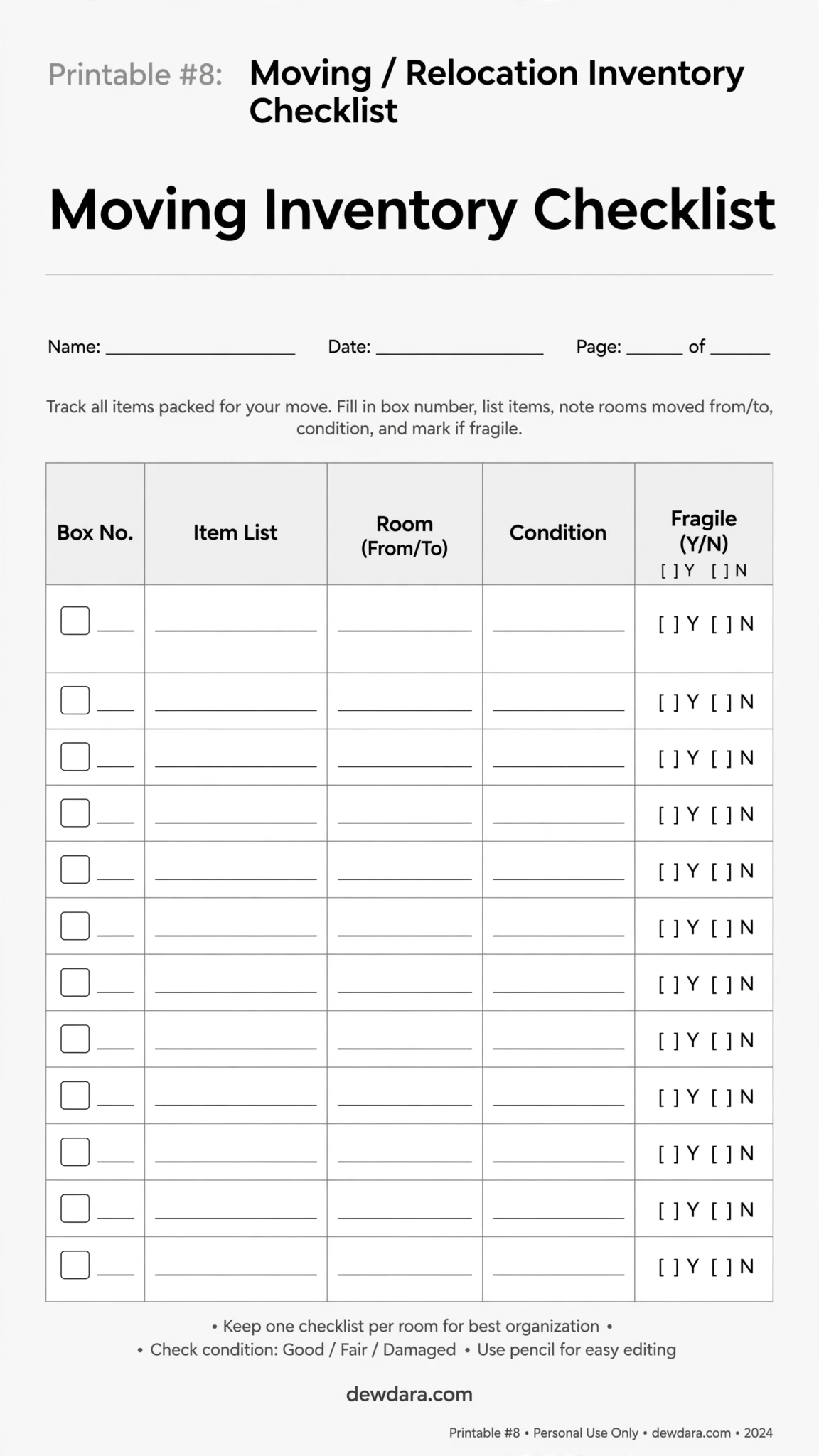
What It Is: A logistics-focused sheet with Box Number, Item List, Room From/To, Condition, and Fragile checkbox.
Why You Need It: It eliminates lost boxes, makes unpacking systematic, and provides damage documentation for moving company claims.
How To Use It: Number every box with a thick marker that matches this sheet. Use one sheet per room you are packing FROM to stay organized.
Pro Tip: Use color dot stickers — same color for same “To Room” — so movers know where to place boxes without reading.
09. Storage & Seasonal Inventory
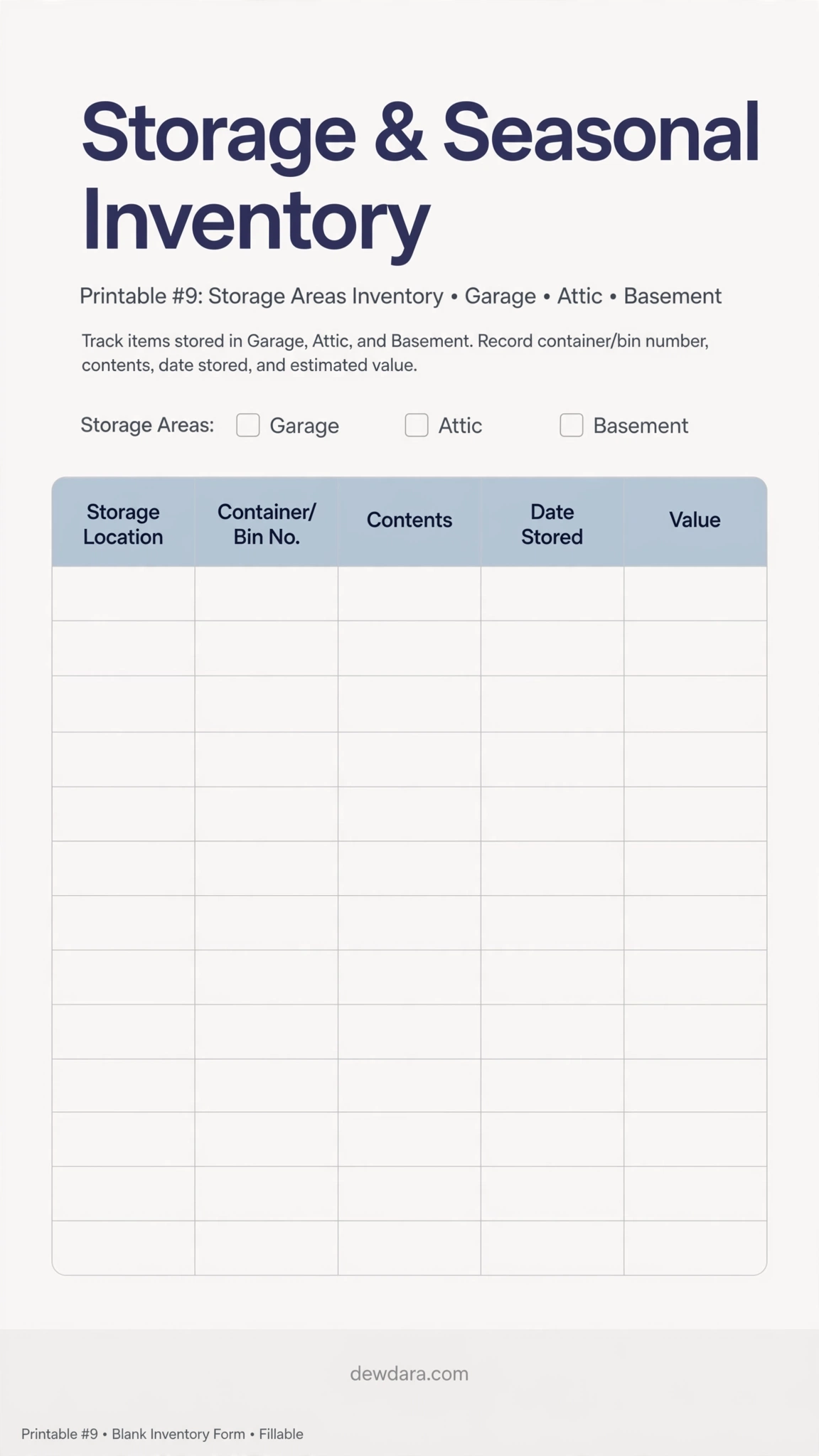
What It Is: The final puzzle piece for attics, garages, basements, and storage units. Tracks Storage Location, Bin/Container Number, Contents, Date Stored, and Value.
Why You Need It: These areas are where items are most forgotten and damaged. Knowing what’s in “Bin #12 – Garage Top Shelf” without opening it saves hours.
How To Use It: Label every bin with a number that matches this sheet. List contents broadly but specifically — “Winter Coats (3) + Snow Boots”.
Pro Tip: Place a copy of this sheet ON the storage room door and one in your main binder.
Conclusion
A home inventory isn’t about expecting the worst — it’s about protecting the life you’ve built. With these 9 blank printables from dewdara.com, you can document your entire home in a single weekend. Start with the Master List, then work through one category each evening. Once complete, store one copy at home and one digitally in secure cloud storage.
Your future self will thank you for the clarity, organization, and peace of mind these simple sheets provide. Print your set today and begin.