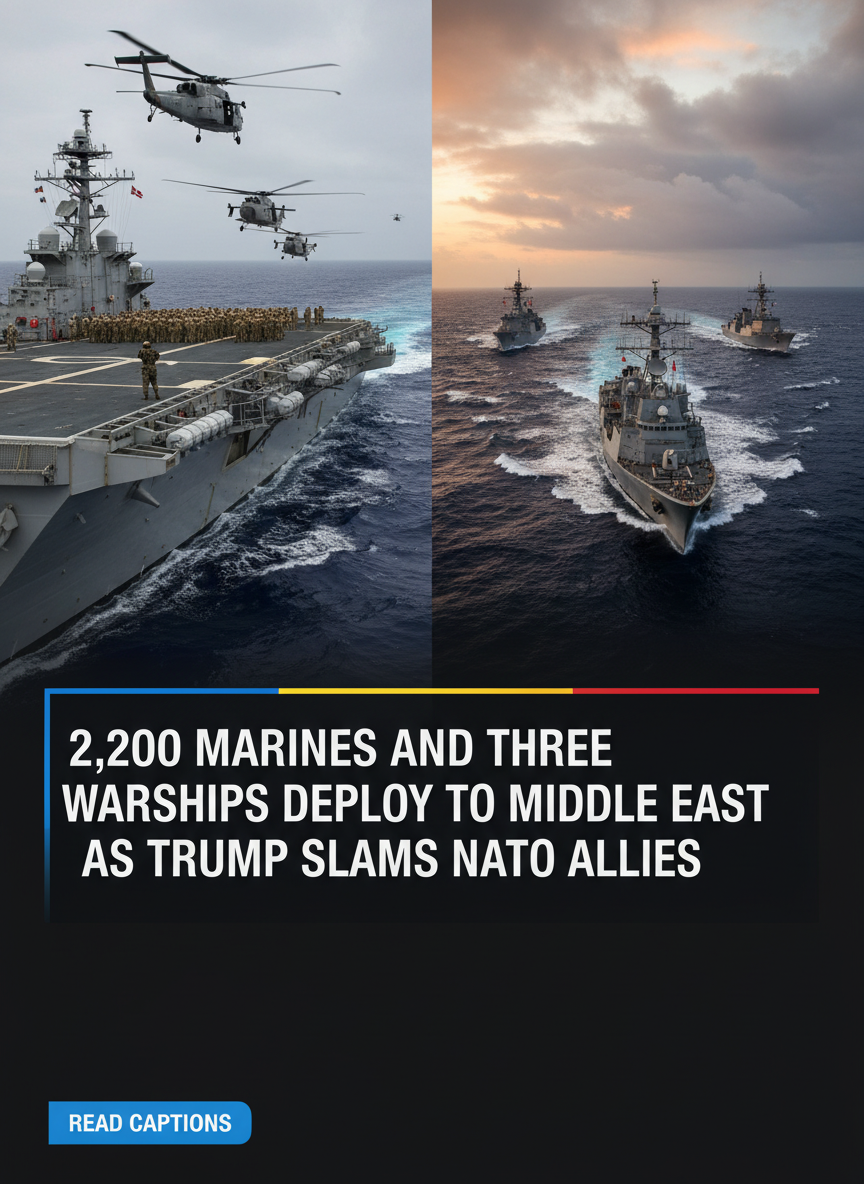
Trump Calls NATO Allies “Cowards” as U.S. Dispatches More Marines and Warships to Middle East
WASHINGTON D.C. — As the conflict with Iran nears its third week of intensive military engagement, the United States is significantly bolstering its presence in the region. Amidst this military buildup, domestic political tensions have reached a boiling point, with former President Donald Trump leveling harsh criticisms against NATO allies, labeling them “cowards” for their perceived lack of support in the escalating crisis.
A Massive Naval and Ground Reinforcement
U.S. defense officials confirmed on Friday that approximately 2,200 additional U.S. Marines and three more warships are currently en route to the Middle East. This deployment is intended to provide “enhanced capabilities” and ensure the security of international shipping lanes, particularly the Strait of Hormuz, which remains a critical artery for the world’s oil supply.
The arrival of these forces will bring the total U.S. footprint in the region to its highest level since the start of the hostilities. The Pentagon stated that the move is a precautionary measure designed to deter further Iranian aggression and to protect American interests and personnel stationed in the area. However, critics argue that the increased military hardware may inadvertently escalate a situation that is already on the brink of total war.
Trump’s Rhetoric Fractures Alliances
While the Pentagon manages the logistics of war, the political landscape is shifting. In a series of recent statements, Donald Trump took aim at America’s traditional partners. Expressing frustration over the lack of direct military or financial contributions from European nations, Trump called NATO allies “cowards” who “hide behind American might while refusing to lift a finger.”
These comments have sent ripples through diplomatic circles. Analysts suggest that such rhetoric could undermine the unified front that the West has attempted to project against Tehran. “Calling allies cowards at a moment when we need a cohesive international coalition is risky,” said one veteran diplomat. “It plays directly into the hands of those who wish to see the Western alliance fractured.”
Economic Aftershocks: Oil and Gas Prices Surge
The looming threat of a protracted war in the Strait of Hormuz has sent shockwaves through global energy markets. With nearly 20% of the world’s petroleum passing through the narrow waterway, the military buildup has caused oil prices to spike. Consumers are already feeling the pinch at the gas pump, where prices have risen significantly over the past 21 days.
Economists warn that if the conflict leads to a prolonged closure of the Strait, the global economy could face a recessionary shock. For the Biden administration, the dual challenge of managing a military conflict while mitigating domestic inflation is becoming an increasingly difficult balancing act.
Netanyahu and the Regional Strategy
In Israel, Prime Minister Benjamin Netanyahu remains in close contact with U.S. leadership. As the “Iran war” reaches the three-week mark, Israeli forces have remained on high alert, coordinating with U.S. intelligence to monitor Iranian proxies in Lebanon and Yemen. The synergy between the U.S. and Israel remains strong, but the inclusion of more American “boots on the ground” suggests that the conflict may be expanding beyond a localized exchange of strikes.
Conclusion: A Region on the Edge
With 2,200 more Marines heading into the theater and political rhetoric heating up at home, the path toward de-escalation appears increasingly narrow. The coming days will be pivotal as the international community watches to see if the arrival of the three additional warships acts as a deterrent or a catalyst for further violence. For now, the world remains on edge, caught between the reality of a growing war and the volatile politics of the leaders tasked with managing it.