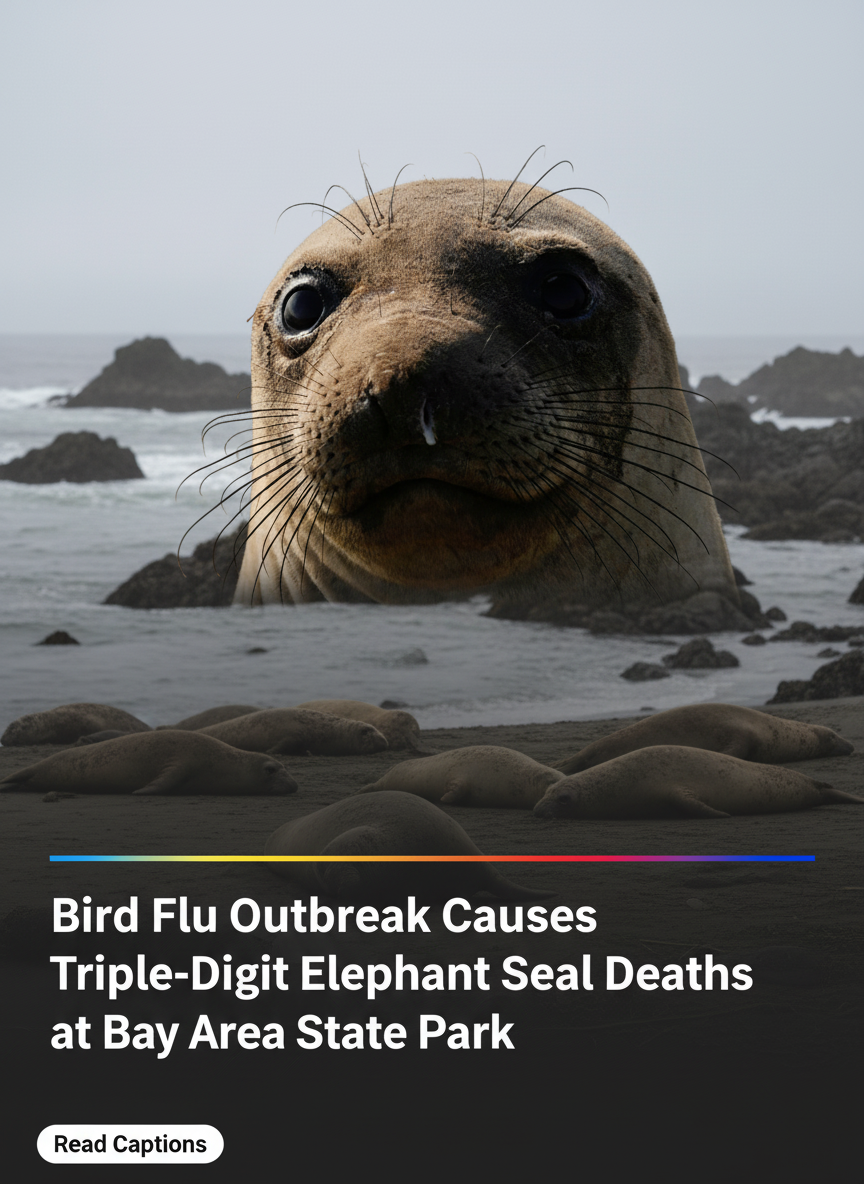
Massive Avian Flu Outbreak Claims Over 100 Elephant Seals Along San Mateo Coast
PESCADERO, Calif. — A devastating biological crisis is unfolding along the rugged coastline of the San Francisco Bay Area. Scientists confirmed this week that the death toll among northern elephant seals at Año Nuevo State Park has officially climbed into the triple digits, a direct result of a concentrated outbreak of Highly Pathogenic Avian Influenza (HPAI) H5N1.
A Grim Milestone at Año Nuevo
As of Friday, researchers monitoring the southern San Mateo County coast reported that approximately 100 elephant seals have perished in recent weeks. The outbreak is centered at Año Nuevo State Park, a world-renowned breeding ground and ecological sanctuary. What began as a handful of isolated cases has rapidly escalated into a significant mortality event, leaving the shoreline dotted with the carcasses of these massive marine mammals.
The culprit, H5N1, is a virulent strain of bird flu that has decimated avian populations globally over the last two years. However, its jump to marine mammals in Northern California represents a troubling shift in the virus’s local impact.
Scientific Monitoring and the Leap Between Species
Biologists and researchers from UC Santa Cruz and California State Parks have been working tirelessly to track the spread of the virus. While avian influenza typically spreads through wild birds, the concentration of deaths among elephant seals suggests a high level of environmental contamination or potential mammal-to-mammal transmission—a prospect that scientists are investigating with urgency.
“The sheer number of fatalities in such a short window is alarming,” noted one researcher familiar with the site. The seals, which congregate in high densities on the beaches to molt and breed, are particularly vulnerable to respiratory pathogens. The proximity of the animals allows the virus to move through the colony with devastating efficiency.
A Global Pattern Hits Home
The tragedy in San Mateo County is not an isolated incident but part of a harrowing global trend. Over the past year, H5N1 has been responsible for the deaths of thousands of sea lions in South America and hundreds of harbor seals in New England. The arrival of this deadly strain in the Bay Area’s elephant seal population marks a significant escalation for California’s coastal wildlife health.
While the Northern elephant seal population has made a miraculous recovery over the last century from the brink of extinction, an outbreak of this magnitude poses a new, modern threat to their long-term stability.
Public Health and Safety Warnings
In response to the outbreak, park officials and health department experts are urging the public to exercise extreme caution. Though the risk of H5N1 transmission to humans remains low, it is not non-existent. Officials have issued the following guidelines for visitors to the San Mateo coast:
- Maintain Distance: Do not approach live or dead seals. Keep a distance of at least 100 feet.
- Leash Pets: Keep dogs away from carcasses and off-limit beach areas to prevent the virus from spreading to domestic animals.
- Report Sightings: Do not attempt to move or touch a dead animal. Instead, report the location to park rangers or the Marine Mammal Center.
Looking Ahead: The Fight for Conservation
The situation at Año Nuevo remains fluid. Scientists are continuing to perform necropsies and environmental sampling to determine if the virus is mutating or if specific environmental factors are exacerbating the die-off. As the breeding season approaches, the primary goal for conservationists is to minimize human interference and allow the remaining population the best possible chance at survival.
For now, the quiet beaches of Pescadero serve as a stark reminder of the volatility of nature and the ongoing challenges posed by a rapidly changing global health landscape.