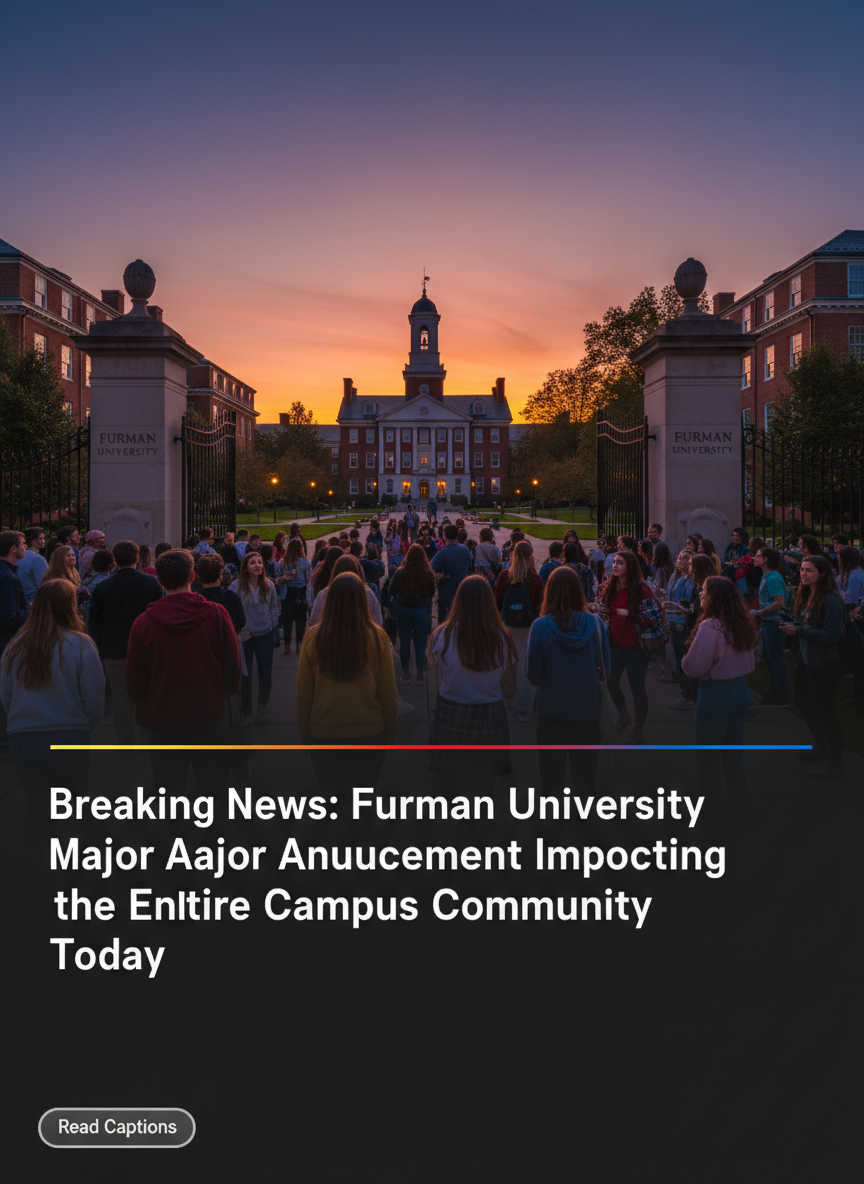
Furman University Enters Bicentennial Year at Peak of National Innovation Rankings
GREENVILLE, S.C. — As Furman University officially enters its bicentennial year in 2026, the institution finds itself at a historic crossroads of tradition and transformation. Long recognized as South Carolina’s oldest private university, Furman has recently solidified its status as a national leader in higher education innovation, clinching the 11th spot for “Most Innovative Schools” in the latest U.S. News & World Report rankings for 2026.
The university is currently operating under its “FUture Focused” strategic plan, a roadmap extending through 2029 that emphasizes AI literacy, community impact, and the holistic development of its 2,300 students. Under the leadership of President Elizabeth Davis, who became the university’s first female president in 2014, Furman has pivoted from a traditional liberal arts model to a high-impact “engaged learning” powerhouse known as The Furman Advantage.
The ‘Furman Advantage’ and the 2026 Bicentennial Pivot
The centerpiece of Furman’s current success is The Furman Advantage, a four-year pathway launched in 2016 that guarantees every student access to research, internships, and study-away opportunities. In 2024, the university’s signature “Pathways Program”—a mandatory two-year advising curriculum—was honored with the global Advising Innovation Award from NACADA. This program ensures that first- and second-year students are matched with faculty mentors to align their academic interests with career goals early on.
Reflecting its forward-looking stance, the university recently established an AI Strategy Task Force (AISTF). Unlike many institutions that have viewed generative AI with skepticism, Furman has integrated AI literacy into its core curriculum, treating it as a foundational skill for the 21st-century workforce. This integration is further bolstered by industry partnerships with global brands like BMW, allowing students to conduct corporate-level research at the company’s nearby facilities in the Upstate region.
Campus Transformation and Student Well-being
Physical infrastructure has kept pace with academic growth. As of March 2026, Furman has completed a multi-year renovation of its first-year housing, including the opening of Blackwell Hall and Lakeview Hall. These facilities are designed to foster “community-centered learning,” featuring open spaces that encourage social interaction and collaborative study.
Additionally, the university recently dedicated the Trone Center for Mental Fitness, funded by a significant gift from alumnus and former U.S. Representative David Trone ’77 and his wife, June. The center represents a major investment in student mental health, providing expanded resources that have become a national model for private liberal arts colleges. This commitment to well-being is backed by longitudinal data from Gallup, which shows that Furman alumni are nearly three times more likely to thrive in their professional and personal lives compared to graduates from other institutions.
Paladin Pride: Athletics and Alumni Achievements
In the sports arena, the Furman Paladins are currently making headlines. The Men’s Basketball team is fresh off a Southern Conference (SoCon) victory and is preparing for a high-stakes first-round NCAA Tournament matchup against UConn in Philadelphia. The university’s football program also remains a dominant force in the FCS, having advanced to the quarterfinals in recent seasons and currently kicking off its 2026 spring practice under head coach Clay Hendrix.
The university’s impact is also being felt at the highest levels of national security. In a historic milestone for the alumni network, General Joshua Rudd ’93 was recently confirmed by the U.S. Senate as the leader of U.S. Cyber Command and the National Security Agency (NSA). Rudd is the first four-star general in the university’s history, joining a prestigious list of alumni that includes Nobel Laureate Charles Townes, former Secretary of Education Richard Riley, and Grammy-winning artist Amy Grant.
Background and Historical Context
Founded in 1826 as the Furman Academy and Theological Institution, the school was originally located in Edgefield, South Carolina, before moving to its current 750-acre suburban campus in Greenville in the 1950s. Named after Baptist pastor Richard Furman, the university maintained a formal affiliation with the South Carolina Baptist Convention for over 160 years.
A pivotal moment in Furman’s history occurred in 1992 when it officially became a secular institution, a move that allowed for greater academic freedom and a broader donor base, including substantial support from The Duke Endowment. Despite this shift, the university retains its original motto, Christo et Doctrinae (“For Christ and Learning”), as a nod to its foundational values.
Conclusion
As Furman University celebrates its 200th anniversary, it stands as a testament to the enduring value of the liberal arts, reimagined for a modern era. With its top-tier rankings in innovation and undergraduate teaching, a renovated campus, and a strategic vision that embraces technology and community health, Furman is positioned to lead South Carolina’s educational landscape well into its third century.