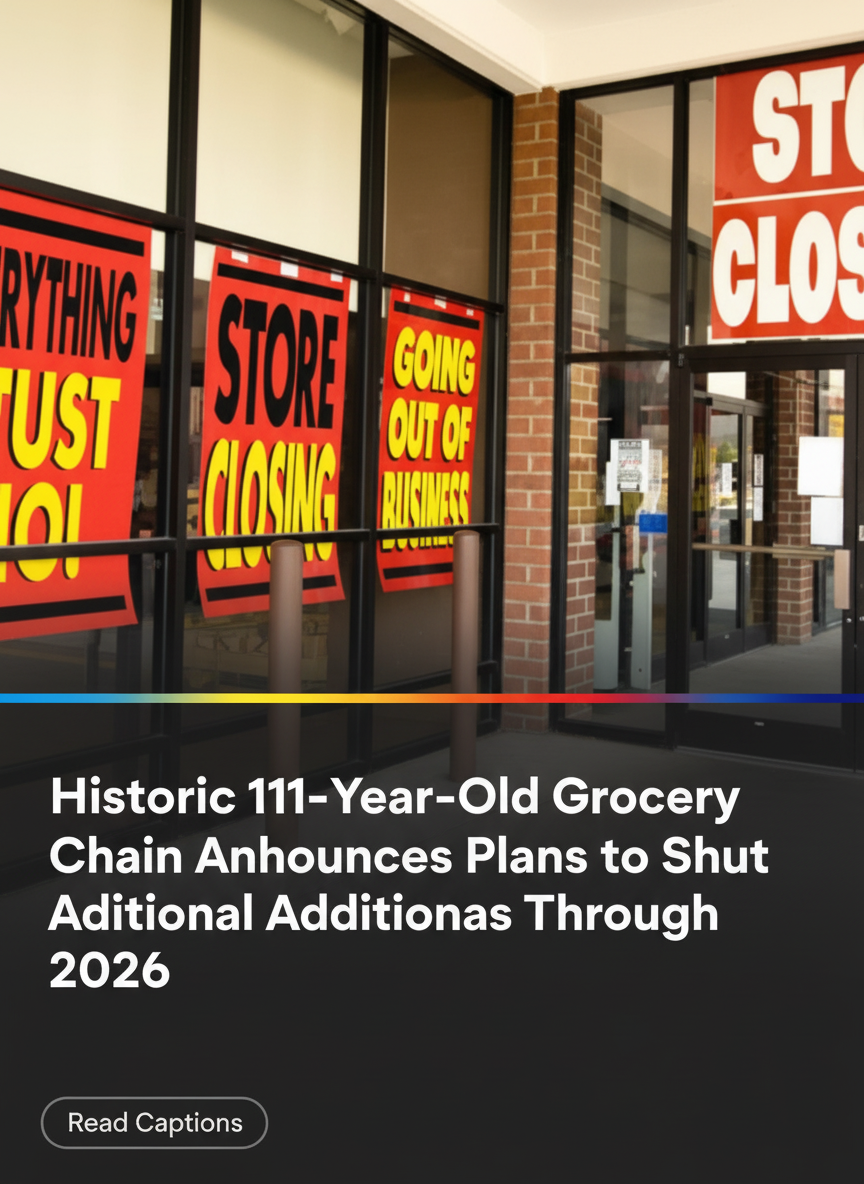
End of an Era: 111-Year-Old Grocery Giant Albertsons Prepares for More Store Closures Through 2026
The American retail landscape is bracing for a significant shift as Albertsons, the storied grocery chain with a 111-year history, moves forward with plans that will see more store closures and ownership transfers through 2026. The move comes as part of the company’s ongoing and embattled effort to merge with fellow industry titan Kroger, a deal that continues to face intense regulatory scrutiny.
A Legacy Under Pressure
Founded in 1915, Albertsons has survived world wars, economic depressions, and the rise of digital commerce. However, the modern grocery wars—fueled by the dominance of Walmart and the expansion of Amazon—have pushed the company toward a massive $24.6 billion merger with Kroger. While the merger is intended to create a more competitive entity, it necessitates the offloading of hundreds of locations to satisfy antitrust concerns.
The Divestiture Strategy: What 2026 Holds
The latest updates regarding the merger indicate that the timeline for store transitions will extend well into 2026. To appease the Federal Trade Commission (FTC), Kroger and Albertsons have agreed to sell 579 stores to C&S Wholesale Grocers. While many of these locations will remain open under new branding, others face the risk of permanent closure if they are deemed redundant or underperforming during the transition period.
For many local communities, these “closures” signify the loss of a neighborhood staple. Safeway, a major subsidiary of Albertsons, is expected to see a significant portion of these changes, particularly in Western states where the brand has been a household name for over a century.
The Regulatory Tug-of-War
The road to 2026 remains rocky. The FTC, along with several state attorneys general, has filed lawsuits to block the merger, arguing that the consolidation would lead to higher grocery prices and lower wages for workers. The government remains skeptical that C&S Wholesale Grocers—primarily a supply chain company—can effectively manage hundreds of retail fronts, citing the failed divestiture of Haggen during the 2015 Albertsons-Safeway merger as a cautionary tale.
Impact on Employees and Shoppers
As the 2026 deadline approaches, labor unions have voiced growing concerns regarding job security. While Kroger has pledged that no frontline workers will lose their jobs and no stores will close as a direct result of the merger, industry analysts remain wary. Historically, large-scale retail consolidations often lead to “store optimizations” that result in shuttered windows and reduced competition in rural areas.
For shoppers, the shift represents a bittersweet goodbye to brands they have known for generations. Whether the 111-year-old chain can maintain its identity under the Kroger umbrella or if it will be absorbed into a new corporate structure remains the primary question for the next two years.
Conclusion: A Shifting Horizon
The narrative of Albertsons is far from over, but the next 24 months will undoubtedly be some of the most transformative in its long history. As 2026 looms, stakeholders from the boardroom to the checkout line are watching closely. Whether this leads to a revitalized grocery powerhouse or a diminished retail presence, the landscape of American food shopping is poised for a permanent change.