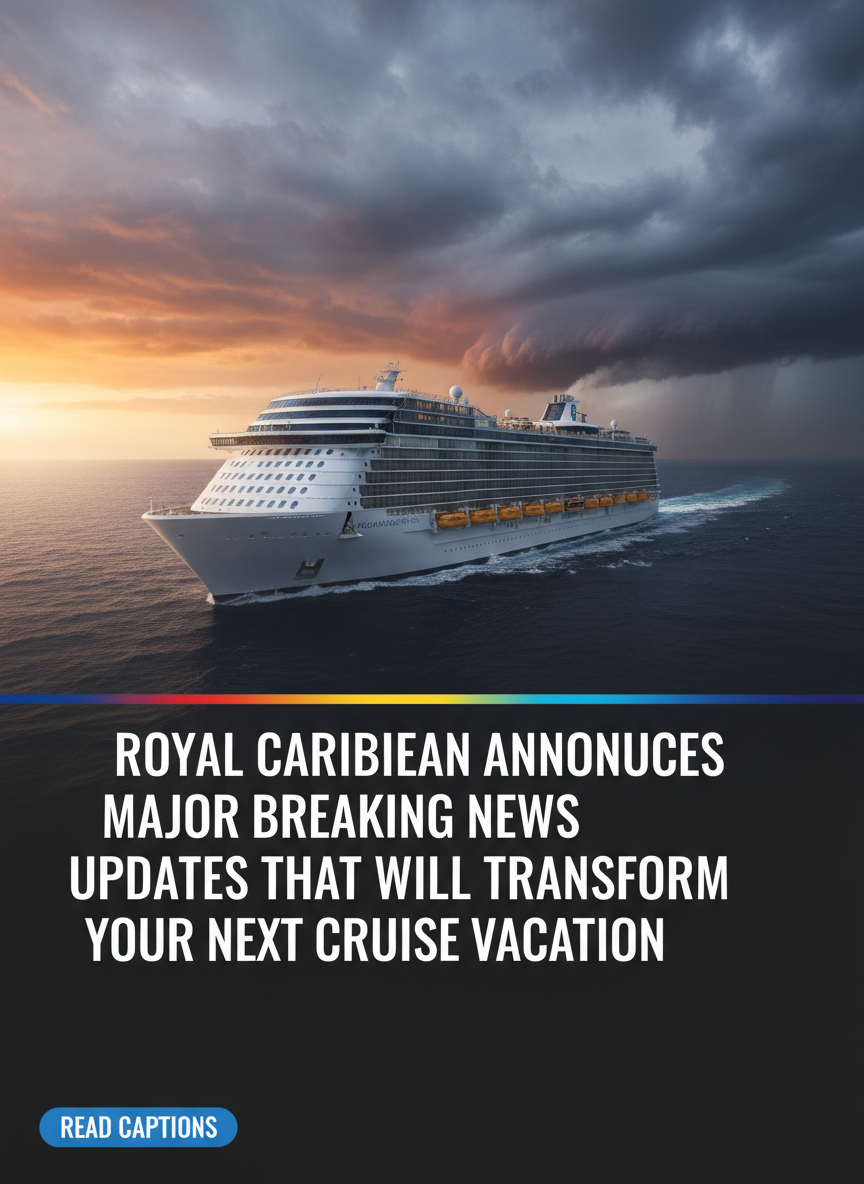
Charting New Waters: Royal Caribbean Group Sets Industry Records Amidst Global Expansion
MIAMI, FL – Royal Caribbean Group is currently navigating a period of unprecedented growth, cementing its position as the dominant force in the global cruise industry. Following the record-breaking launch of Icon of the Seas in January 2024 and the announcement of continued fleet expansion through 2028, the company is reporting historic financial returns that signal a full-throttle recovery and evolution of the maritime vacation sector.
The New Era of “Mega-Ships” and Record Earnings
The primary driver of the company’s current momentum is the successful debut of the Icon of the Seas, the world’s largest cruise ship. Weighing in at 250,800 gross tons and measuring 1,197 feet in length, the vessel can accommodate up to 7,600 guests. According to Michael Bayley, President and CEO of Royal Caribbean International, the ship represents the single most successful product launch in the company’s 50-plus-year history.
The financial impact of these “mega-ships” is reflected in the company’s latest fiscal reports. In early 2024, Royal Caribbean Group—the parent company of Royal Caribbean International, Celebrity Cruises, and Silversea—raised its full-year earnings guidance following a surge in bookings. CEO Jason Liberty noted that the company is seeing “exceptionally strong” demand, with the “Trifecta Program” (a multi-year financial goal to increase adjusted EBITDA per APCD and Return on Invested Capital) ahead of its original schedule.
Strategic Details: Private Destinations and Sustainability
Beyond the ships themselves, Royal Caribbean is shifting its strategy to compete directly with land-based vacation destinations like Orlando’s theme parks. A cornerstone of this strategy is “Perfect Day at CocoCay,” the company’s private island in the Bahamas. In 2024, the company opened “Hideaway Beach,” an adults-only expansion that increased the island’s capacity to 13,000 daily visitors.
Contextually, the company is also addressing the increasing pressure for environmental maritime reform. The Icon of the Seas is the company’s first ship powered by liquefied natural gas (LNG), a move intended to reduce carbon emissions. Furthermore, the company has committed to “Destination Net Zero,” a strategy to achieve net-zero emissions by 2050, which includes testing solid oxide fuel cell technology and waste-to-energy systems on newer vessels.
Background: From Three Ships to a Global Empire
The current scale of Royal Caribbean is a far cry from its humble beginnings. Founded in 1968 by three Norwegian shipping companies (Anders Wilhelmsen & Co., I.M. Skaugen & Co., and Gotaas Larsen), the line debuted its first ship, Song of Norway, in 1970. The company revolutionized the industry in the late 1980s and 90s by introducing features like rock-climbing walls, ice skating rinks, and sprawling atriums.
A pivotal moment occurred in 1997 when Royal Caribbean Cruise Line merged with Celebrity Cruises, leading to the formation of Royal Caribbean Cruises Ltd. (now Royal Caribbean Group). This expansion allowed the company to diversify its offerings, ranging from contemporary family cruising to ultra-luxury expeditions. The 2009 launch of the Oasis Class ships changed the industry’s architectural landscape, introducing the “neighborhood” concept at sea.
Conclusion: The Horizon Ahead
Looking forward, Royal Caribbean shows no signs of decelerating. With Star of the Seas scheduled for a 2025 debut and a seventh Oasis-class ship currently on order for 2028, the company is doubling down on the belief that “bigger is better.” However, the challenge remains in balancing this massive growth with port congestion concerns and the global push for more sustainable tourism.
As of 2024, the company’s stock performance and booking volumes suggest that the cruise industry has not only moved past the challenges of the 2020 global shutdown but has entered a new “Golden Age” of maritime travel. For Royal Caribbean, the focus remains clear: transforming the cruise ship from a mode of transportation into a primary destination itself.