Lost History Uncovered: Newly Discovered Photos Reveal Neil Armstrong’s Miraculous Survival After Gemini 8 Emergency
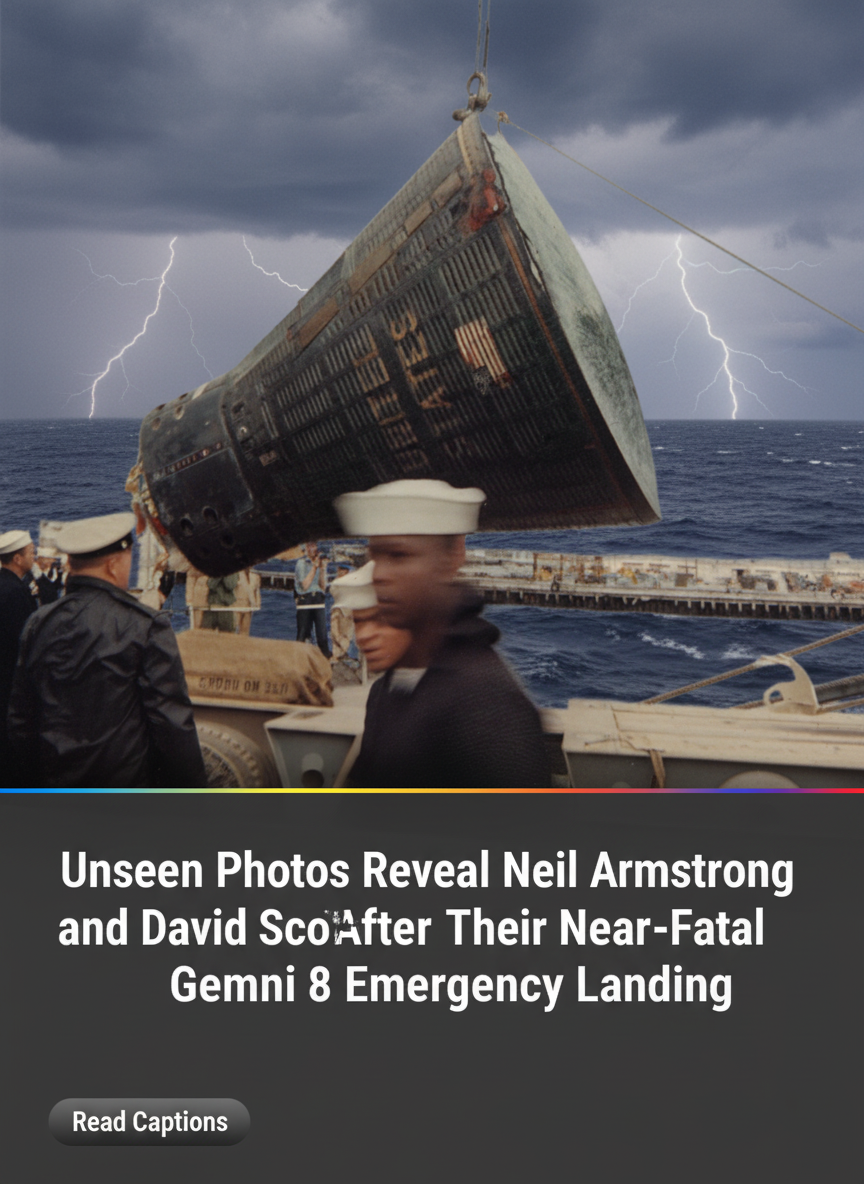
March 22, 2026 — Sixty years after one of the most harrowing moments in the history of space exploration, the public is getting a fresh, intimate look at the men who survived it. A collection of previously unreleased photographs has surfaced, capturing Neil Armstrong and David Scott in the immediate aftermath of their near-fatal Gemini 8 mission.
The images, taken by Ron McQueeney—a U.S. Army veteran and professional photographer who served as an escort for the astronauts—provide a rare, candid glimpse into the physical and emotional toll of a mission that nearly ended in disaster. For decades, these negatives remained tucked away, but their discovery offers a new perspective on the cool-headedness that would eventually define Armstrong’s legacy as the first man on the moon.
The Night Space Nearly Claimed its Pioneers
On March 16, 1966, Gemini 8 was intended to be a milestone for NASA, marking the first-ever docking of two spacecraft in orbit. While Armstrong and Scott successfully docked with the Agena target vehicle, a mechanical failure quickly turned the triumph into a fight for survival. An Orbital Attitude and Maneuvering System (OAMS) thruster became stuck in the “on” position, sending the spacecraft into a violent, accelerating spin.
Tumbling at a rate of one revolution per second, the crew was on the verge of blacking out. In a display of legendary piloting skill, Armstrong made the split-second decision to shut down the main thrusters and use the Reentry Control System (RCS) to stabilize the craft. While the move saved their lives, mission protocol dictated that using the RCS required an immediate emergency landing. The crew splashed down in the Pacific Ocean, hundreds of miles from their intended recovery zone.
A New Lens on an Old Hero
The newly discovered photographs by McQueeney capture the moments after the USS Leonard F. Mason plucked the exhausted duo from the sea. Unlike the polished, official NASA portraits of the era, these images show the raw reality of the ordeal. Armstrong and Scott appear weary, their faces etched with the strain of a high-stakes survival situation that lasted for hours.
McQueeney, who had unprecedented access to the astronauts during their transport and initial debriefing, managed to capture angles that were never seen by the public. One particularly striking image shows Armstrong leaning against a bulkhead, the adrenaline of the rescue seemingly giving way to the gravity of what had just occurred. Experts suggest these photos are invaluable for how they humanize the “Ice Commander,” showing a rare moment of vulnerability before he became a global icon.
The Legacy of Gemini 8
Space historians argue that the Gemini 8 emergency was the ultimate test for Armstrong. His ability to remain calm under extreme pressure was a primary reason NASA flight director Chris Kraft eventually tapped him to command Apollo 11. These photos serve as a visual bridge between the experimental dangers of the Gemini program and the eventual success of the lunar landings.
“These aren’t just pictures; they are a documentation of human resilience,” said a spokesperson for the Smithsonian National Air and Space Museum. “Seeing Armstrong and Scott in this light reminds us that the path to the moon was paved with moments where total failure was just seconds away.”
Conclusion
As NASA looks toward the future with the Artemis missions and the return to the lunar surface, the discovery of Ron McQueeney’s photography serves as a timely reminder of the risks inherent in exploration. These images do more than just fill a gap in the historical record; they honor the courage of those who stepped into the unknown, facing the void of space and, against all odds, coming home.
The collection is expected to be archived and eventually put on public display, ensuring that this dramatic chapter of the Space Race is never forgotten.