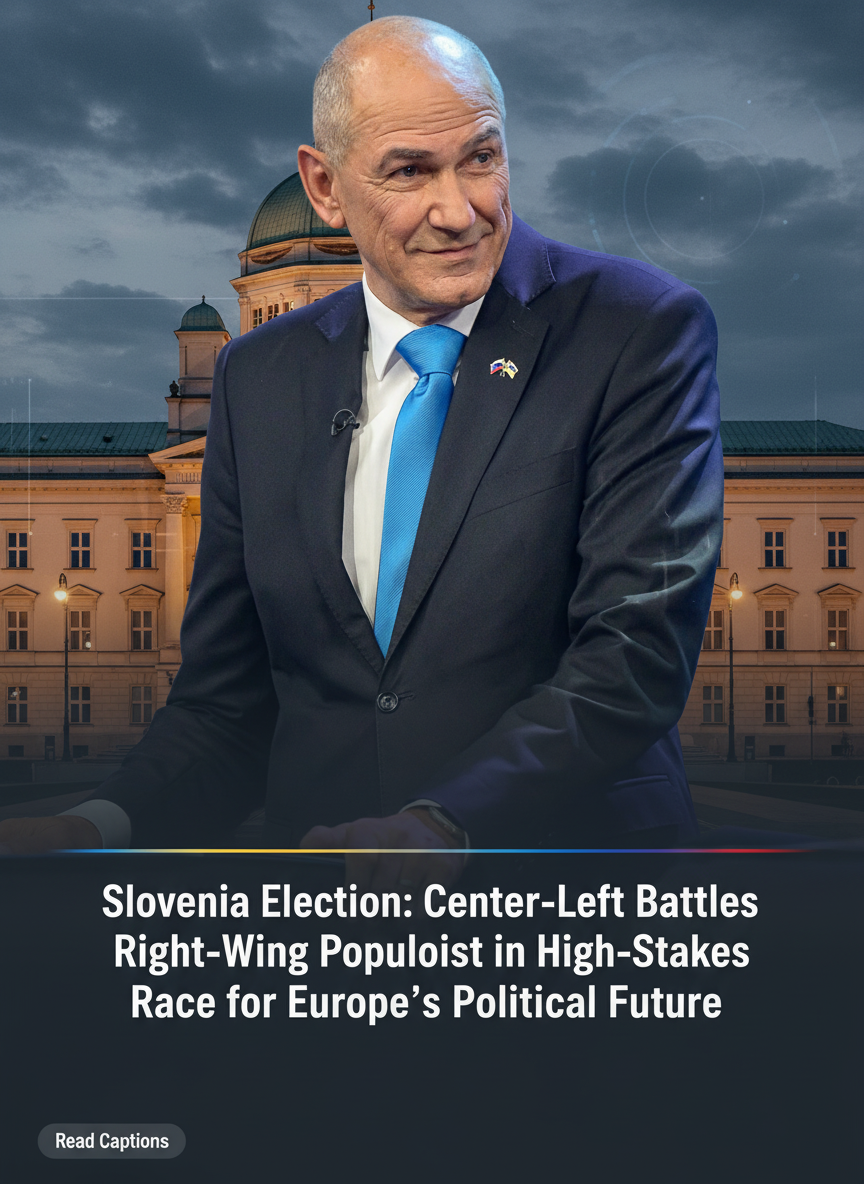
Slovenia at the Crossroads: High-Stakes Election Becomes a Litmus Test for European Populism
By Global News Dispatch | Published March 22, 2026
LJUBLJANA, Slovenia — As voters across Slovenia head to the polls this Sunday, the small Alpine nation finds itself at the center of a geopolitical storm. What began as a standard parliamentary contest has transformed into a high-stakes referendum on the future of liberal democracy in Central Europe, pitting a fragile center-left coalition against a surging right-wing populist movement.
A Nation Divided
The incumbent government, led by a coalition of center-left technocrats and environmentalists, is fighting for its political survival. After four years of navigating the complexities of post-pandemic recovery and the energy shifts necessitated by regional instability, the administration is facing a stiff challenge from the opposition, led by a firebrand populist figure whose campaign has echoed the “nation-first” rhetoric seen elsewhere in the European Union.
While the government has campaigned on a platform of continued integration with the European mainstream and green transition, the opposition has tapped into deep-seated anxieties regarding inflation, migration, and national identity. Polls leading up to the weekend showed the two sides in a statistical dead heat, leaving the country’s undecided voters as the ultimate kingmakers.
The Shadow of the Smear Campaign
The final days of the race have been marred by what political analysts are calling one of the most aggressive smear campaigns in Slovenia’s modern history. In the 72 hours leading up to the vote, the right-wing opposition has been accused of deploying a barrage of misinformation and personal attacks aimed at the Prime Minister’s inner circle.
The allegations include the use of AI-generated content to misrepresent government policies and the sudden surfacing of unverified financial documents—tactics that the incumbent government has denounced as a “coordinated assault on the democratic process.” The opposition, however, has dismissed these claims as a desperate attempt by a “failing elite” to distract from their policy shortcomings.
The Brussels Perspective
The outcome in Ljubljana is being watched with bated breath in Brussels. Since Slovenia often serves as a political bridge between Western Europe and the Western Balkans, a shift toward illiberalism could disrupt the European Union’s fragile consensus on issues ranging from rule-of-law sanctions to military aid for regional allies.
“Slovenia is the canary in the coal mine,” said Elena Rossi, a senior fellow at the European Center for Political Strategy. “If a populist comeback succeeds here through the use of high-tech disinformation, it provides a blueprint for similar movements facing elections in larger member states later this year. This is about much more than just the leadership of a nation of two million people.”
Voters Hold the Key
On the streets of the capital, the tension is palpable. Long lines formed at polling stations early Sunday morning, with turnout expected to reach record highs. For many voters, the choice is between stability and a radical break from the status quo.
“We are deciding what kind of country we want to be,” said Marko Vidmar, a 34-year-old software engineer after casting his ballot. “Do we stay open and connected to Europe, or do we close ourselves off and follow the path of polarization? The atmosphere feels different this time—heavier.”
Looking Ahead
Preliminary results are expected late Sunday evening, though the narrow margins suggest that official tallies and potential coalition negotiations could drag on for days. Regardless of the winner, the election has already exposed deep structural rifts within Slovenian society that will likely take years to heal.
For Europe, the message from Slovenia will be clear: the battle between traditional liberalism and the new wave of populism is far from over, and the tactics used to win that battle are becoming increasingly sophisticated and volatile.