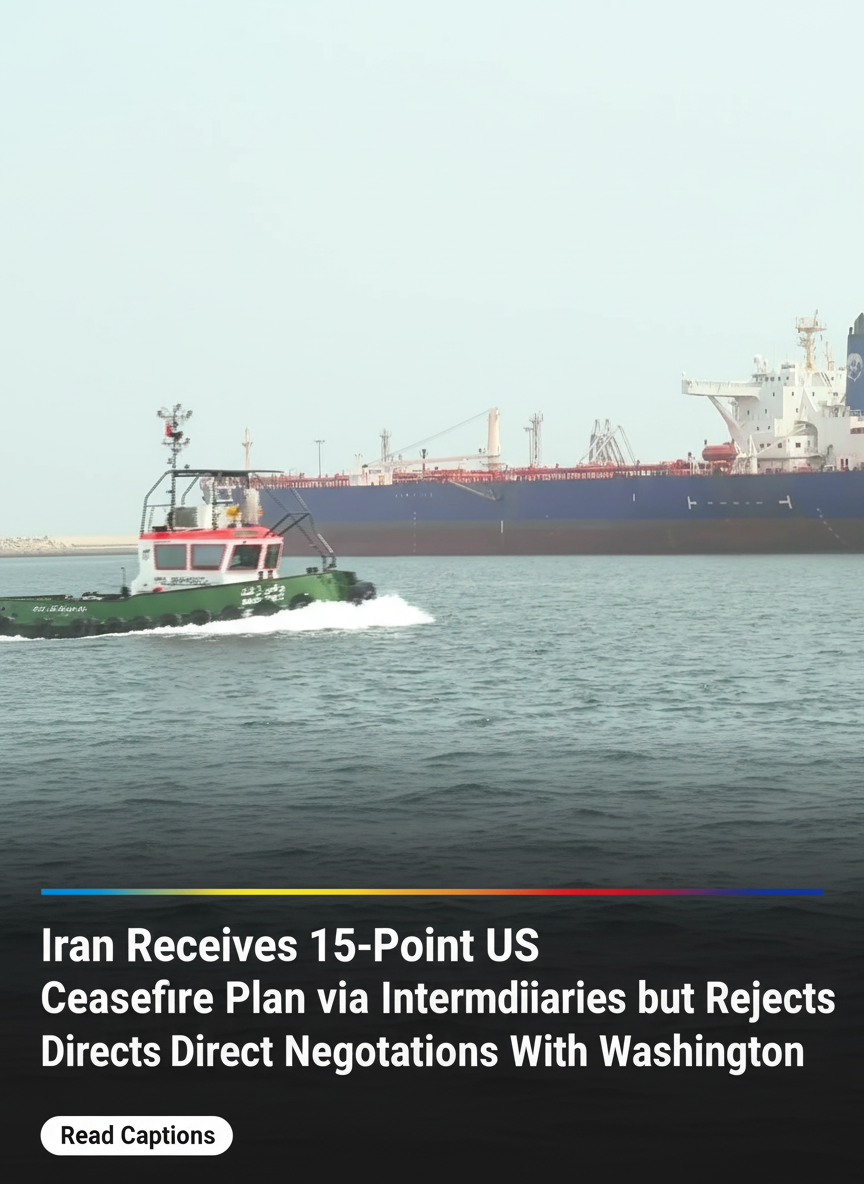
U.S. Proposes 15-Point Ceasefire Plan to End Iran War; Tehran Rejects Direct Talks Amid New Strikes
DUBAI, United Arab Emirates — A major diplomatic push to end the month-long “Iran War” emerged Wednesday as Iran received a comprehensive 15-point ceasefire proposal from the United States. However, the prospects for peace remain dim as Tehran’s military leadership publicly dismissed the idea of negotiations, even as both sides intensified military operations across the Middle East.
The 15-Point Peace Initiative
According to officials in Islamabad speaking on condition of anonymity, the proposal was delivered to Tehran through Pakistani intermediaries. The 15-point plan reportedly outlines a framework for de-escalation that includes significant sanctions relief, civilian nuclear cooperation, and a rollback of Iran’s nuclear capabilities. In exchange, the plan demands strict monitoring by the International Atomic Energy Agency (IAEA), new limits on Iran’s missile program, and guaranteed safe passage for international shipping through the strategic Strait of Hormuz.
Mediators from Egypt and Pakistan are reportedly pushing for a high-level, in-person meeting between U.S. and Iranian representatives as early as Friday in Pakistan. However, significant hurdles remain, including the safety of Iranian officials following a series of high-profile Israeli airstrikes that have targeted the top levels of the Iranian government.
Tehran’s Defiant Rejection
Despite the diplomatic outreach, Iran’s military establishment appears unmoved. In a televised statement from the Khatam Al-Anbiya Central Headquarters, Lt. Col. Ebrahim Zolfaghari scoffed at the U.S. overture. “Our first and last word has been the same from day one: Someone like us will never come to terms with someone like you,” Zolfaghari said. “Not now, not ever.”
Iranian Foreign Ministry spokesperson Esmail Baghaei echoed this sentiment, citing a “catastrophic experience” with previous U.S. diplomacy. While Baghaei confirmed contact with regional diplomats in Pakistan, he maintained that there are currently “no talks or negotiations between Iran and the United States.”
Escalation on the Ground and at Sea
The diplomatic maneuvering has not slowed the pace of combat. Early Wednesday, Israel launched wide-scale strikes targeting government infrastructure in Iran, with reports of explosions in the city of Qazvin. Simultaneously, Iranian-backed forces continued their assault on regional targets. A drone strike on Kuwait International Airport reportedly ignited a massive fire at a fuel tank, sending plumes of black smoke over the city.
In the Persian Gulf, the Saudi Defense Ministry reported intercepting at least eight drones in the Eastern Province, a critical hub for global energy production. The ongoing threat to the Strait of Hormuz—where a fifth of the world’s oil supply passes—has kept global markets on edge. While Brent crude oil prices dipped slightly to $100 per barrel on news of the potential ceasefire, they remain nearly 40% higher than at the start of the conflict on February 28.
U.S. Military Buildup Continues
While the White House has not officially commented on the details of the 15-point plan, President Donald Trump stated Tuesday that negotiations are underway. He noted that a team including special envoy Steve Witkoff, Jared Kushner, Secretary of State Marco Rubio, and Vice President JD Vance is actively engaged in the process.
“The other side, I can tell you, they’d like to make a deal,” Trump said. Despite this optimistic tone, the U.S. is simultaneously bolstering its military presence. At least 1,000 paratroopers from the 82nd Airborne Division are being deployed to the region to join 5,000 Marines and thousands of sailors already en route, a move the Pentagon describes as providing “maximum flexibility.”
The Human Toll
The conflict, though only weeks old, has already resulted in a staggering loss of life. Iranian health officials report that their death toll has surpassed 1,500. Israeli strikes in Lebanon have reportedly killed more than 1,000 people and displaced over a million. On the U.S. side, at least 13 military members have been confirmed killed, alongside dozens of civilians across the West Bank and Gulf states.
As the international community looks toward the proposed Friday meeting in Pakistan, the world remains caught between a fragile hope for a diplomatic breakthrough and the reality of a rapidly expanding regional war.