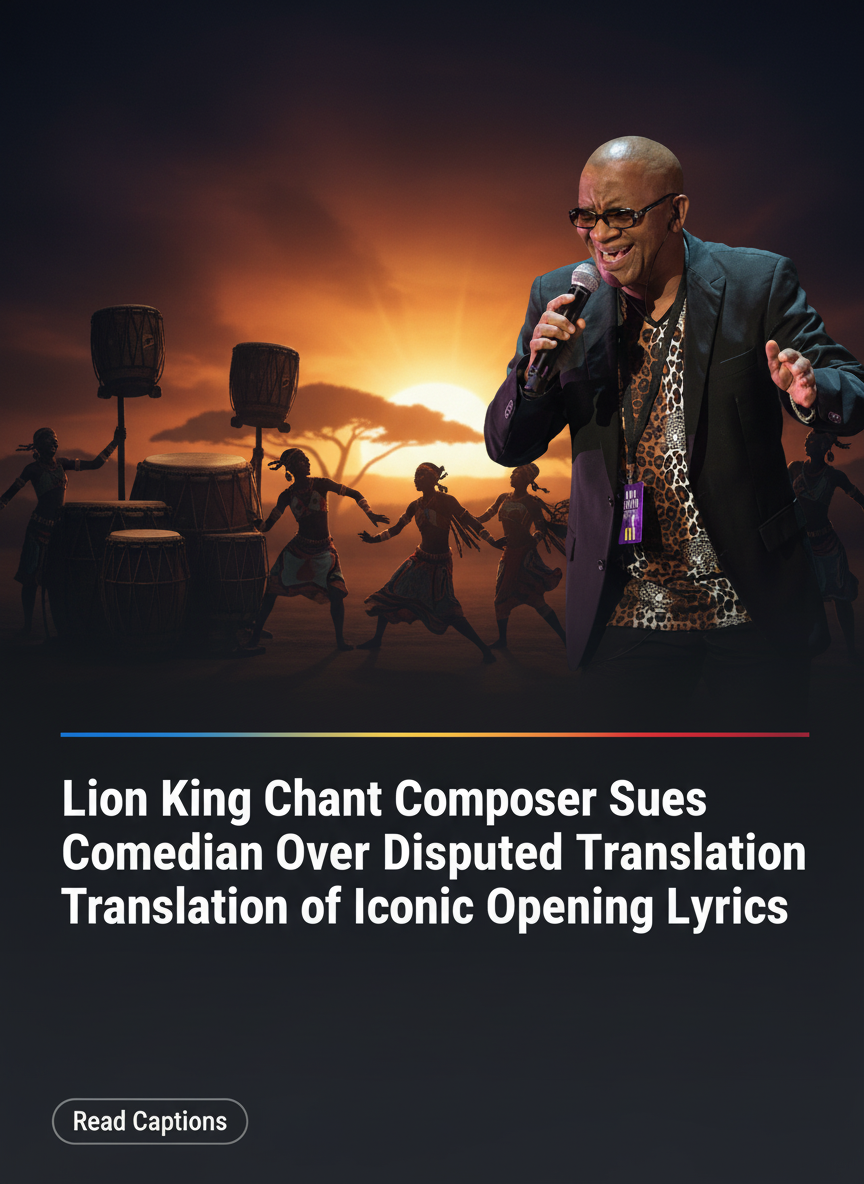
The Lion King’s Roar Reaches the Courtroom: Lebo M Sues Comedian Over ‘Circle of Life’ Translation
For over three decades, the thunderous Zulu chant that opens Disney’s The Lion King has served as one of the most recognizable pieces of music in cinematic history. However, a legal battle is now brewing over the true meaning of those iconic words. Lebohang “Lebo M” Morake, the South African composer and producer behind the chant, has officially filed a lawsuit against stand-up comedian Learnmore Jonasi, alleging that the comic’s humorous interpretation of the lyrics constitutes a disparagement of his work and heritage.
A Dispute Over Cultural Integrity
The legal friction began after Learnmore Jonasi, a rising star in the comedy world known for his appearances on America’s Got Talent, incorporated a bit into his routine regarding the translation of the song “Circle of Life.” In his performance, Jonasi joked that the lyrics—which many fans around the world simply phonetically mimic—translate to something far more mundane and less majestic than the film suggests.
Morake, however, is not laughing. The lawsuit alleges that Jonasi’s “comedic” translation misrepresents the Zulu language and diminishes the spiritual and cultural significance of the composition. For Morake, the chant is not merely a movie intro; it is a proud expression of African identity that helped bring South African vocal arrangements to a global audience.
Setting the Record Straight: The Official Translation
Central to the lawsuit is the clarification of what the lyrics actually mean. The opening phrase, “Nants’ingonyama bagithi Baba,” followed by the response “Sithi uhm ingonyama,” has been the subject of internet myths for years.
According to Morake and Disney’s official records, the translation is deeply rooted in respect and royalty. The phrase translates to: “All hail the king, we all bow in the presence of the king.” Morake contends that by replacing this regal sentiment with a joke, Jonasi is causing “irreparable harm” to the integrity of the intellectual property and the Zulu culture it represents.
The Legal Stakes
Legal experts suggest that the case occupies a unique space between intellectual property rights and the protections afforded to satire and parody. While comedians are generally given wide berth to mock pop culture under “fair use” and free speech doctrines, Morake’s legal team argues that Jonasi’s routine crosses the line into defamation and the devaluation of a copyrighted masterpiece.
“This is about protecting the legacy of a work that changed the landscape of African music in Hollywood,” a representative for Morake’s team stated. “When you take a sacred cultural moment and turn it into a punchline based on falsehoods, it ceases to be comedy and becomes a slight against the artist’s life’s work.”
A Legacy at Risk
Lebo M’s contribution to The Lion King earned him a Grammy Award and helped the 1994 soundtrack become the best-selling soundtrack album for an animated film in the United States. Beyond the 1994 original, his voice and arrangements have anchored the Broadway musical and the 2019 photorealistic remake.
As the case moves forward, the entertainment industry is watching closely. The outcome could set a precedent for how much “creative license” comedians can take when interpreting translated works of art, especially those that carry significant weight in the realm of cultural representation. For now, the “Circle of Life” remains in a legal tug-of-war, with Morake determined to ensure that the world knows exactly what he was saying when he first stepped into that recording booth thirty years ago.
Learnmore Jonasi’s representatives have yet to release a formal statement regarding the pending litigation.