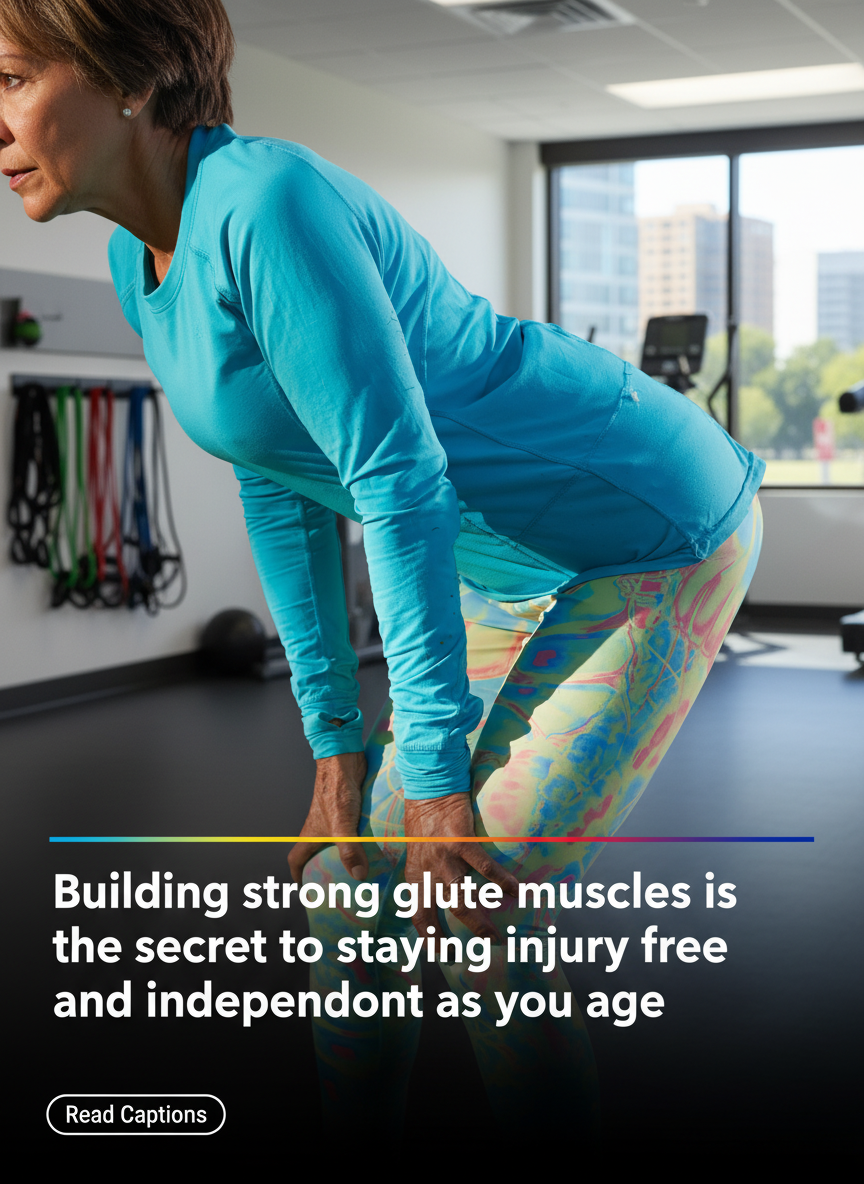
The Unsung Hero of Longevity: Why Strong Glutes Are the Key to Aging Gracefully
By Health & Wellness Correspondent
Published: March 25, 2026
When we think of “longevity muscles,” our minds often drift to the heart or perhaps the lungs. We prioritize cardiovascular endurance and lean muscle mass in our arms and legs. However, a growing body of research and expert opinion suggests that the true foundation of a long, independent life is actually located right behind you.
The gluteal muscles—comprising the gluteus maximus, medius, and minimus—are the largest and most powerful muscle group in the human body. Far from being just an aesthetic concern, these muscles act as the “engine room” for human movement. Experts now argue that maintaining glute strength is one of the most effective strategies for staying injury-free and autonomous well into midlife and beyond.
The Anchor of the Body
The glutes are the primary stabilizers of the pelvis and the powerhouses behind hip extension. They provide the force necessary for fundamental movements like walking, climbing stairs, and standing up from a chair. Because they connect the upper and lower body, they act as a vital shock absorber for the spine.
“Think of your glutes as the anchor for your entire kinetic chain,” says Dr. Elena Rodriguez, a physical therapist specializing in geriatric mobility. “When the glutes are strong, they take the pressure off the lower back and knees. When they are weak, the rest of the body has to compensate, leading to the chronic aches and pains we often mistakenly attribute to ‘just getting older.’”
The “Dead Butt” Epidemic
Despite their importance, the modern lifestyle is a direct assault on glute health. A phenomenon often called “gluteal amnesia” or “dead butt syndrome” occurs when the muscles essentially forget how to fire correctly due to prolonged sitting. When we sit for hours, the hip flexors become tight and shortened, while the glutes remain elongated and inactive.
This muscular imbalance is a primary driver of lower back pain and hip instability. For middle-aged adults, this weakness often manifests as a “shuffling” gait or a decreased ability to handle uneven terrain, both of which increase the risk of falls—the leading cause of injury-related death for those over 65.
Independence Through Strength
The link between glute strength and longevity is primarily rooted in functional independence. Maintaining the ability to move without assistance is the hallmark of a high quality of life in later years. Strong glutes facilitate better balance and faster walking speeds—two metrics that doctors frequently use to predict long-term health outcomes.
“Longevity isn’t just about adding years to your life; it’s about adding life to your years,” says fitness researcher Marcus Thorne. “If you can’t get off a toilet or climb a flight of stairs without help, your world shrinks. Strong glutes ensure that your world stays large and accessible.”
How to Build Your Foundation
The good news is that the glutes are highly responsive to training at any age. Health experts recommend a mix of “activation” and “strength” exercises to wake up and fortify these muscles:
- Glute Bridges: A low-impact way to isolate the muscles and reverse the effects of sitting.
- Squats and Lunges: Functional movements that mimic daily activities and build explosive power.
- Step-Ups: Excellent for improving balance and single-leg stability.
- Clamshells: Targeted movements that strengthen the gluteus medius, crucial for knee health.
Conclusion
While the fitness industry often focuses on what we see in the mirror, the most important muscles for our future are the ones we sit on. By prioritizing glute strength today, we aren’t just protecting our joints; we are investing in our future independence. Whether you are 35 or 75, it is never too late to wake up your glutes and build a stronger foundation for the decades ahead.