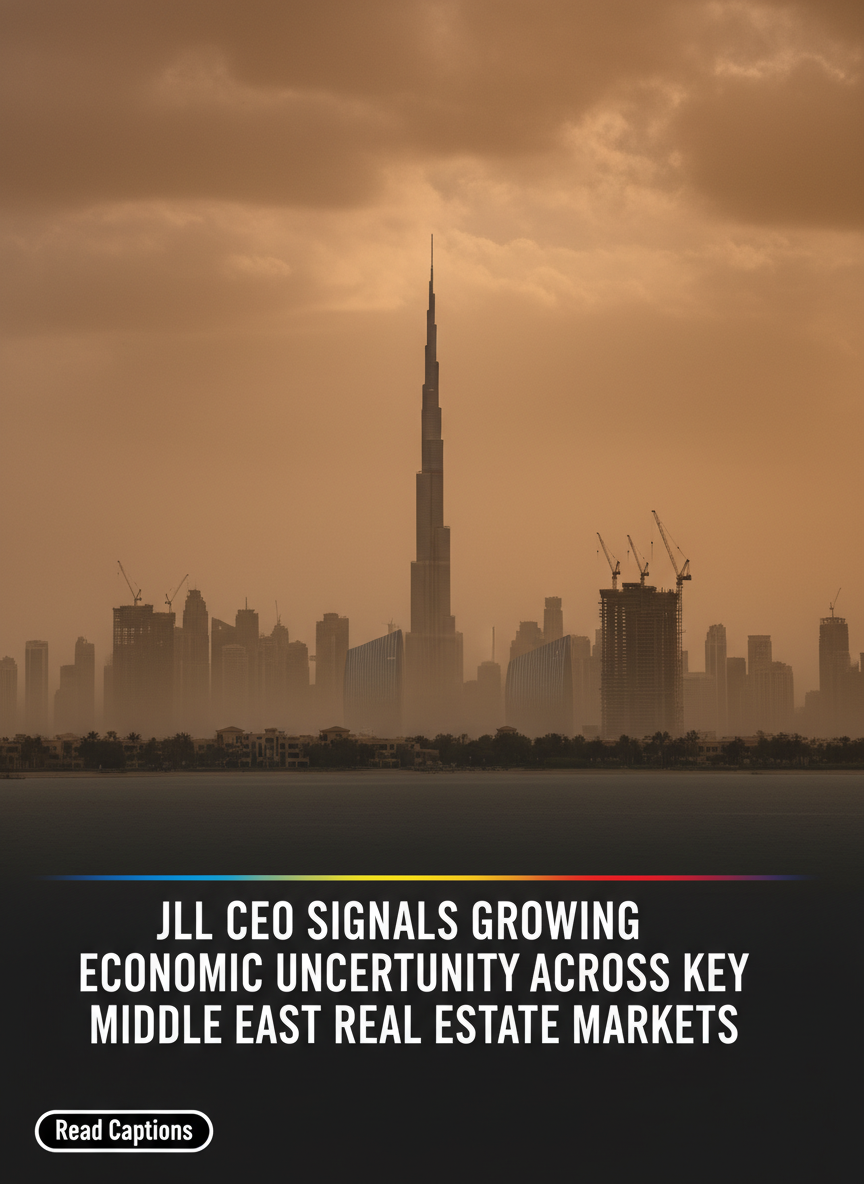
Shifting Horizons: JLL CEO Warns of Growing Uncertainty in Middle East Real Estate Markets
DUBAI, UAE — For years, the skyline of the Middle East has been a symbol of relentless expansion and architectural ambition. However, a new tone of caution is emerging from the upper echelons of the global real estate sector. The CEO of JLL (Jones Lang LaSalle) has signaled that the once-assured trajectory of growth in the region is now facing significant uncertainty.
A Pivot from Unbridled Optimism
In a recent interview with CNBC, the leadership of JLL expressed a shift in sentiment regarding the near-term future of the Middle Eastern property market. While the region—specifically the powerhouses of the United Arab Emirates and Saudi Arabia—has been a global outlier in terms of resilience and luxury demand, macroeconomic headwinds and geopolitical complexities are beginning to cloud the forecast.
JLL, a dominant force in property management and leasing, maintains a massive operational footprint in the region. The firm is deeply embedded in the development of Dubai and Abu Dhabi in the UAE, as well as the rapid transformation of Riyadh in Saudi Arabia. Because of this high level of exposure, the CEO’s pivot toward “uncertainty” serves as a significant bellwether for international investors.
Riyadh and the Vision 2030 Pressure Test
A major focal point of JLL’s operations is Riyadh, which has been the heartbeat of Saudi Arabia’s Vision 2030 initiative. The city has seen an unprecedented influx of multi-national corporations establishing regional headquarters, driven by government mandates and massive infrastructure spending. However, the CEO noted that the sheer scale of these projects, combined with fluctuating global capital markets, has made the next phase of growth harder to predict.
“We have seen a period of extraordinary momentum,” the CEO remarked during the briefing. “But as we move into the middle of the decade, the delta between projected supply and actual absorption is widening. While the ambition remains, the path to achieving these growth targets is becoming more complex.”
The UAE: Resilience vs. Cooling Trends
In the United Arab Emirates, the story is one of transition. Dubai and Abu Dhabi have enjoyed a post-pandemic boom that saw property values reach record highs, fueled by an influx of high-net-worth individuals and a robust tourism rebound. JLL has been at the forefront of leasing these premium assets, but there are signs that the market may be reaching a plateau.
Analysts suggest that while the UAE remains a “safe haven” for capital, the rising costs of financing and a potential oversupply of luxury residential units are contributing to the “uncertainty” mentioned by JLL. The firm emphasized that while they are not forecasting a downturn, the era of double-digit annual growth may be giving way to a more volatile environment.
Strategic Implications for Investors
For institutional investors, the CEO’s comments underscore a need for a more nuanced approach to the Middle East. The “one-size-fits-all” optimism that characterized the 2021–2024 period is being replaced by a strategy focused on selectivity and risk mitigation. JLL indicates that while the fundamentals of the region—such as young demographics and government-led diversification—remain strong, the external pressures of global inflation and regional stability cannot be ignored.
Conclusion: A Market at a Crossroads
The Middle East remains one of the most dynamic real estate environments in the world, but the latest outlook from JLL suggests that the “gold rush” phase may be evolving into a period of consolidation. As the region’s primary markets in Dubai, Abu Dhabi, and Riyadh mature, the focus is shifting from rapid construction to sustainable occupancy and long-term value creation.
As JLL continues to navigate these “uncertain” waters, the industry will be watching closely to see if this caution is a temporary pause or the beginning of a broader market correction in one of the world’s most watched real estate hubs.
Reporting by Financial Correspondent Group. Based on interviews and data provided by CNBC on March 25, 2026.