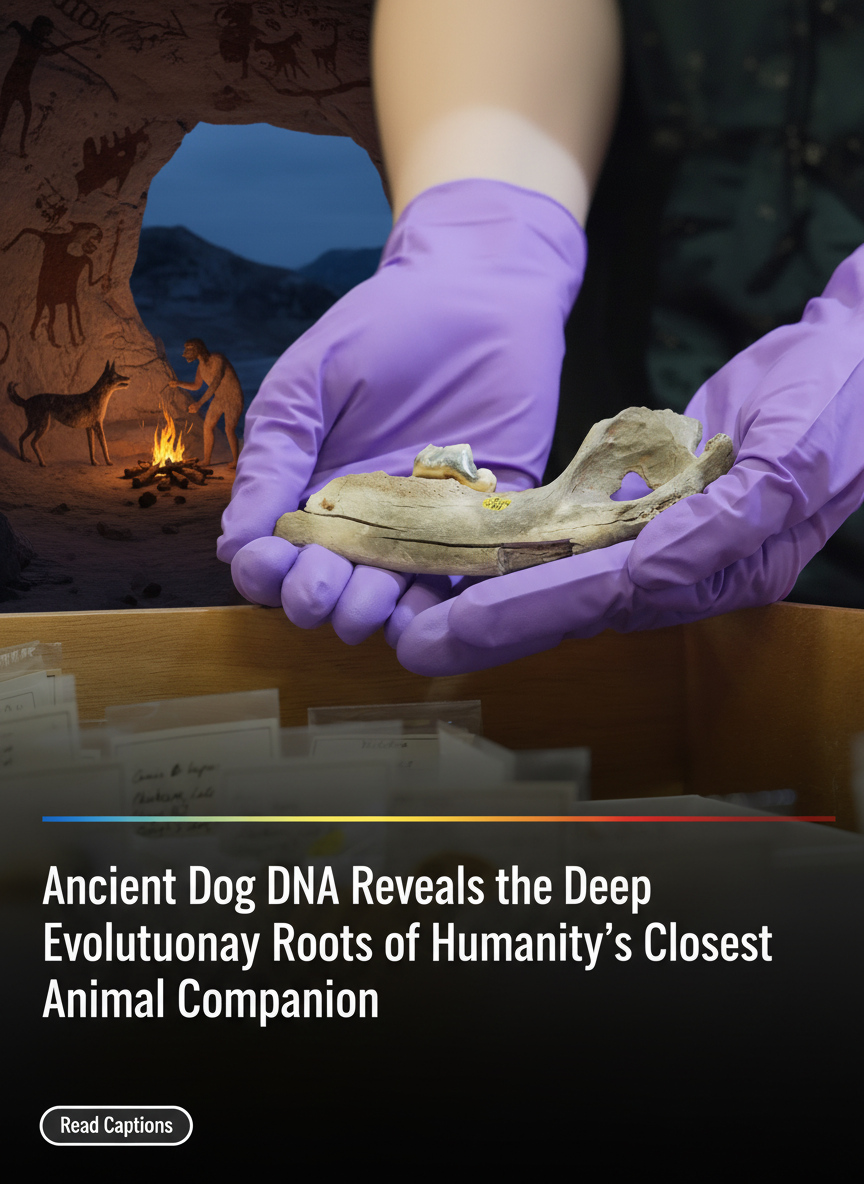
From Wolves to Wagging Tails: New Genomic Research Unlocks the Origins of Humanity’s Best Friend
ANN ARBOR, MI — For millennia, the bond between humans and dogs has been one of history’s most enduring partnerships. Yet, the precise moment a wild predator transformed into a hearth-side companion has long remained shrouded in mystery. New groundbreaking studies into ancient canine genomics are finally shedding light on this evolutionary puzzle, offering a clearer picture of how “man’s best friend” came to be.
The Genetic Map of Domestication
Recent research, which analyzes the DNA of dogs dating back thousands of years, provides a sophisticated look at the migration and evolution of early canines. By sequencing genomes from archaeological remains found across the globe, scientists are beginning to trace the lineage of modern dogs back to distinct populations of ancient wolves.
“This unique relationship between people and dogs has existed for such a long time and is continuing on today,” says Jeffrey Kidd, a dog genomics expert at the University of Michigan. Kidd, who has been at the forefront of studying the canine genetic blueprint, emphasizes that understanding the past is key to understanding the biology of the dogs living in our homes today.
A Story of Co-Evolution
The studies suggest that the domestication process was not a single event but a complex, multi-regional evolution. As ancient humans transitioned from hunter-gatherers to settled farmers, their canine companions adapted alongside them. The research indicates that dogs likely evolved traits to digest starch and thrive on the scraps of human diets, a significant departure from their carnivorous wolf ancestors.
Beyond diet, the genetic data points to behavioral shifts. The DNA reveals a steady selection for lower aggression and increased social cognition—traits that allowed dogs to interpret human gestures and emotions in a way no other animal can. This genetic “tuning” helped cement the dog’s role as a protector, hunter, and eventually, a member of the family.
Mapping the Ancient Migration
One of the most compelling aspects of the new research is the ability to track how dogs moved across continents. By comparing ancient samples from Siberia, Europe, and the Near East, researchers found that dogs accompanied humans on almost every major migration in prehistoric history. As humans crossed the Bering Land Bridge or moved into the heart of Europe, their four-legged companions were right there with them, sharing the same environmental pressures and triumphs.
This shared history means that the study of dog genomes is, in many ways, a mirror of human history. When ancient human populations merged or migrated, their dogs interbred as well, leaving a “genetic breadcrumb trail” that archaeologists and biologists are now using to reconstruct the path of ancient civilizations.
A Bond That Endures
As technology allows scientists to peer deeper into the past, the focus remains on the enduring nature of the human-canine connection. The findings do more than just answer academic questions; they celebrate a partnership that has shaped the course of human development.
For experts like Jeffrey Kidd, the work is a reminder that while the science is complex, the result is something every pet owner understands intuitively. The domestication of the dog was one of the most successful biological experiments in history, creating a bridge between two vastly different species that continues to flourish in the modern world.
With more ancient remains being discovered and genomic sequencing becoming more accessible, the story of the dog is far from over. However, one thing is certain: wherever humans have gone, dogs have followed—and they have been changed by us as much as we have been changed by them.