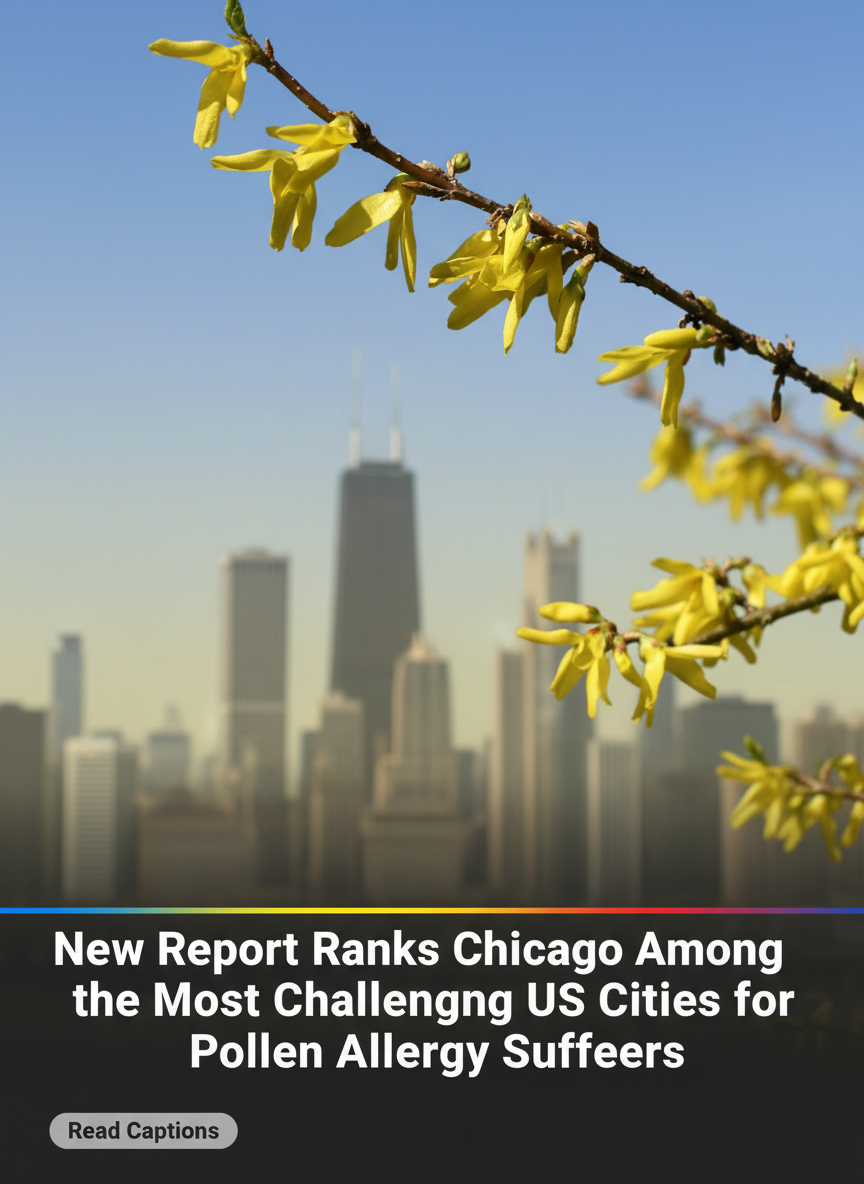
Windy City or Wheezy City? Chicago Ranked Among Most Challenging U.S. Metros for Allergy Sufferers
CHICAGO — For millions of Chicagoans, the arrival of warmer weather is a double-edged sword. While the melting snow and budding trees signal the end of a long winter, they also usher in a season of itchy eyes, persistent sneezing, and respiratory discomfort. A new report has confirmed what many local residents already suspected: Chicago is one of the most difficult cities in the United States for those living with pollen allergies.
A National Ranking of Respiratory Distress
The annual “Allergy Capitals” report, which analyzes data across the most populous metropolitan areas in the U.S., has placed Chicago high on its list of challenging environments. The study, typically released by the Asthma and Allergy Foundation of America (AAFA), evaluates cities based on three critical factors: total pollen counts (including tree, grass, and weed pollen), the use of over-the-counter allergy medications, and the availability of board-certified allergists and immunologists.
While southern cities often dominate the top of the list due to their year-round growing seasons, Chicago’s volatile spring transitions and high concentration of allergenic flora have cemented its status as a “hot zone” for seasonal sniffles. The report suggests that the sheer volume of pollen, combined with a high per-capita demand for antihistamines, makes the Chicago metro area a particularly grueling environment during peak seasons.
The Triple Threat: Trees, Grass, and Weeds
Allergy season in Chicago is rarely a short-lived event. Instead, it is a marathon that evolves in three distinct phases. The struggle begins in early spring with tree pollen—specifically from oak, maple, and ash trees—which can blanket the city in a fine yellow dust. As spring turns to summer, grass pollens take over, followed by the notorious ragweed season in the late summer and autumn.
Experts note that Chicago’s geographical location adds to the complexity. The “lake effect” and shifting wind patterns can trap pollen counts in urban corridors, while the surrounding suburban and agricultural landscapes provide a steady supply of irritants that are carried into the city center by the very winds that give Chicago its nickname.
The Climate Change Connection
The report also highlights a troubling trend: allergy seasons are getting longer and more intense. Due to rising global temperatures, the frost-free season in the Midwest has extended, giving plants more time to grow and release pollen. Additionally, increased levels of carbon dioxide in the atmosphere can act as a fertilizer for plants like ragweed, causing them to produce even more potent pollen in larger quantities.
For Chicago residents, this means that “allergy season” is no longer confined to a few weeks in May. Many are now feeling the effects as early as March and seeing symptoms persist well into October.
Managing the Misery
With Chicago ranking so high on the list of challenging cities, medical professionals are urging residents to take a proactive approach to their health. Recommendations include:
- Monitoring Pollen Counts: Checking daily forecasts and staying indoors on high-pollen, windy days.
- Environmental Controls: Keeping windows closed during peak hours and using HEPA filters in the home.
- Personal Hygiene: Showering and changing clothes after spending time outdoors to remove trapped pollen.
- Early Intervention: Starting allergy medications before symptoms peak to build a defense in the immune system.
Conclusion
While Chicago offers world-class parks and beautiful lakefront views, the new report serves as a stark reminder of the hidden cost for those with sensitive immune systems. As the city continues to rank as a top “Allergy Capital,” the focus shifts toward better urban planning, climate awareness, and expanded access to specialized medical care to help millions of Chicagoans breathe a little easier.
For those struggling with severe symptoms, experts recommend consulting with a local allergist to develop a personalized treatment plan as the season progresses.