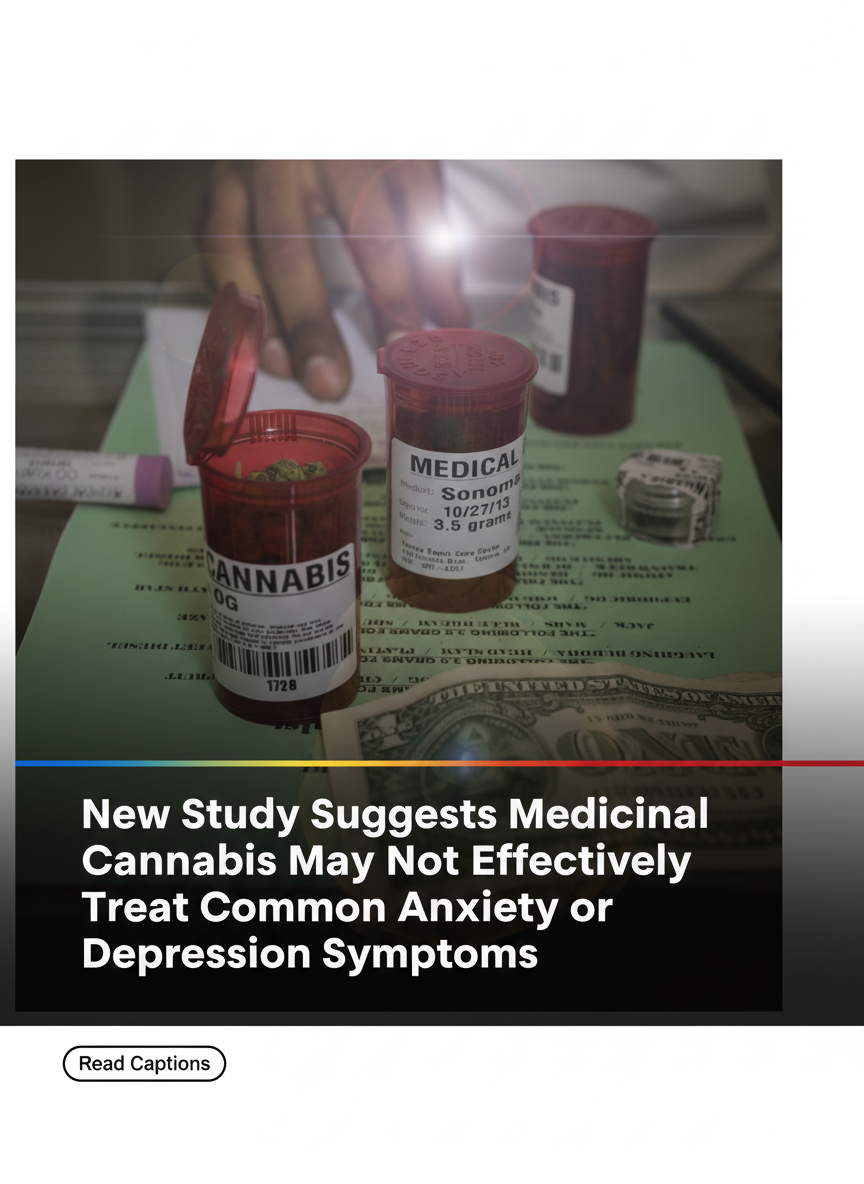
The “Green Relief” Myth? New Study Challenges Medicinal Cannabis as a Cure for Anxiety and Depression
For years, medicinal cannabis has been hailed by many as a “miracle drug” for a wide array of ailments, ranging from chronic pain to insomnia. However, a new study is casting a shadow of doubt over its effectiveness in treating two of the most common reasons patients seek a prescription: anxiety and depression. While the “green rush” continues to sweep across the country, researchers are warning that the relief patients feel might be more psychological than pharmacological.
A Gap Between Perception and Reality
The study, which analyzed the outcomes of patients using medicinal cannabis for mental health conditions, suggests that the drug may not be the silver bullet many believe it to be. Despite the growing number of states legalizing cannabis for medicinal use, the clinical evidence supporting its efficacy for mood disorders remains remarkably thin. Researchers found that while patients often report immediate relief after use, these benefits rarely translate into long-term clinical improvement.
“There is a significant discrepancy between what patients perceive as helpful and what the clinical data actually shows,” says the research team. This “perception gap” suggests that while cannabis may mask symptoms temporarily, it often fails to address the underlying causes of anxiety and depression, potentially leading to a cycle of dependency without true recovery.
The Placebo Effect and Short-Term Masking
One of the most striking takeaways from the research is the potential influence of the placebo effect. Because cannabis is often associated with relaxation and euphoria, patients enter treatment with high expectations of success. This positive outlook can lead to a subjective feeling of improvement that isn’t backed by objective psychological benchmarks.
Furthermore, the study highlights the “masking” nature of THC. For an individual suffering from acute anxiety, the intoxicating effects of cannabis may provide a temporary escape. However, as the effects wear off, the anxiety often returns—sometimes with increased intensity. This creates a “rebound effect” that can make the original condition more difficult to manage in the long run.
Potential Risks: Dependency and Increased Anxiety
Beyond its lack of effectiveness, the study also pointed to potential risks. For some users, high-potency THC products—which are common in medicinal dispensaries—can actually trigger paranoia and panic attacks, exacerbating the very symptoms the patient is trying to treat.
There is also the concern of Cannabis Use Disorder (CUD). When patients rely on cannabis as their primary coping mechanism for depression, they may forgo traditional, evidence-based treatments like Cognitive Behavioral Therapy (CBT) or regulated antidepressants. This reliance can lead to a psychological dependence that complicates the patient’s mental health profile.
A Call for More Rigorous Clinical Trials
The researchers emphasize that their findings do not necessarily mean cannabis has no place in medicine; rather, they argue that its use for mental health should be approached with extreme caution. Unlike traditional pharmaceuticals, which undergo years of rigorous double-blind clinical trials before being approved for specific conditions, medicinal cannabis has largely been fast-tracked through legislative action rather than laboratory proof.
The medical community is now calling for more standardized studies to determine which specific compounds (such as CBD vs. THC) might be beneficial and at what dosages. Until then, the “Wild West” of medicinal cannabis may continue to leave patients searching for answers that the plant cannot yet provide.
Conclusion: Consult Professionals, Not Just Dispensaries
As the conversation around cannabis evolves, healthcare providers are urging patients to maintain an open dialogue with their doctors. While a budtender at a dispensary can describe the flavor profiles and immediate effects of a strain, they are not equipped to manage clinical depression or generalized anxiety disorder.
For those struggling with mental health, the consensus remains: cannabis should be a last resort or a supplementary tool, rather than a primary treatment. In the search for mental wellness, the most effective path remains a combination of professional therapy, lifestyle changes, and medically supervised treatments that have stood the test of clinical scrutiny.