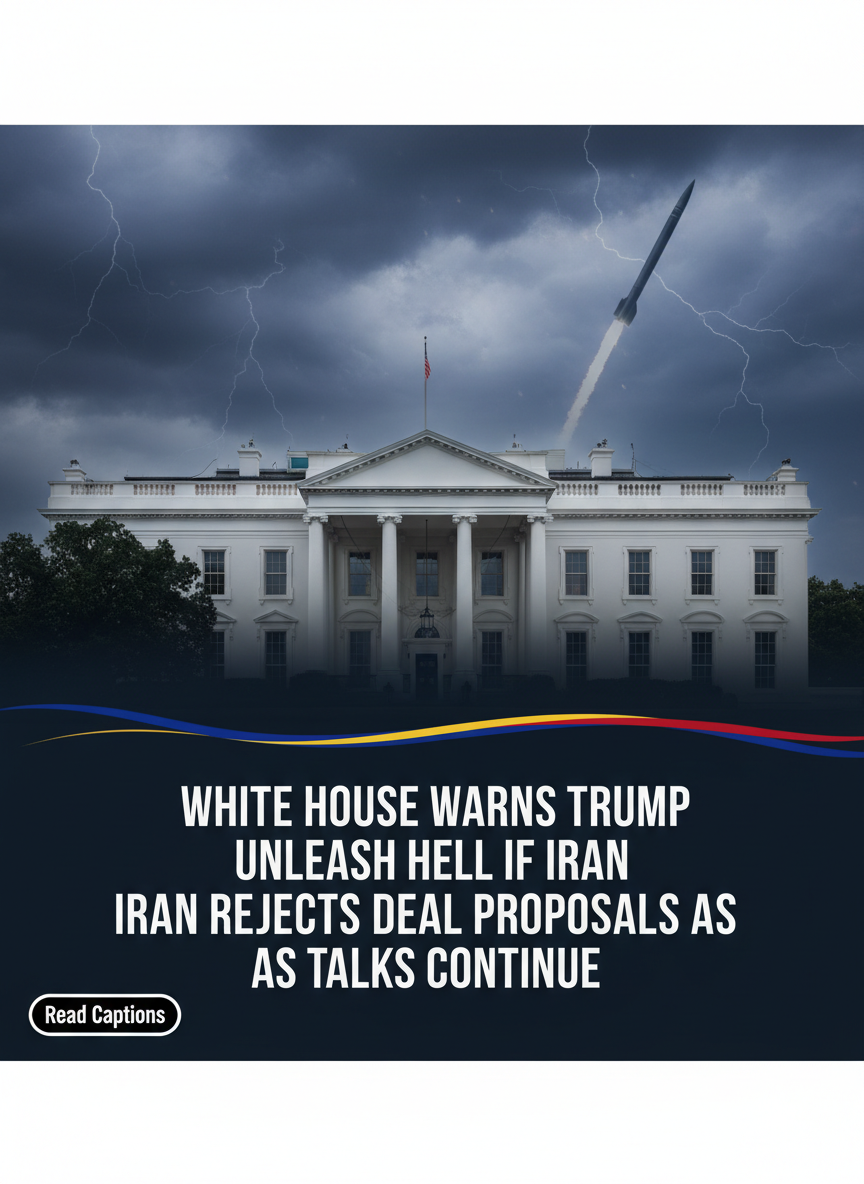
‘Unleash Hell’: White House Issues Blistering Ultimatum to Iran as Nuclear Talks Stall
WASHINGTON — The Trump administration escalated its rhetoric against the Iranian regime on Thursday, issuing a stark warning that the United States is prepared to “unleash hell” if a comprehensive diplomatic agreement is not reached. The ultimatum comes amid conflicting reports regarding the status of back-channel negotiations and a defiant posture from Tehran.
A ‘Maximum Pressure’ Ultimatum
White House Press Secretary Karoline Leavitt delivered the administration’s most aggressive stance to date during a press briefing, emphasizing that President Trump’s patience with the Islamic Republic is not infinite. According to Leavitt, while the United States remains open to a diplomatic resolution, the window for a deal is rapidly closing.
“President Trump has been very clear: he will not allow Iran to obtain a nuclear weapon, nor will he allow them to continue destabilizing the Middle East through proxy warfare,” Leavitt told reporters. “If the regime in Tehran refuses to come to the table in good faith and make a deal that ensures global security, this administration is prepared to unleash hell. All options—kinetic, economic, and cyber—remain firmly on the table.”
Conflicting Reports from Tehran
The White House’s remarks followed hours after Iranian state media outlets reported that the regime had formally rejected a series of proposals recently submitted by Washington. Iranian officials characterized the American terms as “humiliating” and an infringement on national sovereignty.
Despite the public rejection, Leavitt maintained that talks between Washington and Tehran are “ongoing,” suggesting that private diplomatic channels remain active even as public rhetoric turns hostile. “There is a difference between what the regime says to its state-controlled media and what is happening behind closed doors,” she added.
Tehran Mocks U.S. Threats, Warns of ‘Regional Fire’
In Tehran, the mood remained one of calculated defiance. Iranian state-run television broadcast segments mocking the Trump administration’s “Maximum Pressure” tactics, with commentators dismissing the “unleash hell” comment as psychological warfare.
Furthermore, Iranian military leaders issued their own counter-warnings, specifically addressing the possibility of a ground escalation. A spokesperson for the Islamic Revolutionary Guard Corps (IRGC) warned that any attempt at a ground invasion or direct military strike would result in a “regional fire” that would consume U.S. interests and allies across the Middle East. “The era of hit-and-run is over,” the spokesperson stated, according to state media.
The Israel Factor and Regional Stability
The escalating tension occurs against the backdrop of heightened military activity involving Israel. Intelligence reports suggest that the U.S. and Israel have increased coordination regarding potential strikes on Iranian nuclear facilities and IRGC infrastructure. The Trump administration has signaled that it will provide “unprecedented support” to Israel should the regional conflict broaden.
Geopolitical analysts suggest that the “unleash hell” rhetoric is designed to force Iran into a corner before it reaches a “breakout” nuclear capacity. However, the risk of miscalculation remains high. Critics of the administration’s approach argue that such incendiary language could inadvertently close the very diplomatic doors the White House claims are still open.
What Happens Next?
As the standoff intensifies, the international community is watching closely for signs of a formal breakdown in communication. For now, the world remains in a tense holding pattern: Washington is demanding a total shift in Iranian foreign policy, while Tehran bets on its ability to withstand another round of extreme American pressure.
With the “unleash hell” threat now public, the burden of the next move falls on the Iranian leadership. Whether they choose the path of a new nuclear deal or risk a direct military confrontation remains the defining question of the current administration’s foreign policy.
Reporting by the Associated Press and CBS News contributed to this story.