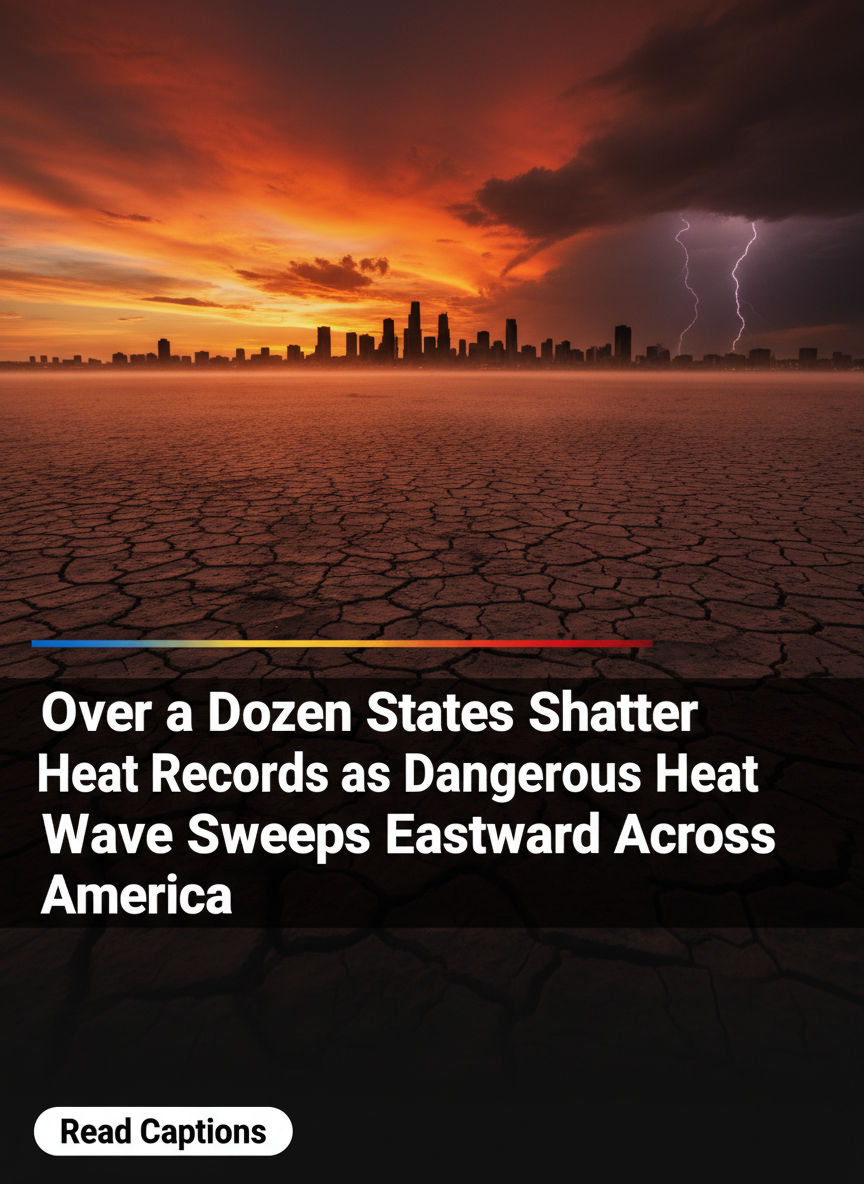
Scorching Heat Wave Sweeps Across Central U.S. as Record Temperatures Shatter in 17 States
CHICAGO — A relentless heat wave that has spent the last week punishing the Western United States is officially on the move. On Wednesday, the record-breaking thermal ridge expanded its reach into the nation’s midsection, bringing triple-digit temperatures and dangerous humidity to at least 17 states.
A Relentless Heat Dome Marches Eastward
Meteorologists at the National Weather Service (NWS) confirmed that a massive “heat dome”—a high-pressure system that traps hot air in one place—has begun migrating from the Desert Southwest toward the Plains and the Midwest. As the system shifted, historical temperature marks fell in cities from California to the Mississippi River Valley.
In total, more than a dozen states reported daily record highs on Wednesday alone. Palm Springs, California, which has been at the epicenter of the West Coast’s extreme weather, hit a staggering 124 degrees earlier this week, setting an all-time record. As the heat pushes east, major metropolitan areas in states like Kansas, Oklahoma, and Missouri are now bracing for several days of heat indexes exceeding 110 degrees.
Widespread Impacts and Public Safety Alerts
The scale of the current weather event has triggered heat advisories and excessive heat warnings for over 100 million Americans. In states like Texas and Arizona, the prolonged nature of the heat is straining electrical grids as residents crank up air conditioning to combat the sweltering conditions.
Public health officials are urging citizens to take the “silent killer” seriously. “This isn’t just a typical summer warm-up,” said one NWS meteorologist. “The duration of this heat wave, combined with high overnight lows that offer no recovery for the human body, makes this an exceptionally dangerous event.”
Local municipalities have responded by opening cooling centers and extending public pool hours. In many cities, emergency services have reported an uptick in heat-related distress calls, prompting warnings for residents to stay hydrated, avoid outdoor activities during peak sun hours, and check on vulnerable neighbors and the elderly.
The Forecast Ahead: No Immediate Relief
While the West may see a slight reprieve as the core of the heat dome shifts, the relief is expected to be marginal. Meanwhile, the Eastern Seaboard is next in line. Forecast models suggest that by the weekend, the heat will settle into the Ohio Valley and the Mid-Atlantic, potentially bringing record-breaking temperatures to cities like Washington D.C. and Philadelphia.
Climate scientists note that while summer heat is expected, the frequency, intensity, and geographic scale of these heat waves are consistent with long-term warming trends. As the central U.S. continues to bake under the current system, officials are bracing for what could be one of the hottest months on record for the continental United States.
Staying Safe in the Heat
Authorities recommend the following precautions for those in affected states:
- Hydrate: Drink more water than usual, even if you do not feel thirsty.
- Seek Shade: Limit time spent outdoors between 10:00 a.m. and 4:00 p.m.
- Monitor Symptoms: Be aware of the signs of heat exhaustion, including heavy sweating, dizziness, and nausea.
- Never Leave Pets or Children in Cars: Internal vehicle temperatures can reach lethal levels in a matter of minutes.
As the heat wave continues its eastward journey, residents are encouraged to stay tuned to local weather updates and prioritize safety until the system finally breaks.