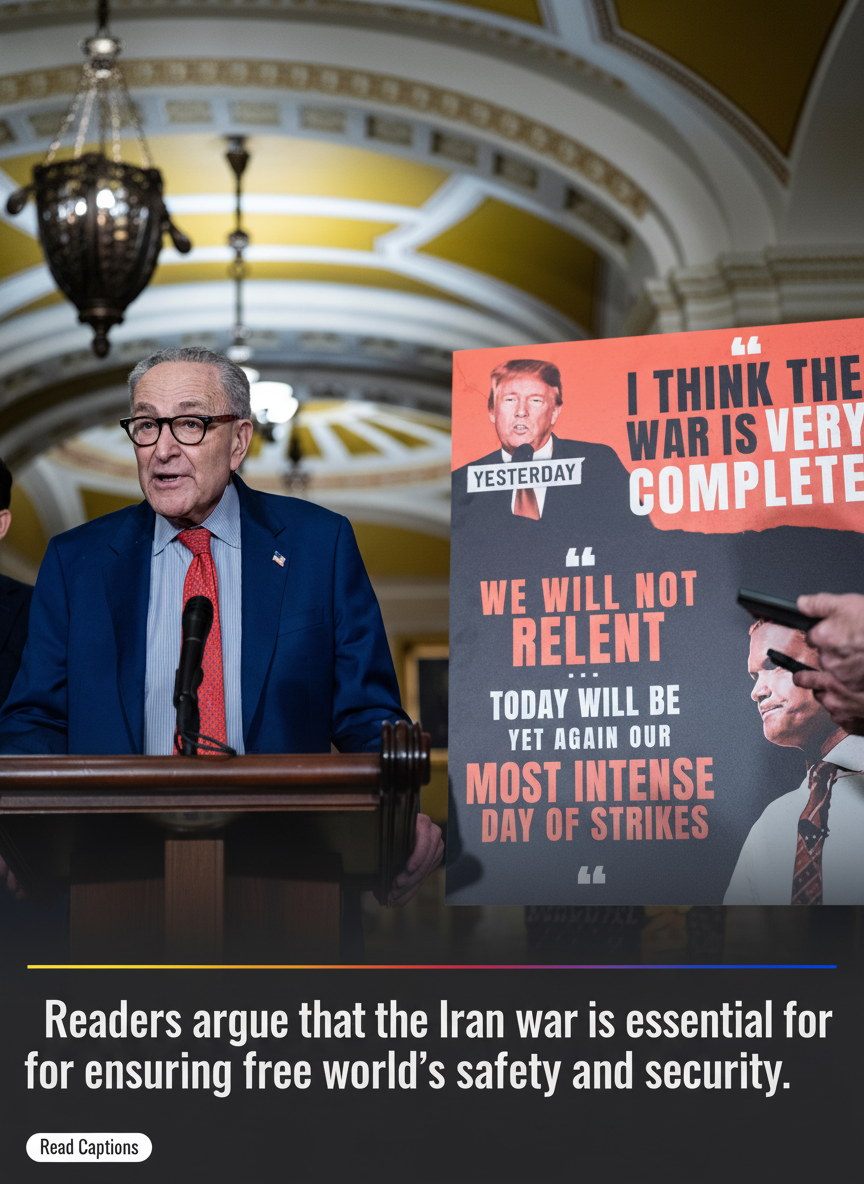
National Security or Political Posturing? NY Post Readers Target Democratic Opposition to Iran Conflict
NEW YORK — As the military engagement in Iran continues to dominate the global stage, a fierce domestic debate is erupting over the necessity of the conflict and the political response at home. In a series of letters published by the New York Post on March 18, 2026, a growing segment of the public is voicing sharp criticism toward Democratic leadership, accusing the party of “misdirected outrage” regarding a war many see as essential for global stability.
The “Misdirected Outrage” Argument
The core of the recent public outcry centers on the perception that Democratic lawmakers are prioritizing partisan optics over the existential threat posed by the Iranian regime. Correspondents to the Post argue that the opposition’s focus on de-escalation is misplaced, given the long-standing provocations and the nuclear stakes involved in the region.
Many readers expressed frustration that the narrative in Washington seems detached from the realities of the “free world’s safety.” The letters suggest that while the horrors of war are undeniable, the cost of inaction—or a fragmented domestic front—could be significantly higher for Western interests and regional allies.
A Clash of Visions for Global Safety
The Democratic platform has largely centered on the risks of a “forever war” and the potential for regional destabilization. However, critics in the Post’s forum contend that this stance ignores the primary objective of the current military operations: the dismantling of threats that have loomed over the international community for decades.
“The safety of the free world isn’t a bargaining chip,” wrote one reader, echoing a sentiment shared by several others who believe that the Democratic pushback undermines the resolve needed to see the conflict through to a secure conclusion. This highlights a deepening divide between those who view the war as a regrettable necessity and those who see it as a strategic error.
Political Ramifications in a High-Stakes Year
This surge in public commentary comes at a sensitive time for the administration and its allies on Capitol Hill. As 2026 progresses, the efficacy of the military campaign in Iran is likely to become a defining issue for voters. The perception that one party is “misdirecting” its anger away from the aggressor and toward the military effort itself could have lasting impacts on the political landscape.
Supporters of the intervention argue that the Democratic stance fails to offer a viable alternative for neutralizing the threat, while opponents maintain that diplomatic avenues were abandoned too quickly. The Post letters suggest that, at least among a vocal portion of the electorate, the patience for diplomatic nuance is wearing thin in favor of a decisive victory.
Conclusion: A Nation Divided on the Path to Peace
The letters to the editor reflect a microcosm of a larger national struggle. As the war in Iran enters its next phase, the tension between political ideology and national security strategy remains high. While Democratic leaders continue to call for caution and oversight, the feedback from the New York Post readership indicates a significant demand for unity and a focus on the broader mission of international safety.
Whether this public pressure will result in a shift in Democratic rhetoric remains to be seen, but for now, the debate over “misdirected outrage” serves as a stark reminder of the challenges of leading a nation through a major foreign conflict in a polarized era.