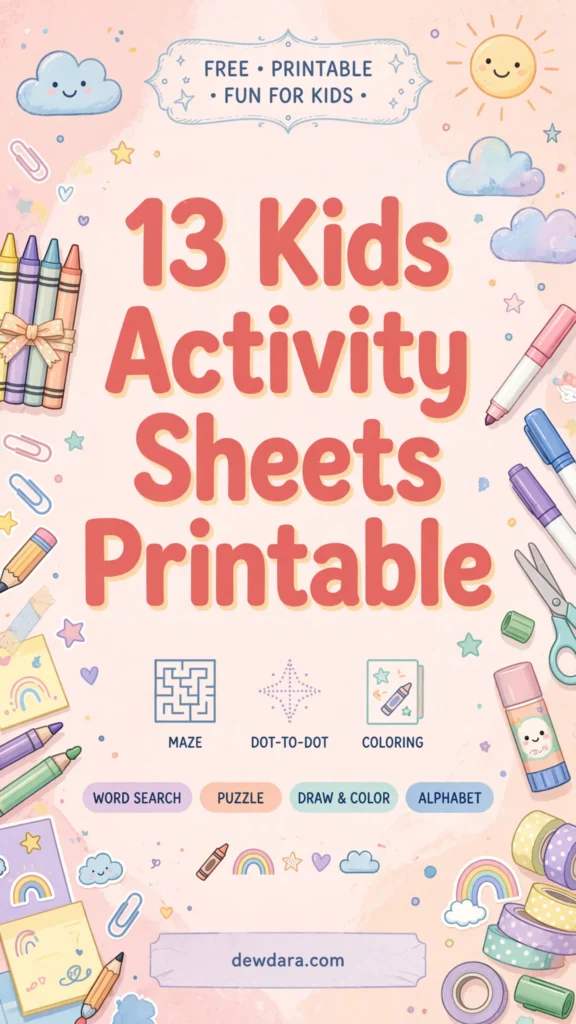
13 Kids Activity Sheets Printable – Fun, Educational & Screen-Free Learning
Looking for simple, effective, and joyful ways to keep your little ones engaged while building essential skills? Printable activity sheets are a parent’s and teacher’s best friend. They require no prep, no screen time, and they turn learning into play.
This collection of 13 Kids Activity Sheets Printable from dewdara.com is carefully designed for preschoolers, kindergarteners, and early elementary kids ages 3-7. Each sheet targets a different developmental skill — from fine motor control and handwriting to logic, math, focus, and emotional intelligence.
Just print, grab some crayons, pencils, or safety scissors, and let the learning begin. All pages are clean, black-and-white, ink-friendly, and ready to use.
1. Trace The Lines – Pre-Writing Fine Motor Practice
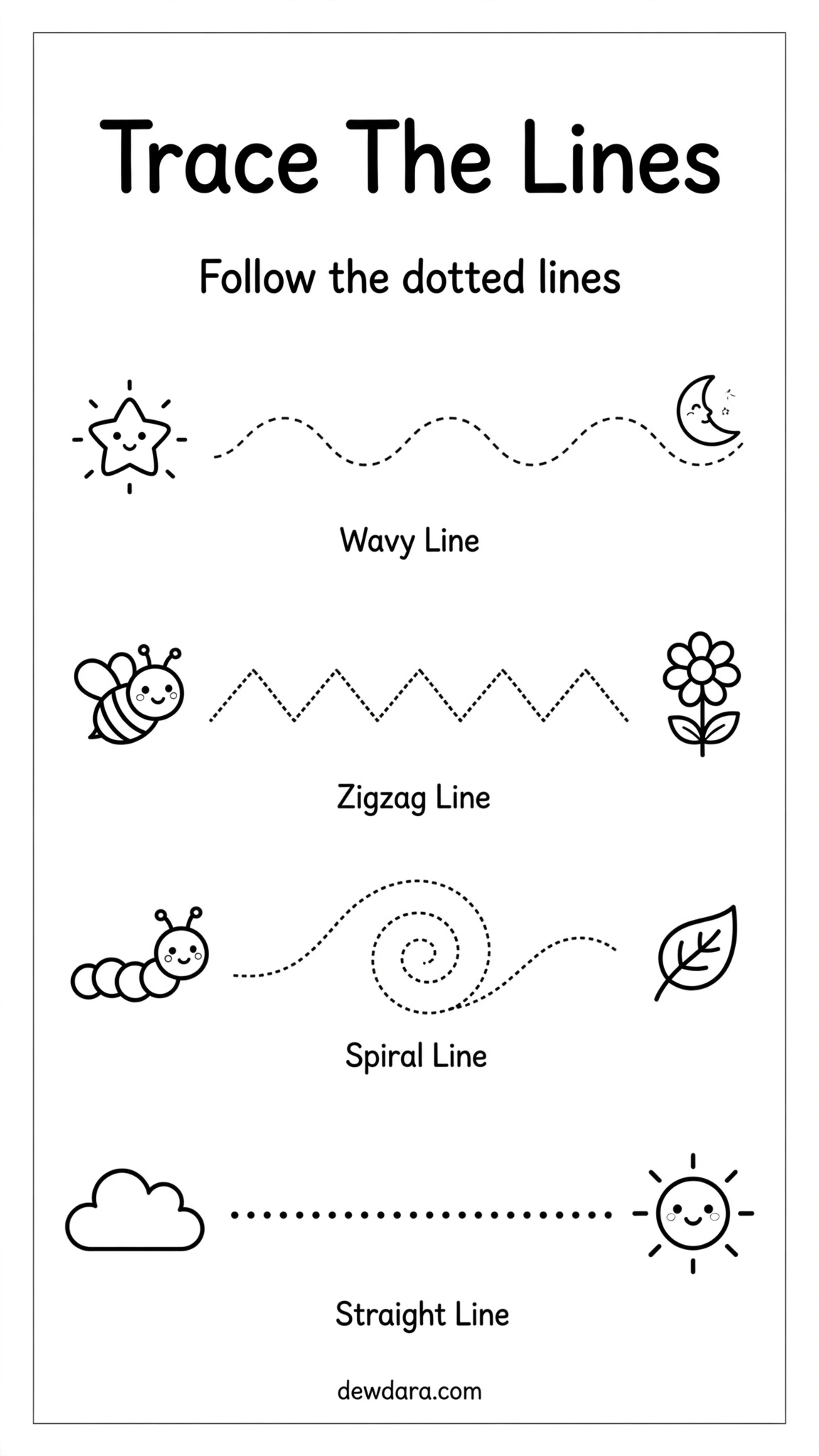
This is the perfect starting point for toddlers and preschoolers. This sheet features wavy, zigzag, spiral, and straight dotted lines with cute start-and-finish icons.
What it develops: Hand-eye coordination, pencil grip, fine motor control, and pre-writing stamina.
How to use: Ask your child to follow the dotted lines slowly with a pencil or marker. Start with thicker crayons for younger kids.
Best for: Ages 3-5. Ideal as a warm-up before writing practice.
2. Color By Number – Number Recognition & Creativity
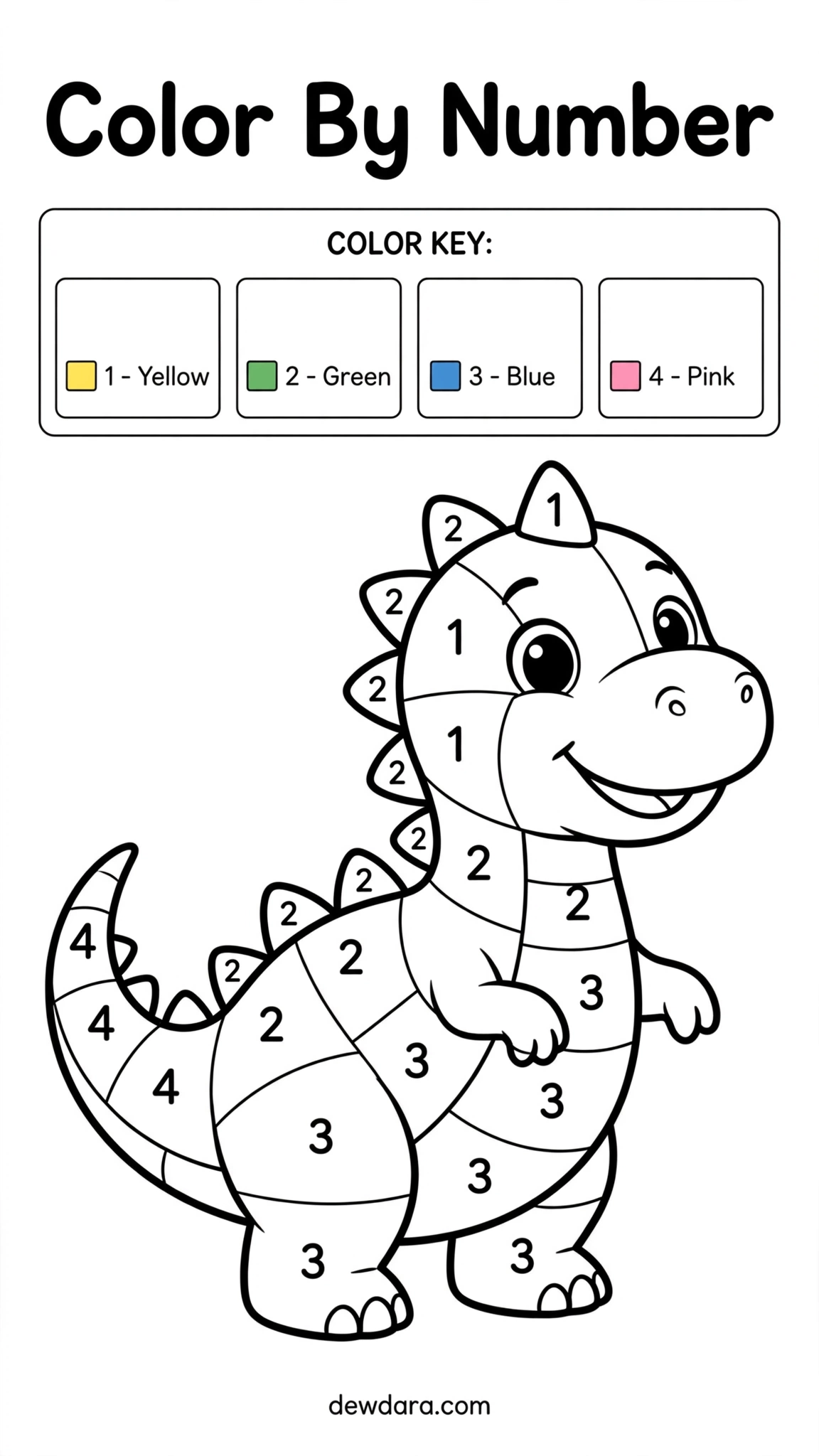
A creative twist on coloring! Kids match numbers to colors using the key at the top to reveal a fun picture.
What it develops: Number recognition 1-4, color identification, focus, and patience.
How to use: Color the key first, then let your child find each numbered section and color accordingly. It’s a great quiet-time activity.
Best for: Ages 4-7. Perfect for early math learners who love art.
3. Spot The Difference – Visual Attention & Observation
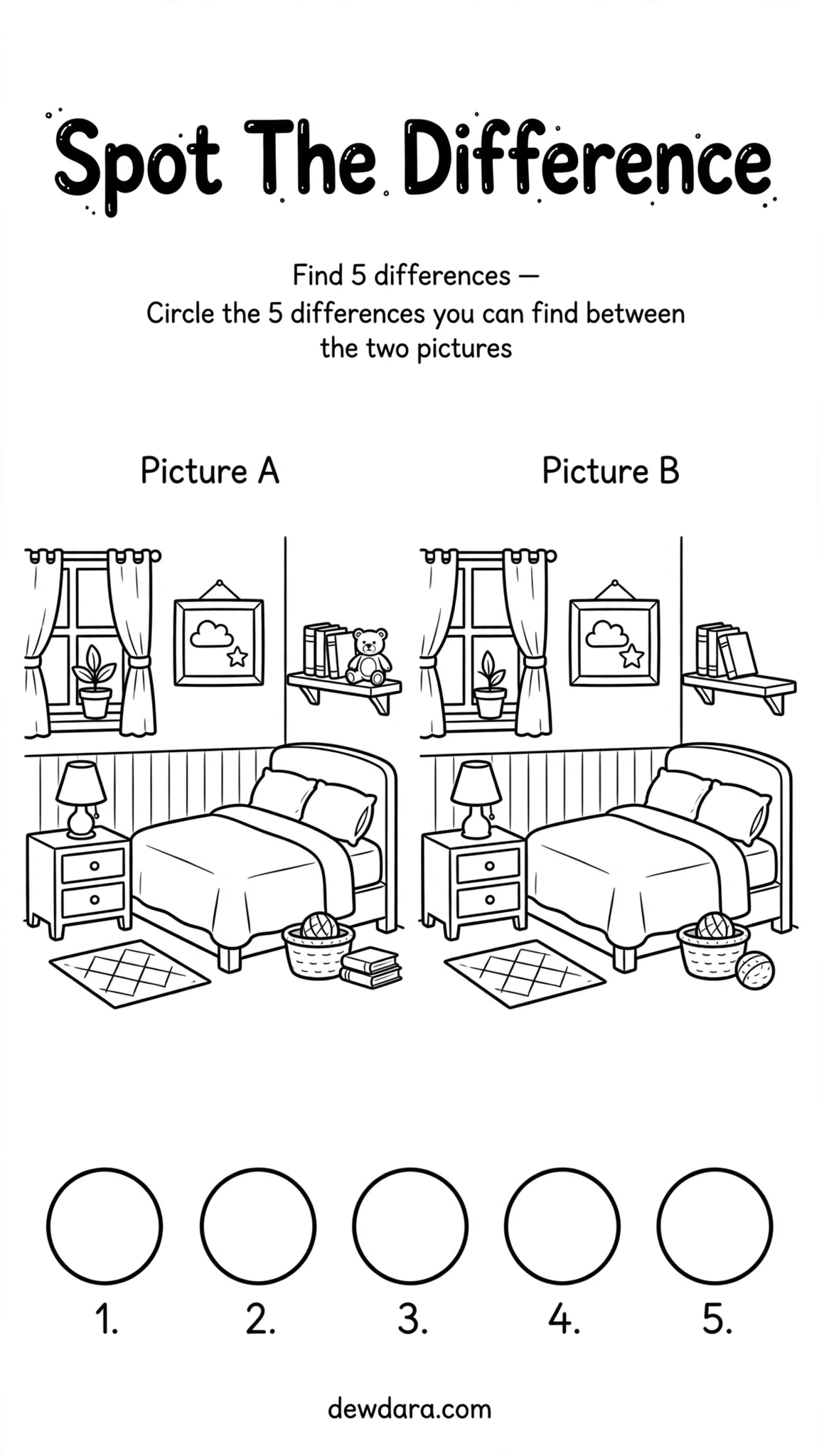
Two pictures that look the same — but with 5 hidden differences. Can your child find them all?
What it develops: Visual discrimination, attention to detail, concentration, and logical reasoning.
How to use: Encourage kids to scan slowly from top to bottom and circle each difference they find. Ask them to describe what changed.
Best for: Ages 5-7. Great for building focus before reading.
4. Maze – Help The Bunny Find The Carrot
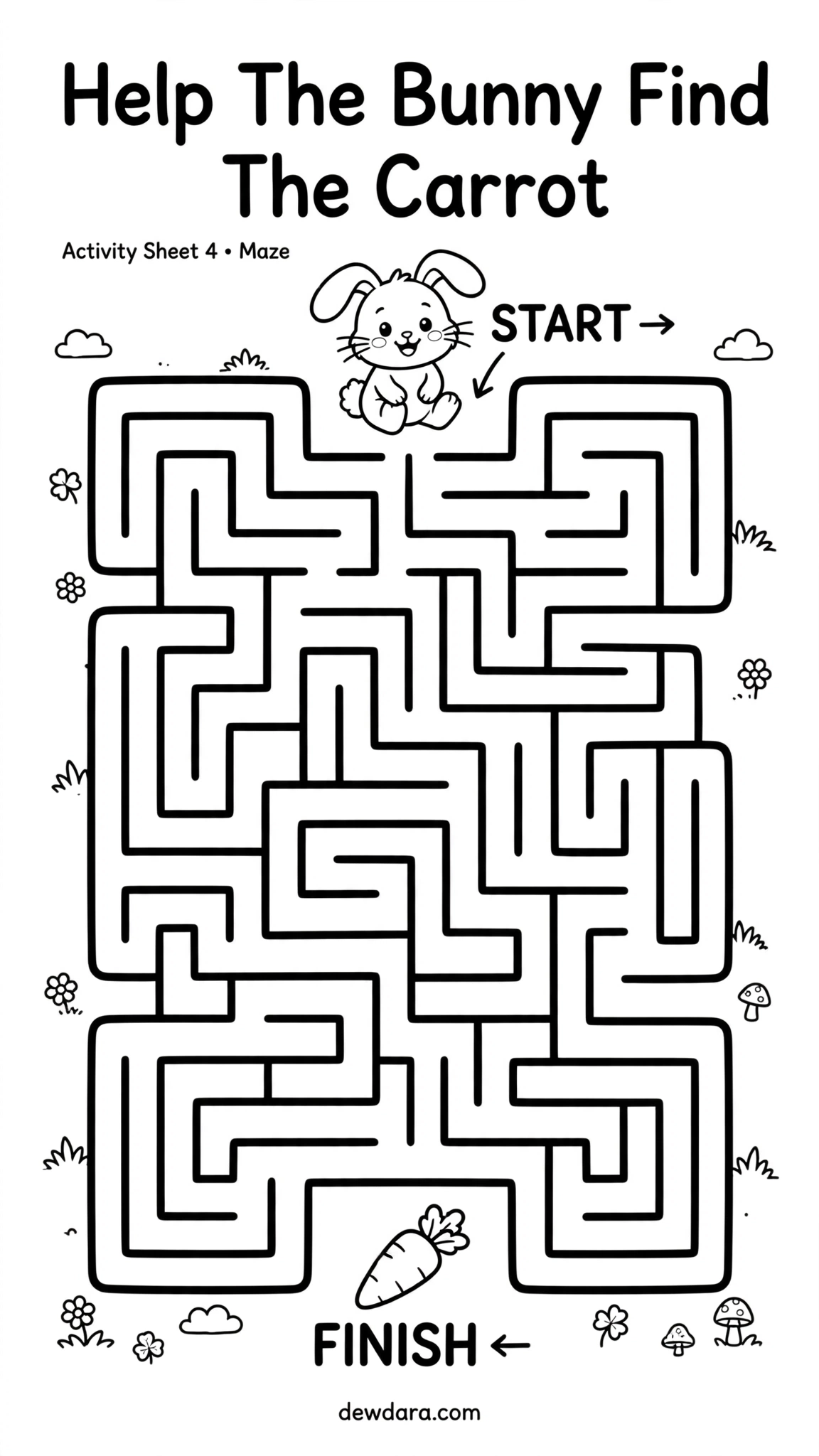
A classic favorite! Help the cute bunny navigate the maze to reach the carrot.
What it develops: Problem-solving, spatial awareness, critical thinking, and pencil control.
How to use: Let children try with their finger first, then trace the correct path with a pencil. No need to rush.
Best for: Ages 4-6. A wonderful logic builder.
5. Kids Word Search – Early Literacy Fun
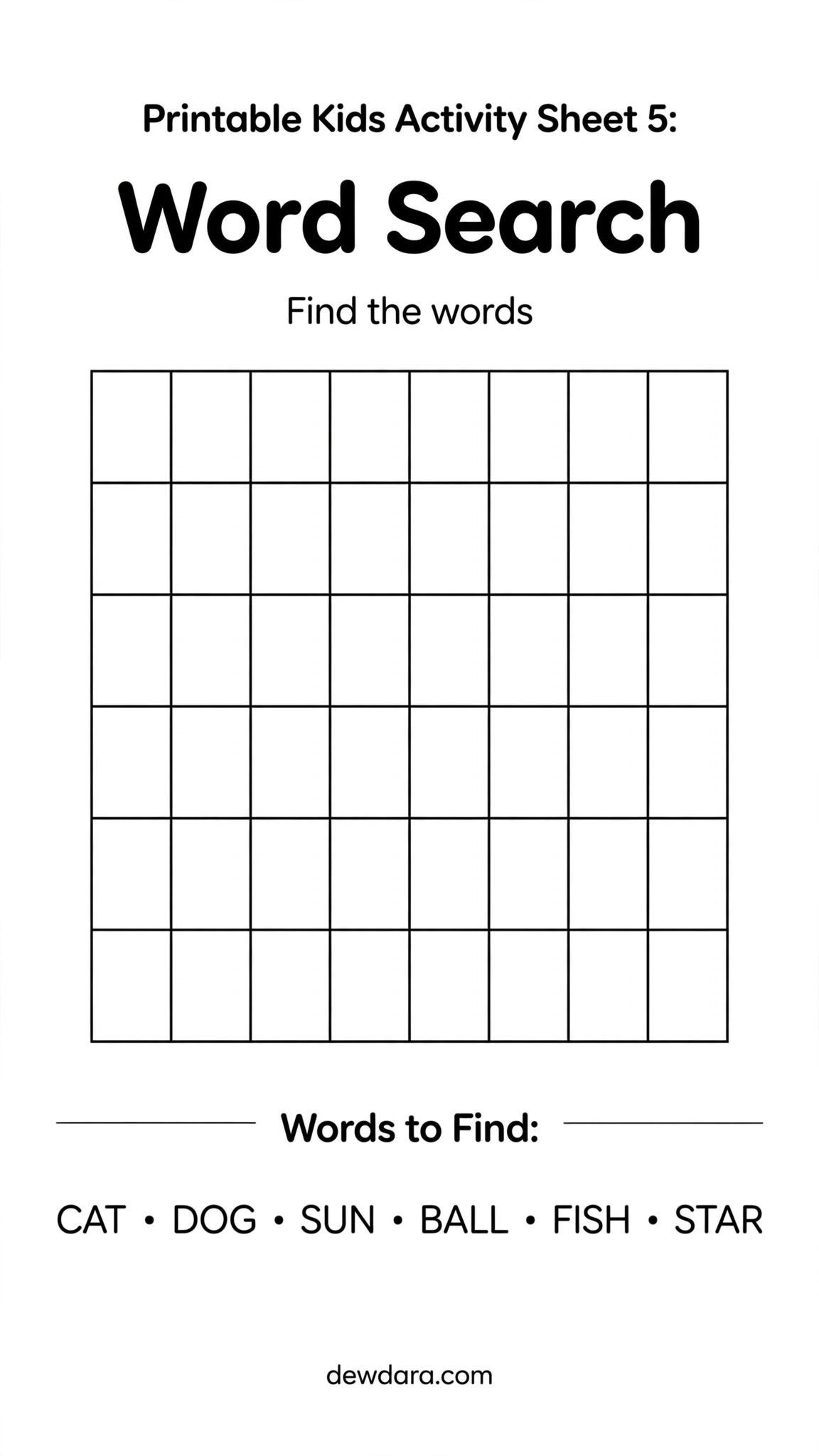
A beginner-friendly word search with simple 3-4 letter words like CAT, DOG, SUN, BALL, FISH, and STAR.
What it develops: Letter recognition, spelling, vocabulary, and scanning skills.
How to use: Read the word list together first. Then show them how to look horizontally and vertically. Circle or highlight each word found.
Best for: Ages 5-7. Ideal for kindergarten and first grade.
6. Connect The Dots 1-20 – Number Sequence & Drawing
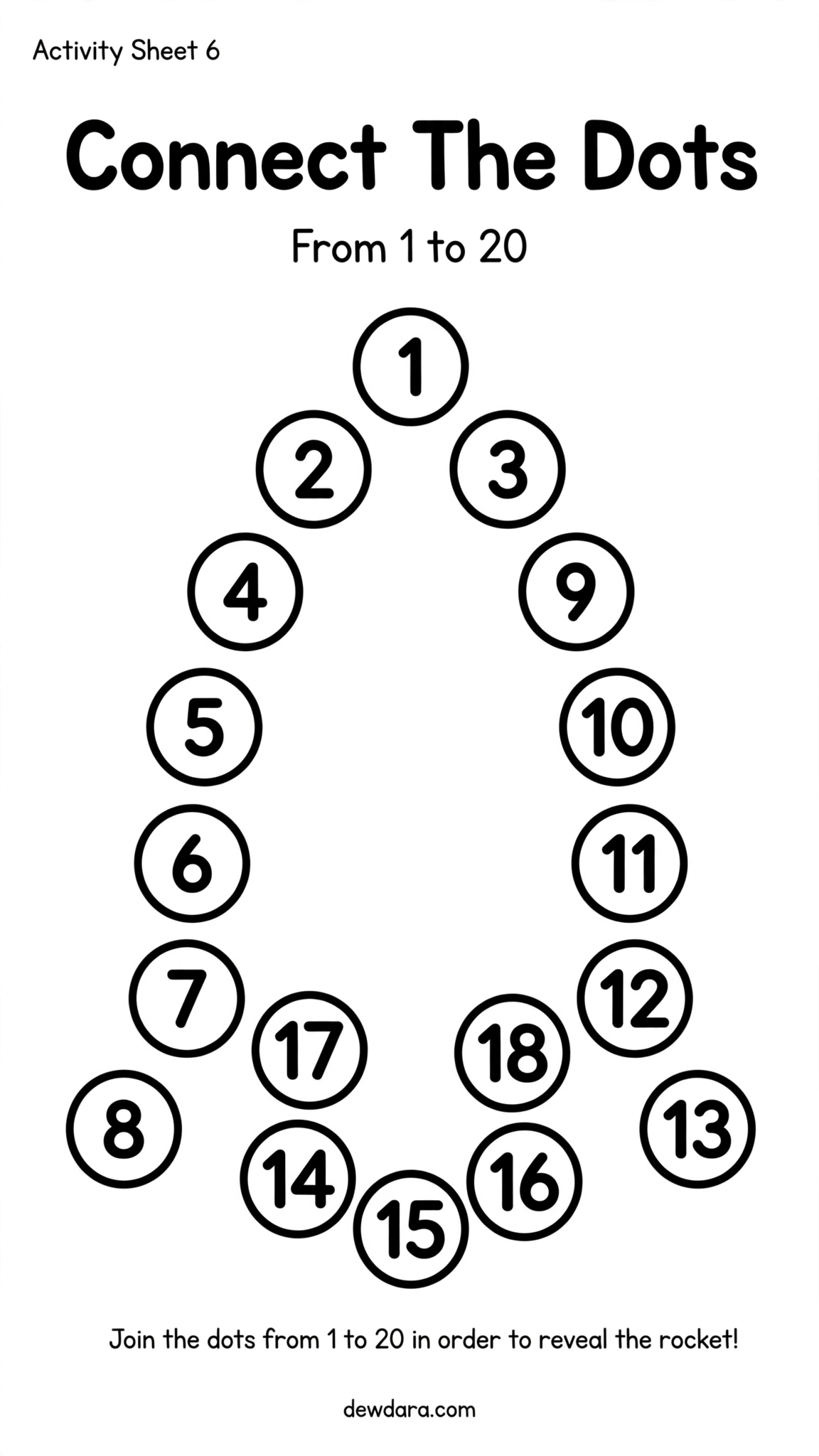
Connect the dots from 1 to 20 to reveal a surprise rocket picture!
What it develops: Number sequencing, counting in order, hand control, and excitement for drawing.
How to use: Ensure kids say each number out loud as they connect. Once complete, they can color the revealed picture.
Best for: Ages 4-6. Makes counting meaningful and fun.
7. Match The Shadows – Visual Matching
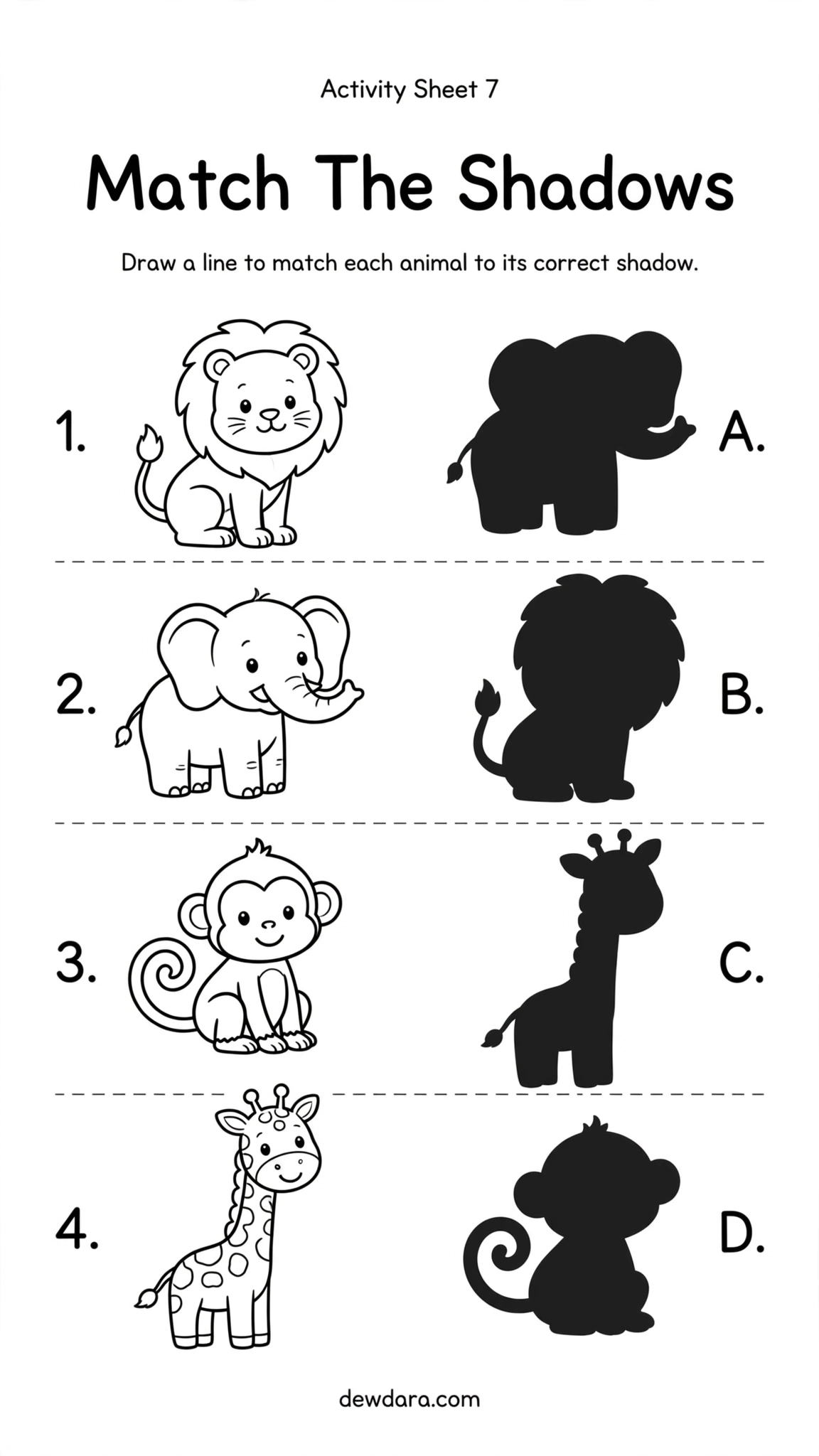
Match each cute animal to its correct shadow silhouette.
What it develops: Visual perception, shape recognition, and logical matching.
How to use: Draw a line from each animal on the left to its shadow on the right. Ask: “What shape makes this shadow?”
Best for: Ages 3-5. A Montessori-inspired activity.
8. Count and Match – Early Math Foundation
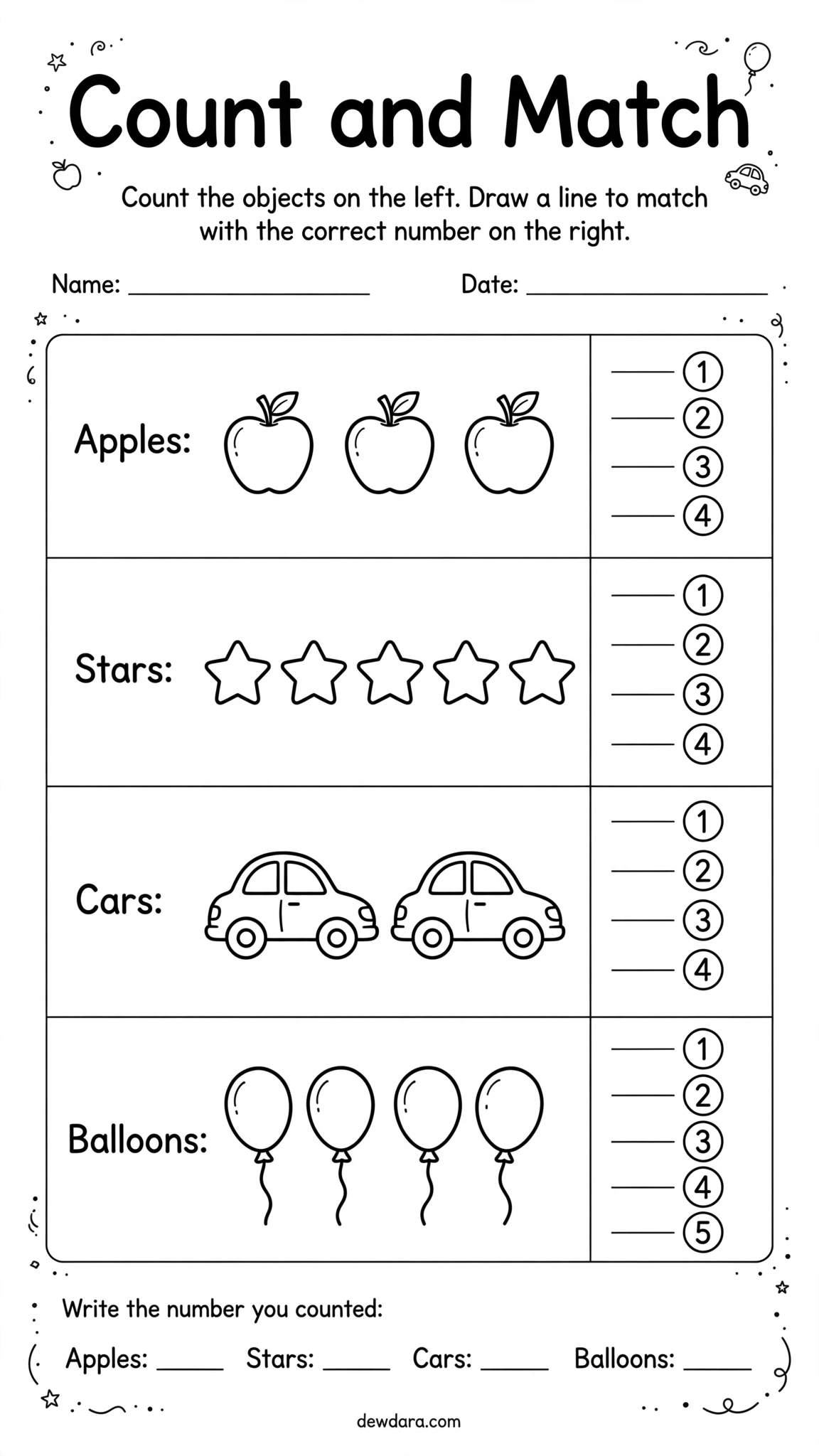
A beautifully clean counting sheet where kids count apples, stars, cars, and balloons and match them to the correct number.
What it develops: One-to-one correspondence, counting, number writing, and early math confidence.
How to use: Count each group together, point and touch each object, then draw a line to the number or write the number in the box.
Best for: Ages 3-5. The perfect introduction to math.
9. Trace The Alphabet A to Z – Handwriting Practice
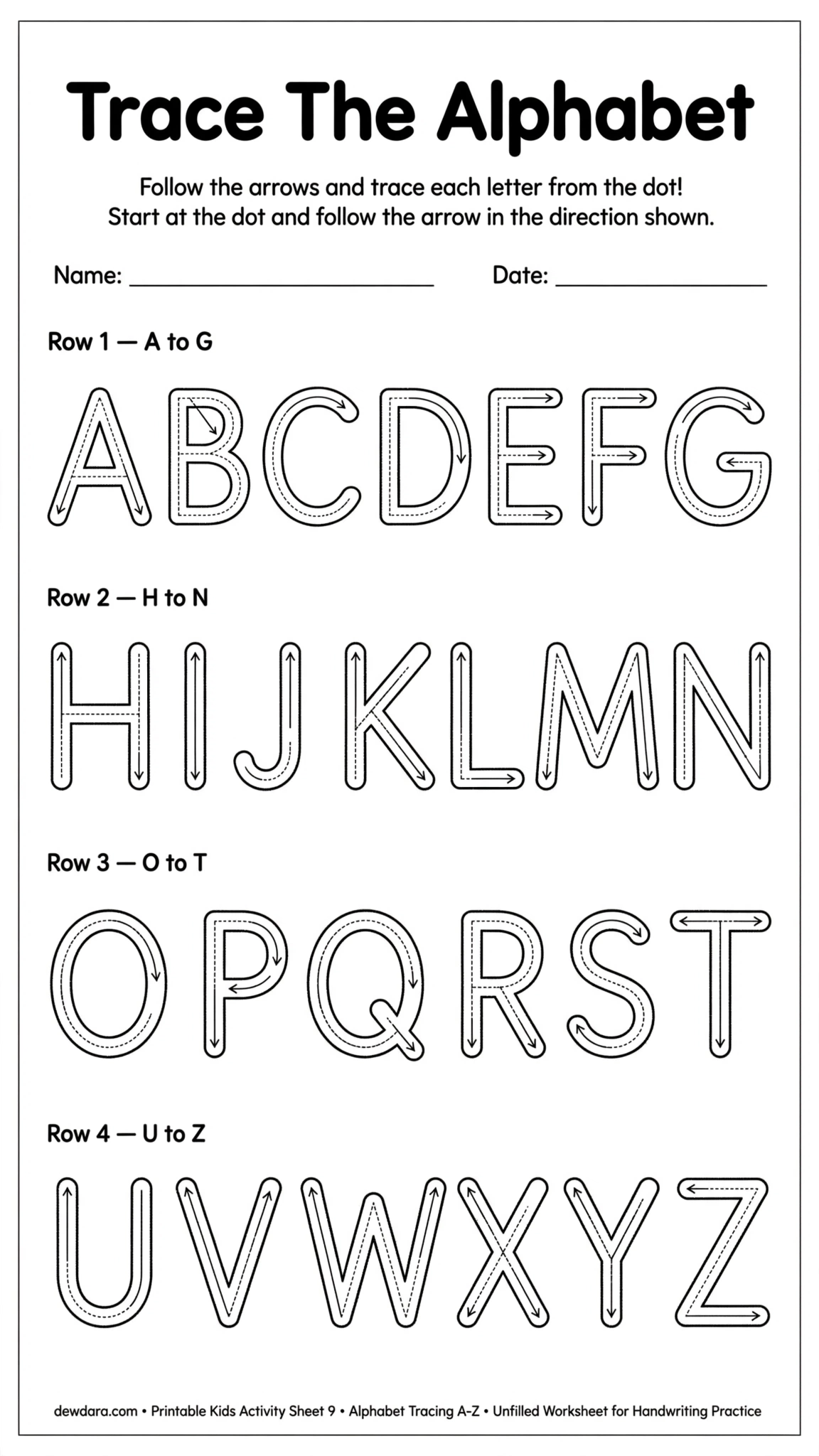
Large, dotted uppercase letters from A to Z with directional arrows for proper letter formation.
What it develops: Letter formation, handwriting, alphabet order, and pencil control.
How to use: Practice 3-4 letters at a time. Use a thick pencil and remind kids to follow the arrows. Laminate it for reusable dry-erase practice.
Best for: Ages 4-6. Essential for preschool and kindergarten.
10. What Comes Next? – Pattern Recognition & Logic
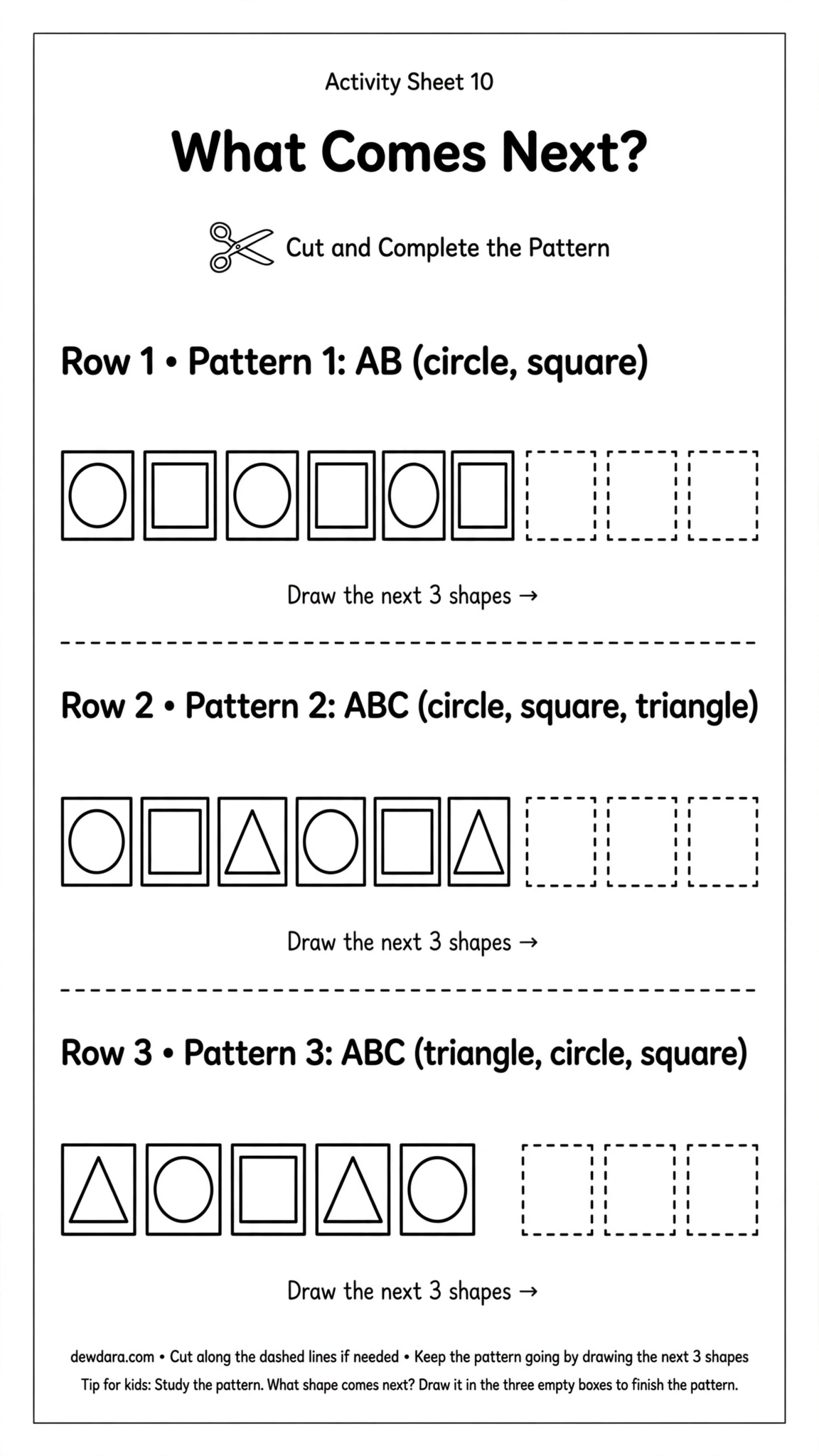
An engaging pattern completion worksheet with AB and ABC patterns using circles, squares, and triangles.
What it develops: Logical thinking, pattern recognition, prediction, and early STEM skills.
How to use: Ask your child to say the pattern out loud: “circle, square, circle, square…” Then let them draw what comes next in the empty boxes.
Best for: Ages 4-7. Builds the foundation for math and coding logic.
11. How Are You Feeling Today? – Emotions & Social Learning
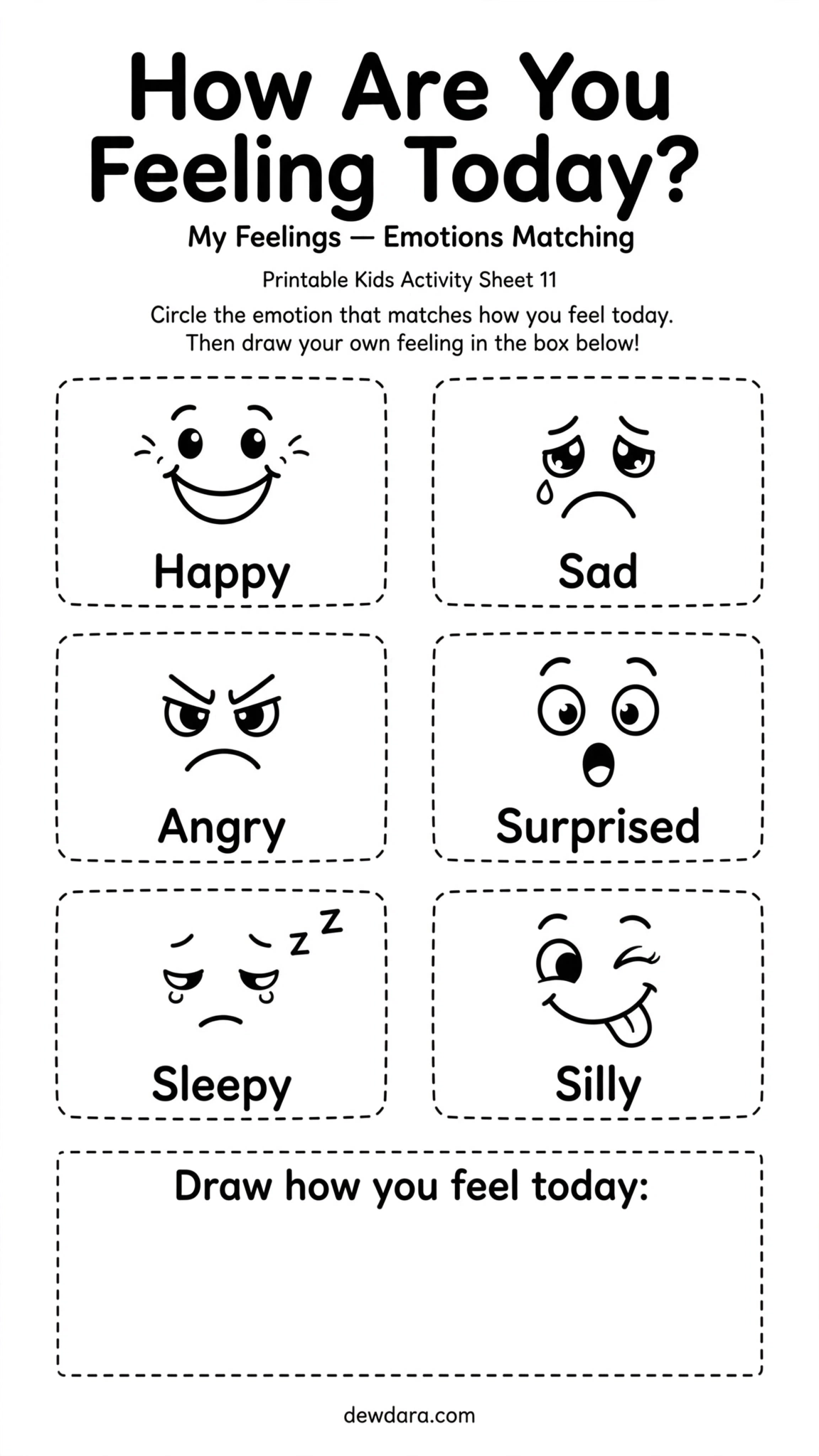
A social-emotional activity featuring 6 big emotions: Happy, Sad, Angry, Surprised, Sleepy, and Silly, with a space to draw their own feeling.
What it develops: Emotional intelligence, self-awareness, vocabulary for feelings, and empathy.
How to use: Talk about each face. Ask: “When do you feel happy?” Then let your child circle how they feel today and draw it in the box below.
Best for: Ages 3-7. Great for morning check-ins at home or in class.
12. I Spy Counting Game – Focus & Counting
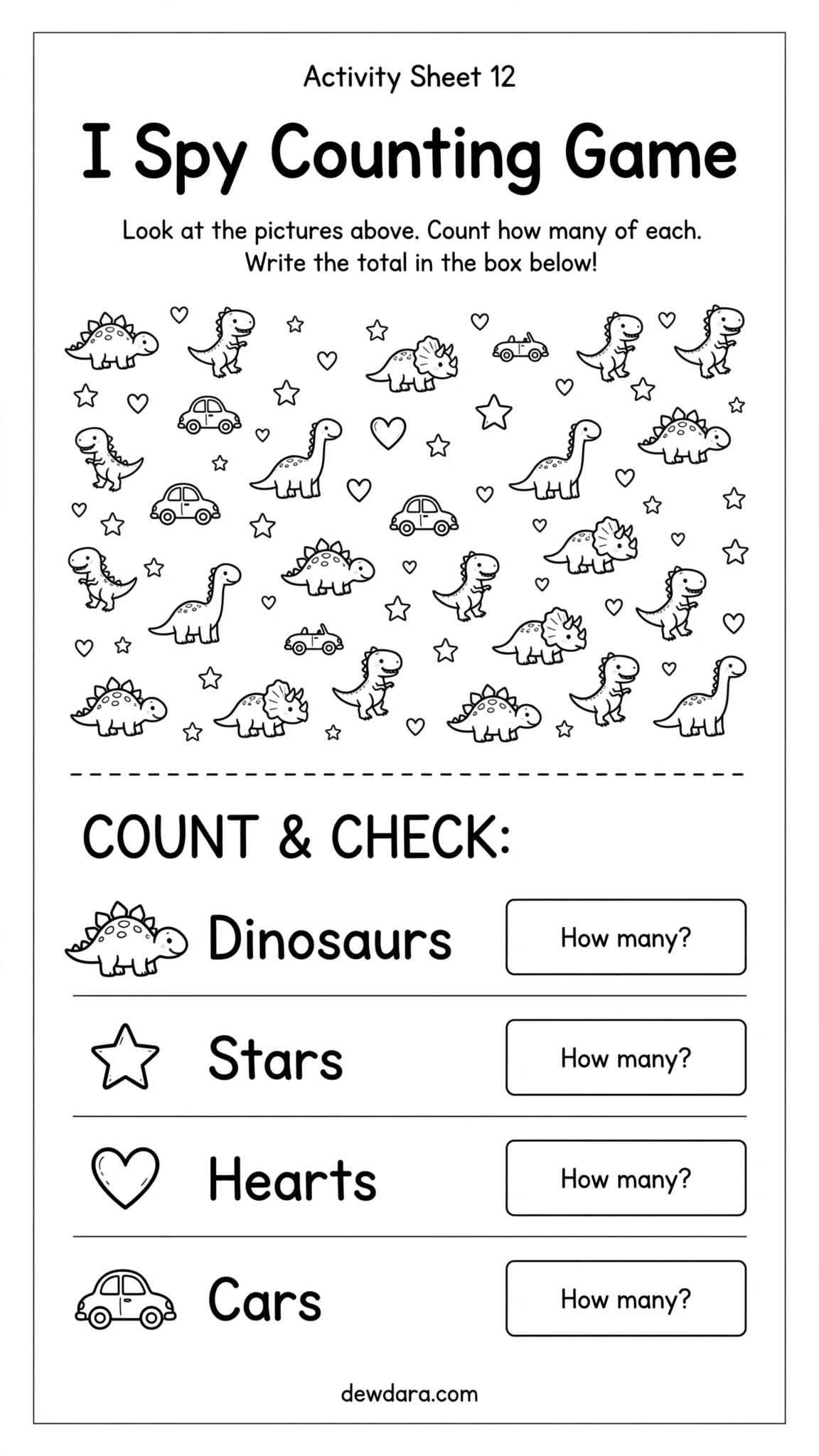
A busy, fun “I Spy” page packed with small pictures to find and count.
What it develops: Counting, concentration, visual scanning, and working memory.
How to use: Find each type of item in the main picture and count how many. Write the number in the checklist. Make it a race or a team game!
Best for: Ages 4-7. Perfect for travel, waiting rooms, or rainy days.
13. My Five Senses – Science for Little Explorers
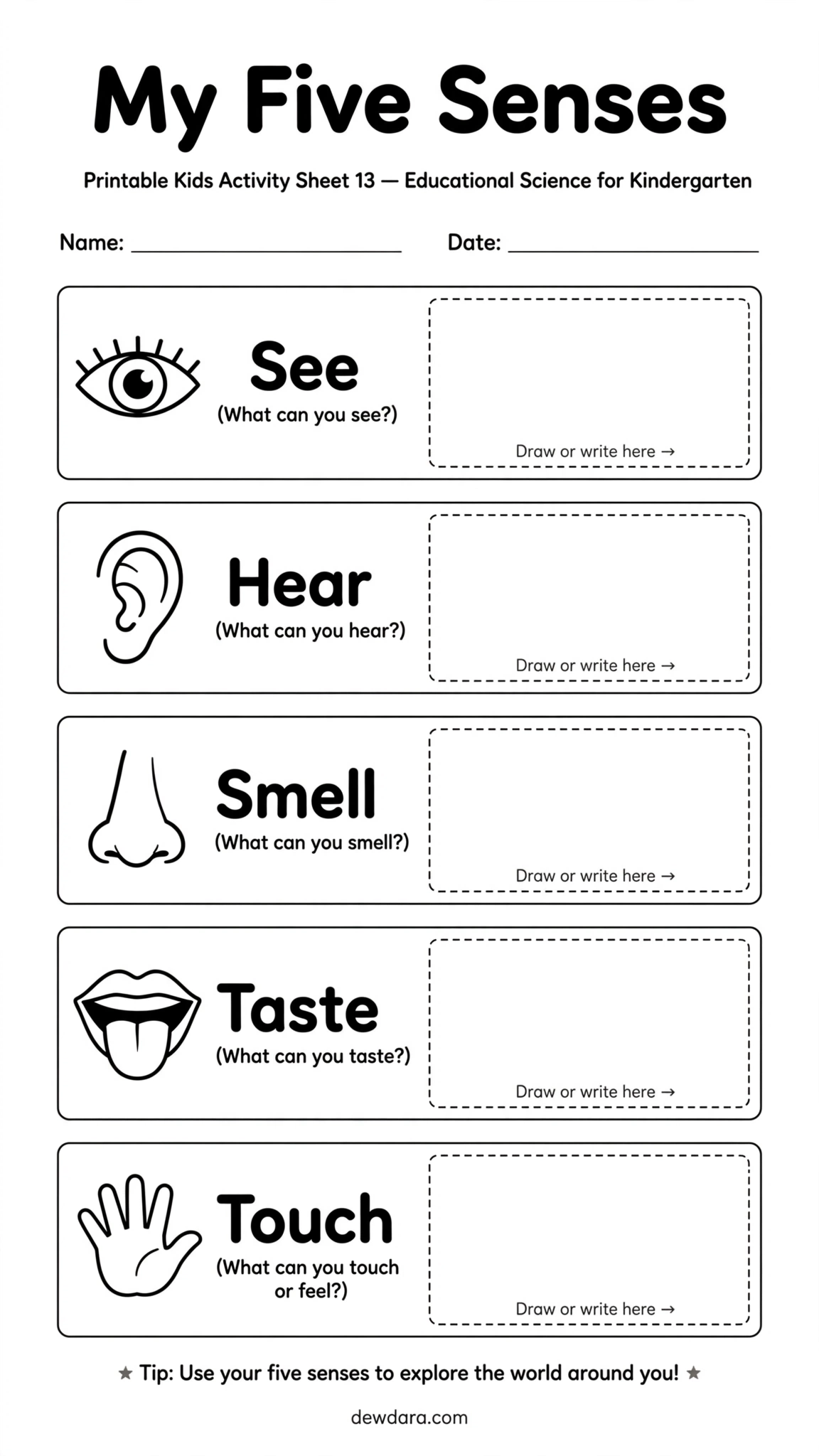
An educational science worksheet introducing See, Hear, Smell, Taste, and Touch with blank boxes to draw.
What it develops: Science understanding, sensory awareness, vocabulary, and observational skills.
How to use: Discuss each sense. Ask: “What do you see with your eyes?” Then let kids draw or write an example for each sense.
Best for: Ages 4-7. A wonderful first science lesson.
Conclusion
These 13 printable activity sheets are more than just paper — they are tools to build confidence, independence, and a love for learning. They are intentionally designed to be uncluttered, easy to print, and effective for both home and classroom use.
Keep them in a binder, use them as morning work, homework, or a screen-free weekend activity pack. For best results, print on A4 or Letter size paper and let your child work at their own pace.
All sheets are free to download and print from dewdara.com. Print the whole set today and turn any ordinary day into a creative learning adventure!
Tip: For reusable fun, laminate your favorite sheets and use dry-erase markers.