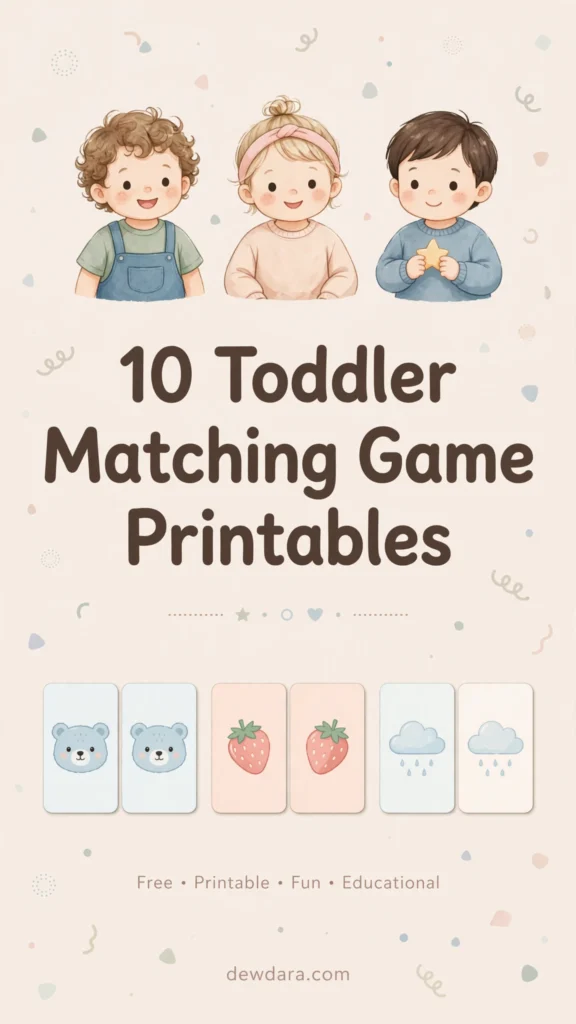
10 Toddler Matching Game Printables for Early Learning Fun
Matching games are one of the most powerful tools in early childhood education. For toddlers aged 2-4, these simple activities do so much more than just keep little hands busy.
They build visual discrimination, improve memory and concentration, develop fine motor skills as children draw lines, and introduce core concepts like colors, shapes, numbers, and language in a playful, low-pressure way.
This collection of 10 printable matching games has been designed with toddlers in mind — large, clear illustrations, simple concepts, and cute, friendly art that invites learning. All printables are blank (not filled), so your little one can do the matching themselves. Just print, grab a crayon or marker, and let the learning begin.
All printables are from dewdara.com and are free for personal and classroom use.
1. Animal Shadow Matching Game
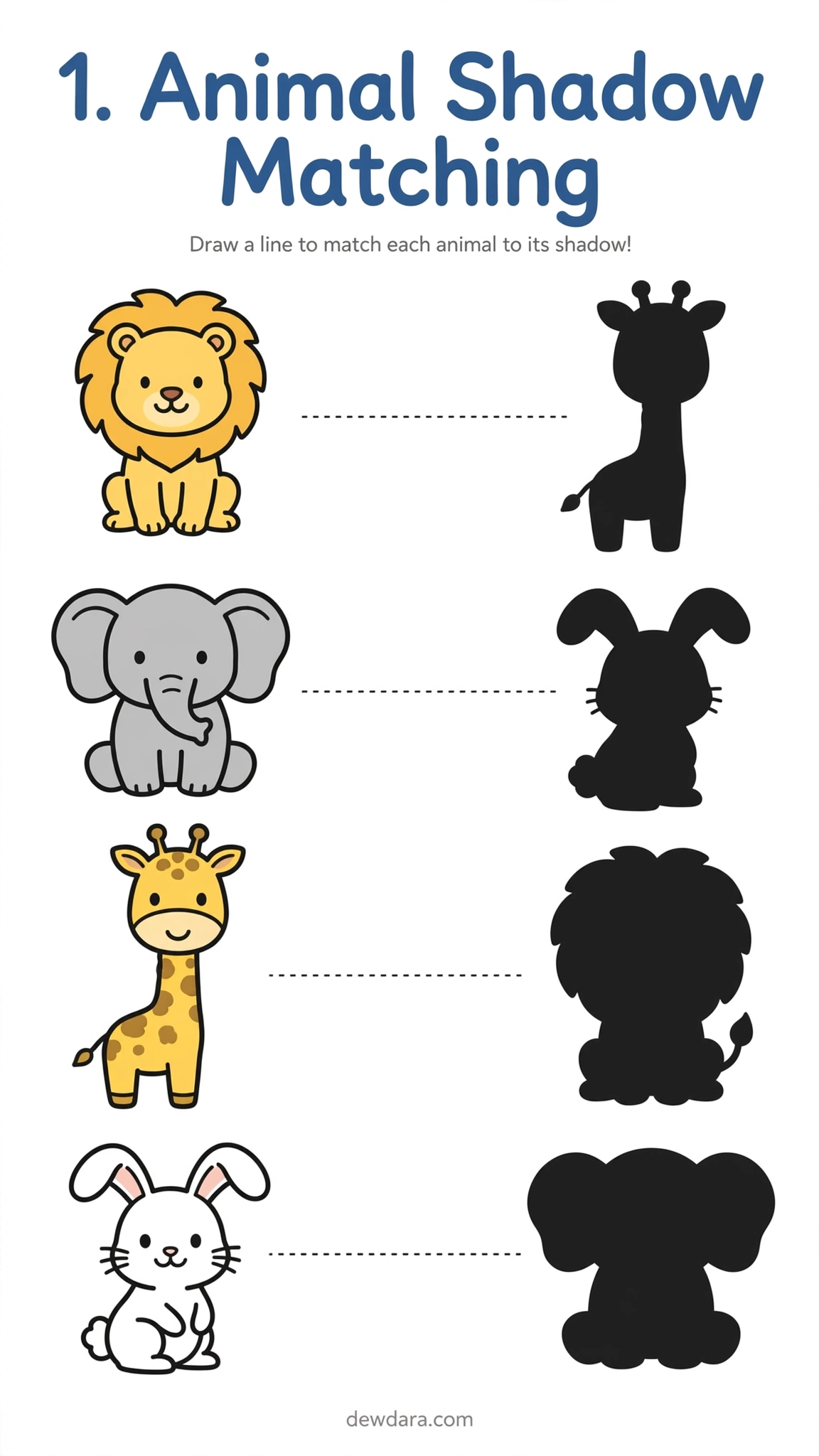
This classic shadow matching game is perfect for building observation skills. On the left, your toddler sees four friendly animals in full color, and on the right, their black silhouettes in a mixed order.
What it teaches: Visual perception, attention to detail, and animal recognition. Shadow matching helps toddlers learn to identify an object by its outline alone, which is a key pre-reading skill.
How to use it: Ask your child to look carefully at the shape of each animal. “Can you find where the lion’s shadow is hiding?” Encourage them to draw a line from the colorful animal to its shadow. Start by pointing and talking about each animal’s features.
Pro Tip: Laminate the sheet and use a dry-erase marker so they can practice again and again.
2. Colors Matching Game
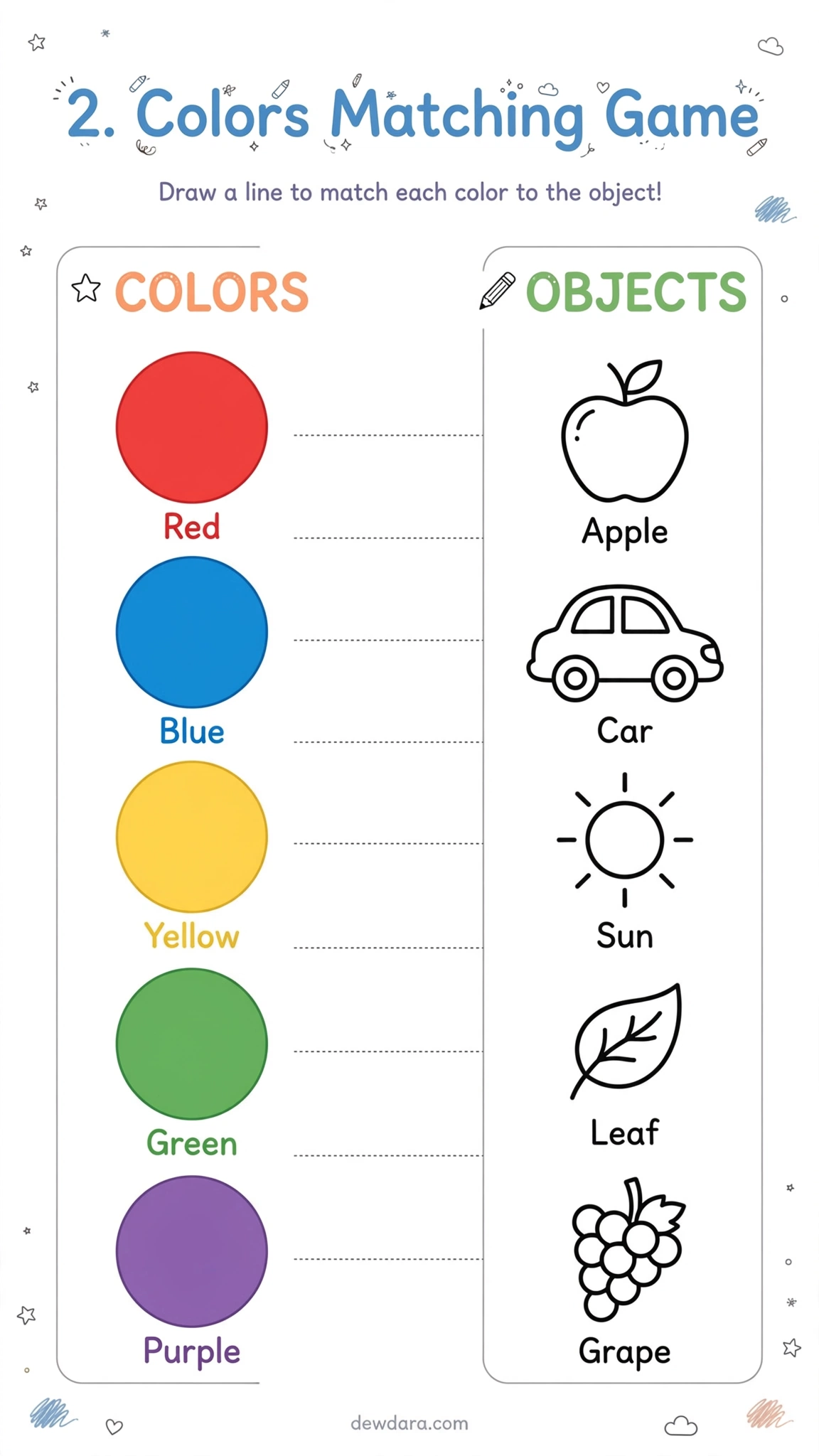
A vibrant introduction to color recognition. This printable pairs solid color circles with familiar objects in the same color family.
What it teaches: Color identification, vocabulary building, and categorization. Connecting abstract colors to real-world objects helps solidify learning.
How to use it: Name each color out loud. “This is red. Can you find something else that is red like an apple?” This is ideal for toddlers who are just starting to learn their colors.
Learning Extension: After completing the sheet, go on a color hunt around the house to find more objects of the same color.
3. Shapes Matching Game
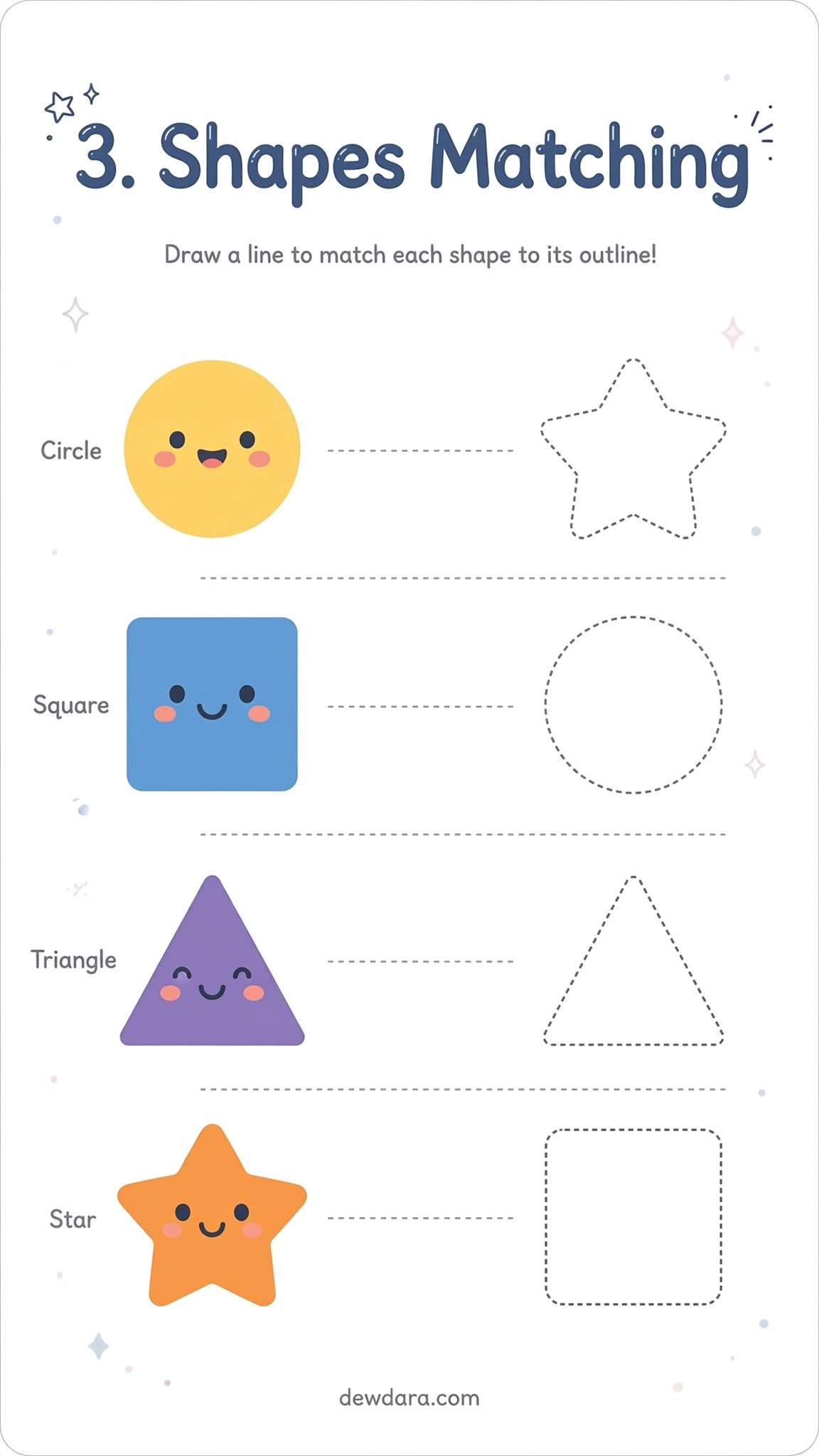
Shapes are everywhere, and this worksheet makes them friendly and memorable by giving each shape a cute face.
What it teaches: Shape recognition, early geometry awareness, and problem-solving. Recognizing shapes is a foundational math skill.
How to use it: Let your toddler trace the shapes with their finger first. Talk about the number of sides: “A triangle has three sides, a square has four.” Then match each happy shape to its outline partner.
Pro Tip: Perfect for ages 2.5+ when shape curiosity peaks.
4. Numbers & Counting Match (1-5)
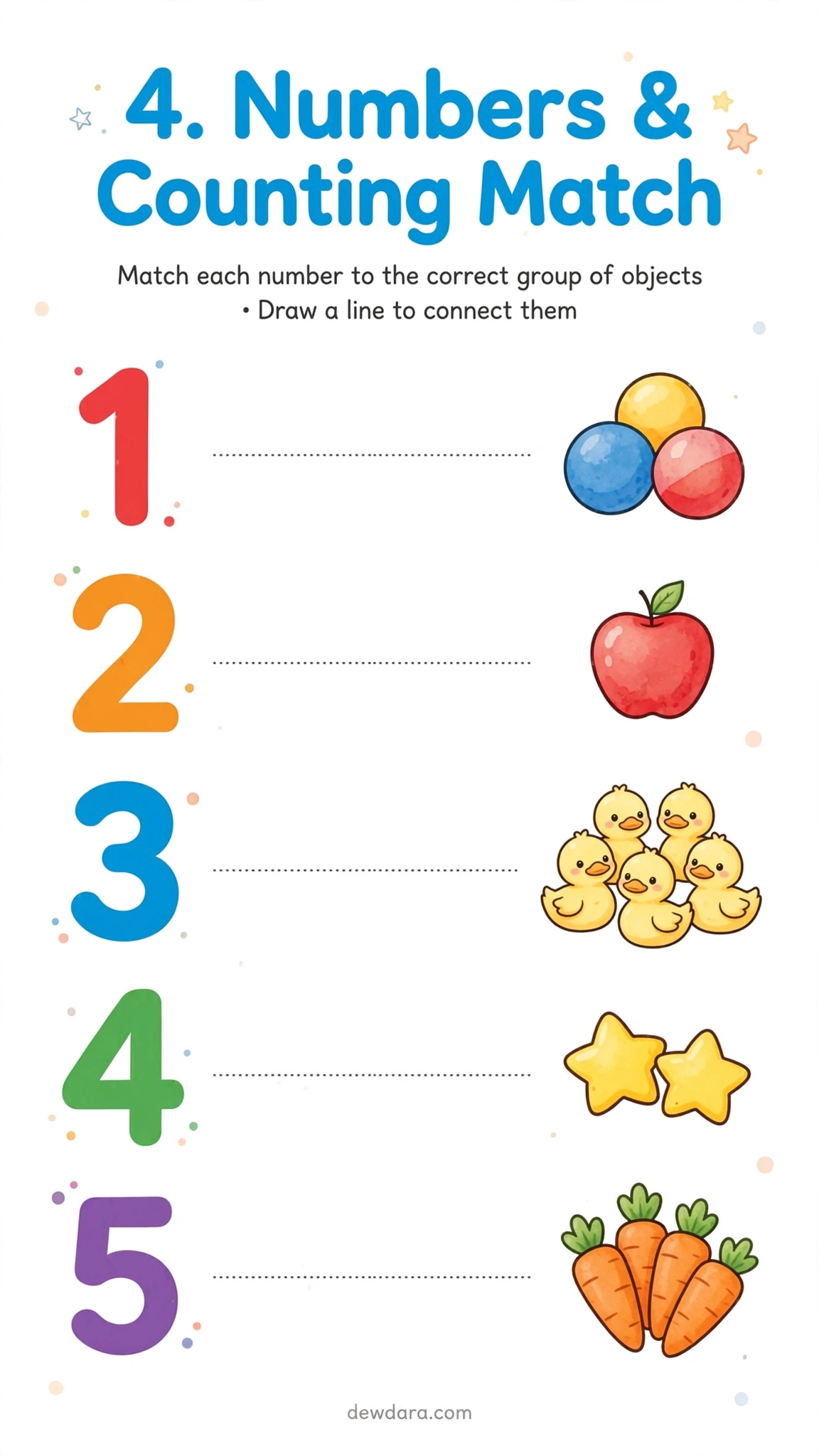
The perfect first numbers worksheet. One side shows big, bold numbers 1 through 5, and the other side shows sets of objects to count.
What it teaches: Number recognition, one-to-one correspondence, counting, and early math confidence. This connects the numeral symbol to its quantity.
How to use it: Encourage your child to count out loud while pointing to each object in the group. “Let’s count: 1, 2, 3 balls. So 3 matches with the number 3.” Use small toys or cheerios to make it hands-on.
5. Fruit Matching Game
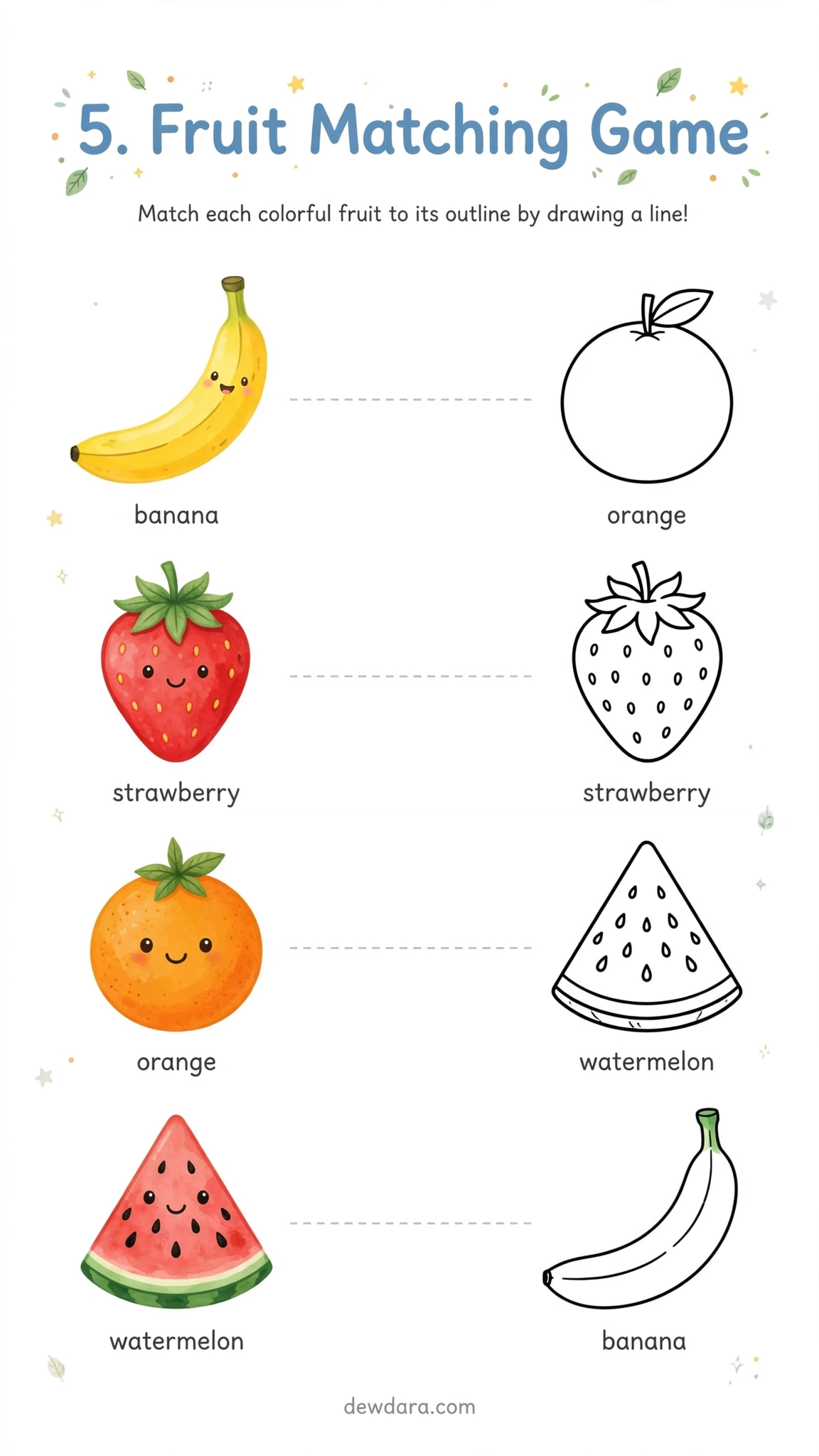
A deliciously fun game featuring the sweetest fruits. Colorful, smiling fruits need to be matched to their outline.
What it teaches: Fruit names, healthy food awareness, color and shape differentiation, and fine motor control.
How to use it: This printable is wonderful for language development. As they match, talk about taste, color, and texture. “Banana is yellow and soft. Have you eaten a banana today?” The word labels under each fruit also support early print awareness.
6. Alphabet ABC Matching (Uppercase to Lowercase)
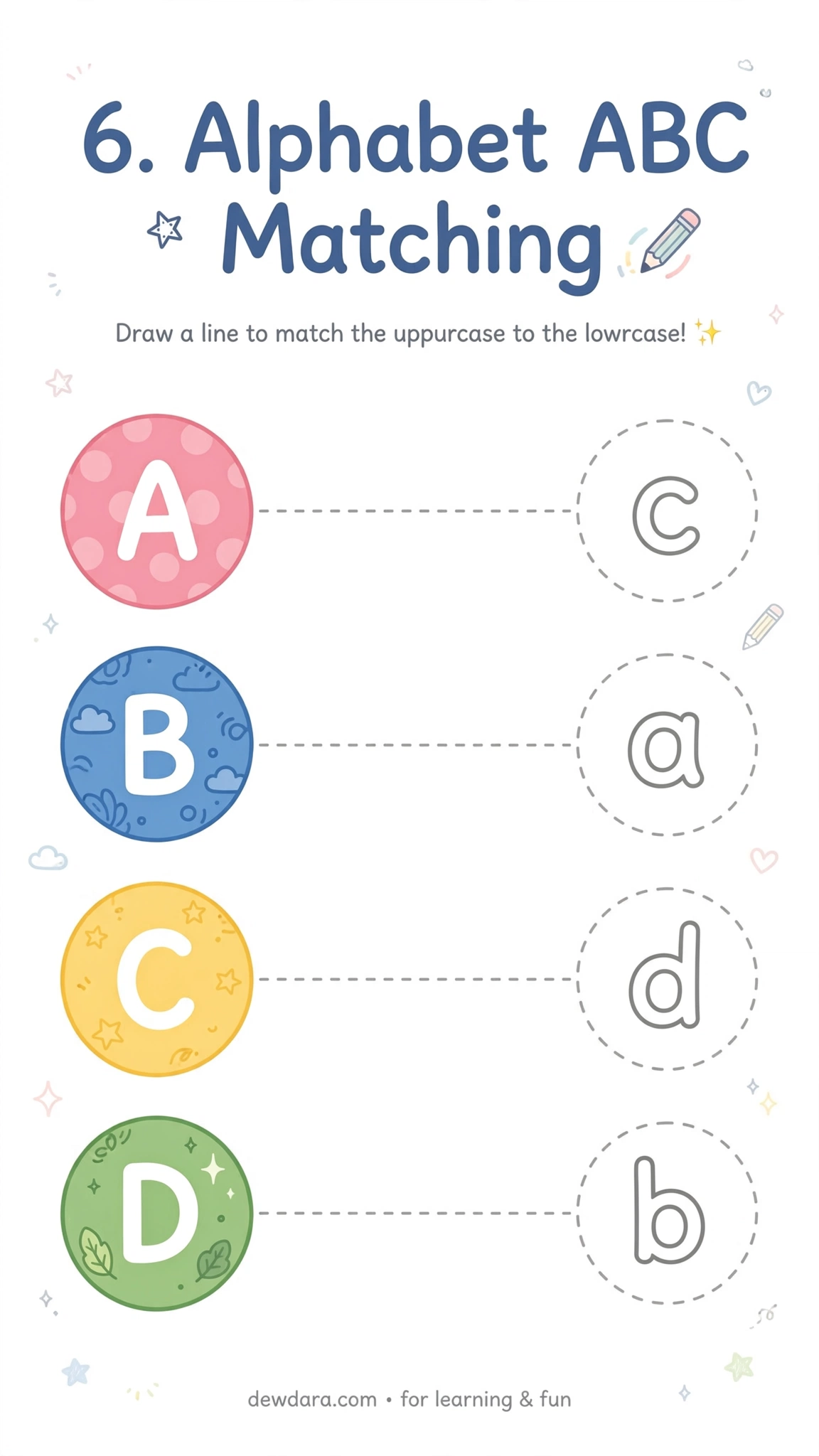
A gentle introduction to the alphabet, focusing on matching big letters to little letters.
What it teaches: Letter recognition, uppercase and lowercase correspondence, and pre-literacy skills. This is a crucial step before reading.
How to use it: Focus on just 4 letters at a time to avoid overwhelming your toddler. Say the letter sound: “A says ‘ah’ like in Apple. This big A matches with little a.” The dotted lines are perfect for practicing pencil grip.
Ideal for: Preschool prep and toddlers showing interest in letters.
7. Animal Babies Matching Game
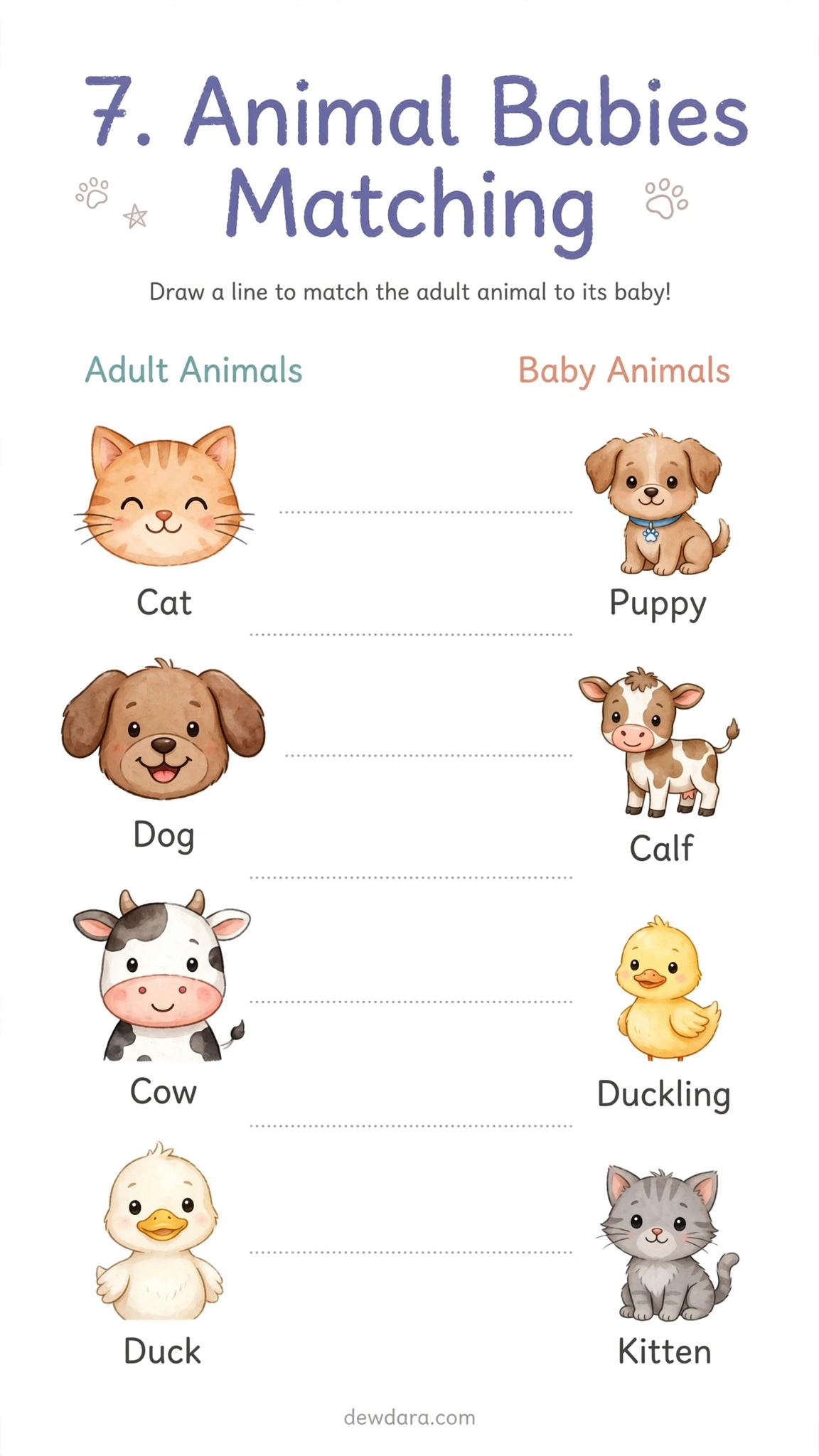
One of the most loved themes for toddlers — matching mamas and babies. Match the adult animal to its baby.
What it teaches: Animal names, nurturing relationships, vocabulary expansion (kitten, puppy, calf, duckling), and empathy.
How to use it: Turn it into a story. “The mama cat is looking for her kitten. Can you help her find it?” This makes the activity emotionally engaging and memorable.
8. Vehicles Matching Game
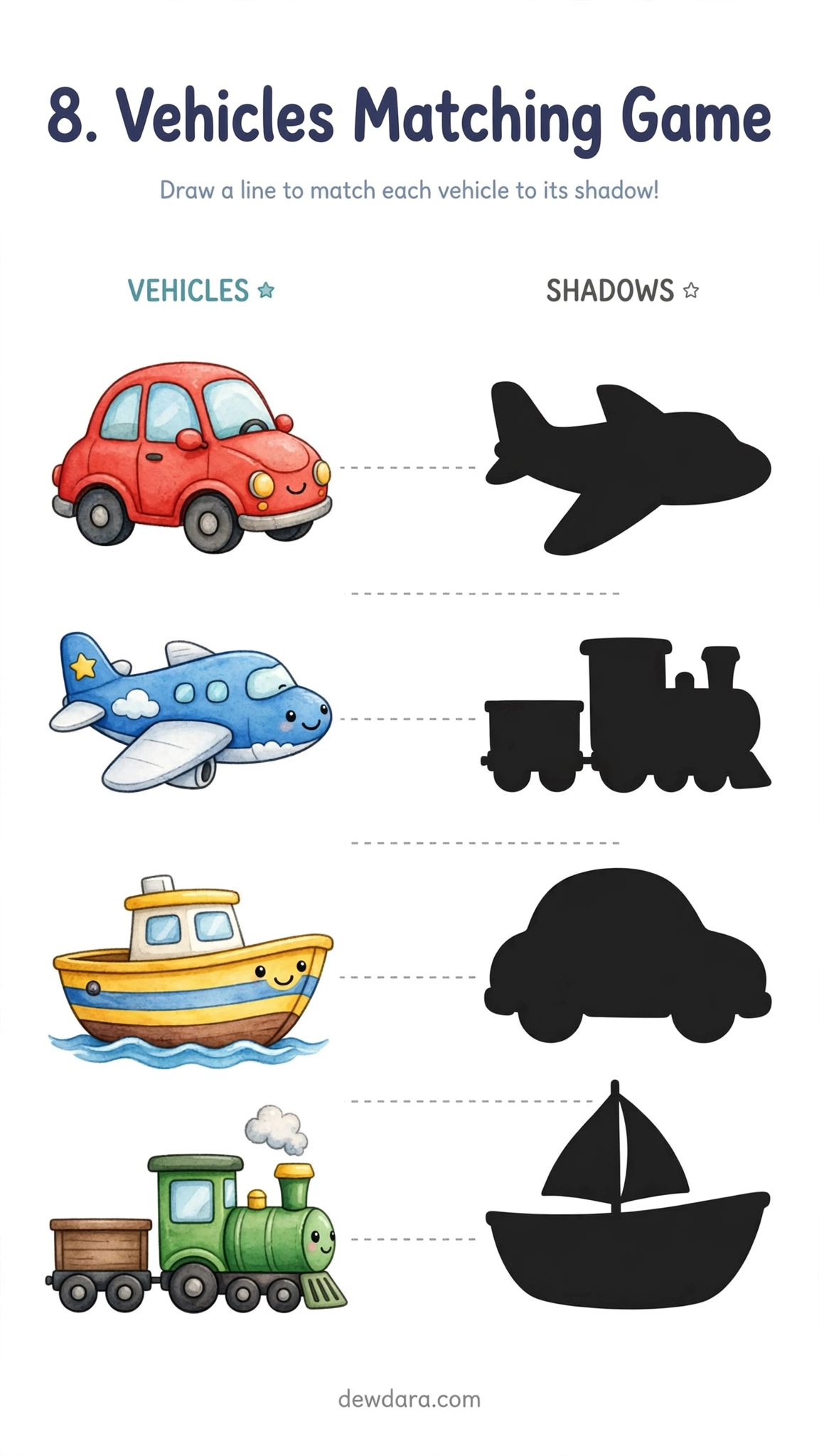
Vroom, vroom! Perfect for little vehicle enthusiasts. Colorful vehicles matched to their silhouettes.
What it teaches: Vehicle names, sound association, visual memory, and focus. Transportation themes are highly motivating for toddlers.
How to use it: Make the sounds together: “The airplane goes whoooosh!” This adds auditory learning and makes it more interactive. Ask, “Where does a boat go? On water!”
9. Food & Animal Matching Game
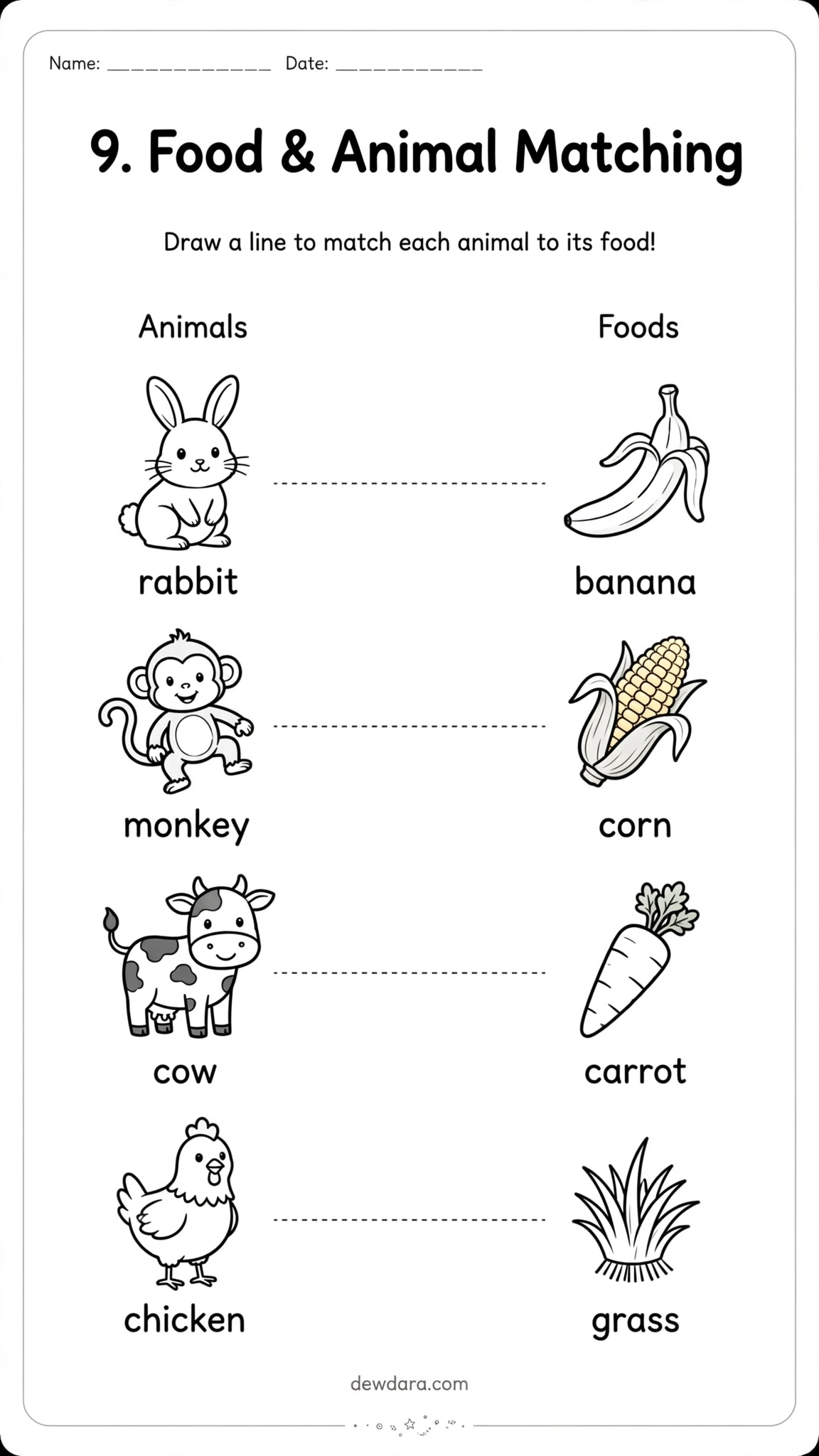
What does each animal love to eat? This logical matching game connects animals to their favorite foods.
What it teaches: Animal diets, logical reasoning, cause and effect, and vocabulary. It moves beyond simple visual matching to conceptual thinking.
How to use it: Ask open-ended questions: “Why do you think the rabbit likes the carrot?” This encourages thinking and conversation. It’s a great worksheet to use before snack time.
10. Emotions Matching Game
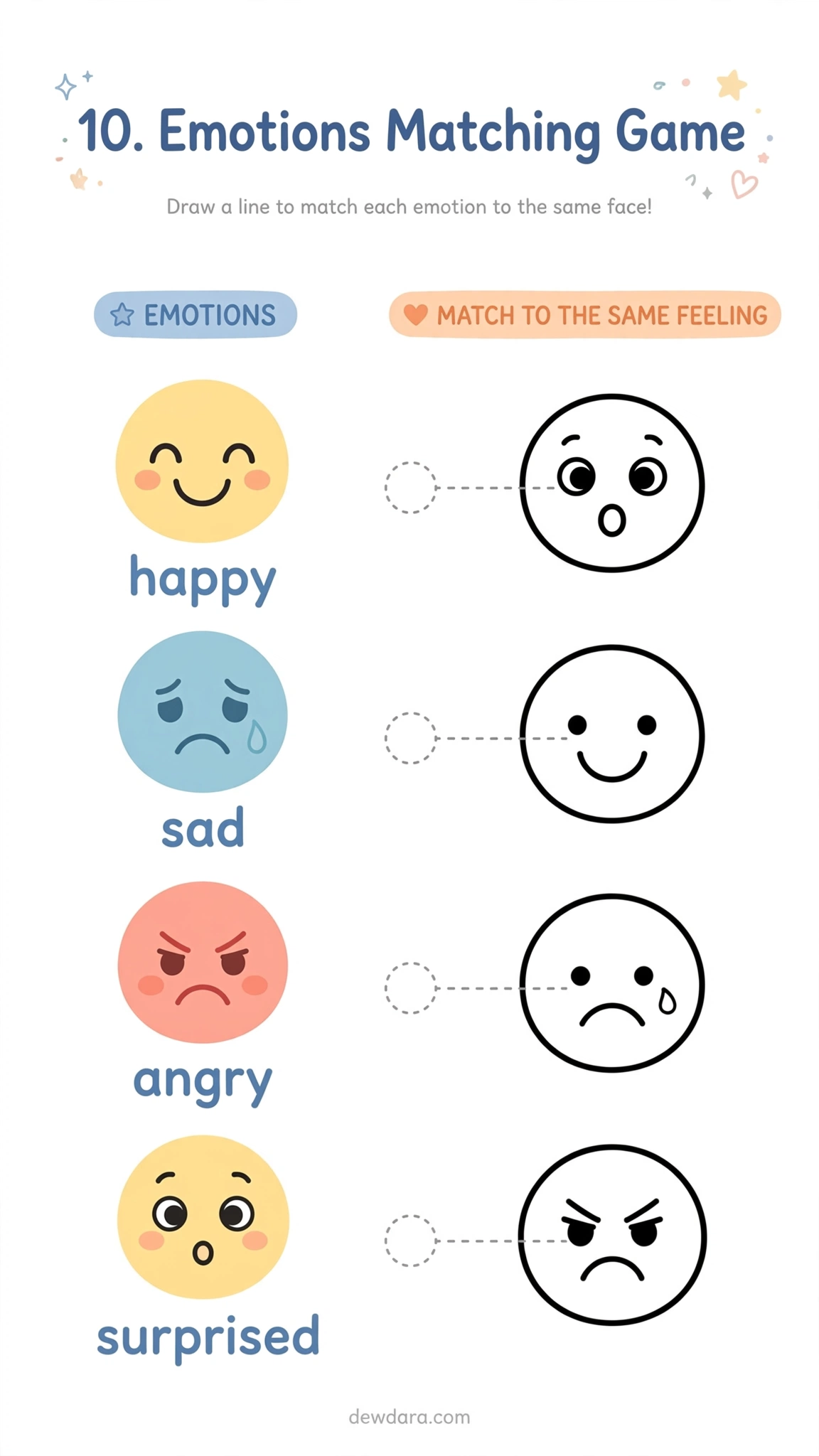
A beautiful and essential printable for emotional intelligence. Match the same feelings together.
What it teaches: Emotional recognition, social-emotional learning (SEL), empathy, and self-expression. Learning to name feelings is one of the most important skills for toddlers.
How to use it: After matching, ask your child to make the face themselves. “Can you make a happy face like this one? When do you feel happy?” This helps toddlers connect the worksheet to their own feelings and builds emotional vocabulary.
Conclusion
These 10 toddler matching game printables are designed to turn a few quiet minutes into powerful learning moments. Keep them in a folder or binder, rotate them through the week, and celebrate every line your toddler draws — it’s a sign of growing concentration and confidence.
For best results:
- Print on thick cardstock
- Use washable markers or crayons
- Laminate for reusable fun
- Always sit with your child and talk through the activity
You can download, print, and share all these printables for personal and classroom use from dewdara.com.
Which matching game will you try first?
All illustrations and printables are original creations by dewdara.com. Please do not resell or redistribute without permission.