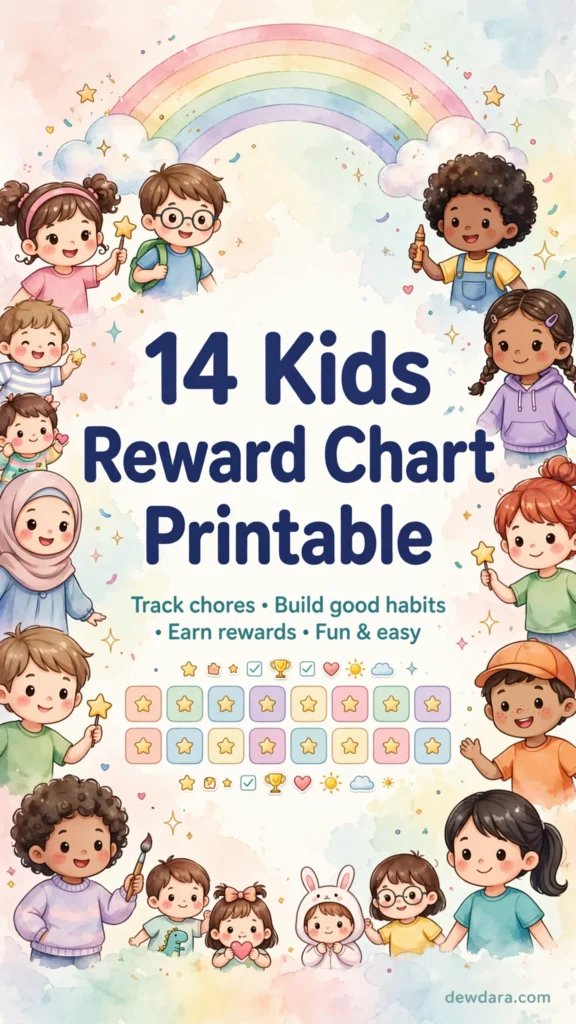
14 Kids Reward Chart Printable – Fun Ways to Motivate Your Little Ones
Positive reinforcement is one of the most effective and gentle ways to guide children’s behavior. A well-designed reward chart transforms everyday tasks into exciting achievements, helping kids build confidence, independence, and healthy habits without nagging or punishment.
These printable charts are based on child psychology principles of visual tracking and immediate positive feedback. When children can see their progress with stickers, stars, or colors, they feel a sense of ownership over their actions. The key is consistency, praise, and keeping it fun.
Below are 14 professionally designed, ready-to-print charts for every age and need. Just print, add your child’s name, and start rewarding with stickers or stamps. All printables are free from dewdara.com.
1. Daily Routine Rainbow Chart
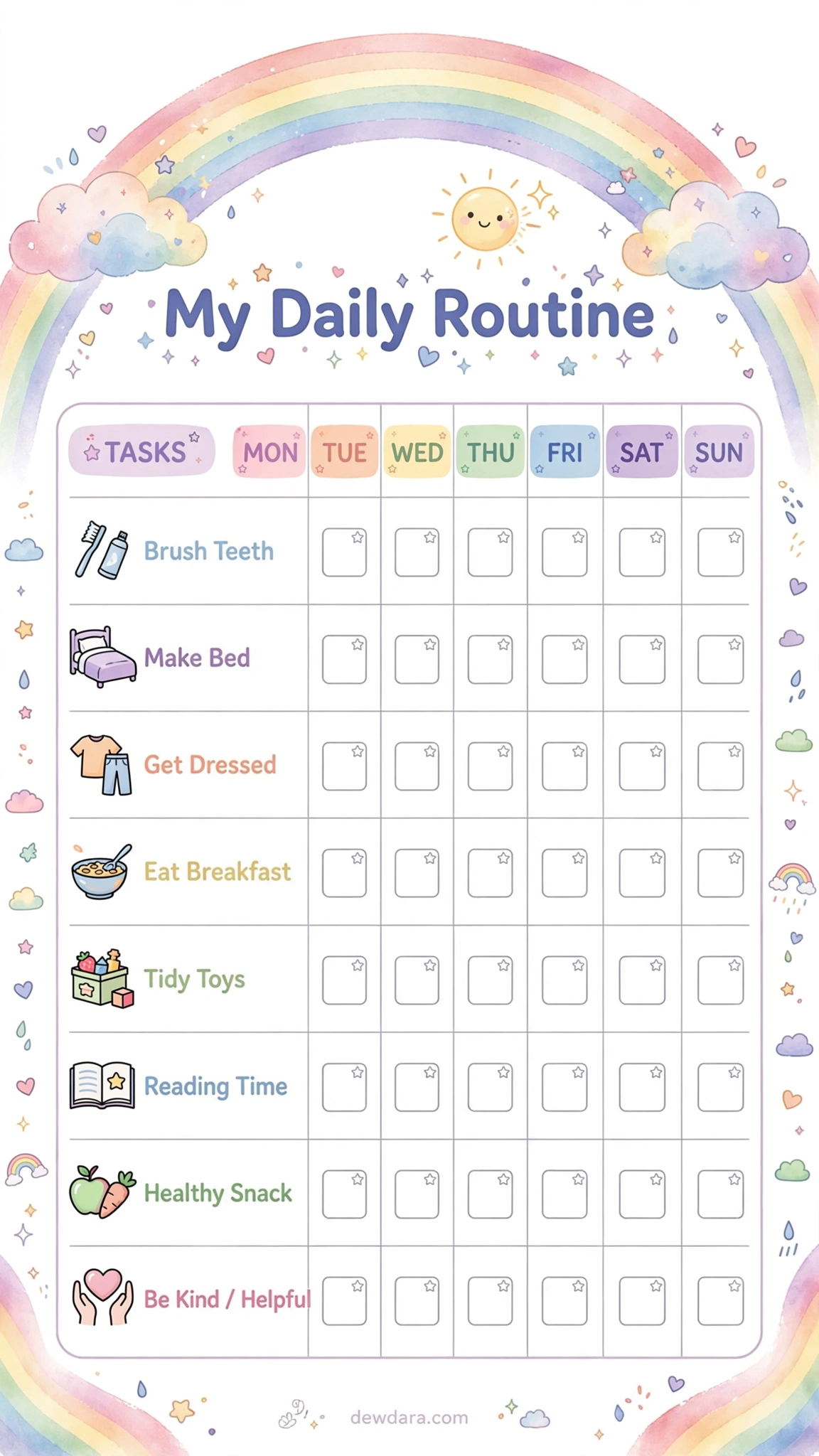
This all-in-one daily tracker is perfect for building structure. It features a soft rainbow border with 7 days and 8 daily task rows with cute icons for brushing teeth, making the bed, eating breakfast, and more.
How to use: Let your child place a star sticker or checkmark for each task completed. At the end of the week, celebrate 30+ stars with a small family reward. Best for: Ages 4-8. Pro Tip: Laminate it and use dry-erase markers to reuse it every week.
2. Morning & Bedtime Routine Chart
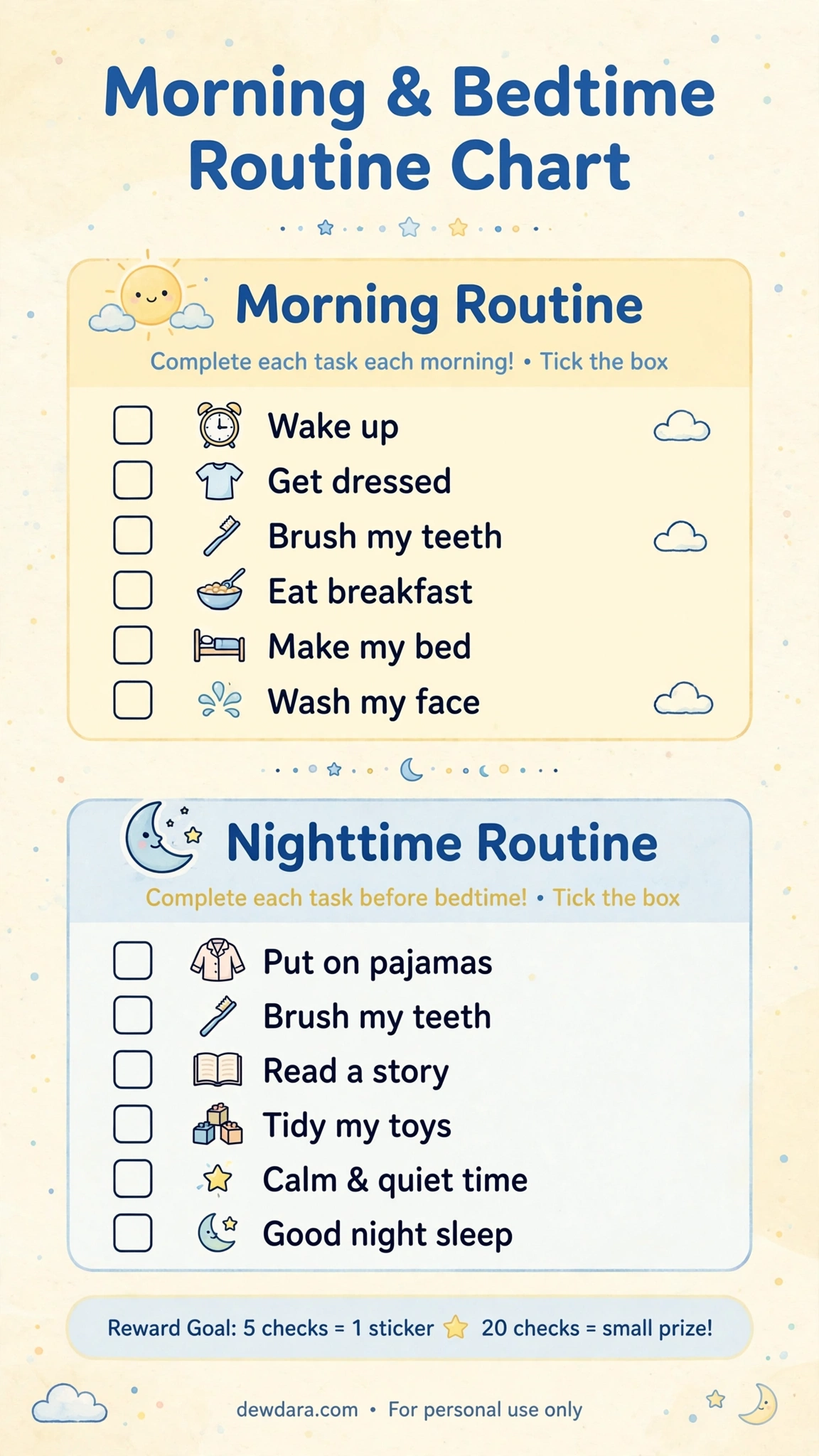
Mornings and nights are the biggest struggle zones. This chart is split into a sunny Morning section and a calm Moonlit Night section to create clear separation.
How to use: Focus on 3-4 key steps per routine (e.g., brush, dress, backpack / bath, book, lights out). Best for: Ages 3-7. Pro Tip: Pair it with a visual timer – 5 minutes per task keeps things moving without stress.
3. Weekly Chores Chart
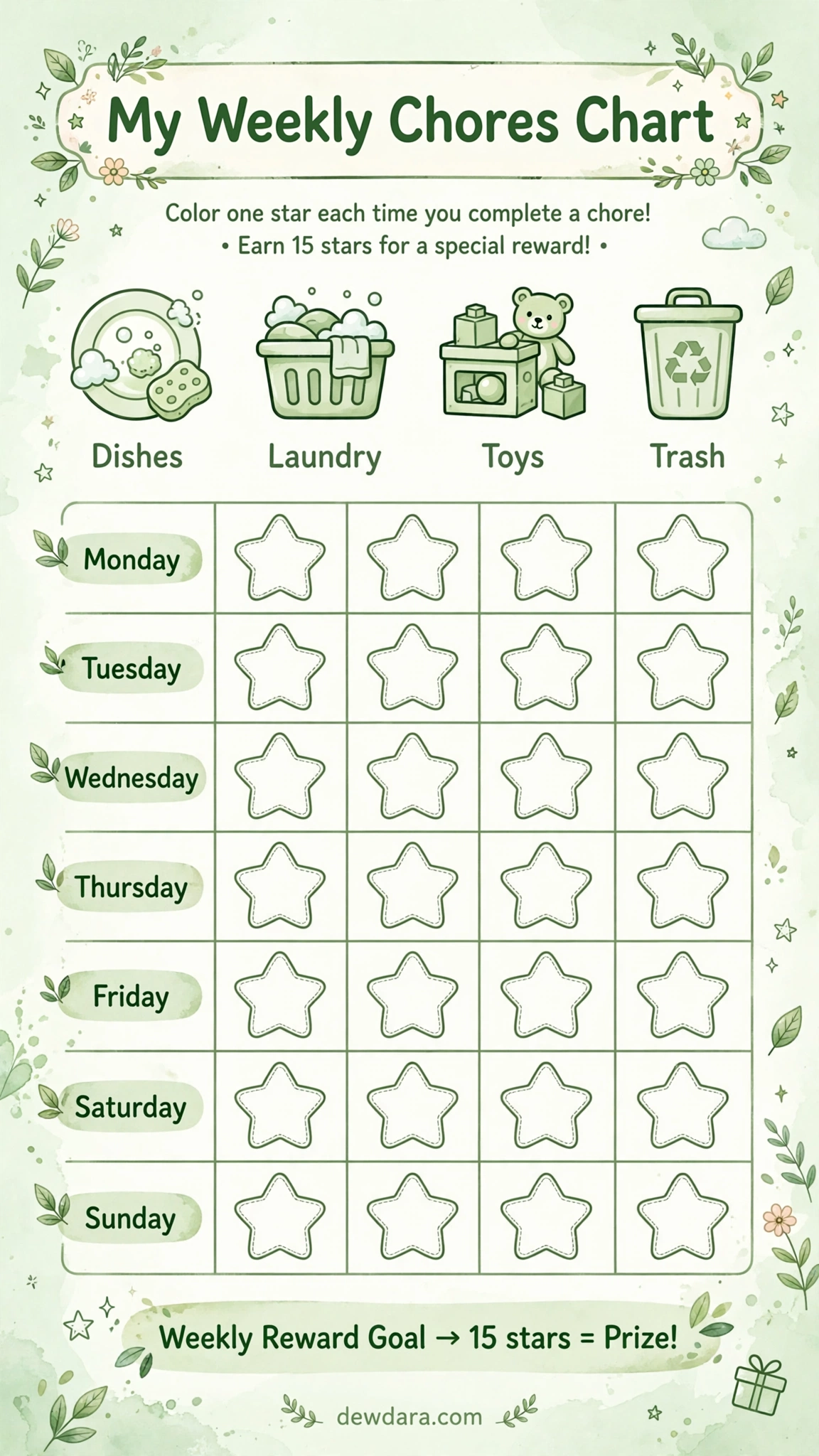
Teaches responsibility in an age-appropriate way. Includes icons for common chores like tidying toys, feeding pets, taking out trash, and helping with laundry.
How to use: Assign 2-3 chores per day, not all at once. Let kids choose a star color for each day. Best for: Ages 5-10. Pro Tip: Rotate chores weekly so it never feels boring.
4. Good Behavior Star Chart
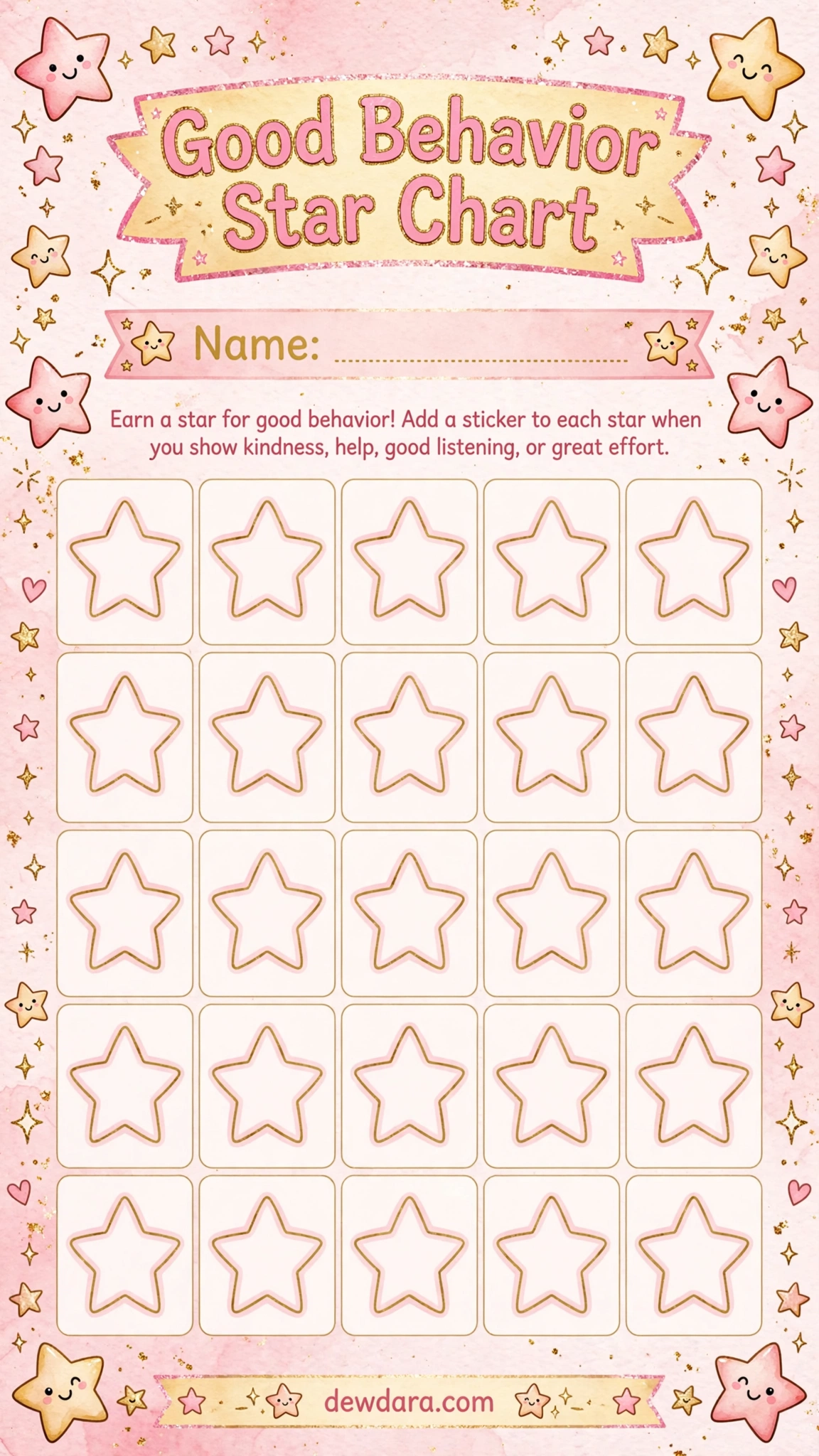
A classic 30-star grid focused purely on positive behavior rather than tasks. Big, open stars are satisfying to fill with stickers.
How to use: Write the child’s name at the top and define 3 target behaviors (e.g., sharing, listening the first time). Best for: Ages 3-9. Pro Tip: Never remove stars for bad behavior – only add for good ones.
5. Potty Training Chart
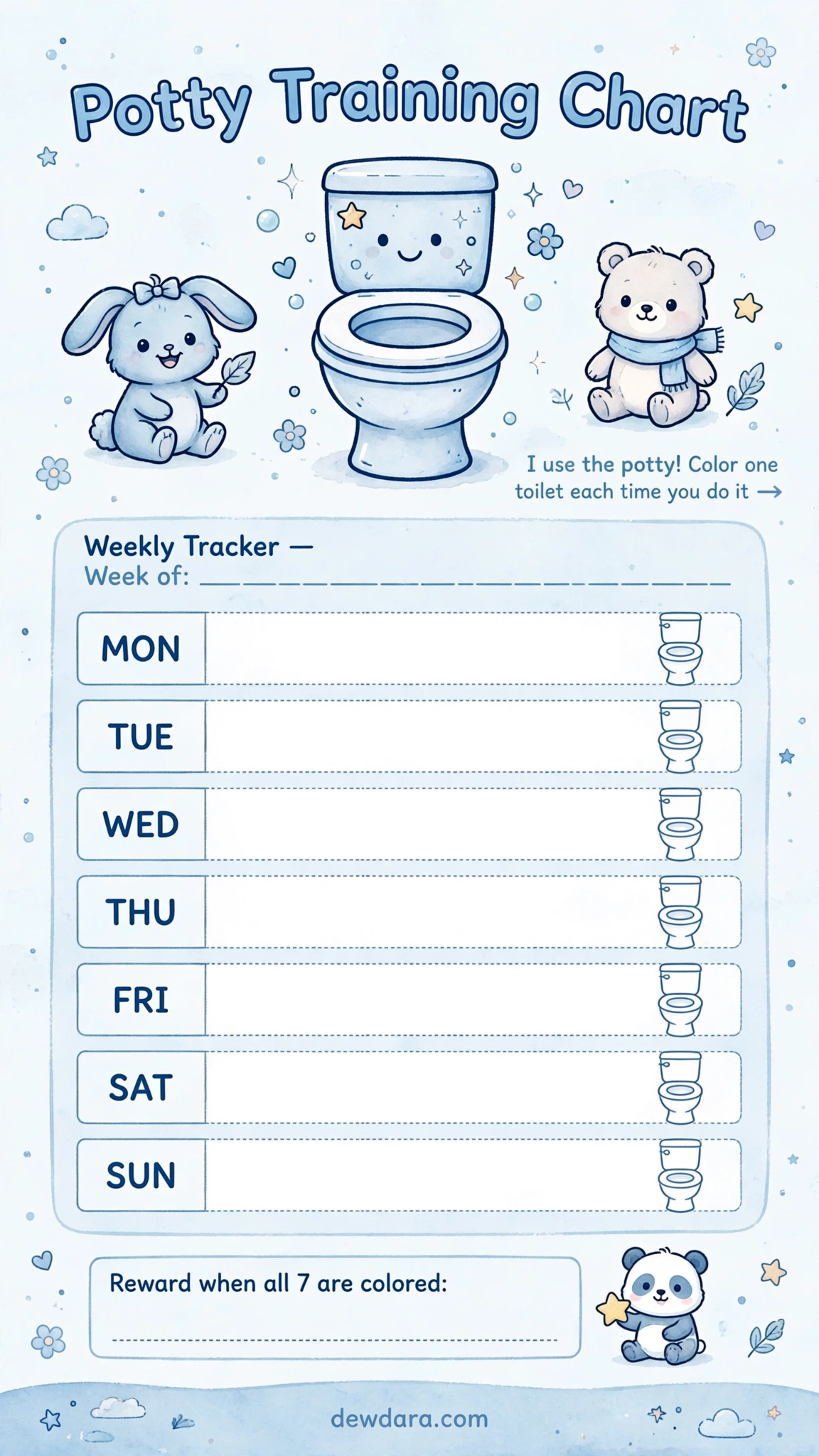
Designed for toddlers with large, simple icons and encouraging language. The toilet and animal illustrations make it non-intimidating.
How to use: Let your toddler color an icon each time they try, not just when they succeed. Effort matters more than outcome at first. Best for: Ages 2-4. Pro Tip: Keep it in the bathroom at eye level and celebrate loudly.
6. Reading & Homework Chart
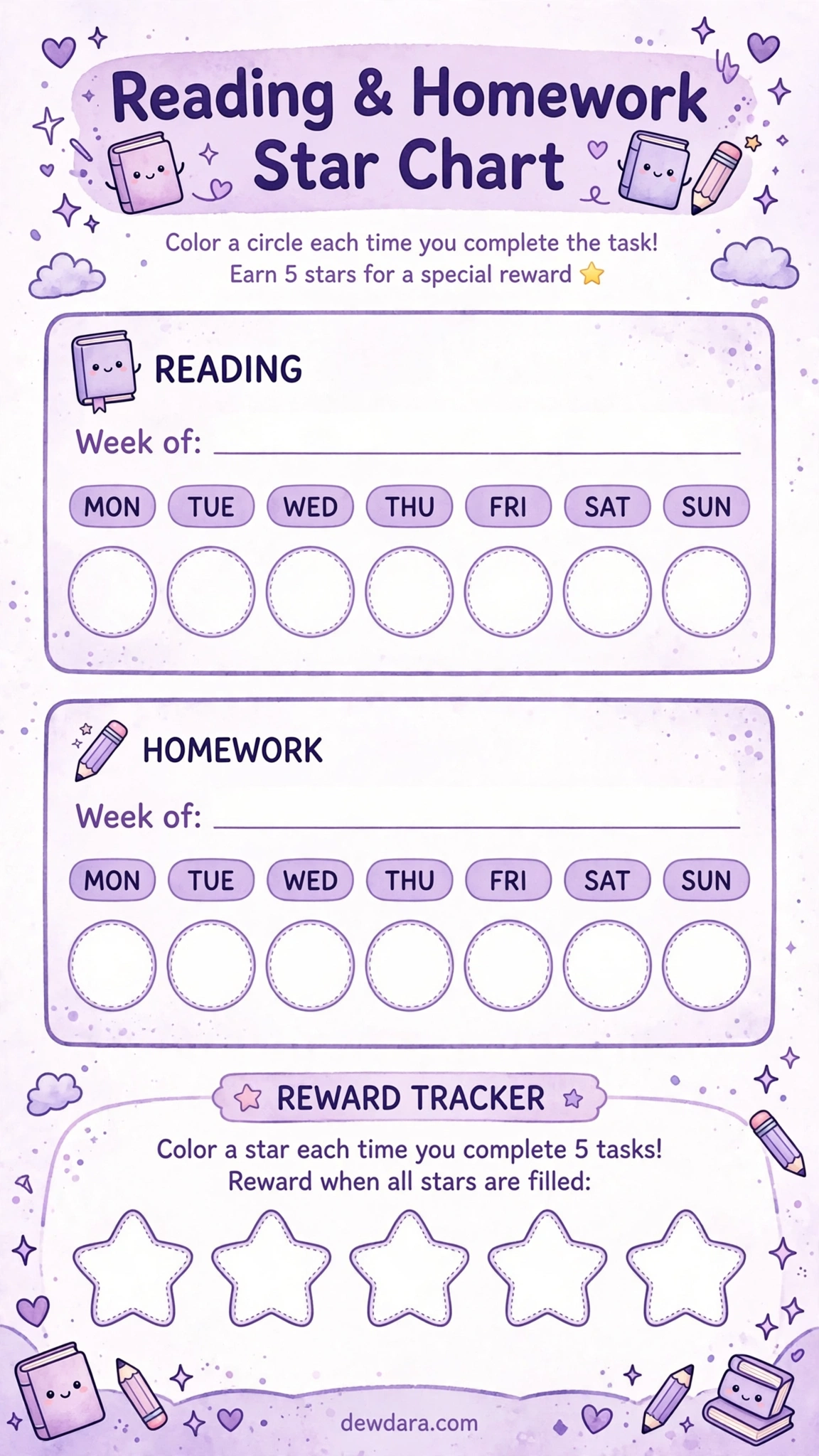
Builds focus and a love for learning. Features books, pencils, and a weekly tracker with empty circles.
How to use: Track 15 minutes of reading or one homework task per circle. Link 5 circles to a book-related reward like a library trip. Best for: Ages 5-10. Pro Tip: Let kids color the circles with different colors for reading vs. homework.
7. Kindness & Manners Chart
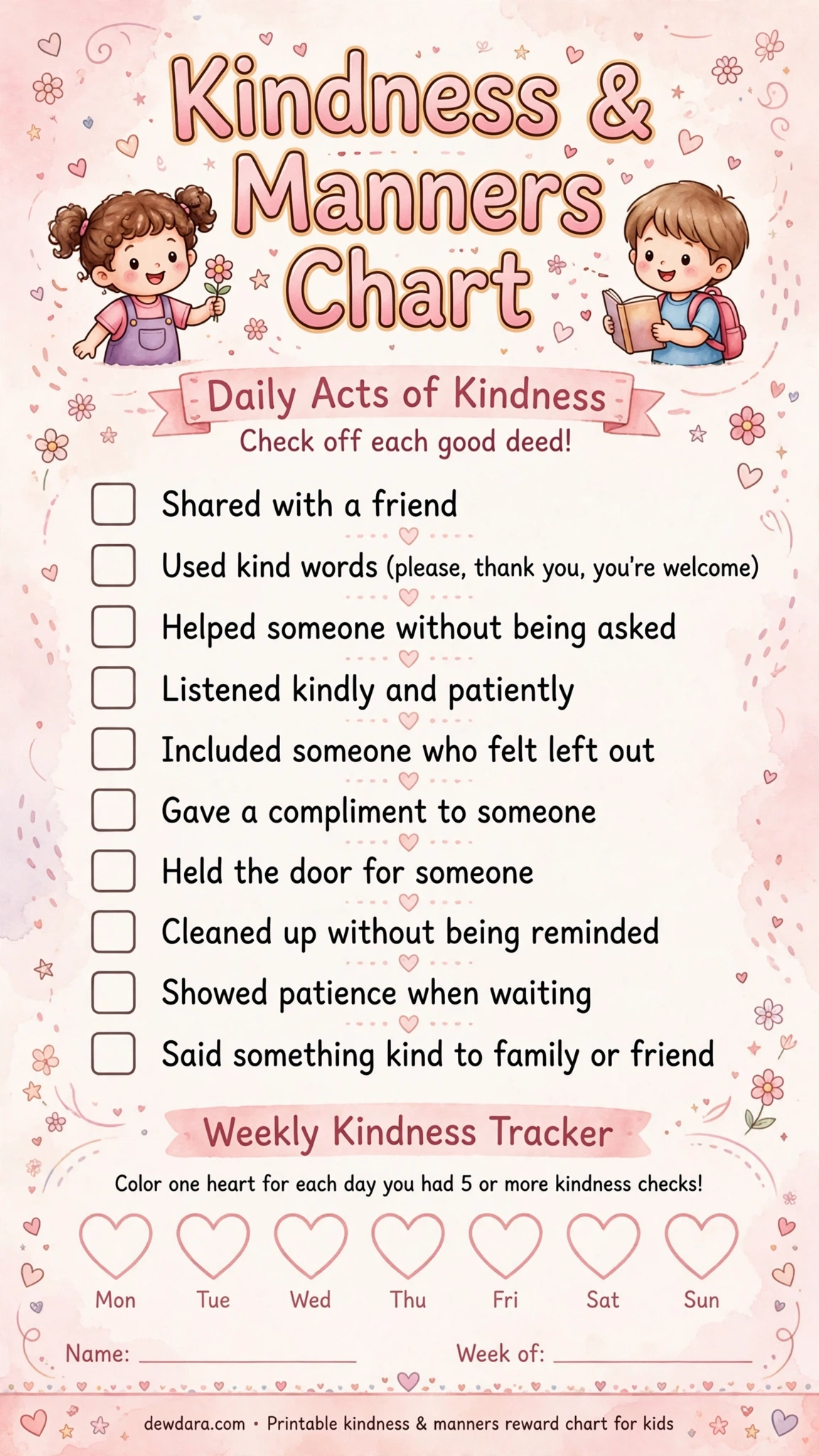
Focuses on social-emotional growth. Tracks acts like saying please/thank you, helping a friend, and sharing.
How to use: At dinner, ask “What kindness did you do today?” and fill it together. Best for: Ages 4-9. Pro Tip: Model it yourself – add your own kindness acts on a separate chart.
8. Screen Time Management Chart
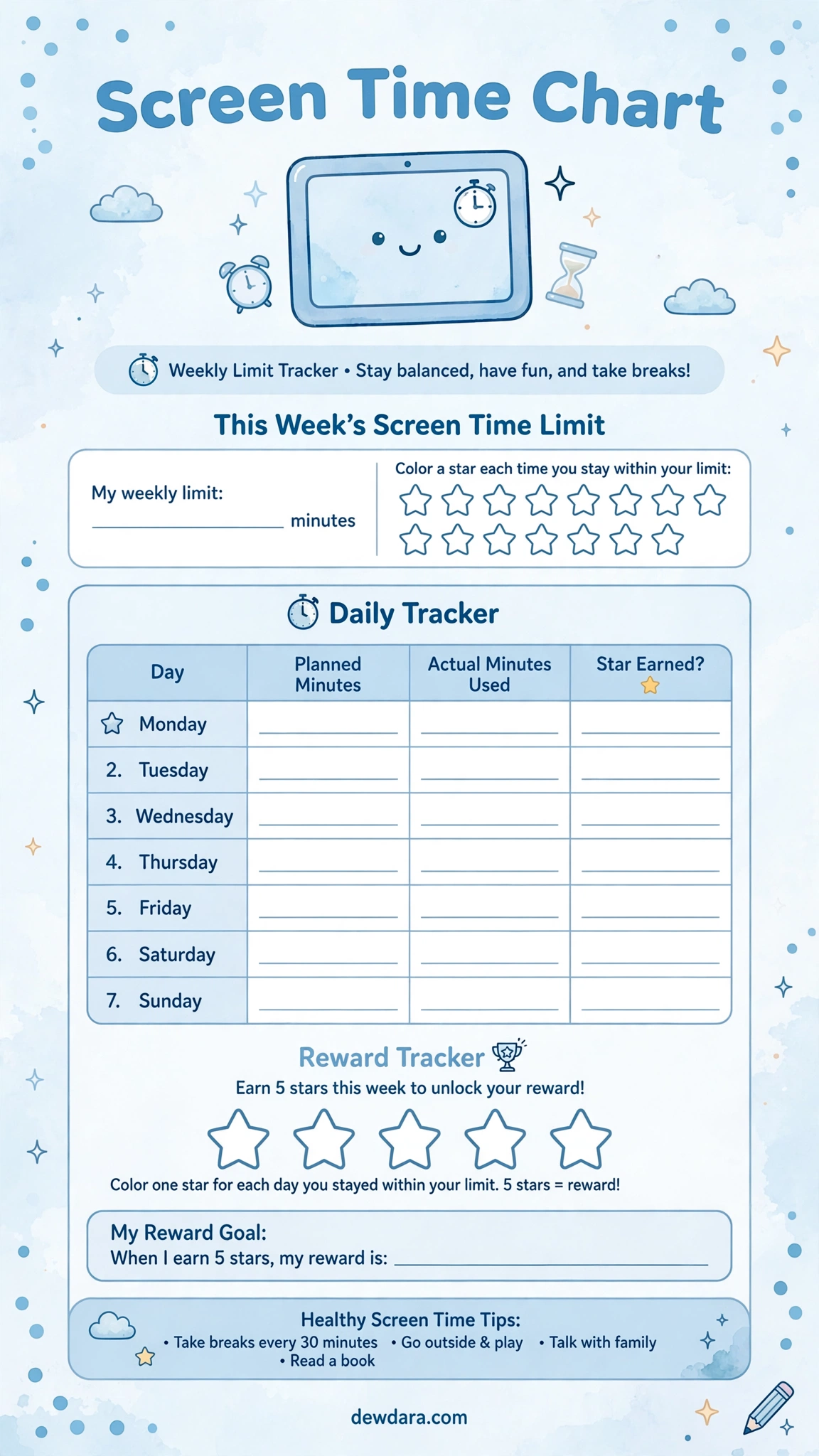
Helps balance digital time with other activities. Modern, minimal design that kids respect.
How to use: Set a daily screen goal (e.g., 1 hour). If they stay within the limit, they earn a star. 5 stars = a special non-screen activity. Best for: Ages 5-12. Pro Tip: Make the reward an experience, not more screen time.
9. Healthy Eating Chart
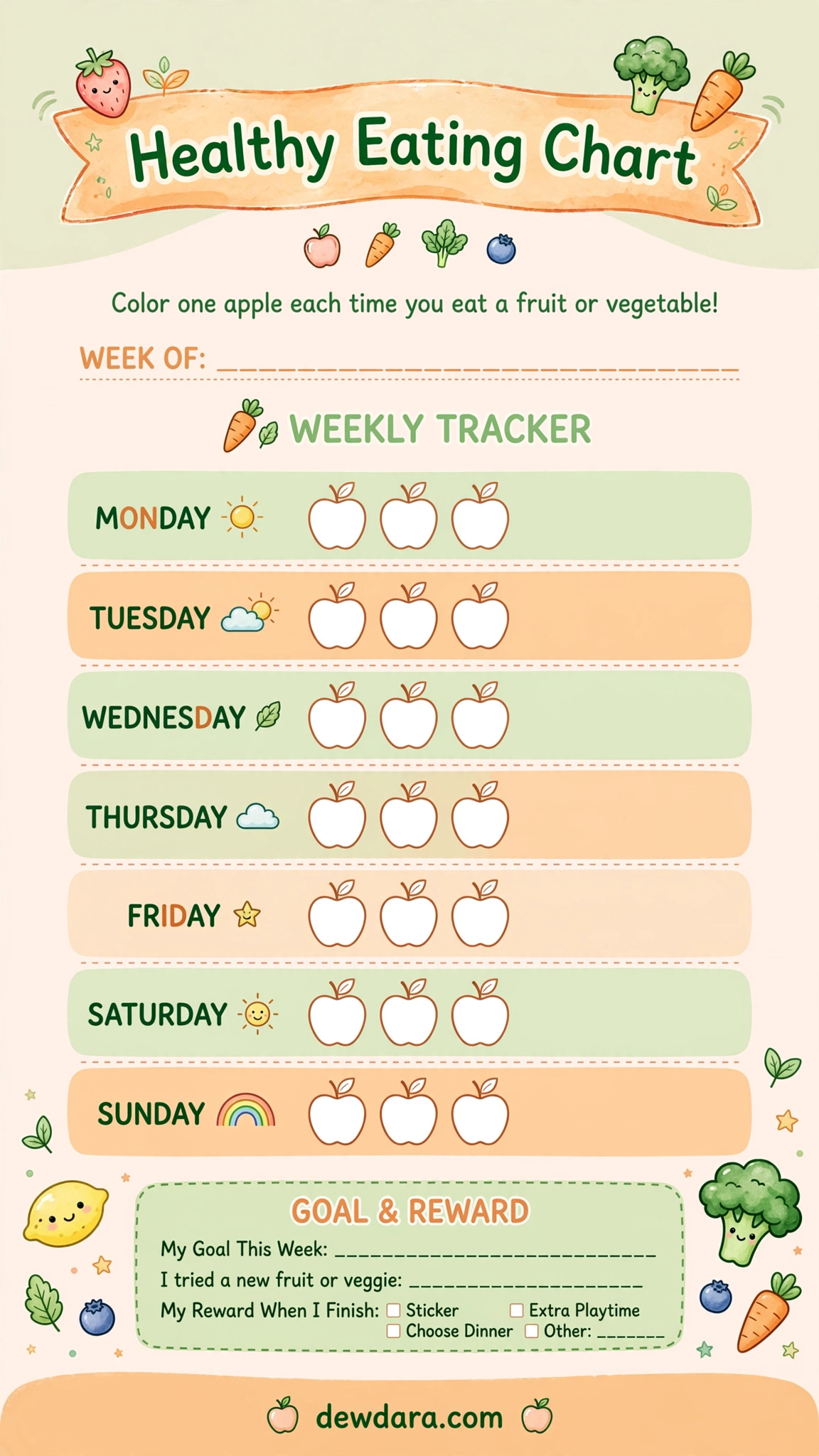
Makes nutrition fun with cute fruits and vegetables. Kids color an apple for each healthy choice.
How to use: Don’t use it to shame. Focus on “tried a new fruit” or “ate 3 colors today.” Best for: Ages 3-8. Pro Tip: Let kids put stickers on foods they want to try at the grocery store.
10. Dinosaur Adventure Chart
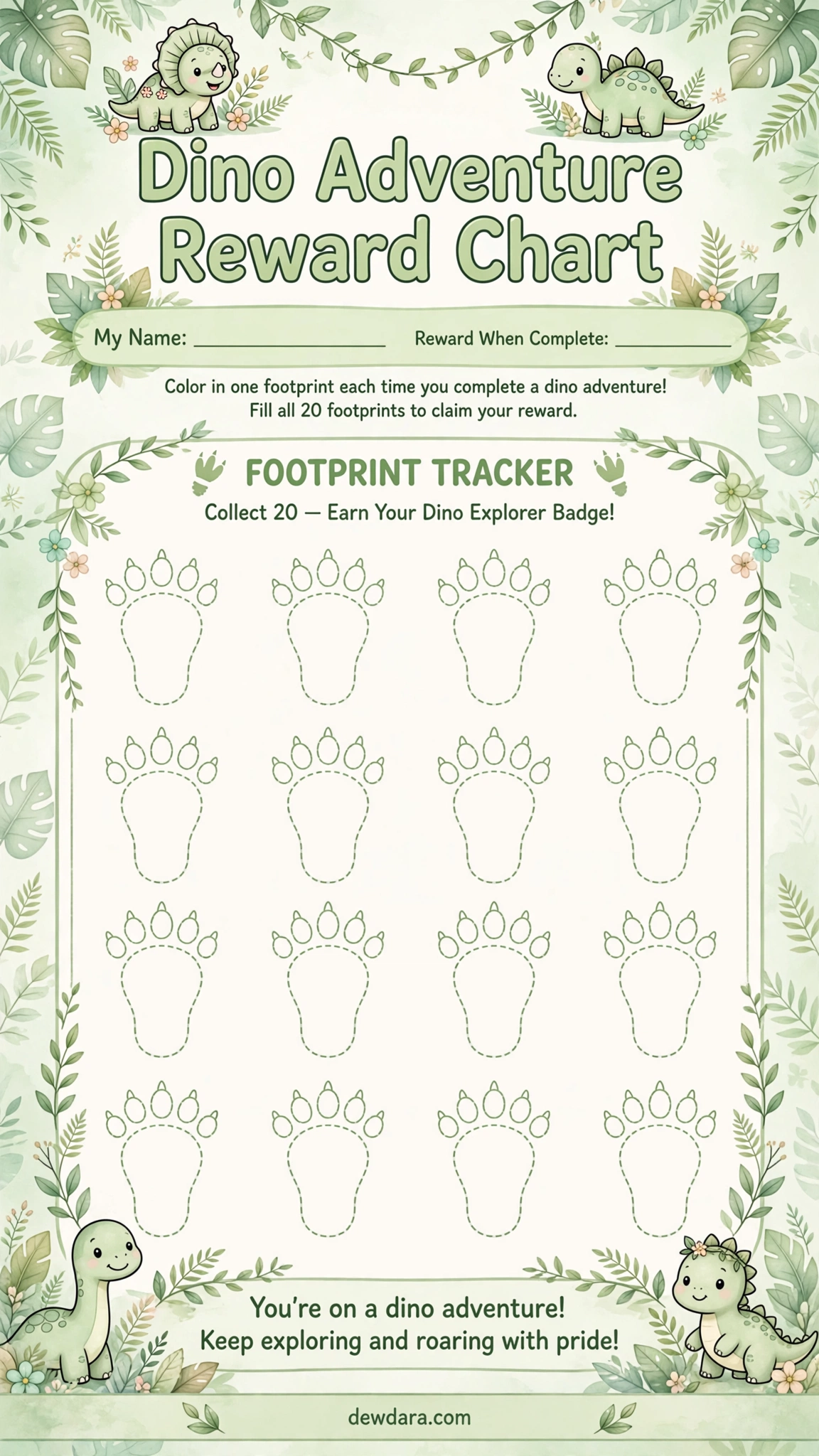
A themed chart for dino lovers! Tracks progress with footprints leading to a big reward – perfect for reluctant kids.
How to use: Great as a monthly challenge chart. Each footprint is one day of completing the main goal. Best for: Ages 3-7. Pro Tip: Use dinosaur stickers as the ultimate motivator.
11. Unicorn Magic Chart
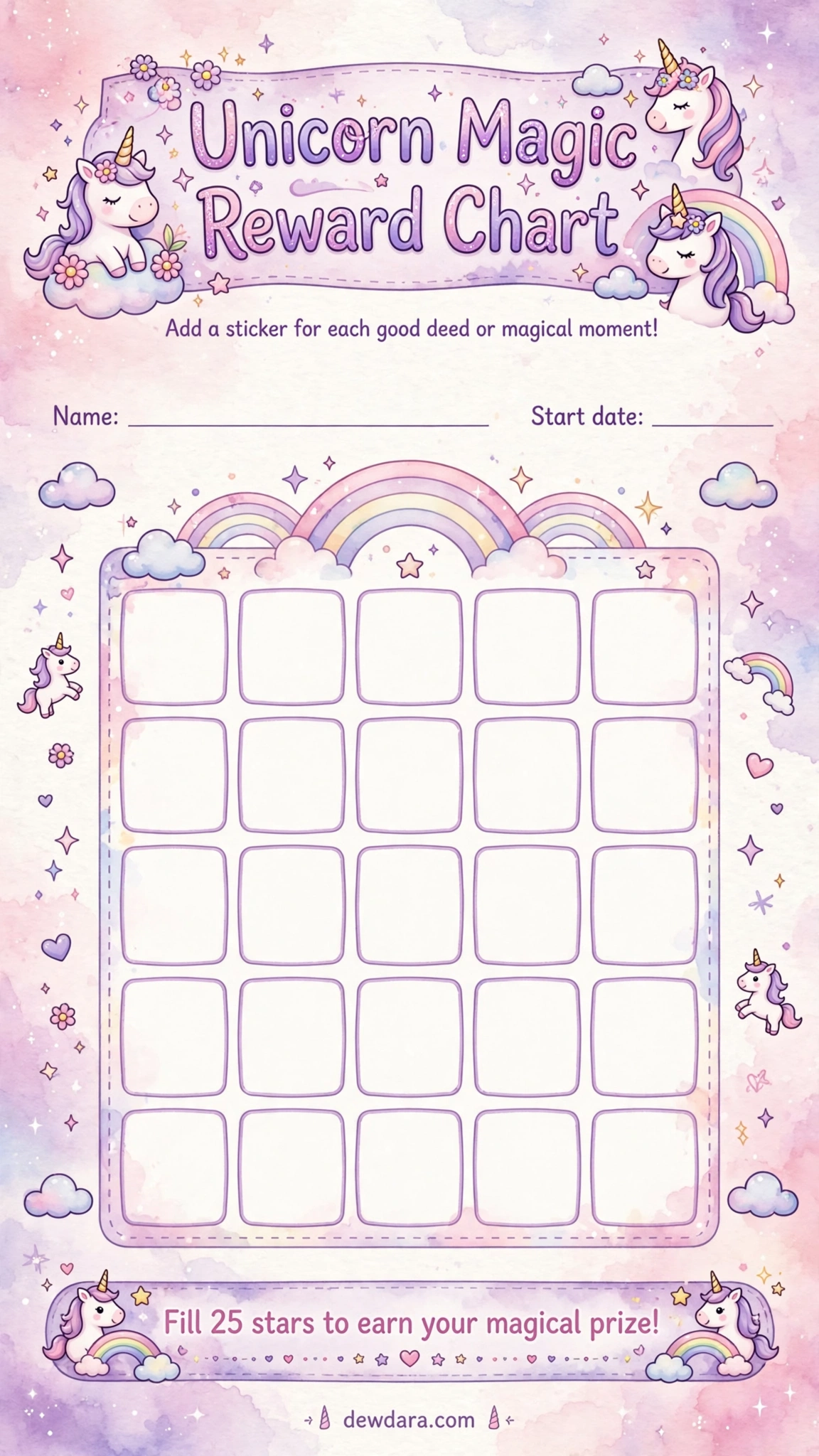
Dreamy pastel unicorns and rainbows make this an instant favorite. The cloud and star grid feels magical.
How to use: Use for any goal your child chooses – that ownership increases motivation. Best for: Ages 3-8, especially those who love fantasy play. Pro Tip: Use glitter star stickers to match the theme.
12. Space Explorer Chart
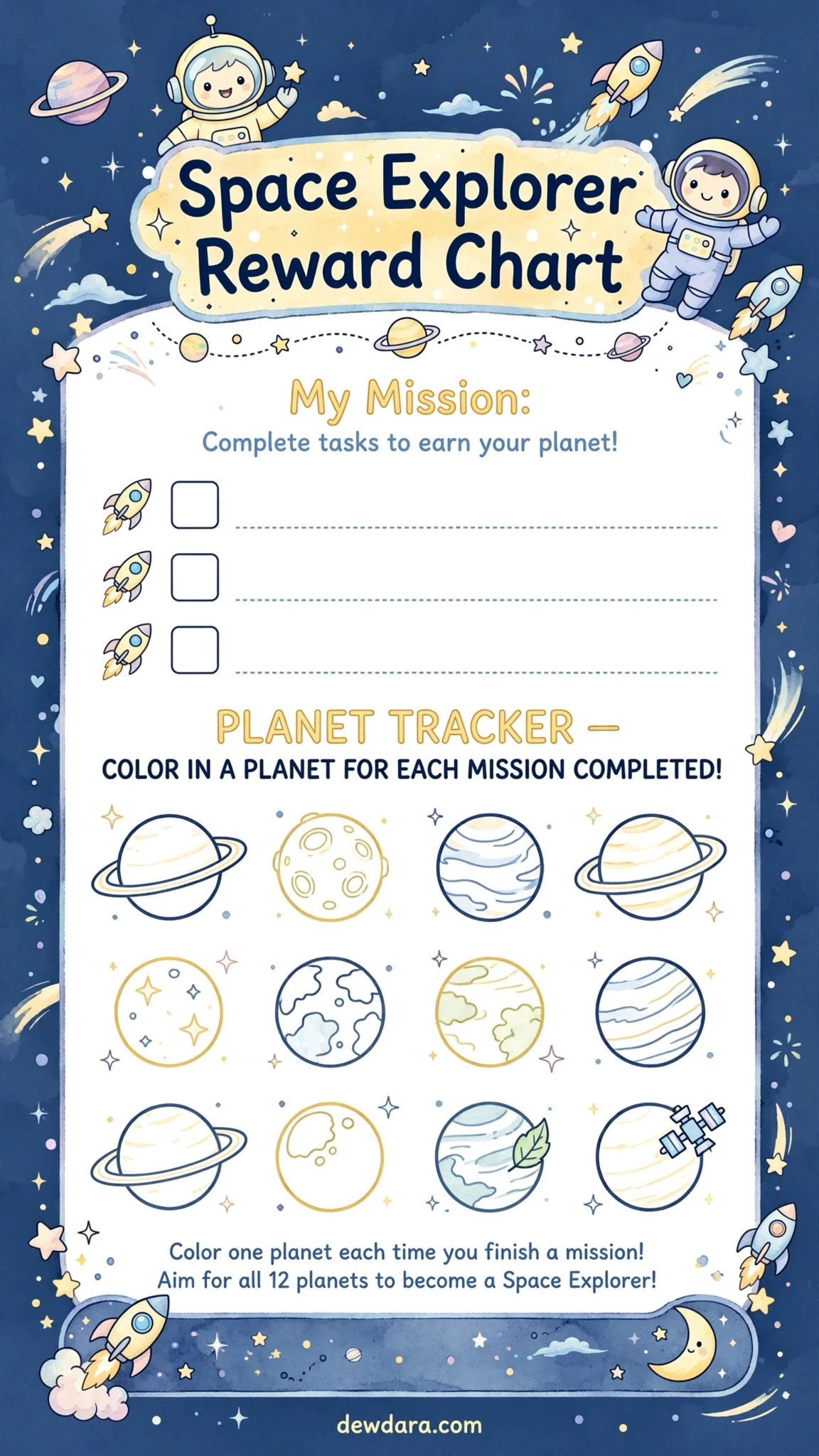
Blast off to good habits! Kids complete missions to earn planets and become a certified Space Explorer after 12 planets.
How to use: Write 3 custom missions at the top (e.g., “Mission 1: Pack my bag”). Color one planet per mission. Best for: Ages 4-10. Pro Tip: Pair it with space facts – learn one fact per planet earned.
13. My First Reward Chart (Ages 2-3)
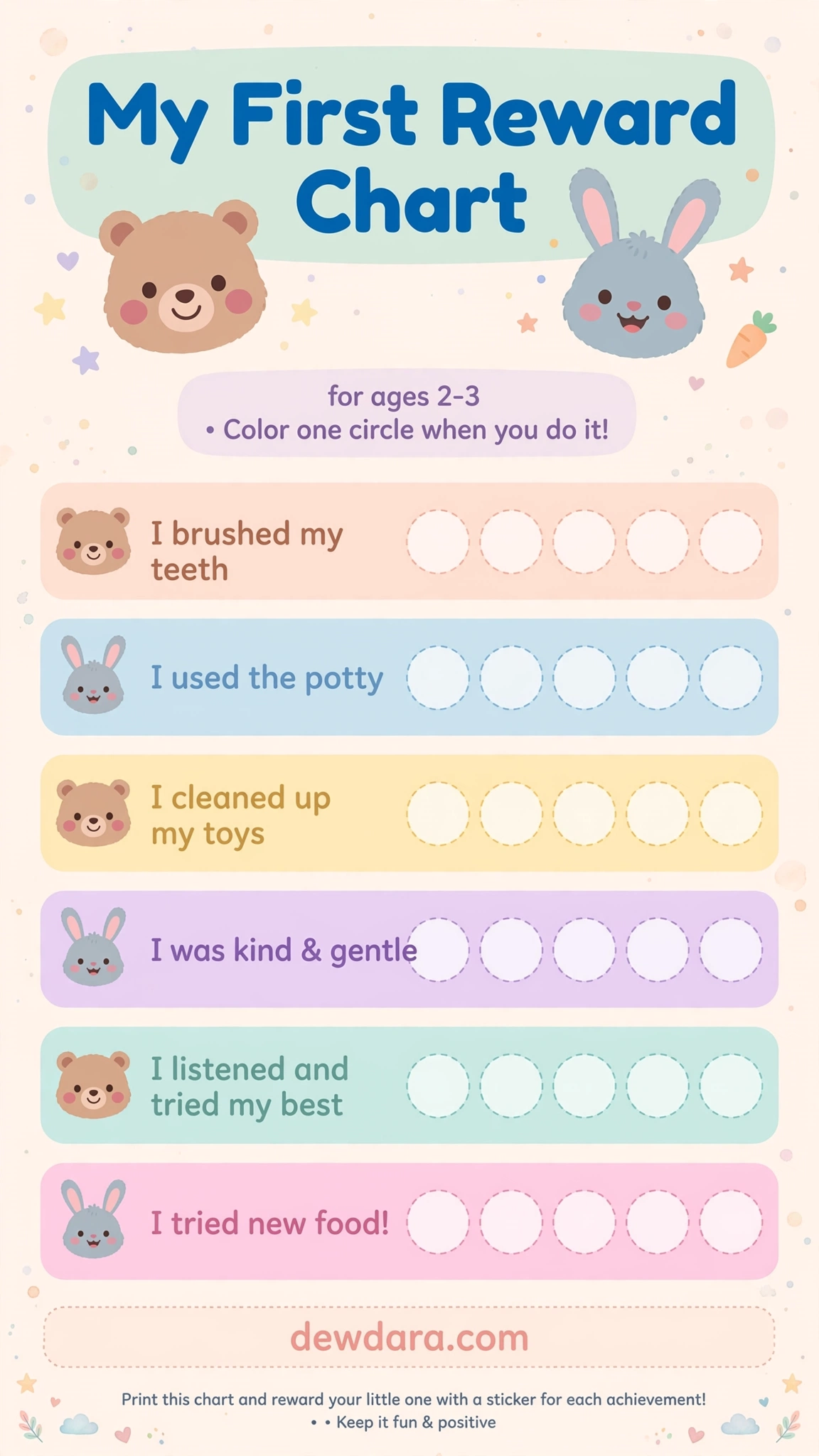
Extra simple with large circles, big fonts, and adorable bear and bunny icons. Only 5 goals to avoid overwhelming toddlers.
How to use: Focus on one row at a time. Use dot markers instead of tiny stickers for little hands. Best for: Ages 2-3. Pro Tip: Keep praise immediate and physical – high-fives work better than distant rewards at this age.
14. Monthly Goal Tracker
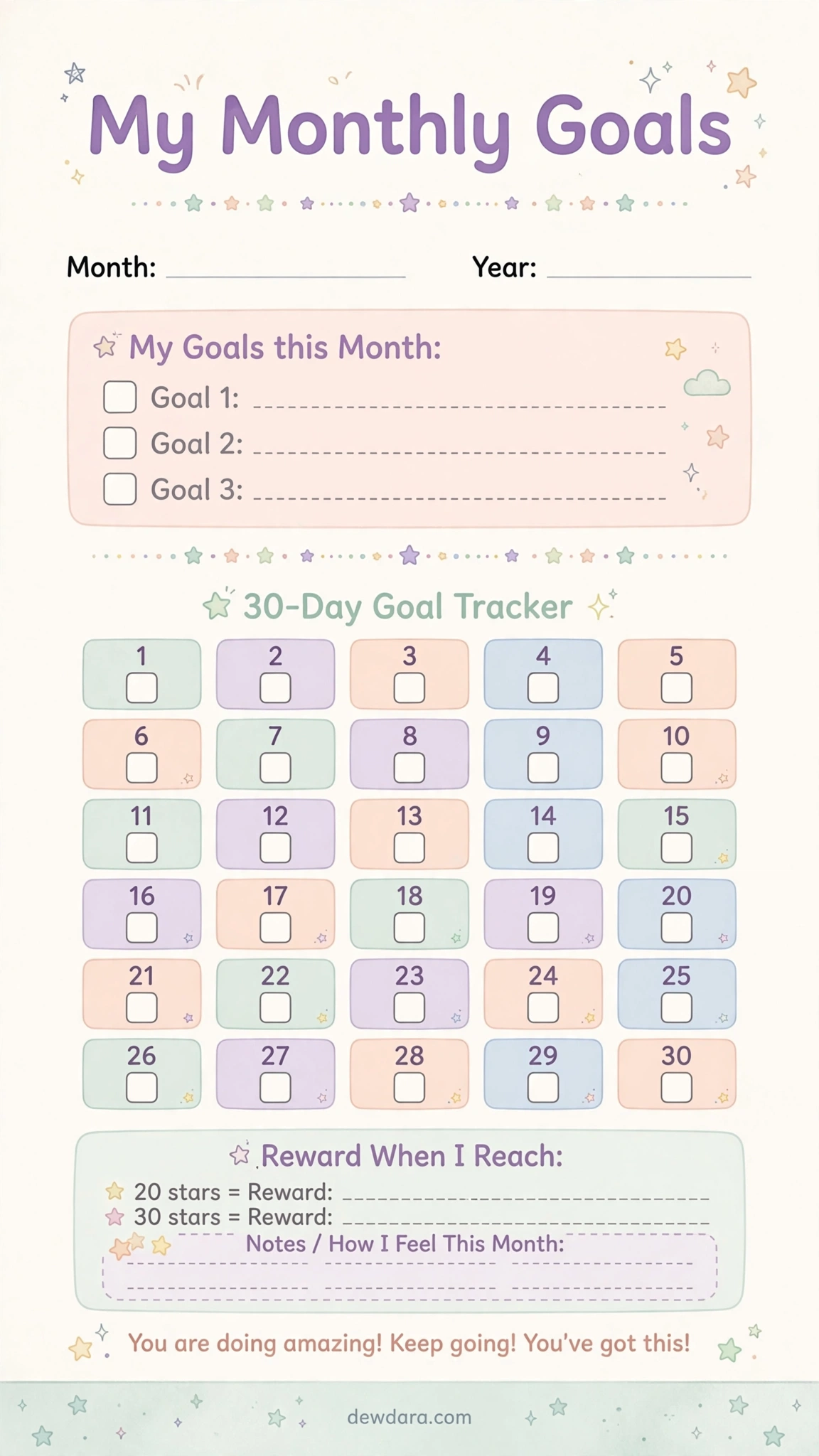
Teaches long-term goal setting and patience. Includes space for 3 monthly goals and a 30-day tracker with reward milestones.
How to use: At the start of the month, set 3 goals together. Each day gets a checkbox. Define what 20 and 30 stars earns. Best for: Ages 6-12. Pro Tip: Add a “How I Feel This Month” reflection at the end to build emotional awareness.
Conclusion
Reward charts work because they make invisible progress visible. They turn “you should” into “look what you did!” – and that shift builds lifelong self-motivation.
Start with just ONE chart that fits your child’s current biggest challenge. Keep it in a visible spot, be consistent for at least 3 weeks, and celebrate effort more than perfection. You can print all these charts directly from dewdara.com – they are designed to be ink-friendly and beautiful on your fridge or wall.
You’ve got this, and so does your little one.