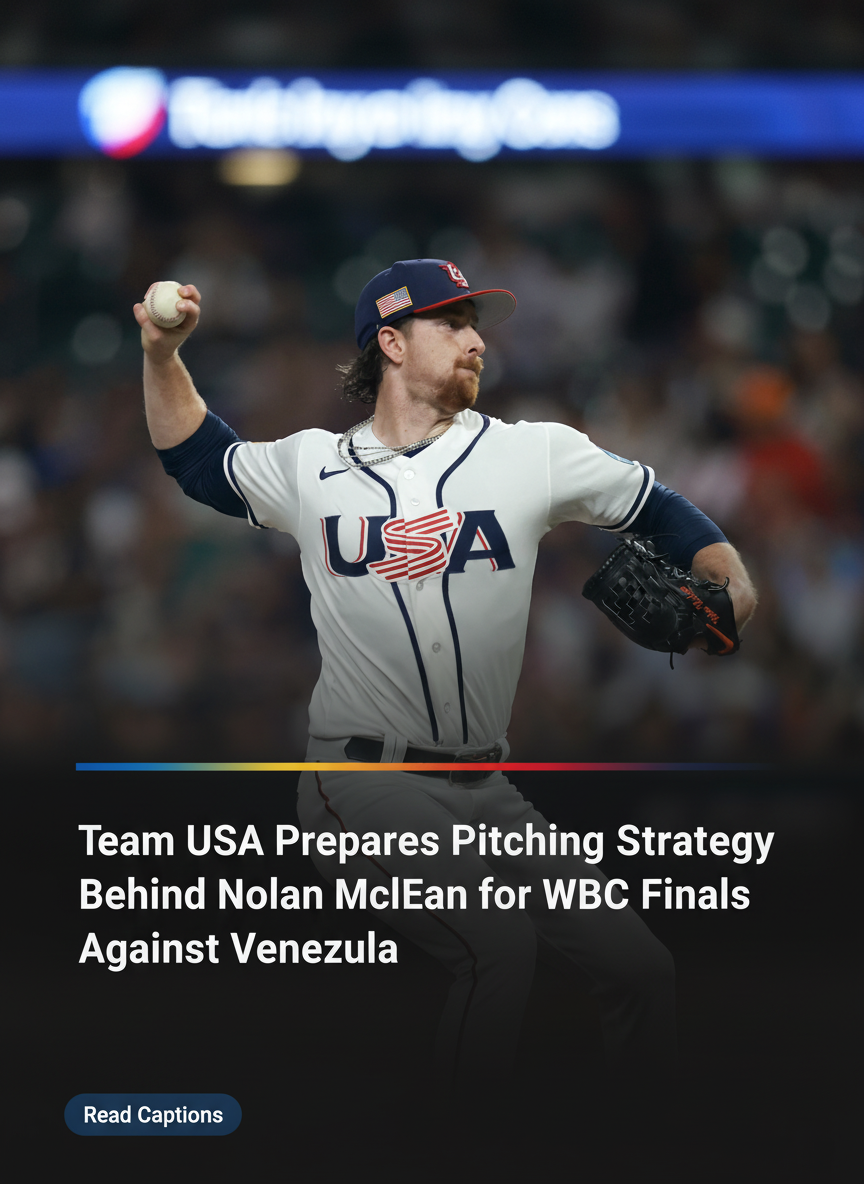
The McLean Gamble: How Team USA Plans to Navigate the Pitching Chess Match in WBC Final vs. Venezuela
MIAMI — The stage is set, the flags are waving, and the stakes could not be higher. As Team USA prepares to defend its crown in the World Baseball Classic final against a powerhouse Venezuela squad, all eyes are fixed on the mound. In a move that has sparked both intrigue and debate across the baseball world, manager Mark DeRosa has handed the ball to New York Mets rookie sensation Nolan McLean.
While McLean represents the future of American pitching, a championship final against a lineup featuring some of the most disciplined hitters in Major League Baseball requires more than just a talented starter. For DeRosa, the challenge isn’t just about how McLean starts—it’s about how the United States finishes.
The Bold Choice: Why Nolan McLean?
Starting a rookie in a winner-take-all international final is a high-risk, high-reward strategy. McLean, known for his imposing presence and a “power-everything” repertoire, has been the talk of the Mets’ system. His ability to miss bats with a high-velocity heater and a devastating breaking ball makes him a weapon, but his lack of high-leverage international experience remains the X-factor.
DeRosa’s decision signals a desire for “pure stuff” early in the game. The goal for McLean is likely not to provide a traditional seven-inning quality start, but rather to navigate the Venezuelan order twice, keeping the game within reach before the specialized arms of the American bullpen take over.
The “All Hands on Deck” Bullpen Blueprint
The reality for Team USA is that McLean will be on a remarkably short leash. Manager Mark DeRosa has hinted at an “aggressive bridge” strategy. If McLean encounters turbulence in the first three frames, expect DeRosa to go to his middle-relief anchors earlier than usual.
The strategy revolves around keeping Venezuela’s hitters off-balance by constantly changing speeds and arm angles. With a bullpen stocked with MLB closers and setup men, the United States has the luxury of playing the matchups. The key will be identifying the “bridge” — the pitcher who can provide 2.2 or 3 innings of stability in the middle of the game to ensure the back-end flamethrowers enter with a lead.
Neutralizing the Venezuelan Threat
Venezuela enters the final as perhaps the most balanced team in the tournament. Their lineup is a nightmare for any pitching staff, blending elite contact hitters with veteran power. To secure a victory, the U.S. pitching staff must find a way to navigate a gauntlet that rarely chases out of the zone.
“We know what they bring to the table,” DeRosa said during the pre-game press conference. “They are aggressive, they are emotional, and they feed off momentum. Our job is to keep the crowd out of it and execute pitches from the first inning to the ninth. It starts with Nolan, but it’s going to take every guy in that dugout to get twenty-seven outs.”
The Strategic Pivot
One of the most critical elements of DeRosa’s plan will be the “piggyback” option. Should McLean struggle with his command early—a common hurdle for younger pitchers in high-atmosphere environments—Team USA is expected to have a veteran long-reliever ready to go at a moment’s notice. This “emergency” length allows the U.S. to avoid burning their high-leverage arms too early in the game.
Conclusion: A Legacy on the Line
As the lights shine down on LoanDepot Park, the narrative of this World Baseball Classic will be written through the strategic maneuvers of the American dugout. If McLean can harness his electric stuff and the bullpen can execute the handoffs with precision, Team USA stands a strong chance of hoisting the trophy once again.
However, in the volatile world of international baseball, plans often go out the window after the first pitch. For Mark DeRosa, the next nine innings will be the ultimate test of his managerial instincts. The plan is in place; now, it’s time for the players to perform.