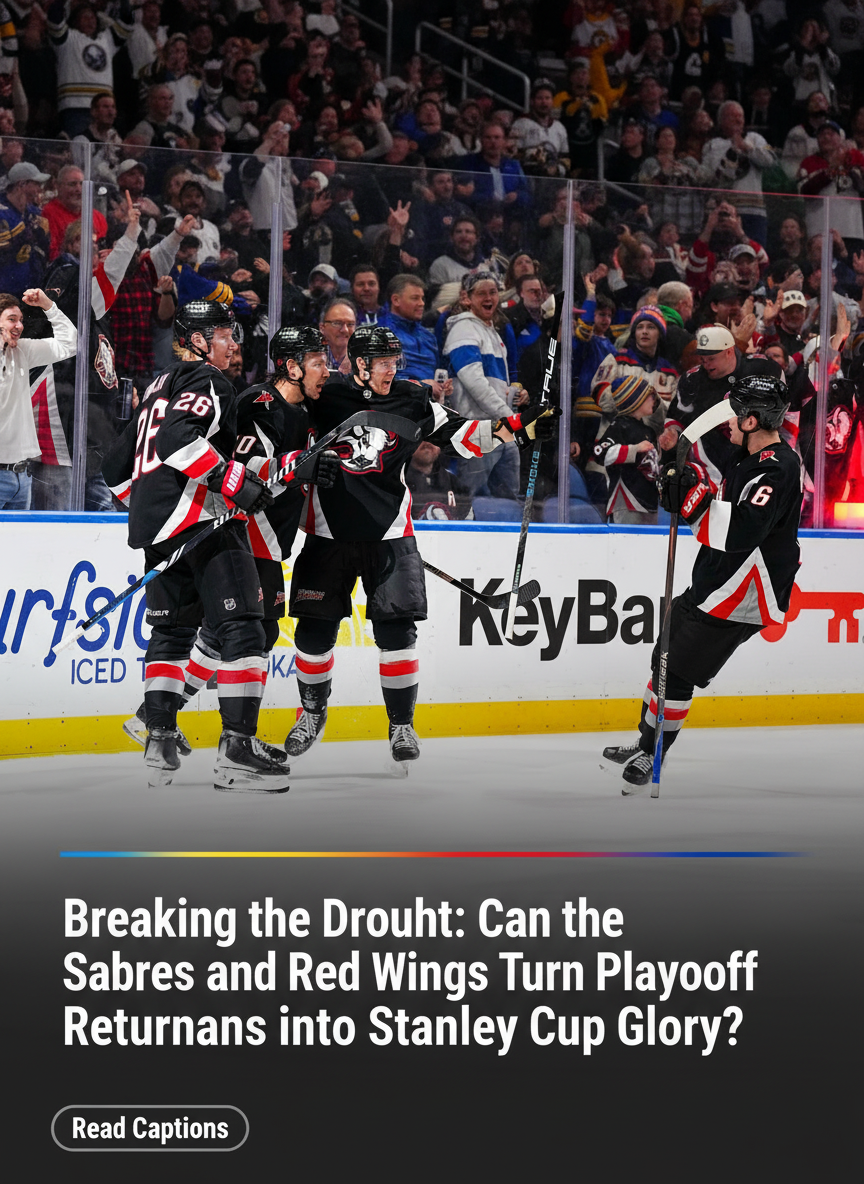
Ice Cold No More? Why the Sabres and Other Rebuilding Franchises Face an Uphill Battle Toward the Stanley Cup
In the high-stakes world of the National Hockey League, parity is often touted as the league’s greatest strength. However, for a handful of franchises, that parity has felt more like a myth. For the Buffalo Sabres, the drought has reached historic proportions, spanning 13 seasons without a postseason appearance—the longest active streak in the NHL and a record in league history.
But as the 2024-25 season approaches a critical juncture, the conversation is shifting. With the Sabres, Detroit Red Wings, Anaheim Ducks, and the newly relocated Utah Hockey Club (formerly the Coyotes) all showing flashes of brilliance, the hockey world is asking: Can a team leapfrog from a decade of irrelevance straight to Stanley Cup contention?
The Case for the Buffalo Sabres: Talent Meets Desperation
The Sabres are no longer the “bottom-feeders” of the Atlantic Division. Boasting a core that includes powerhouse defenseman Rasmus Dahlin and scoring threats like Tage Thompson and Alex Tuch, the roster is arguably the most talented it has been since the mid-2000s. The argument for their success is simple: youthful exuberance and a lack of “playoff scars.”
Often, veteran teams carry the weight of past failures. For a young Sabres squad, there is no “ghost of playoffs past.” If they can sneak into a Wild Card spot, they possess the speed and transition game that can frustrate older, more structured contenders. Historically, teams that break long droughts often play with a “nothing to lose” mentality that makes them dangerous in a seven-game series.
The “Yzer-plan” and the Rebuilding Class
Buffalo isn’t alone in its quest for redemption. In Detroit, General Manager Steve Yzerman has been meticulously crafting a roster designed for sustained success. The Red Wings have hovered on the edge of the playoff bubble, bolstered by veteran leadership and emerging stars like Moritz Seider. Meanwhile, the Anaheim Ducks and the Utah franchise are deep into “scorched-earth” rebuilds, accumulating high-end draft picks that are finally reaching NHL maturity.
The common thread among these teams is salary cap flexibility. Unlike perennial contenders like the Vegas Golden Knights or Tampa Bay Lightning, these drought-stricken teams have the cap space to be aggressive at the trade deadline, adding the “missing pieces” that can turn a bubble team into a legitimate threat.
The Harsh Reality: Why History is Against Them
While the “can-win” argument is fueled by optimism, the “can’t-win” argument is backed by decades of data. Winning the Stanley Cup requires more than just talent; it requires playoff seasoning. Since the expansion era, very few teams have won the Cup without first suffering several years of early-round exits.
For teams like the Sabres or Ducks, the hurdles are significant:
- Goaltending Stability: Championship teams almost exclusively rely on elite, proven netminding. Young teams often cycle through prospects or “stop-gap” veterans who may not hold up under the pressure of May and June.
- Defensive Structure: High-scoring young teams often struggle when the game tightens up in the postseason. Learning to win 2-1 games is a skill that usually takes years to master.
- Physical Toll: The grueling nature of four rounds of playoff hockey often swallows rosters that aren’t built with significant “grit” and veteran depth.
Conclusion: A New Era of Parity?
The Buffalo Sabres and their fellow drought-mired peers are currently at a crossroads. While the statistical probability of a team jumping from a 13-year absence to a championship parade is slim, the modern NHL is more volatile than ever. Whether it happens this year or next, the “rebuild” era for these franchises is officially over.
The quest is no longer just about making the playoffs; it’s about proving that a decade of patience was worth the wait. For the fans in Buffalo, Detroit, and beyond, the hope is that the first step into the postseason is just the beginning of a much longer journey toward hockey’s ultimate prize.