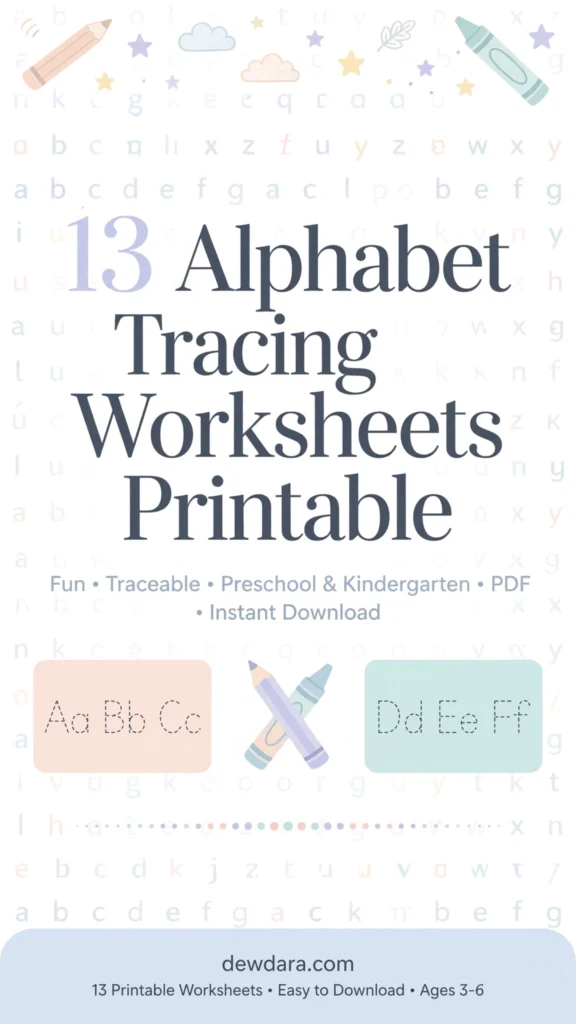
13 Alphabet Tracing Worksheets Printable – Free Educational Printables for Early Learners
Learning to write the alphabet is one of the most important milestones in early childhood education. Tracing worksheets help children develop fine motor skills, pencil grip, letter recognition, and muscle memory before they begin independent writing.
This collection of 13 alphabet tracing worksheets printable has been carefully designed for preschoolers, kindergarteners, and early elementary learners. Each worksheet is clean, unfilled, and print-ready in a clear 9:16 format, making it perfect for classroom use, homeschooling, or at-home practice. All printables include the dewdara.com branding at the bottom for your personal and educational use.
1. Uppercase Alphabet Tracing – Classic Dotted
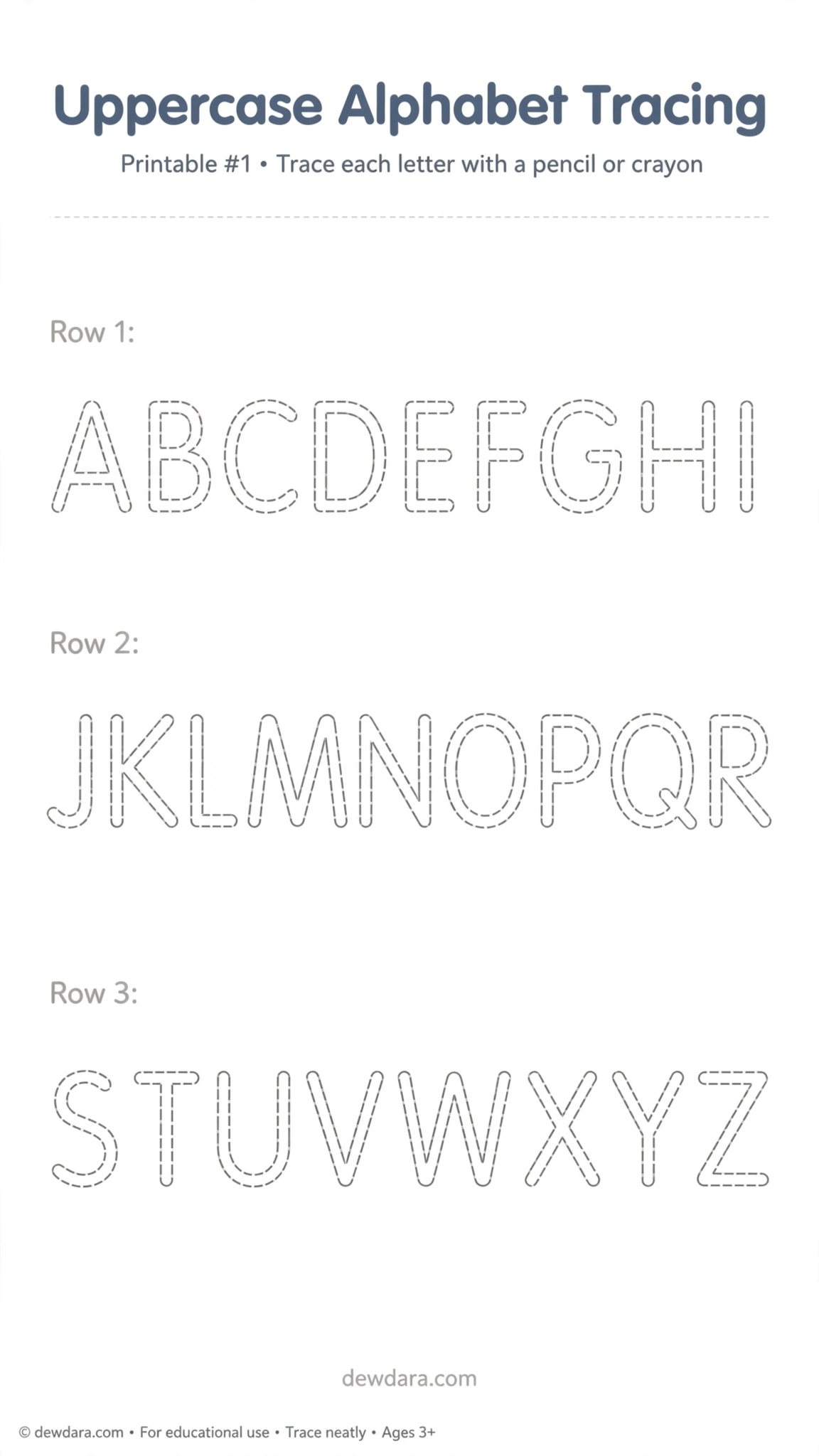
This is the foundation worksheet every beginner needs. It features the complete uppercase alphabet from A to Z in light gray dotted lines, arranged in neat rows. The large, clear font is ideal for children who are just starting to learn letter formation. Use it daily to build confidence and consistency in writing capital letters. The clean, unfilled design ensures kids can focus entirely on tracing without distractions.
Best for: Ages 3-5, preschool introduction to capital letters.
2. Lowercase Alphabet Tracing – Classic Dotted
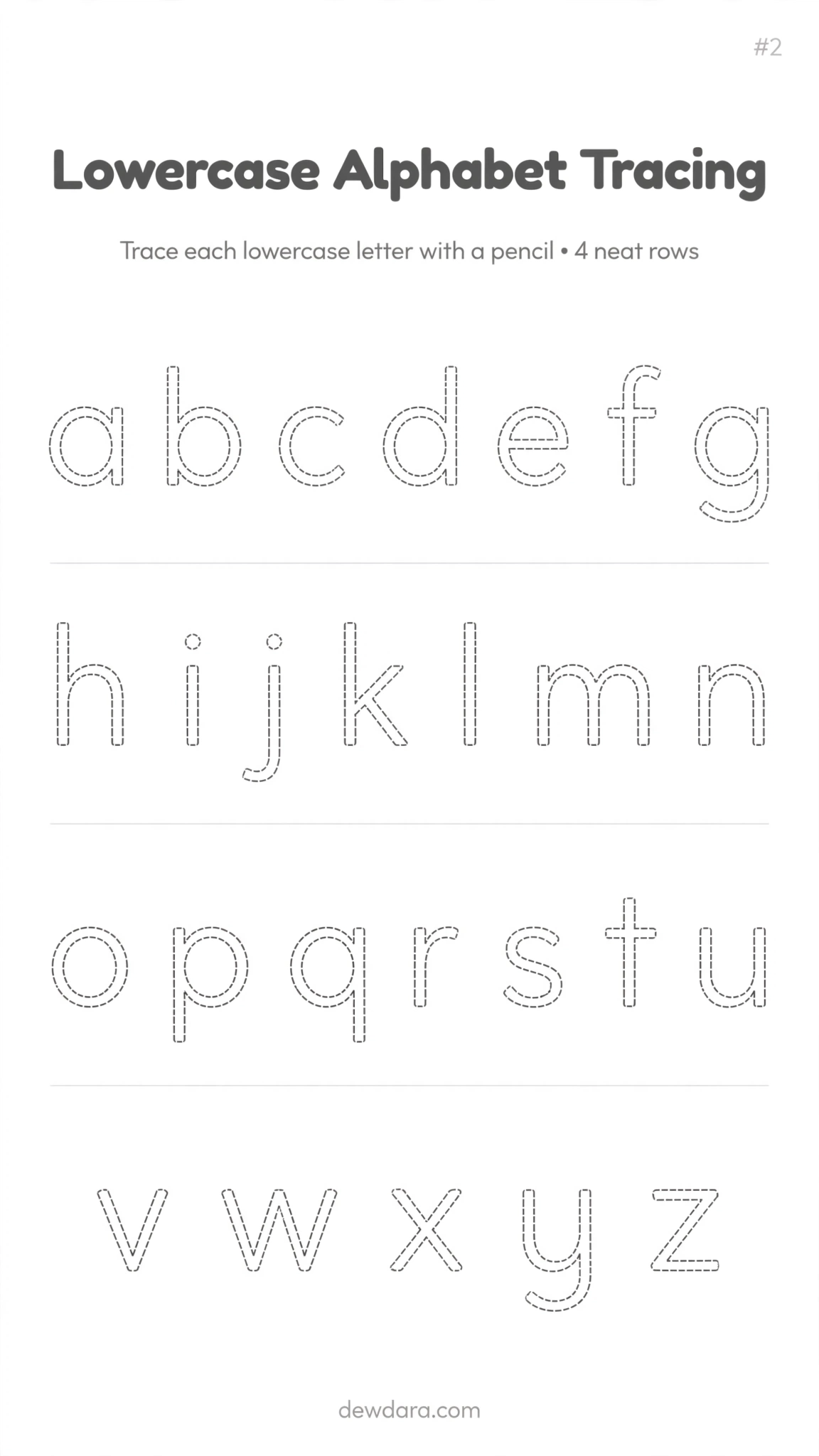
Once uppercase letters are mastered, lowercase is the natural next step. This worksheet provides the full lowercase alphabet a-z in the same easy-to-trace dotted format. Lowercase letters are more frequent in reading and writing, so this sheet is essential for building fluency. Print multiple copies for repeated practice.
Best for: Ages 4-6, transitioning from uppercase to lowercase.
3. Uppercase & Lowercase Combined Tracing
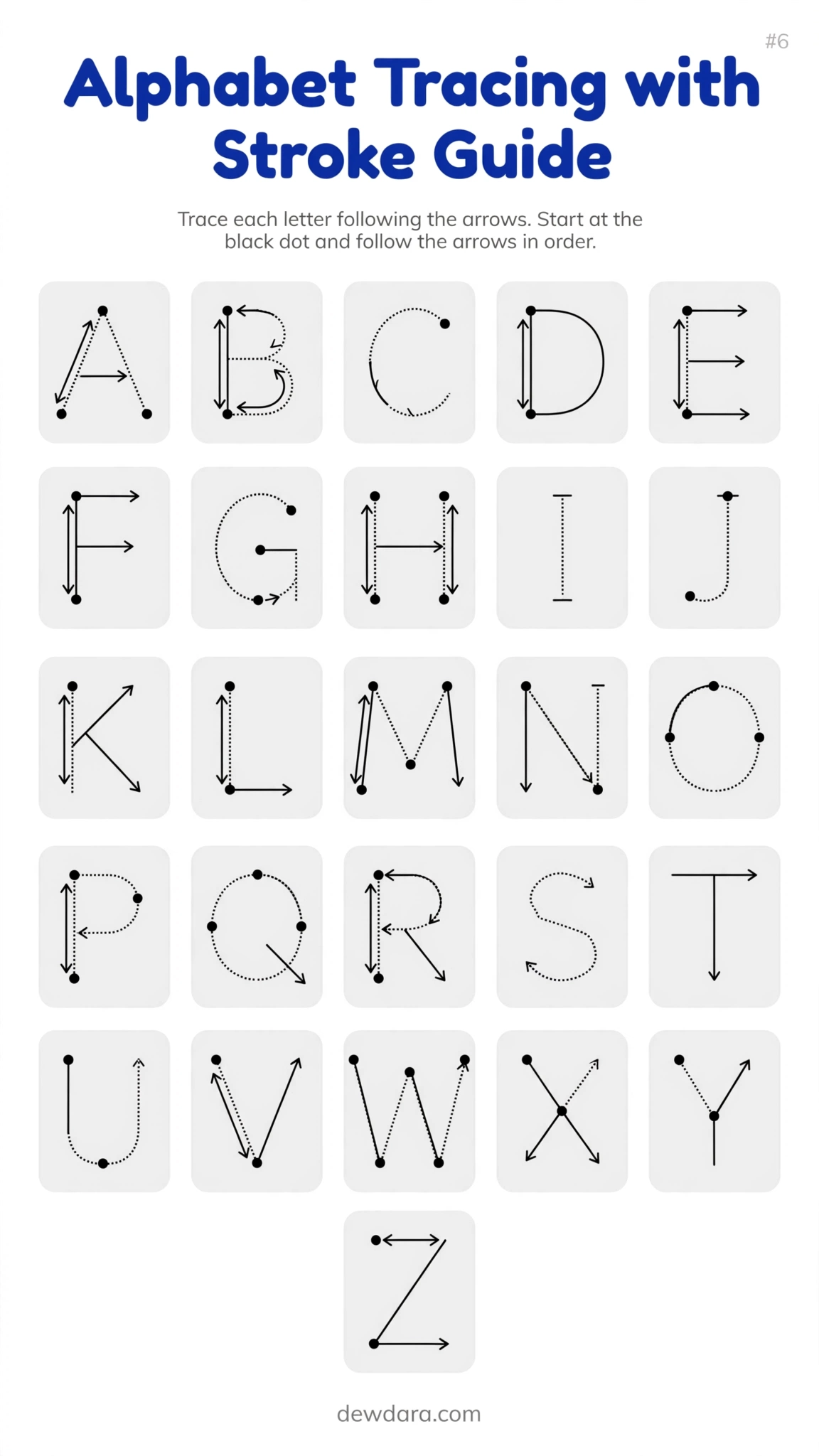
This combined worksheet pairs each uppercase letter with its lowercase counterpart as Aa, Bb, Cc. It helps children understand the relationship between both forms of the same letter. The side-by-side layout improves visual discrimination and is excellent for alphabet review and assessment.
Best for: Letter matching, case recognition, and kindergarten review.
4. Cursive Uppercase Tracing – Elegant Style
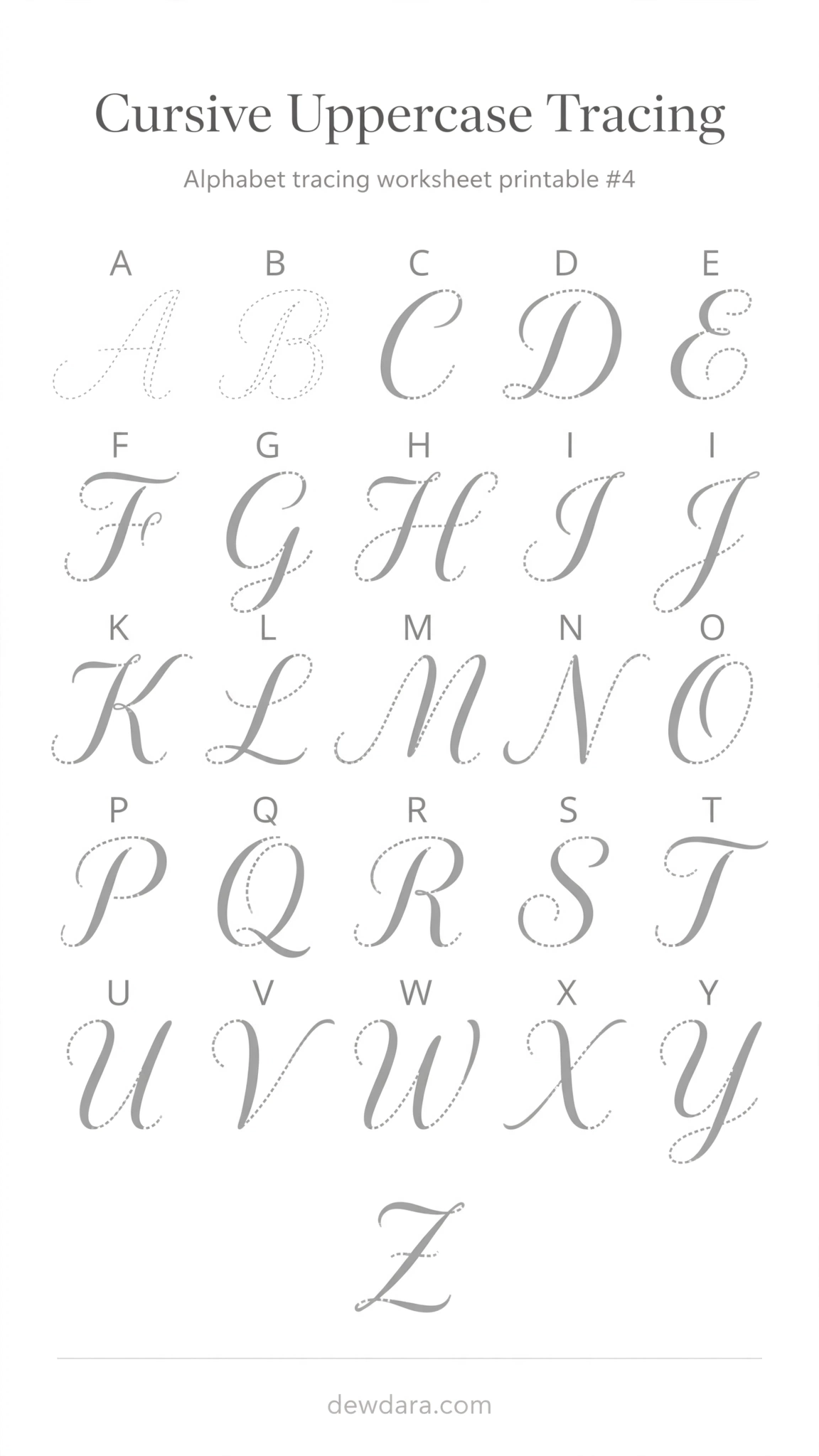
Introduce a touch of elegance with cursive uppercase tracing. This worksheet uses a flowing, dotted cursive font that guides children in learning the loops and curves of cursive writing. It is lightly dotted and completely unfilled, allowing learners to practice pencil control and smooth hand movements.
Best for: Ages 6-8, cursive introduction, fine motor development.
5. Uppercase & Lowercase Compact Tracing – Space Saver
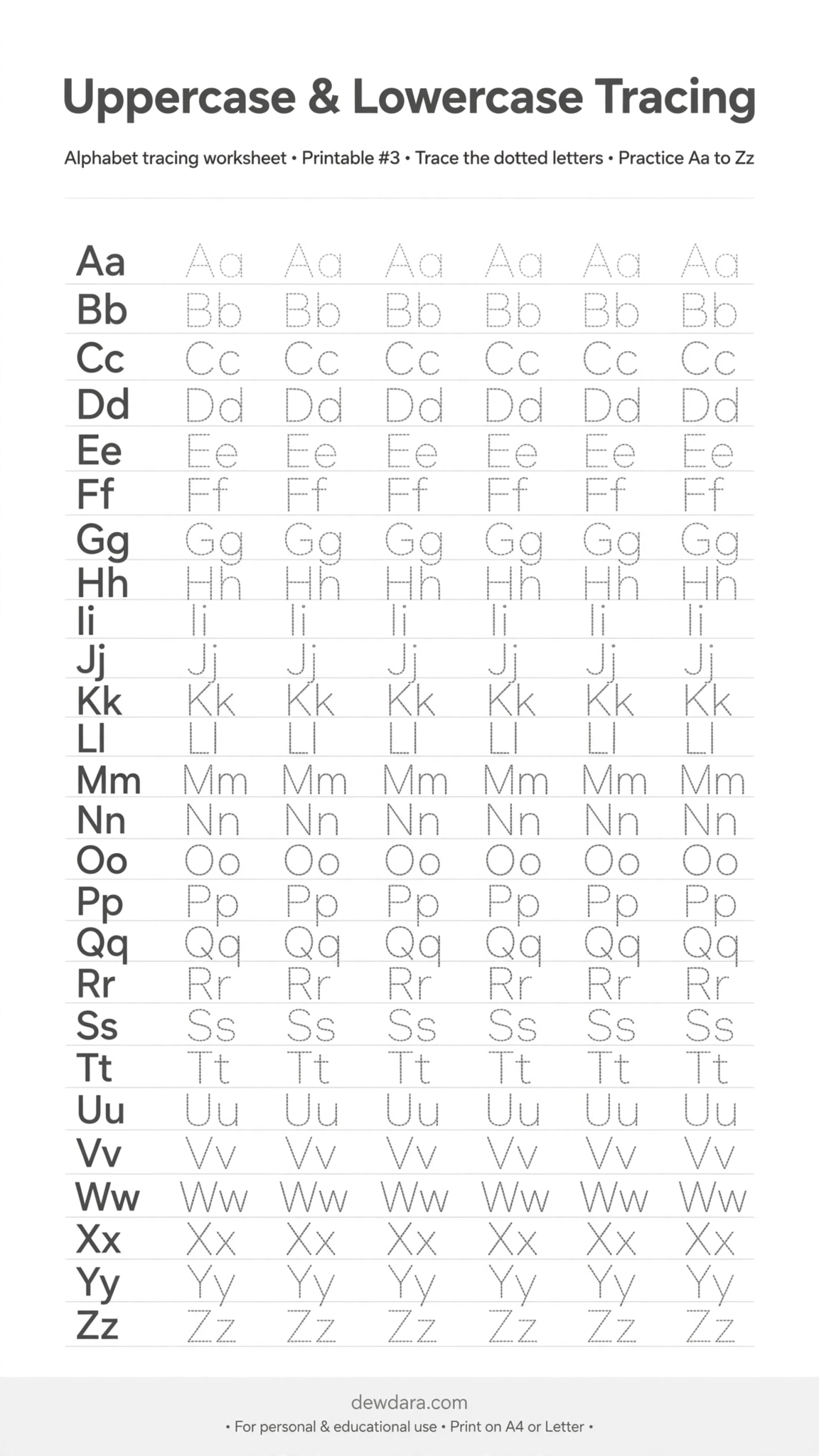
Designed for efficient practice, this worksheet presents the entire alphabet in a compact 4-row layout. It is perfect for quick daily warm-ups, homework packets, or when you need to save paper. Despite the compact size, each letter remains clear and easy to trace.
Best for: Daily drills, homework, and classroom centers.
6. Big Alphabet Tracing – Large Letters for Beginners
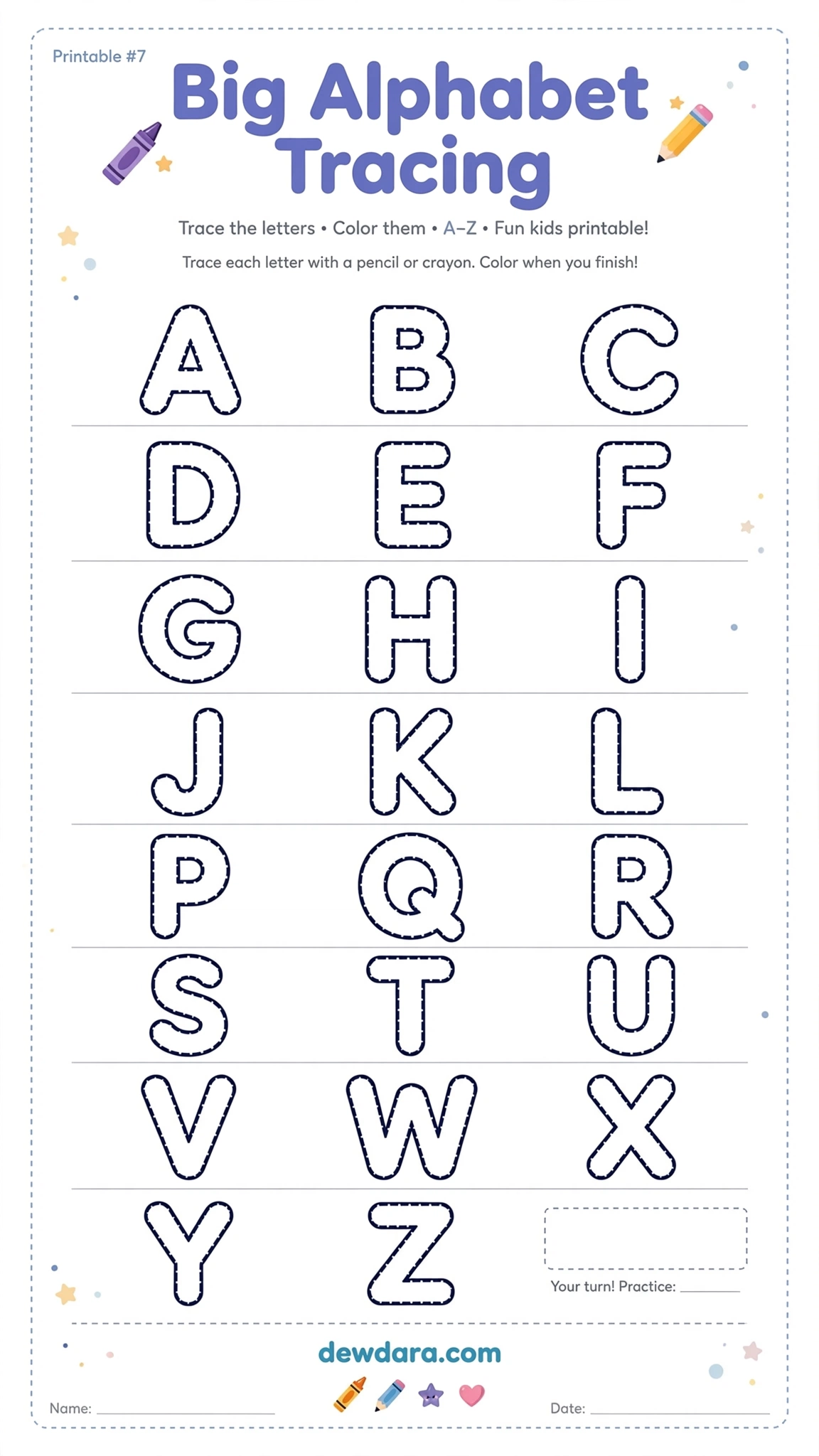
Young learners with developing grip need larger targets. This worksheet features oversized bubble-style dotted letters with only 3 letters per row. The extra space allows children to trace slowly and even color inside the letters after tracing, combining writing practice with a fun art activity.
Best for: Ages 3-4, pre-writers, children with fine motor challenges.
7. Alphabet Tracing with Directional Stroke Guide
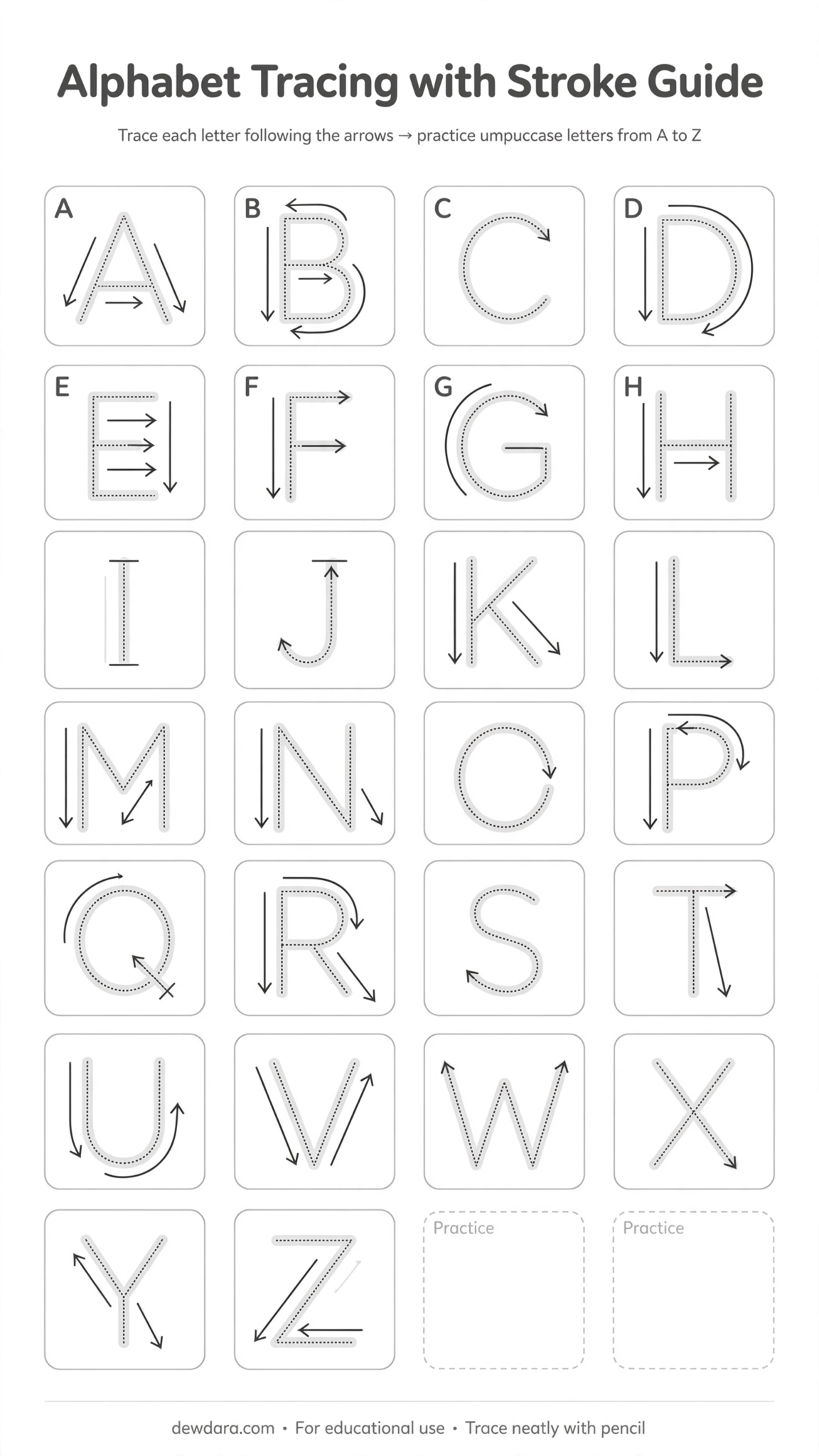
Correct letter formation matters from the beginning. This advanced worksheet includes small arrow guides inside each dotted letter showing exactly where to start and which direction to move. It teaches proper stroke order for A-Z and prevents bad writing habits. Includes two blank practice boxes at the bottom.
Best for: Correct handwriting technique, OT support, independent learners.
8. Alphabet Tracing with Three-Line Writing Guide
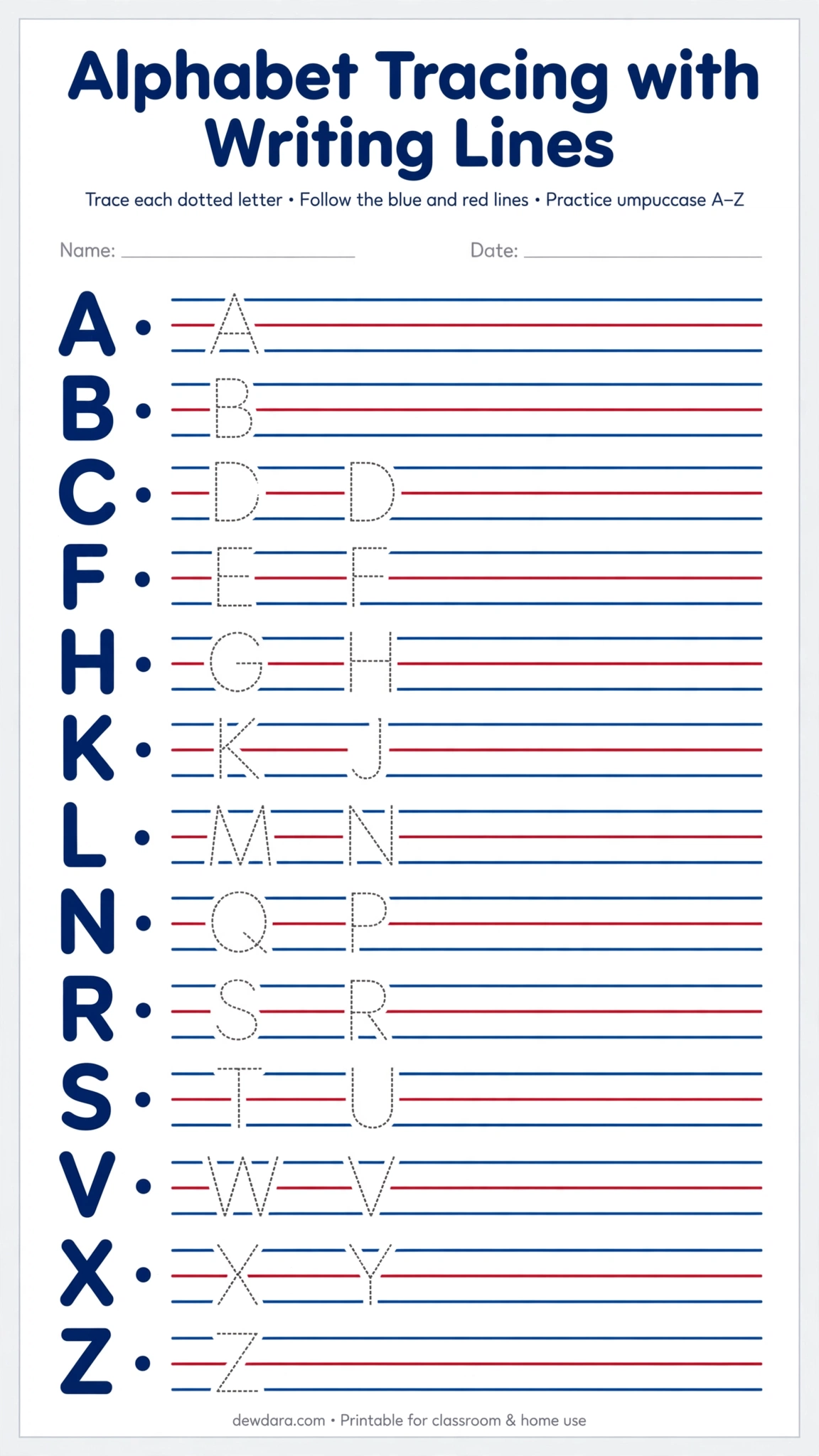
This is a classroom-style worksheet with traditional blue and red three-line writing guides. Children can see how letters sit on the baseline, which letters reach the top line, and which drop below. Each row has a solid reference letter and a dotted tracing letter, reinforcing proper size and alignment.
Best for: Kindergarten and 1st grade, learning line placement.
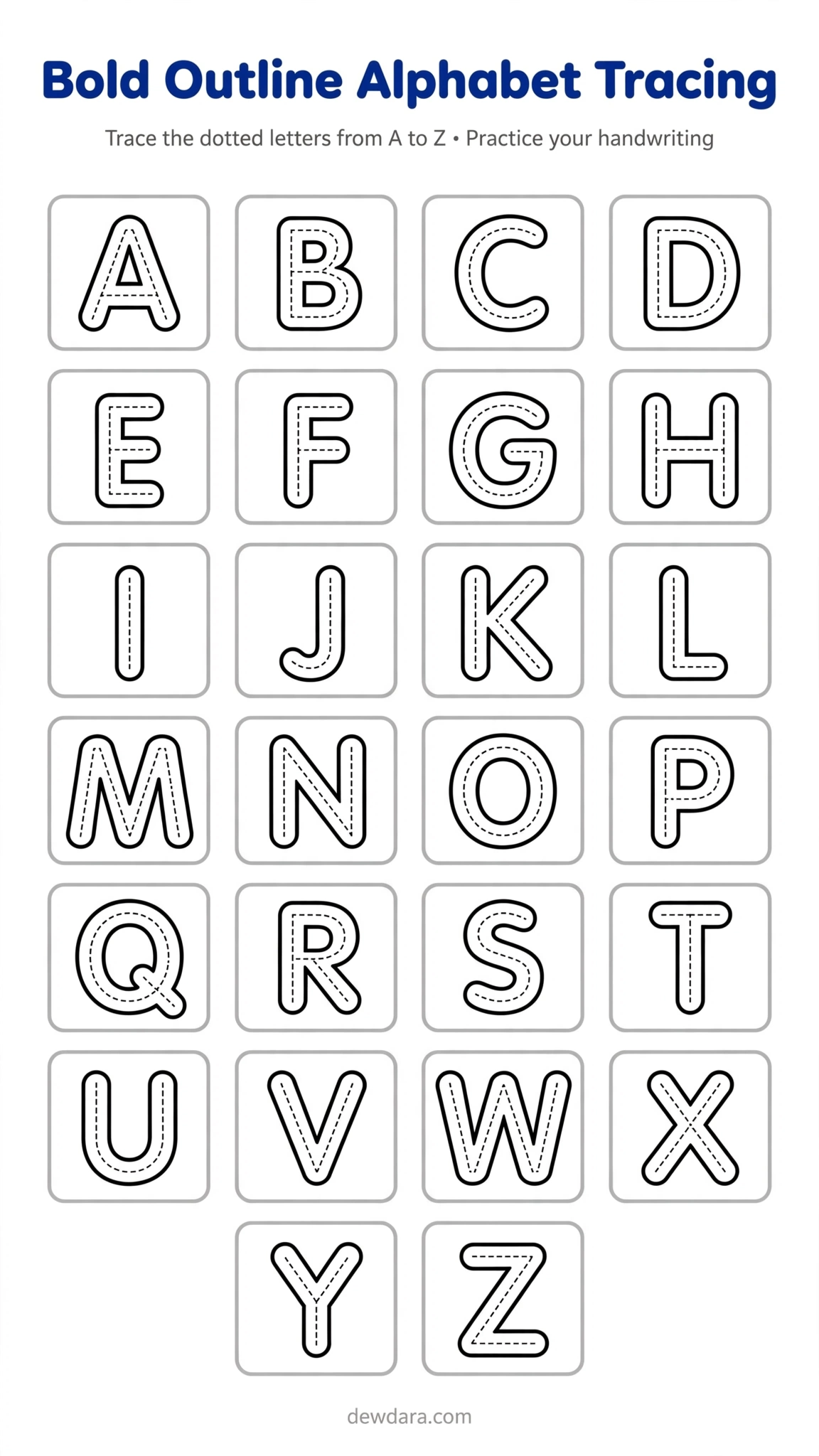
9. Bold Outline Alphabet Tracing
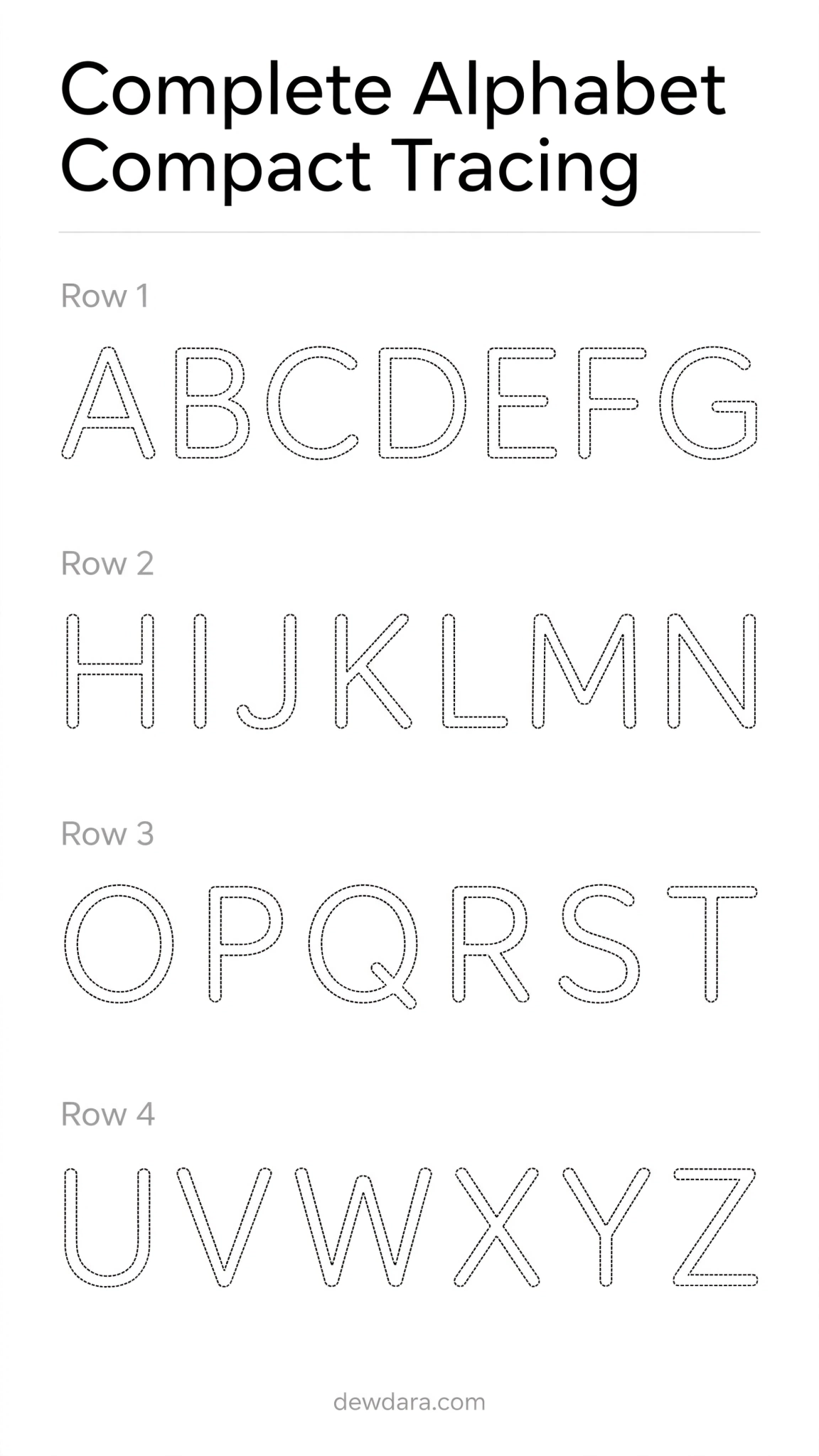
A modern, minimal take on tracing. This worksheet uses bold, clean outlines with a dotted center line. The high contrast makes it easy for children to see the letter shape clearly. The extra white space reduces visual overwhelm and is excellent for focused practice.
Best for: Visual learners, clean and distraction-free practice.
10. Writing Lines Tracing – Blue and Red Lined Practice
This professional worksheet features name and date fields at the top and a full A-Z dotted alphabet organized with primary writing lines. The blue lines represent the headline and baseline, while the red dotted line shows the midline. It mimics real school writing paper.
Best for: School readiness, structured handwriting lessons.
11. Alphabet Tracing with Fun Icons Style
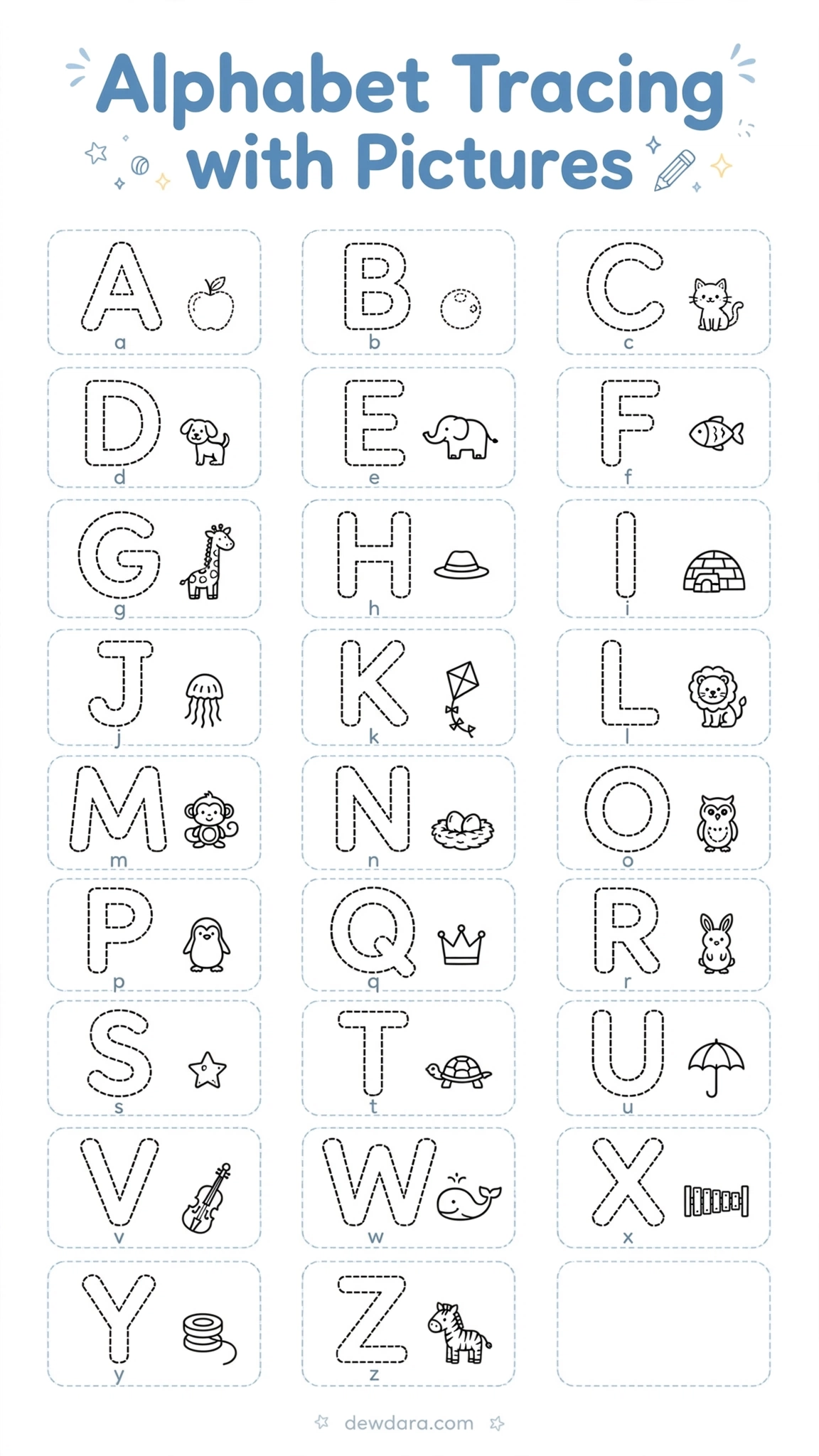
This playful version keeps the tracing focused but adds a subtle educational element with letter-associated visuals. The layout remains uncluttered and unfilled, keeping the tracing as the main activity while maintaining a child-friendly appeal.
Best for: Engaging reluctant writers, preschool fun learning.
12. Cursive Lowercase Tracing – Smooth Curves
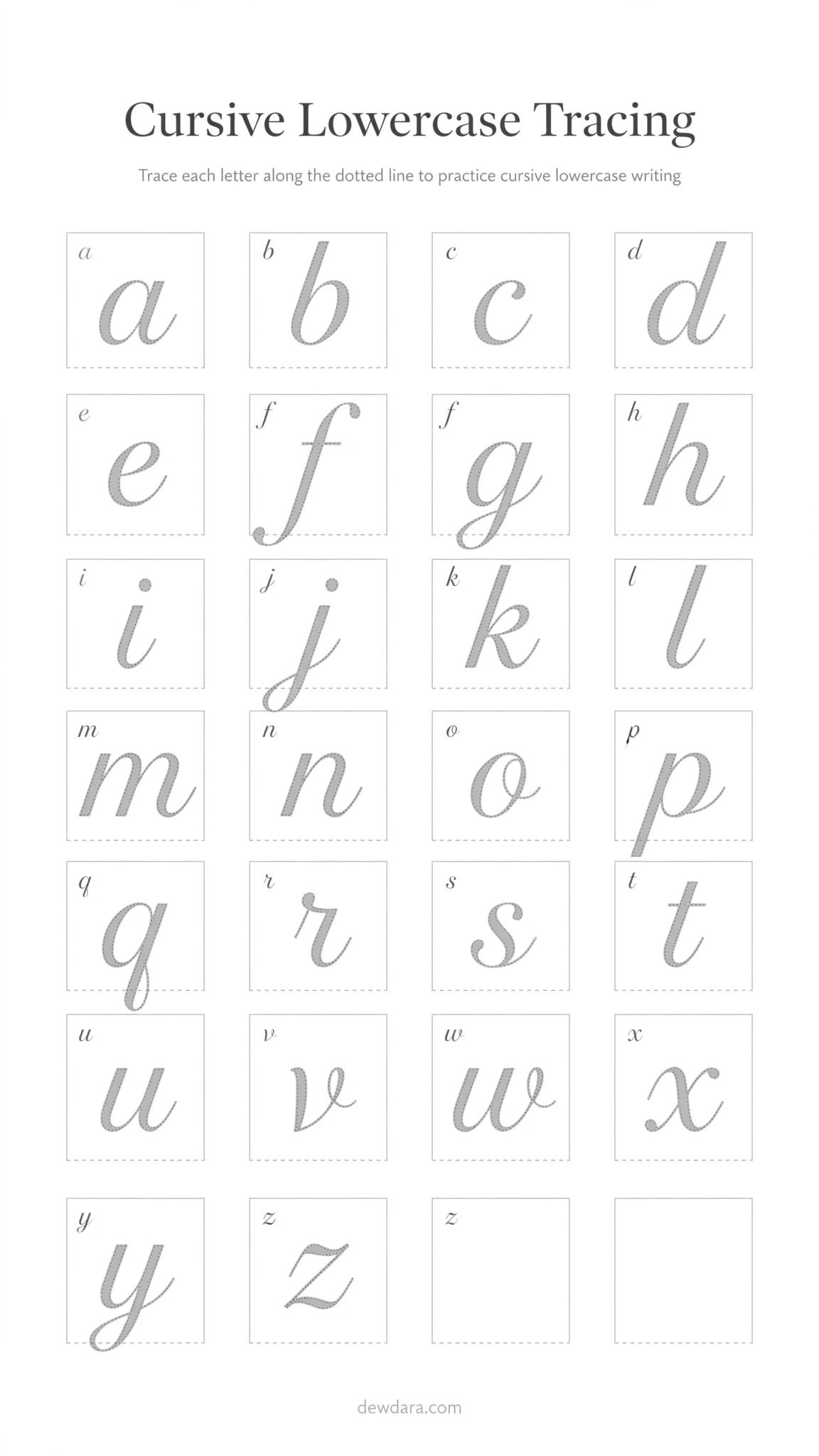
Mastering cursive lowercase letters requires smooth, connected strokes. This worksheet provides the complete lowercase cursive alphabet a-z in light dotted lines. The elegant font encourages flow and rhythm in handwriting, improving hand-eye coordination.
Best for: Cursive mastery, ages 7+, handwriting improvement.
13. Trace and Write Alphabet – Two-in-One Worksheet
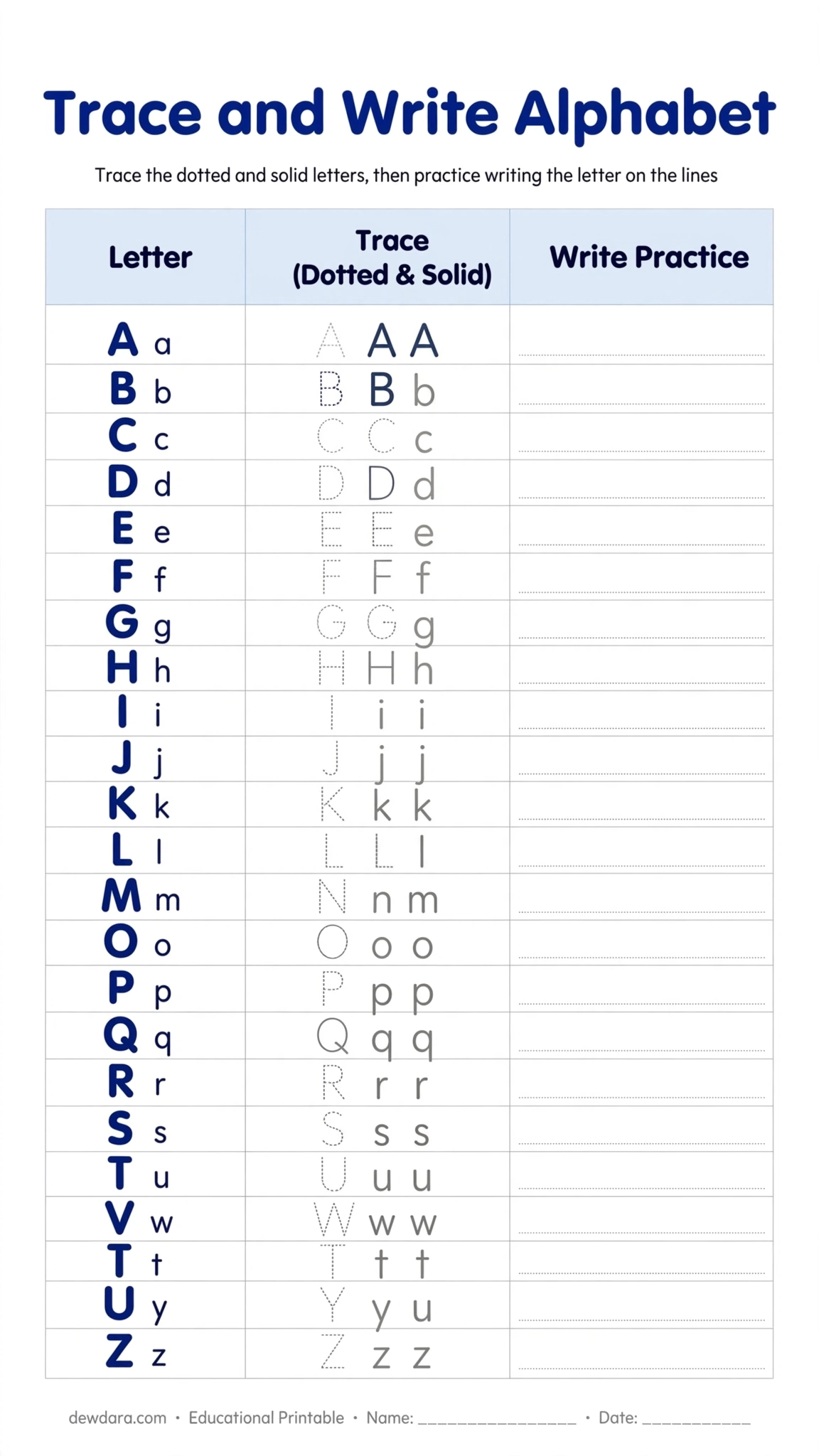
This is the ultimate practice sheet. It is divided into three columns: Letter, Trace (Dotted & Solid), and Write Practice. Children first trace the dotted letter, then the solid gray letter, and finally write independently on blank lines. It bridges the gap between tracing and free writing in one page.
Best for: Final assessment, transition from tracing to independent writing.
How to Use These Printables
Printing Tips: Print on standard A4 or Letter size paper at 100% scale. Use a slightly heavier paper (80-100 gsm) for best results with pencils and crayons.
Learning Routine: Start with 1 worksheet per day. Let your child trace with a thick pencil or washable marker. Always demonstrate the correct pencil grip.
Laminate for Reuse: Laminate the sheets and use dry-erase markers to make them reusable and eco-friendly.
Conclusion
These 13 alphabet tracing worksheets printable are designed to make early writing fun, structured, and effective. From classic dotted uppercase to stroke-guided and three-line formats, this complete set supports every stage of handwriting development. All worksheets are free, blank for practice, and branded with dewdara.com for your classroom and home use.
Download, print, and start tracing today – help your little learners build confident handwriting skills one letter at a time.