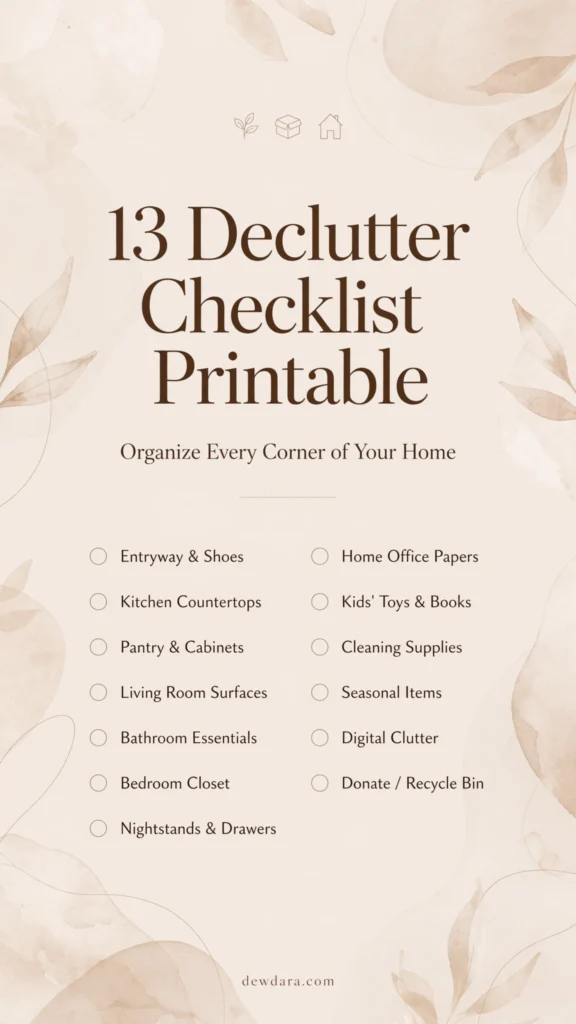
13 Declutter Checklist Printables to Transform Your Home Room by Room
A cluttered space often means a cluttered mind. We all know the feeling — walking into a room and feeling instantly overwhelmed by the piles, the stuff we don’t use, and the little messes that have built up over time. Decluttering isn’t about throwing everything away or creating a perfect, magazine-like home. It’s about creating space for what truly matters.
These 13 declutter checklist printables were designed to make the process simple, peaceful, and achievable. Instead of tackling your whole house in one exhausting day, you can focus on one zone at a time. Print them, keep them on a clipboard or fridge, and enjoy the satisfaction of checking off each box. All checklists are blank so you can customize them to your own home and lifestyle.
Let’s get started on your journey to a calmer, more organized home.
1. Whole Home Declutter Checklist
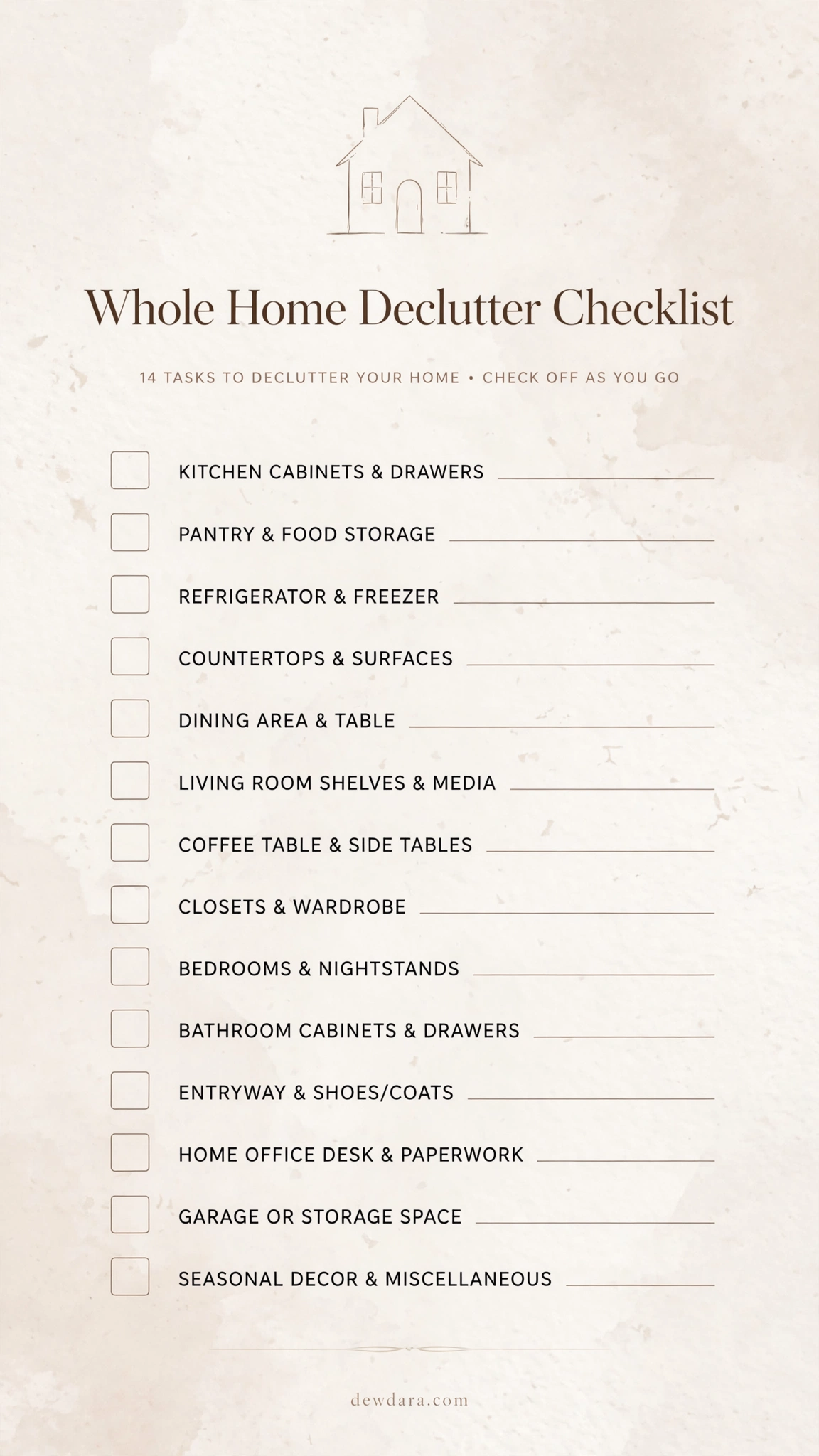
This is your big-picture starting point. Before you dive deep into drawers and closets, this checklist helps you do a quick sweep of your entire home to build momentum.
How to use it: Walk through every room for 15 minutes and write down the obvious clutter — trash, broken items, things that don’t belong in that room, expired food or products. The goal is not perfection, but quick wins.
What to focus on: Surfaces, floors, and entry points. Clear coffee tables, countertops, and the areas where clutter lands first like dining tables and chairs.
Pro Tip: Use the 4-Box Method as you go: Keep, Donate, Trash, Relocate. It makes every decision faster.
2. Living Room Declutter Checklist
The living room is where life happens, which means it collects everything — remotes, blankets, mail, toys, and random items from other rooms.
How to use it: This printable helps you edit your living room to feel cozy but not crowded. Write your own tasks on the blank lines, such as “declutter throw pillows,” “sort DVDs/books,” or “organize TV cables.”
What to focus on: Start with surfaces and soft furnishings. Remove decor that you no longer love, fold throws intentionally, and create a designated home for remotes and chargers.
Pro Tip: Keep only 3-5 decorative items per surface. This instantly makes the room look more intentional and calm.
3. Bedroom Declutter Checklist
Your bedroom should be a sanctuary for rest, not a storage unit. Clutter in the bedroom directly affects sleep quality and stress levels.
How to use it: Use this checklist to create a peaceful retreat. List tasks like “clear nightstands,” “declutter under the bed,” or “sort jewelry.”
What to focus on: Nightstands, dresser tops, under the bed, and the “chair” where clothes pile up. Remove anything that doesn’t support relaxation.
Pro Tip: Make your bed first. A made bed makes even a half-decluttered room feel 80% more peaceful.
4. Kitchen Declutter Checklist
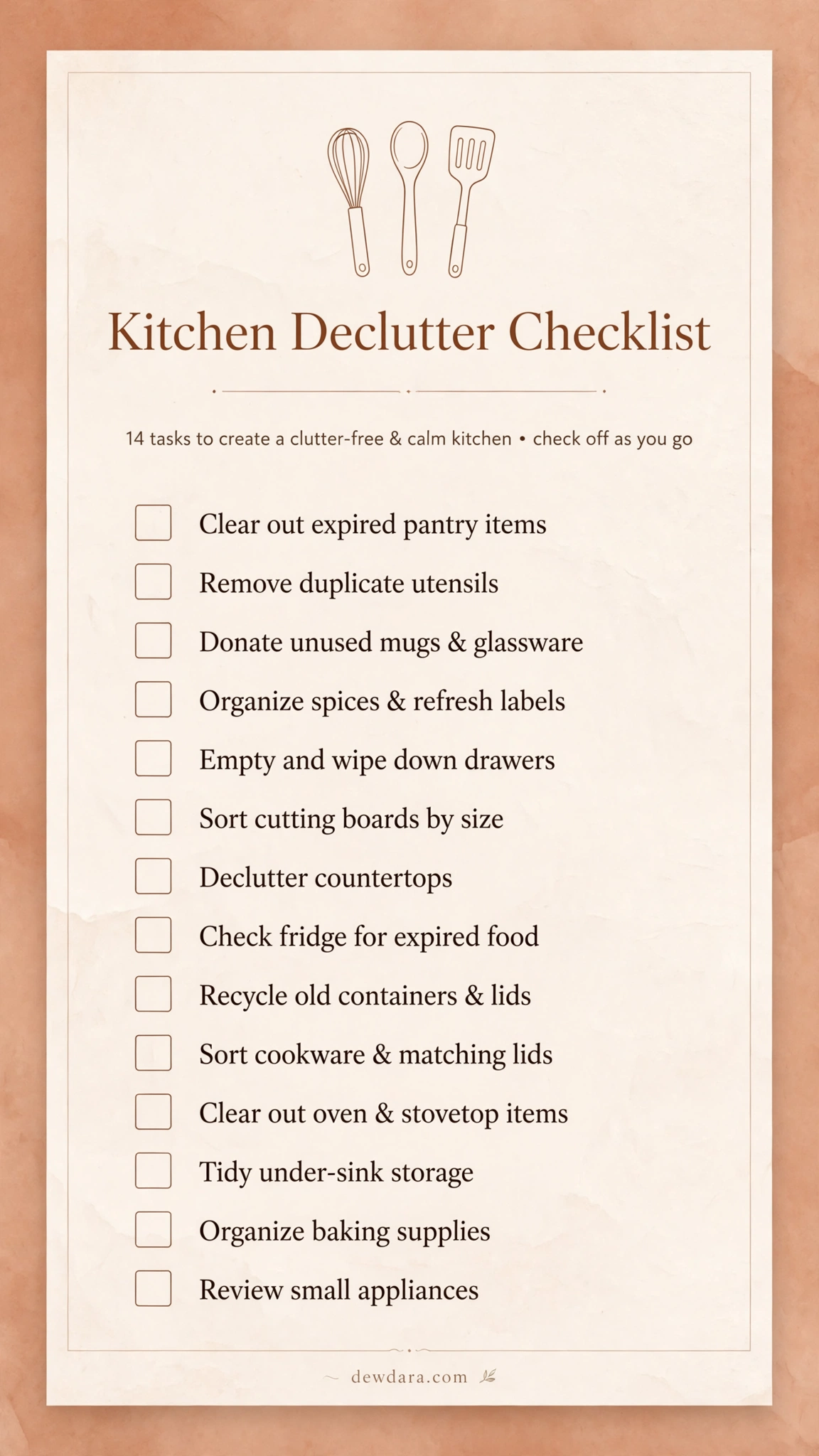
The kitchen is the hardest-working room in the house and often the most cluttered. Duplicate utensils, expired pantry items, and unused gadgets take up valuable space.
How to use it: Tackle this checklist zone by zone — drawers, cabinets, pantry, fridge, and countertops. Write specific actions like “check spice expiration” or “declutter plastic containers.”
What to focus on: Countertop real estate. Only keep daily essentials out. Everything else should have a cabinet home.
Pro Tip: If you have two of the same tool, keep the better one and donate the other. You only need one potato peeler.
5. Bathroom Declutter Checklist
Bathrooms collect half-used products, old makeup, expired medicine, and ratty towels that we forget to replace.
How to use it: Empty one cabinet or drawer at a time onto a towel. Throw away anything empty, expired, or you haven’t used in 6 months. Write your tasks on the blank lines.
What to focus on: Medicine cabinet, under the sink, makeup drawer, and shower caddy. Decant products you love into beautiful, refillable bottles.
Pro Tip: Keep a small bin for trash and recycling right in the bathroom to make daily decluttering effortless.
6. Closet & Wardrobe Declutter Checklist
Your closet should only hold clothes that fit you, flatter you, and that you actually wear. Everything else is taking up mental and physical space.
How to use it: Try everything on if you have time, or use the hanger trick — turn all hangers backwards, and after you wear something, turn it forward. After 3 months, anything still backwards can go.
What to focus on: Clothes that don’t fit, are damaged, or you haven’t worn in a year. Also scarves, belts, bags, and shoes.
Pro Tip: Ask three questions: Would I buy this again today? Does it make me feel confident? Does it go with 3 other items I own? If not, let it go.
7. Entryway & Mudroom Declutter Checklist
This small space sets the tone for your entire home. When it’s chaotic, the whole house feels chaotic.
How to use it: This checklist is perfect for creating a functional drop zone. List items like “sort shoes,” “declutter coat hooks,” “empty key tray,” or “organize mail station.”
What to focus on: Shoes, coats, bags, keys, mail, and pet supplies. Give every family member one basket or hook and enforce the rule: one in, one out.
Pro Tip: Add a small bowl for keys and a lidded basket for miscellaneous items. Contained clutter looks tidy.
8. Home Office / Desk Declutter Checklist
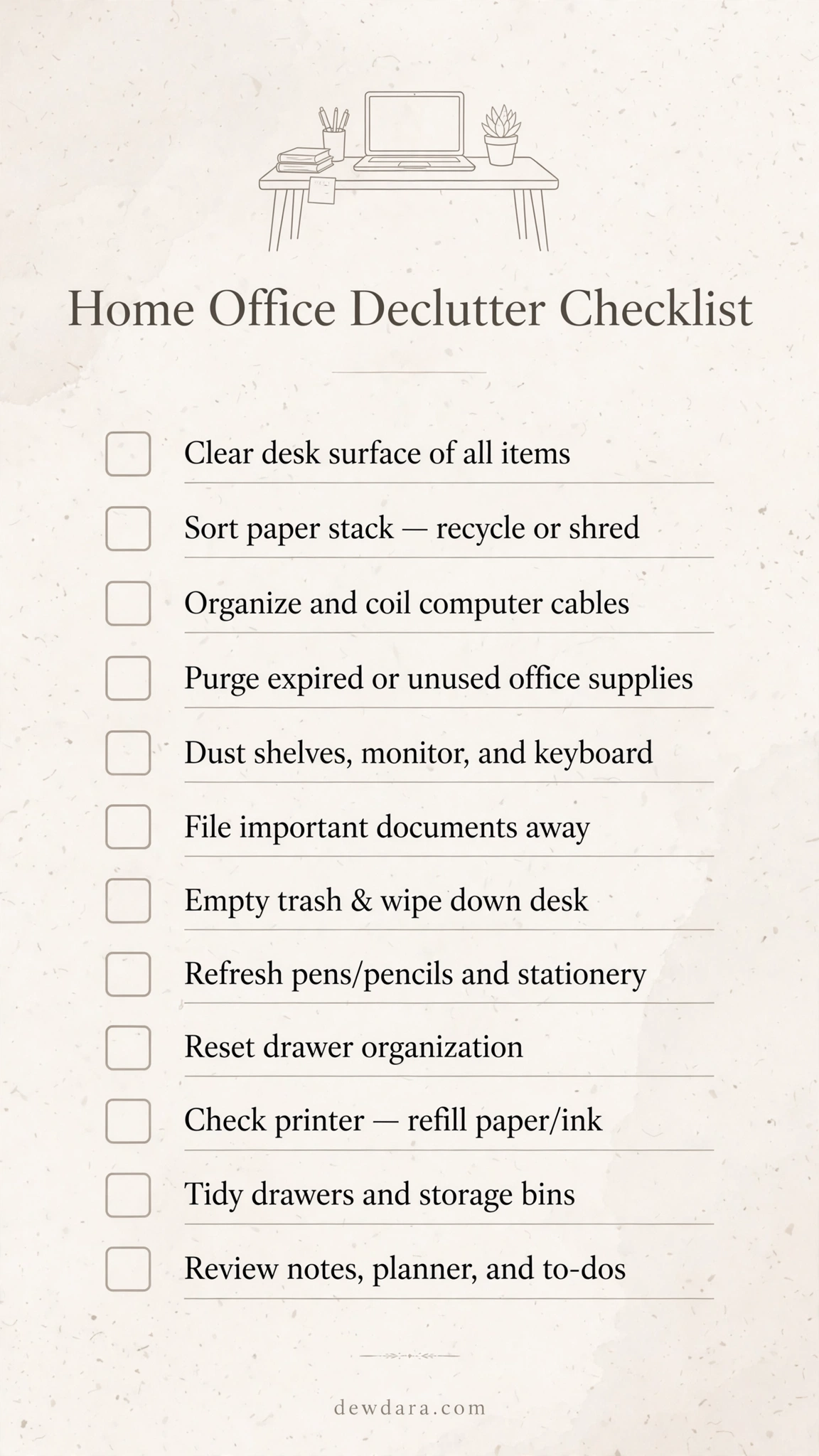
A cluttered desk kills focus and creativity. Digital and physical clutter both affect productivity.
How to use it: Use this for both your physical desk and your immediate work zone. Tasks could be “clear desktop,” “file loose papers,” “untangle cables,” or “clean keyboard.”
What to focus on: Paper piles, old pens that don’t work, outdated notes, and cable management. Keep only your top 5 daily tools on your desk.
Pro Tip: End each workday with a 5-minute desk reset. It makes starting the next morning so much easier.
9. Kids’ Room & Toys Declutter Checklist
Toys multiply overnight. A gentle, regular declutter teaches kids to value what they have and makes clean-up actually possible.
How to use it: Do this with your kids when possible. Let them choose what to keep. Write tasks like “sort stuffed animals,” “check broken toys,” or “organize art supplies.”
What to focus on: Broken toys, outgrown clothes, duplicate toys, and Happy Meal toys. Use bins with picture labels for younger kids.
Pro Tip: Use the toy rotation method. Box up half the toys and swap them monthly. Kids will think they got all new toys.
10. Garage & Storage Area Declutter Checklist
Garages and storage rooms become the final landing place for “I might need it someday” items. This is where the biggest transformations happen.
How to use it: This area needs time, so break it into sections on your blank lines: tools, holiday decor, sports gear, etc. Never declutter the garage without three zones marked: Keep, Donate/Sell, Trash.
What to focus on: Anything broken, rusted, expired, or you haven’t used in 2 years. Be honest about DIY projects you will never finish.
Pro Tip: Install vertical storage — pegboards, wall hooks, and overhead racks. The floor should be as empty as possible.
11. Digital Declutter Checklist
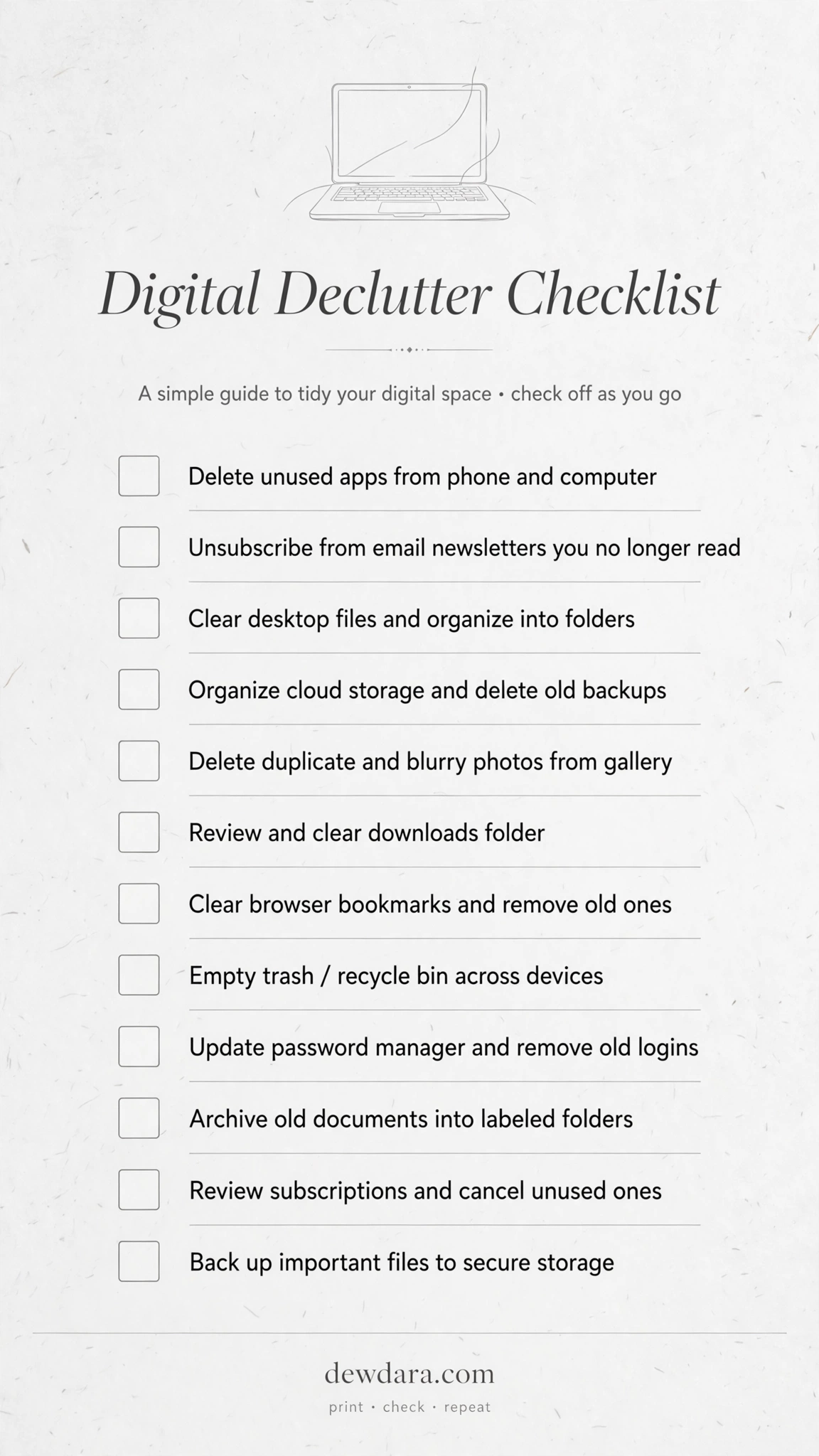
Clutter isn’t just physical. A messy digital life creates just as much anxiety — thousands of photos, overflowing inboxes, and a chaotic desktop.
How to use it: Perfect for a cozy Sunday reset. Write tasks like “clean phone photos,” “unsubscribe from 10 emails,” “organize desktop files,” or “delete unused apps.”
What to focus on: Email inbox, phone storage, desktop, cloud storage, and social media follows. Unfollow accounts that make you feel bad or cluttered.
Pro Tip: Set a timer for 20 minutes. You can delete over 500 old photos or 100 emails in that time. Small sprints prevent burnout.
12. Paperwork & Documents Declutter Checklist
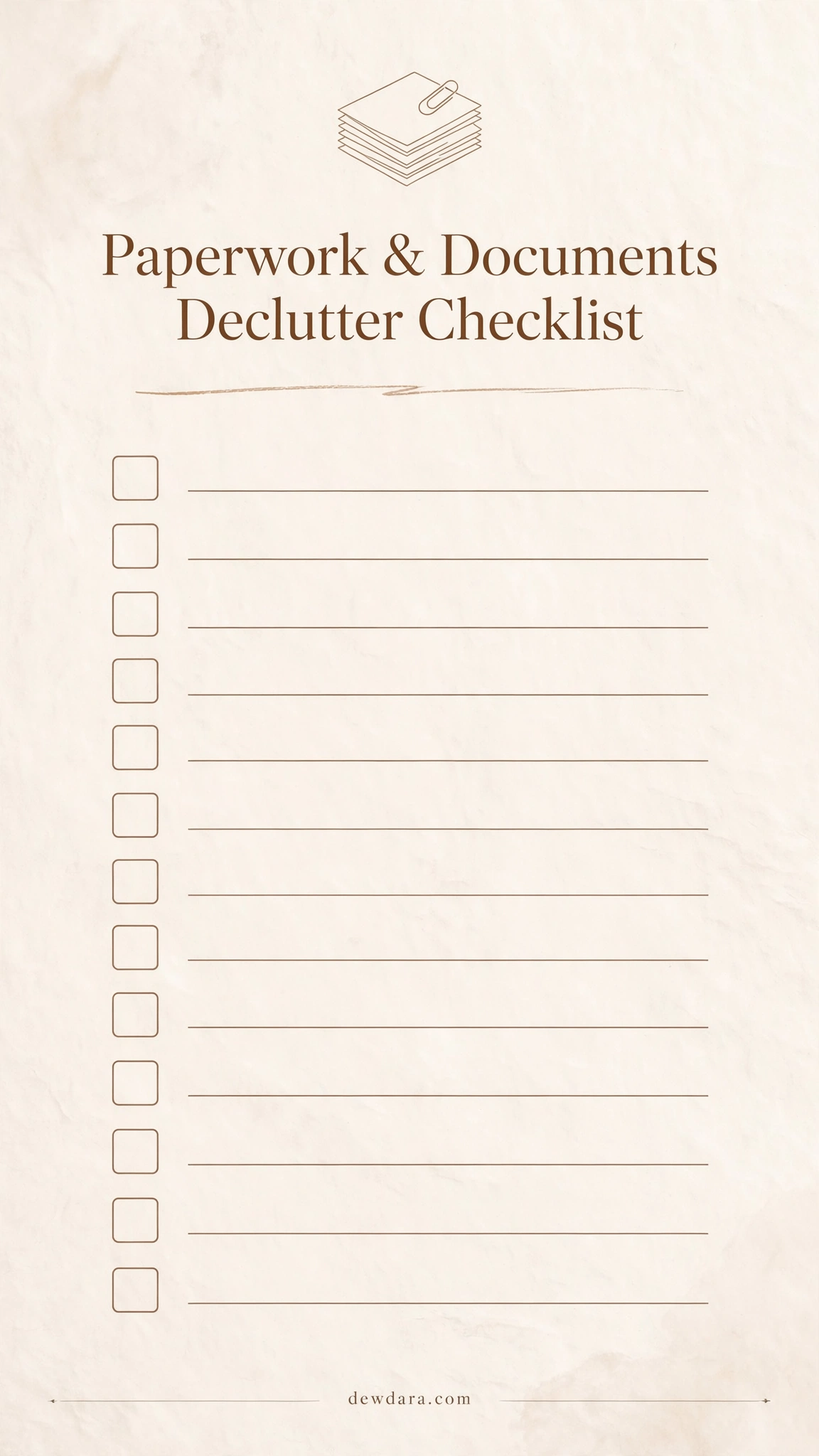
Paper clutter is sneaky and stressful. Old bills, manuals, kids’ artwork, and receipts can take over cabinets and drawers.
How to use it: Create a simple system — Action, File, Shred/Recycle. Use your blank lines to list categories: medical bills, warranties, school papers, receipts.
What to focus on: Anything you can find online (manuals, bank statements) can be shredded after downloading. Keep only vital documents in a fireproof file box.
Pro Tip: Scan kids’ artwork and important documents, then keep only the most sentimental originals. A digital album saves space and memories.
13. 30-Day Declutter Challenge Checklist
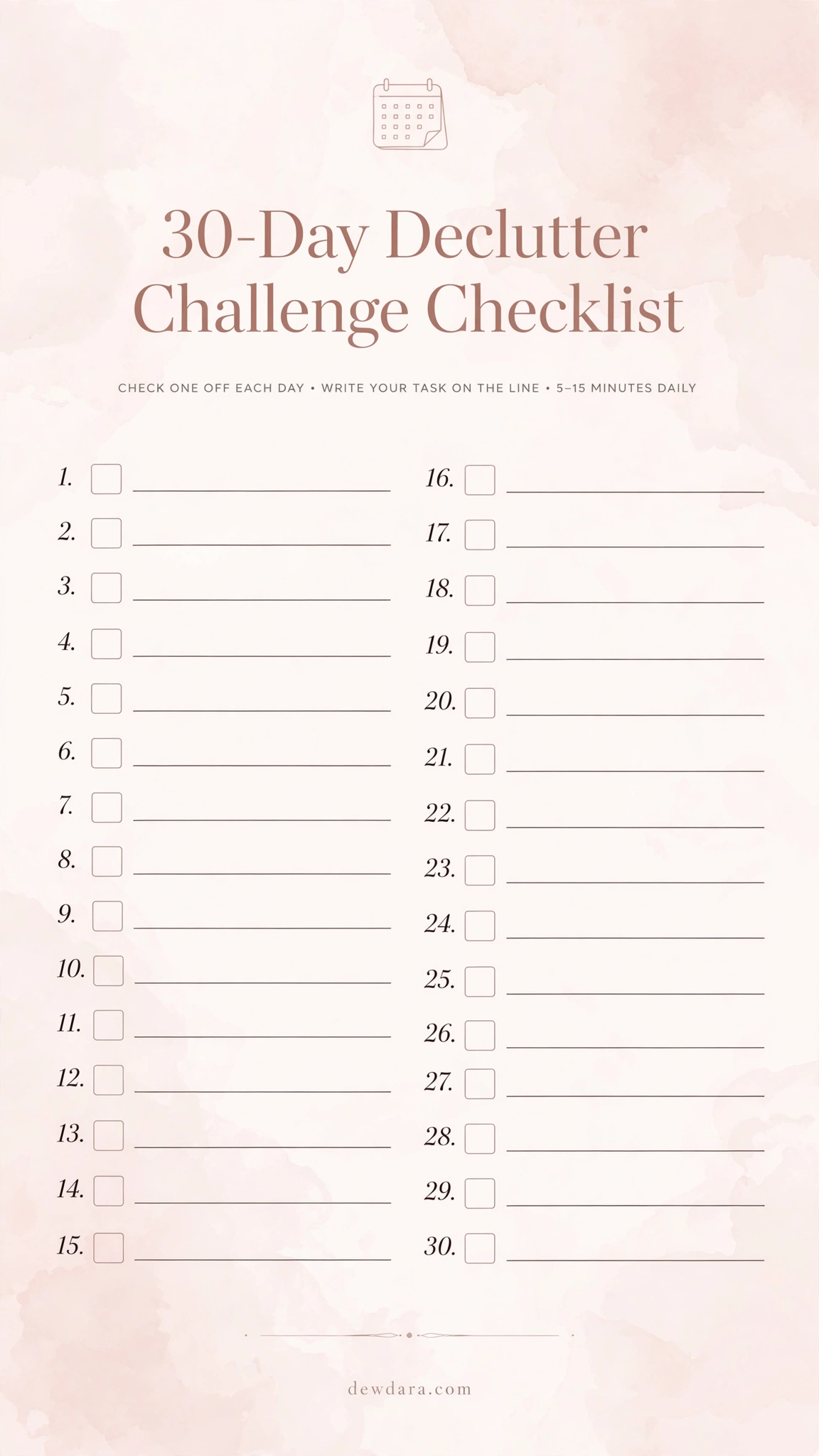
If you love a challenge and need accountability, this is your favorite printable. Slow, steady progress beats overwhelming marathon sessions.
How to use it: Write one small declutter task for each day of the month on the blank lines. For example, Day 1: Junk drawer, Day 2: T-shirt drawer, Day 3: Under bathroom sink. Check off one box per day.
What to focus on: Consistency over intensity. 5-15 minutes a day is enough to transform your entire home in a month without burnout.
Pro Tip: Pair this checklist with a reward at the end — a candle, a plant, or a relaxing evening in your newly calm space.
Conclusion: Your Home, Your Pace
You don’t need to do all 13 checklists this weekend. The most successful decluttering journeys happen one checklist, one drawer, and one small win at a time.
Start with the area that bothers you the most — the one that gives you that little sigh every time you see it. Print that specific checklist, set a timer for 20 minutes, and just begin. Progress, not perfection, is the goal.
Save this collection, print your favorites, and keep them somewhere visible. Every checked box is a step closer to the calm, intentional home you deserve.
All printables are designed by dewdara.com for personal use. You can print them as many times as you need and share them with friends and family.