15 Grocery Budget Printables to Save Money & Stay Organized
Grocery shopping is one of the largest flexible expenses in every household. Without a clear plan, it’s easy to overspend, buy duplicates, and waste food. That’s where a dedicated grocery budget system changes everything.
These grocery budget printables are designed to give you complete control over your spending without complicated apps or spreadsheets. Whether you are shopping for one, feeding a family of five, meal prepping for the week, or trying to eat healthier on a budget, having a physical sheet to track, plan, and compare makes you more mindful.
Printing your budget makes it real. You see your limits, you track every dollar, and you start to notice patterns — where you overspend, which stores save you money, and how much you can save with a little planning. This collection of 15 printables covers every aspect of grocery budgeting, from weekly planning to yearly overviews and money-saving challenges.
All templates are blank, minimalist, and ready to print. Just download, print, and start saving.
1. Weekly Grocery Budget Planner
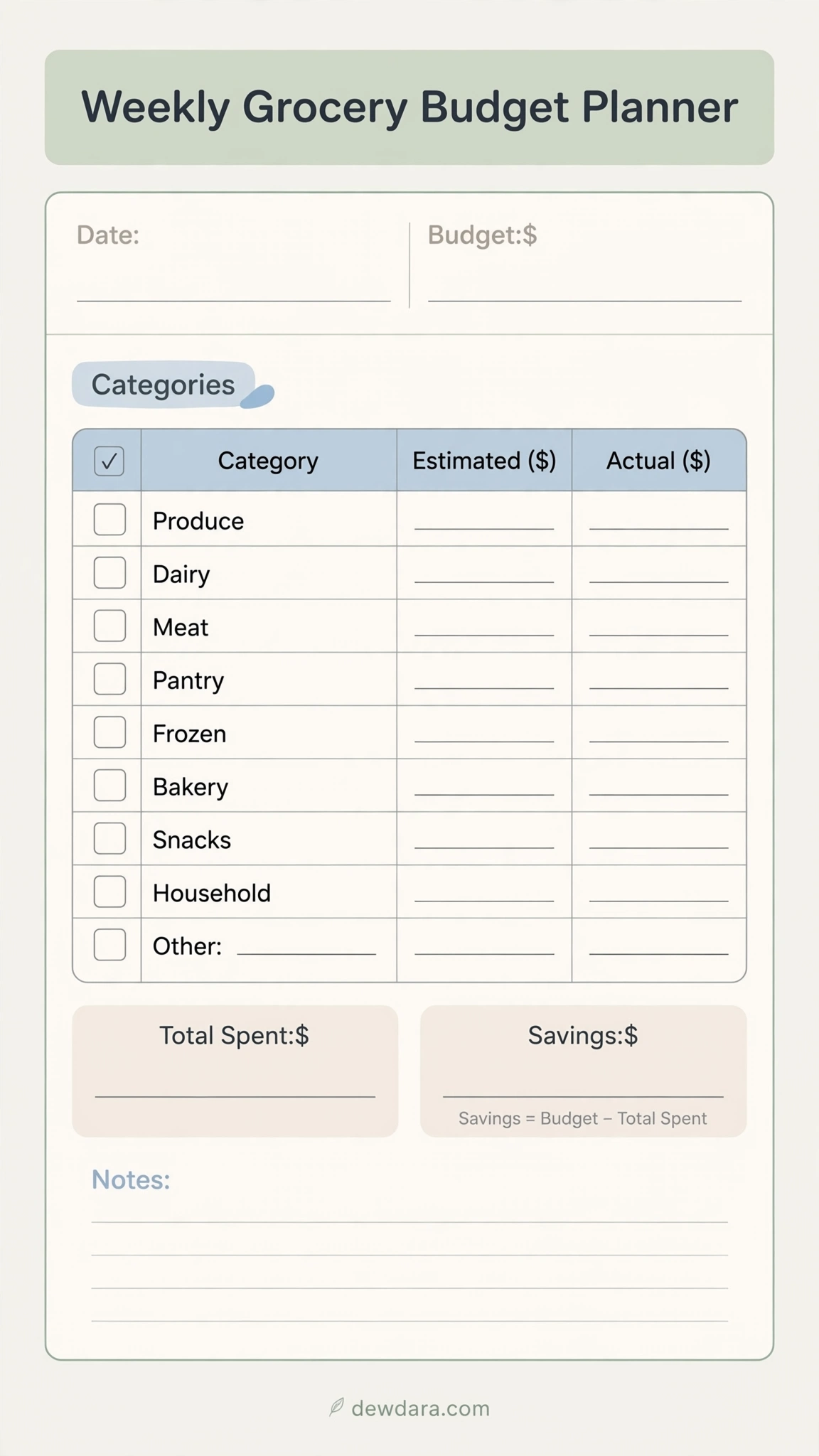
What it is: A clean weekly breakdown sheet with categories like Produce, Dairy, Meat, Pantry, and Household, with columns for estimated budget and actual spend.
Why you need it: Most overspending happens week by week. This planner helps you set a realistic limit for each category and see instantly where you went over.
How to use it: At the start of the week, set your total weekly budget and allocate amounts to each category. As you shop, fill in the actual cost. At the end of the week, calculate your total saved.
Pro Tip: Keep your produce budget separate — it’s the category where impulse buying is highest.
2. Monthly Grocery Budget Tracker
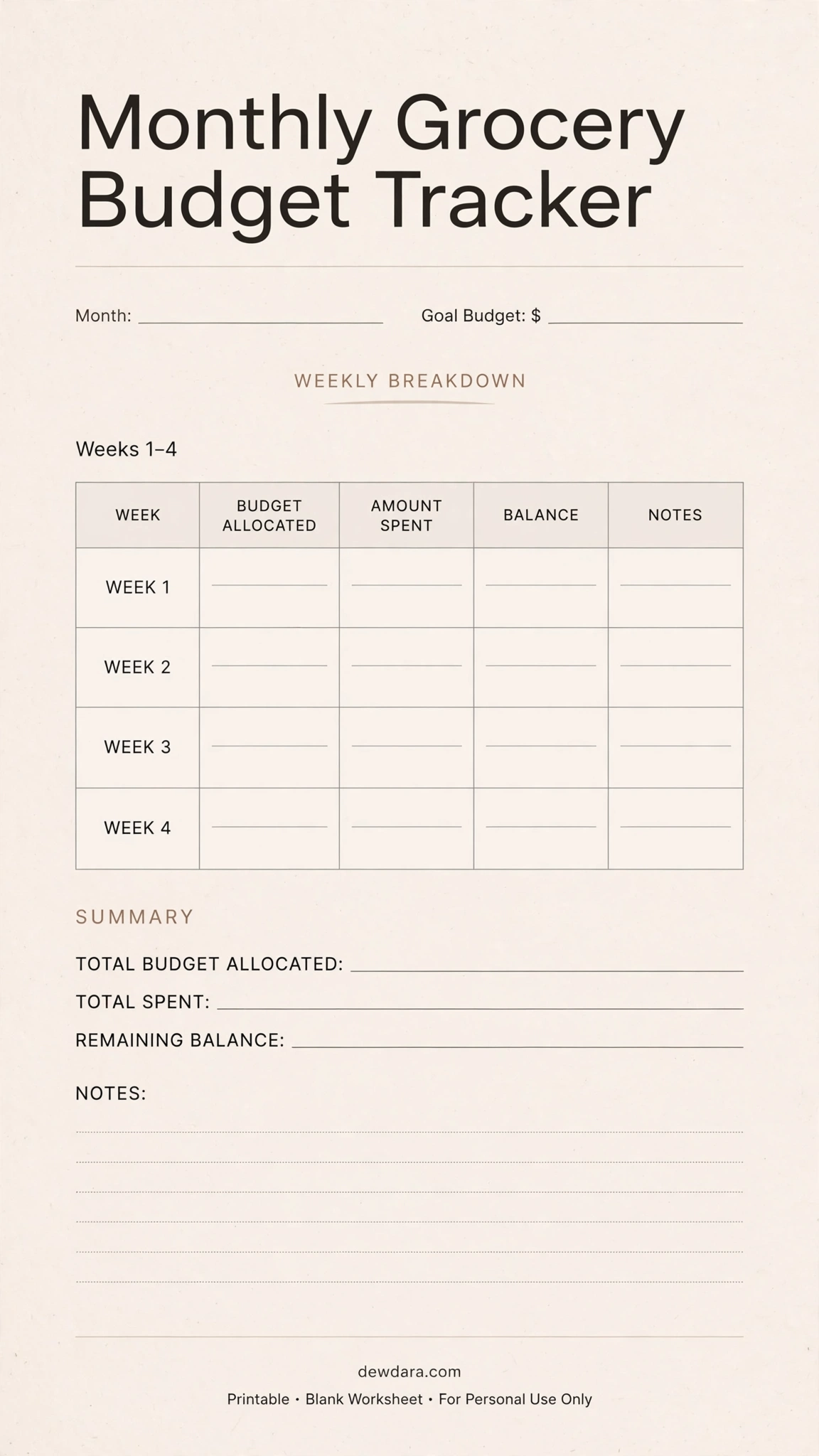
What it is: A month-at-a-glance tracker divided into Week 1 to Week 4 with budget, spent, and balance columns.
Why you need it: A weekly planner is great, but a monthly view shows you the bigger picture and helps you balance an expensive week with a cheaper one.
How to use it: Transfer your weekly totals here. This is perfect for families who get paid monthly or bi-weekly and need to spread their grocery funds.
Pro Tip: Add a small rewards line — if you stay under budget for the month, move the extra to savings.
3. Grocery List with Budget Column
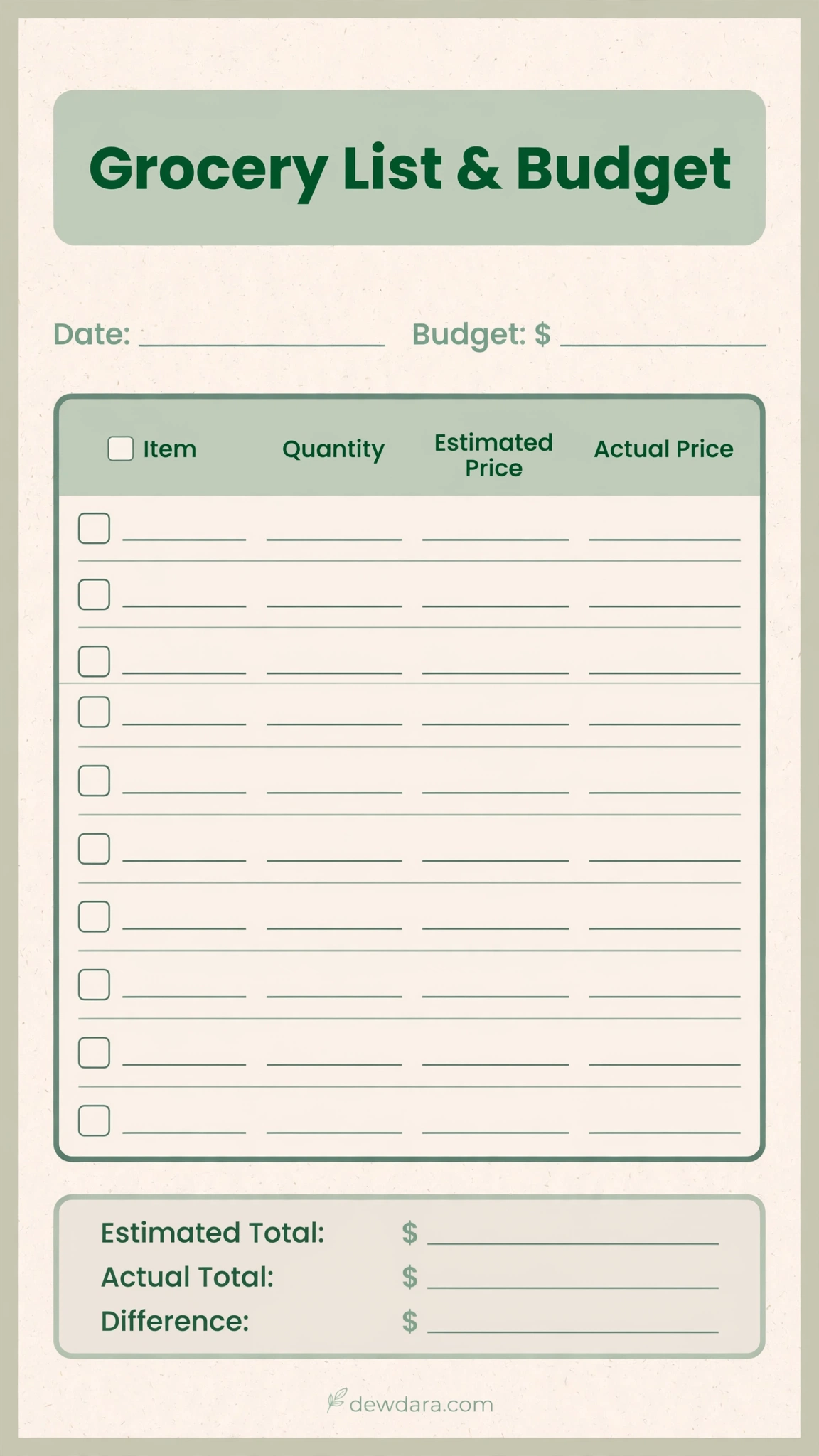
What it is: The classic shopping list upgraded with quantity, estimated price, and actual price columns plus checkboxes.
Why you need it: A list without prices is just wishes. This version forces you to price-check before you go and prevents sticker shock at checkout.
How to use it: Write items as you run out during the week, estimate each price from memory, then correct with actual prices in-store.
Pro Tip: Round all estimates up to the nearest dollar. You’ll almost always come in under.
4. Meal Plan + Grocery Budget Combo
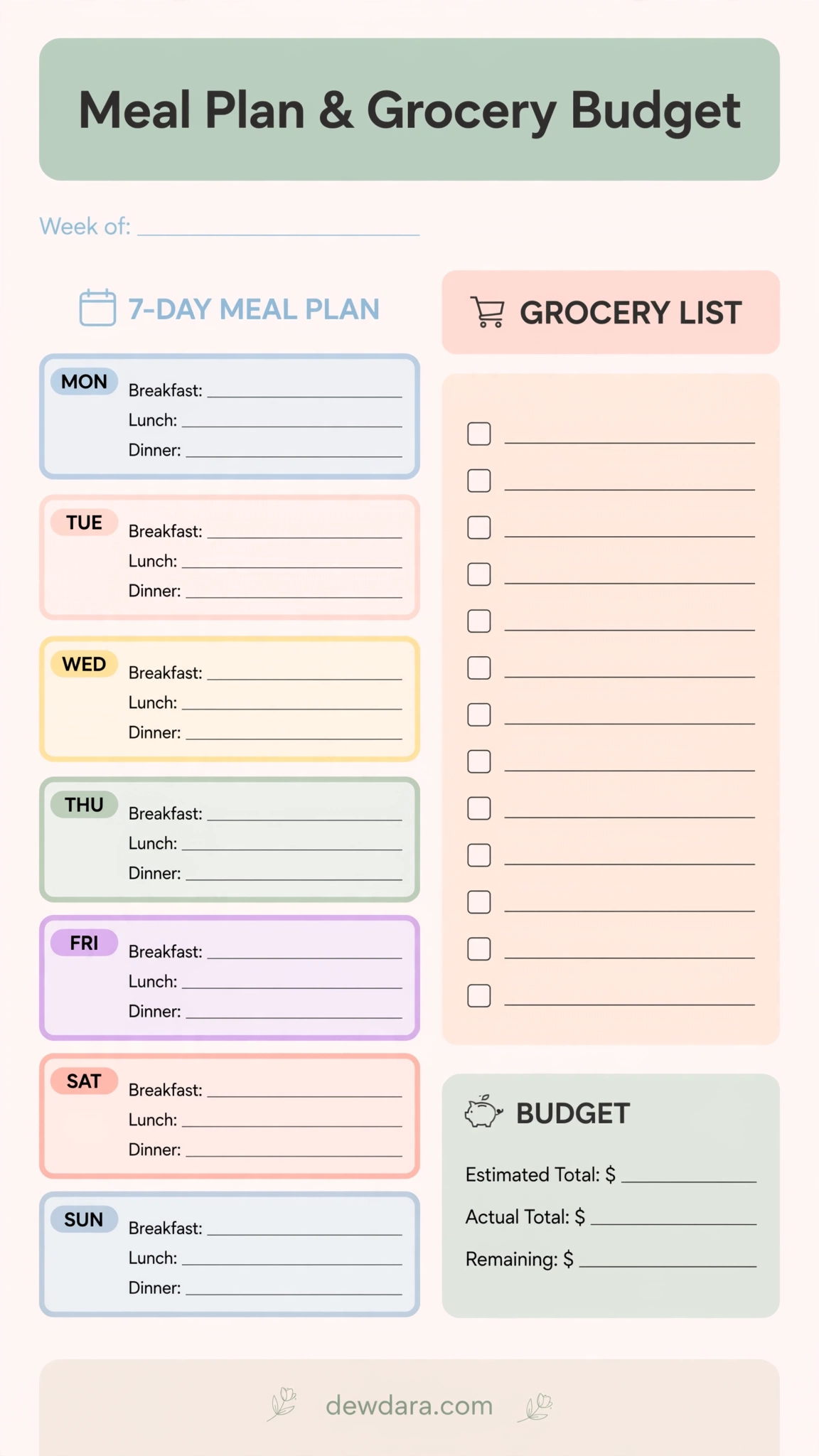
What it is: A two-in-one sheet with a 7-day meal plan (Breakfast, Lunch, Dinner) on one side and the resulting grocery list with budget on the other.
Why you need it: Meal planning is the #1 way to save on groceries. When you know what you’re eating, you only buy what you need.
How to use it: Plan meals first using what you already have, then build your shopping list only from missing ingredients.
Pro Tip: Plan for 5 dinners, not 7 — leave room for leftovers and flexibility.
5. Pantry Inventory & Budget Saver
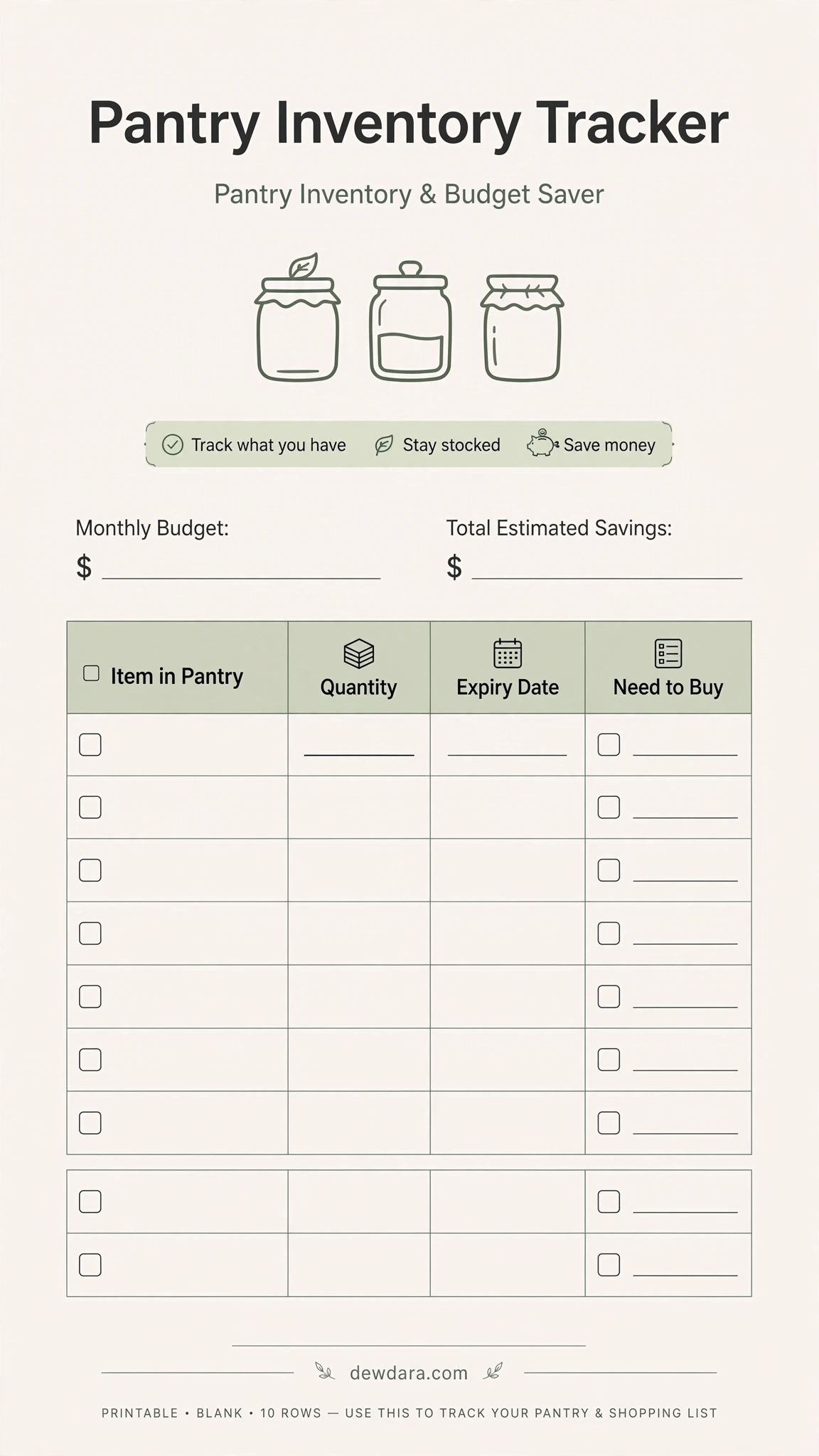
What it is: An inventory sheet to log what you already have, with quantity, expiry date, and need-to-buy status.
Why you need it: The average household wastes $1500+ a year on expired food they forgot they had. This stops duplicate buying.
How to use it: Do a 15-minute pantry scan every Sunday. Mark expiring items to use first and only add truly needed items to your shopping list.
Pro Tip: Organize by expiry, not by category — oldest in front.
6. Price Comparison Sheet
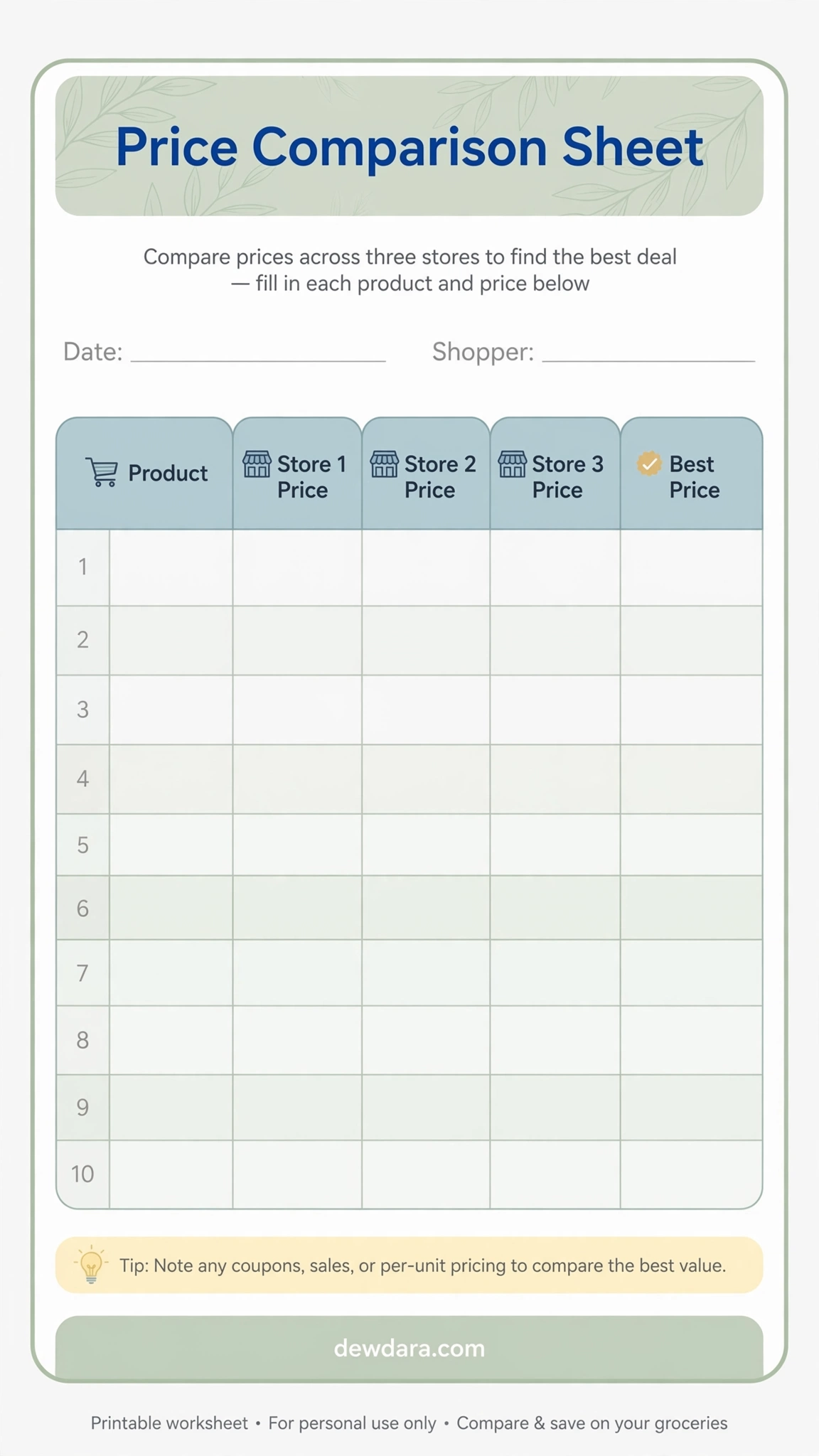
What it is: A comparison table for the same product across 3 different stores to find the best price.
Why you need it: The same item can cost 30% more depending on where you buy it. This sheet reveals your cheapest store for each staple.
How to use it: Track your 20 most-bought items for 2 weeks across 2-3 stores. After that, you’ll know exactly where to shop for what.
Pro Tip: Include unit price (price per oz/lb) — it’s the only true comparison.
7. Coupon & Discount Tracker
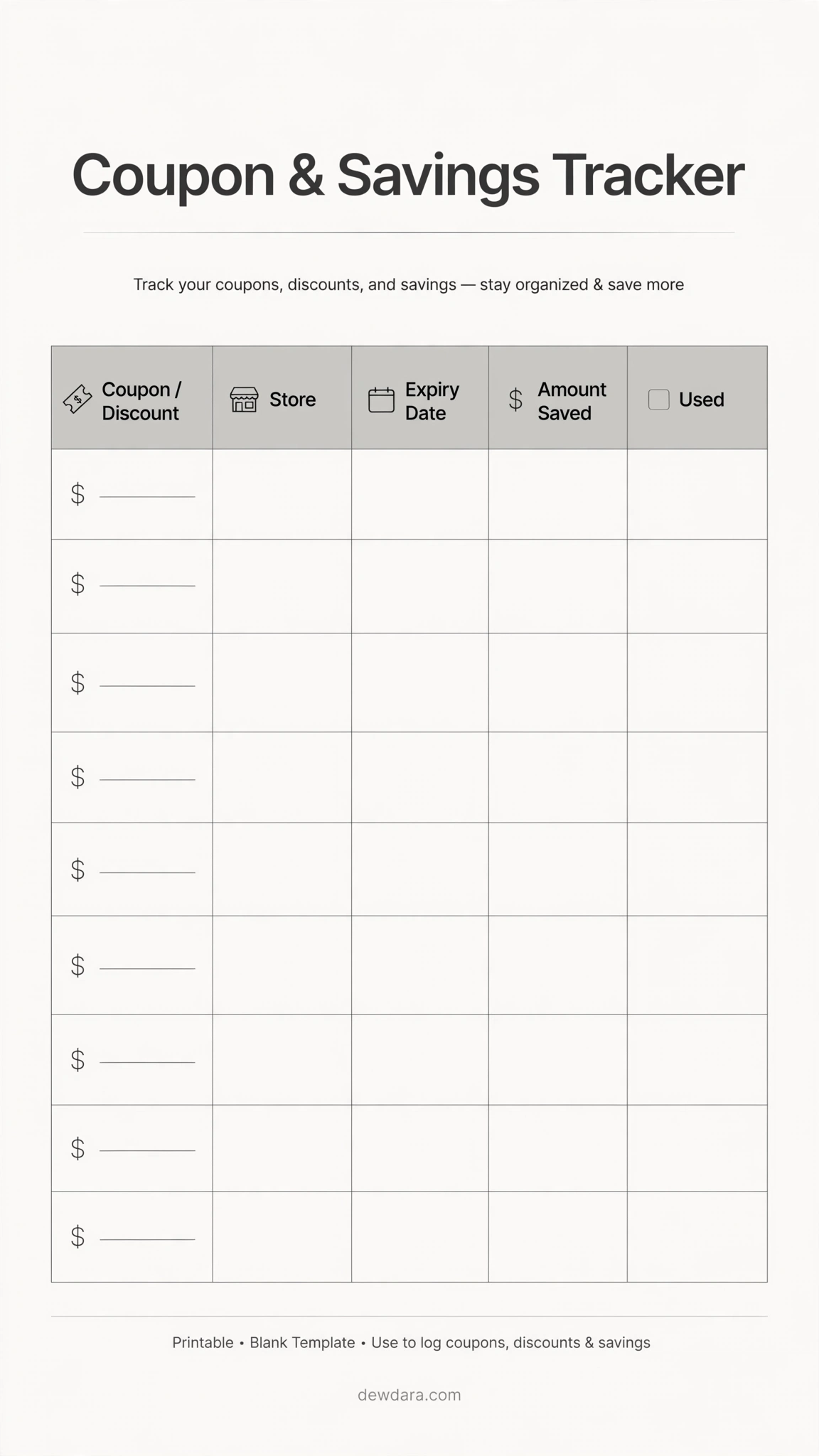
What it is: A dedicated log for coupons, promo codes, store discounts, expiry dates, and amount saved.
Why you need it: Coupons only save money if you use them before they expire and track if they actually saved you anything.
How to use it: Clip or screenshot coupons and log them immediately with expiry. Bring this sheet when you shop.
Pro Tip: Only log coupons for items you were already planning to buy — a coupon for something you don’t need is not a saving.
8. Bi-Weekly Grocery Budget

What it is: Perfectly split into Week 1 and Week 2 with budget, spent, remaining, and item lists for each.
Why you need it: If you shop every two weeks or get paid bi-weekly, a monthly sheet is too long and weekly is too short. This is the sweet spot.
How to use it: Ideal for bulk shopping. Plan Week 1 for fresh produce and Week 2 for pantry top-ups.
Pro Tip: Do one big shop in Week 1 and only a small fresh produce run in Week 2 to avoid impulse buys.
9. Grocery Spending Log
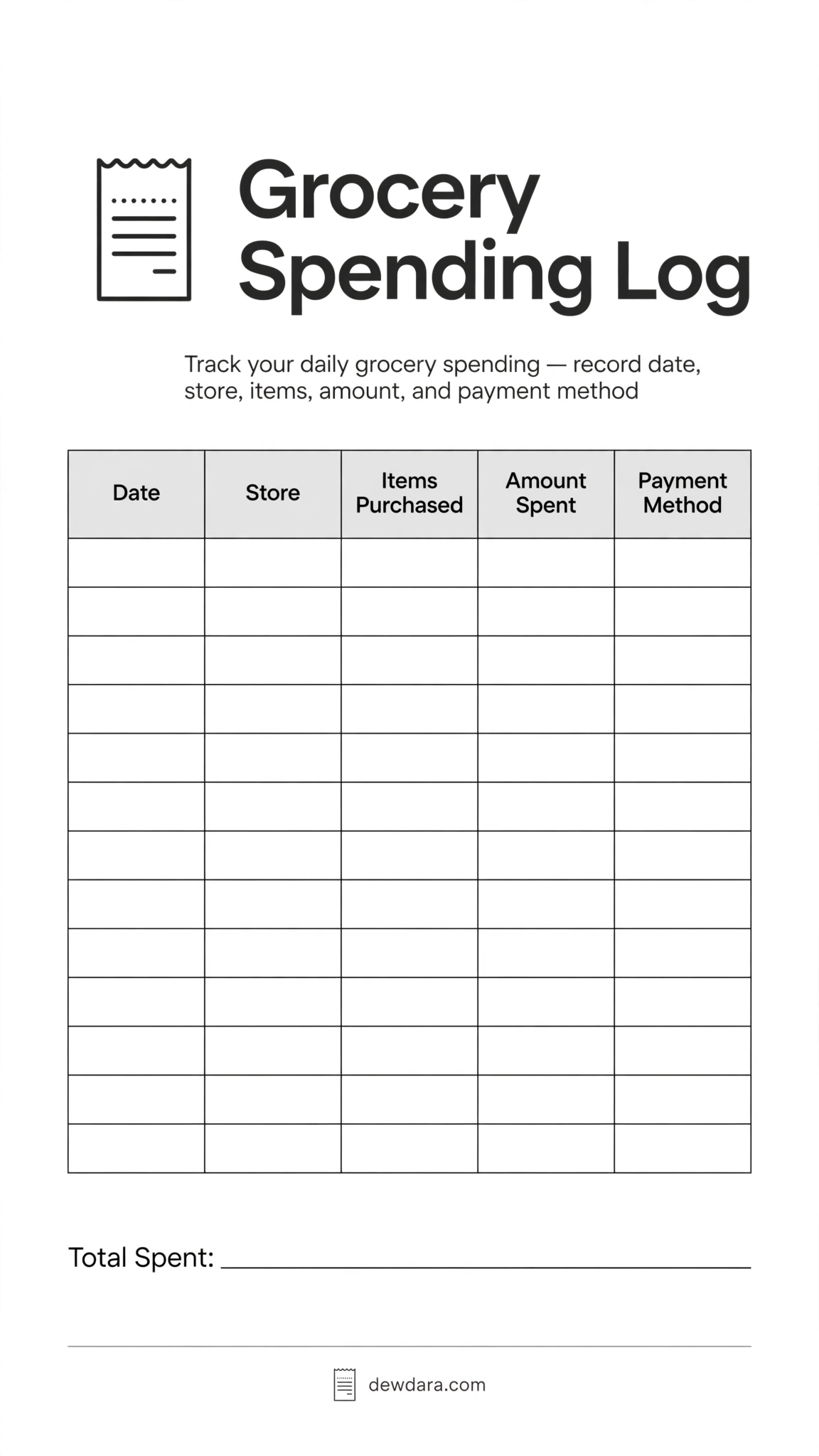
What it is: A simple daily log with Date, Store, Items Purchased, Amount Spent, and Payment Method.
Why you need it: This is your reality check. It shows you how often you shop and where all the small trips add up.
How to use it: Fill it right after each shopping trip — even small convenience store runs.
Pro Tip: Review at month-end and highlight all unplanned trips. That’s your savings opportunity next month.
10. Family Grocery Budget Planner
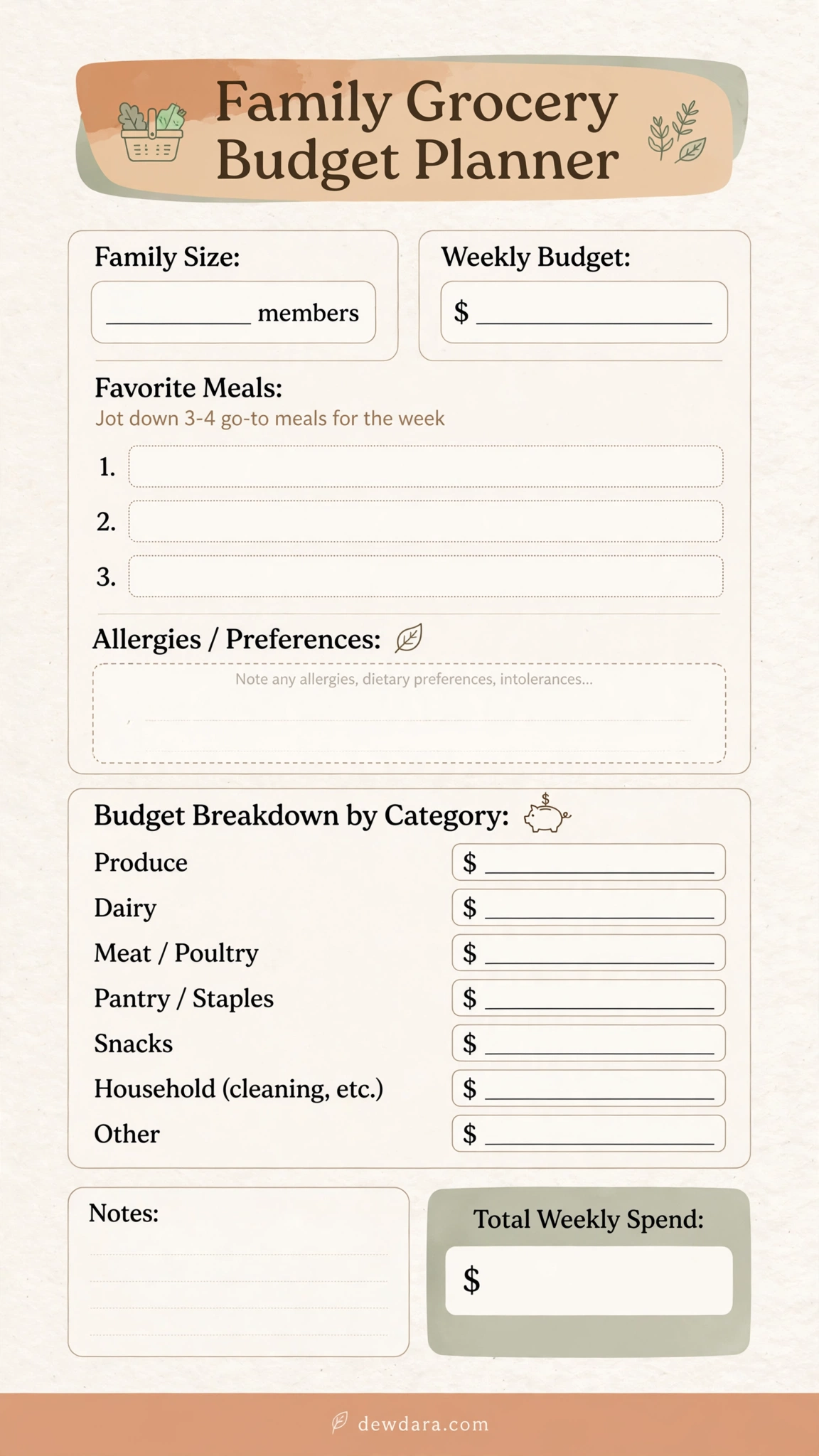
What it is: A family-focused planner with sections for family size, favorite meals, allergies/preferences, and budget breakdown by category.
Why you need it: Feeding a family means balancing preferences, dietary needs, and budget. This keeps everyone on the same page.
How to use it: Get kids involved — let them list their top 3 favorite budget-friendly meals to reduce food refusal waste.
Pro Tip: Add a “never buy” and “always buy” section based on your family’s actual eating habits.
11. Healthy Eating Grocery Budget
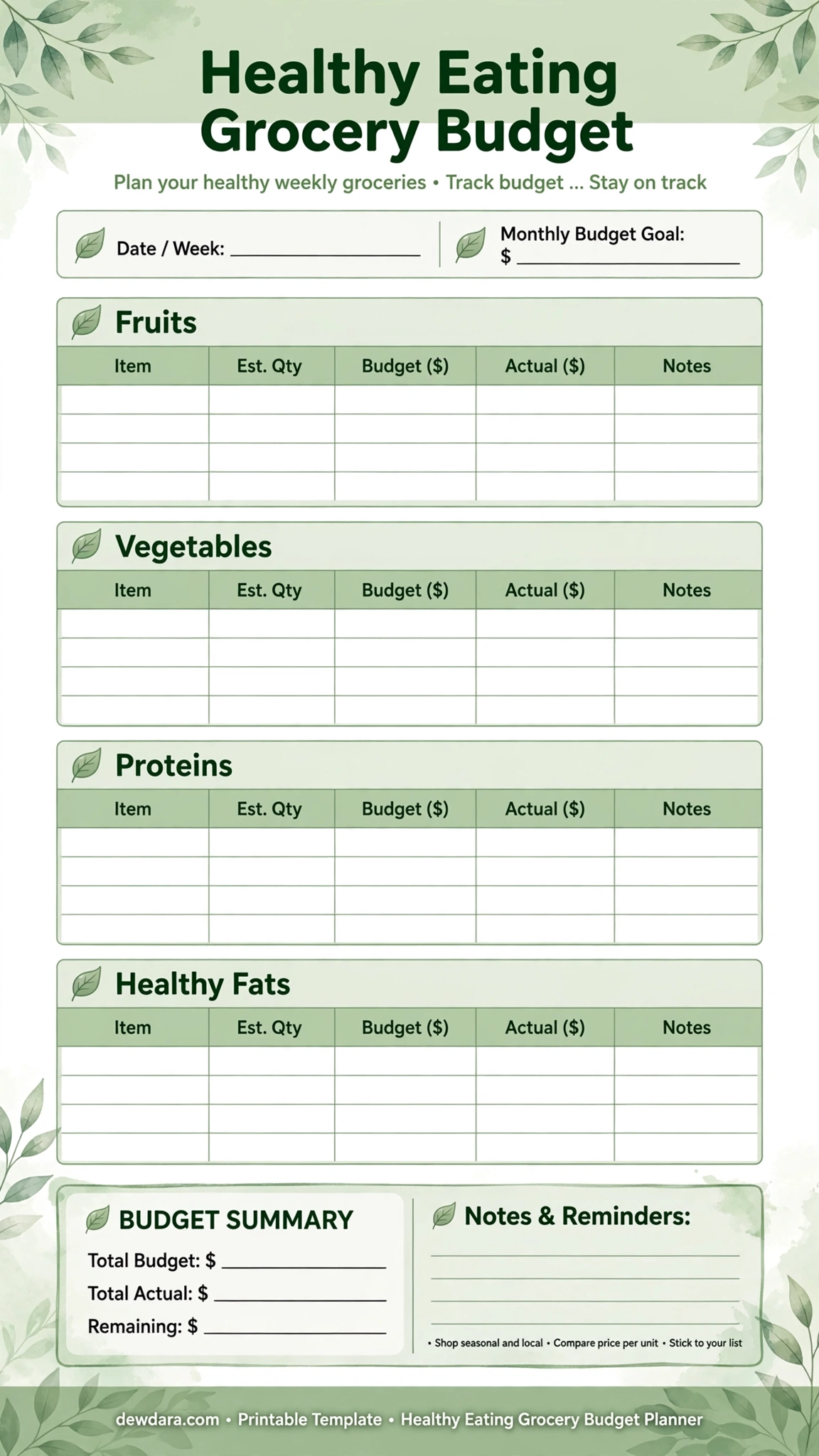
What it is: Divided into healthy categories: Fruits, Vegetables, Proteins, Healthy Fats with budget vs. actual columns.
Why you need it: Eating healthy feels expensive until you budget for it intentionally. This shows you can eat well within limits.
How to use it: Set a fixed amount for each healthy category first, then fill your cart to match that, not the other way around.
Pro Tip: Shop seasonal produce — this sheet will quickly show you how much cheaper in-season fruits and vegetables are.
12. Minimalist Grocery Budget Worksheet
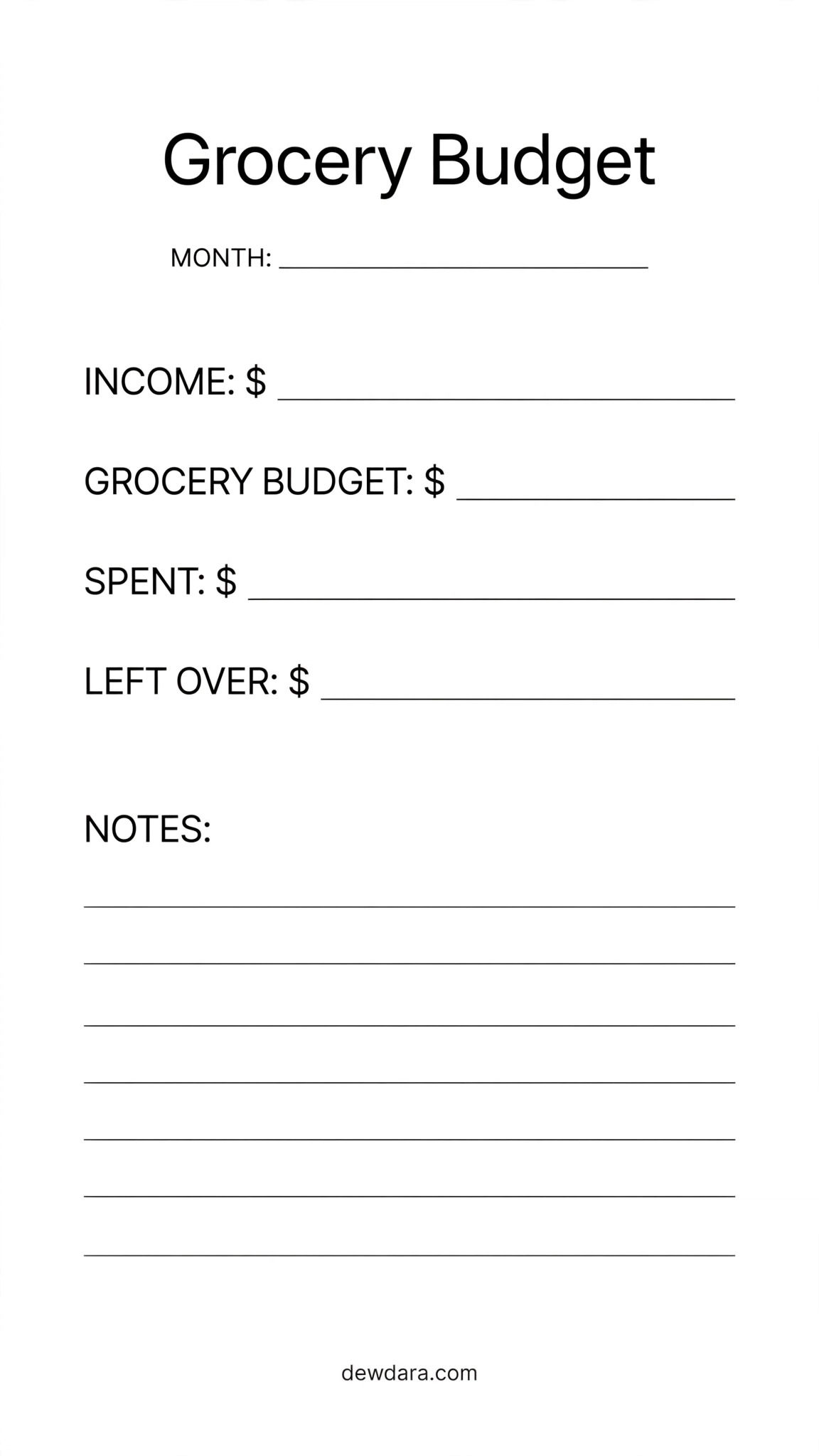
What it is: An ultra-clean, black-and-white worksheet with just the essentials: Income, Grocery Budget, Spent, Left Over, Notes.
Why you need it: Sometimes less is more. If complex trackers overwhelm you, this one keeps you consistent because it’s so simple.
How to use it: Perfect for beginners or for sticking on the fridge. Fill it in 2 minutes after shopping.
Pro Tip: Print 52 copies and bind them — you have a full year of minimalist budgeting.
13. Yearly Grocery Budget Overview
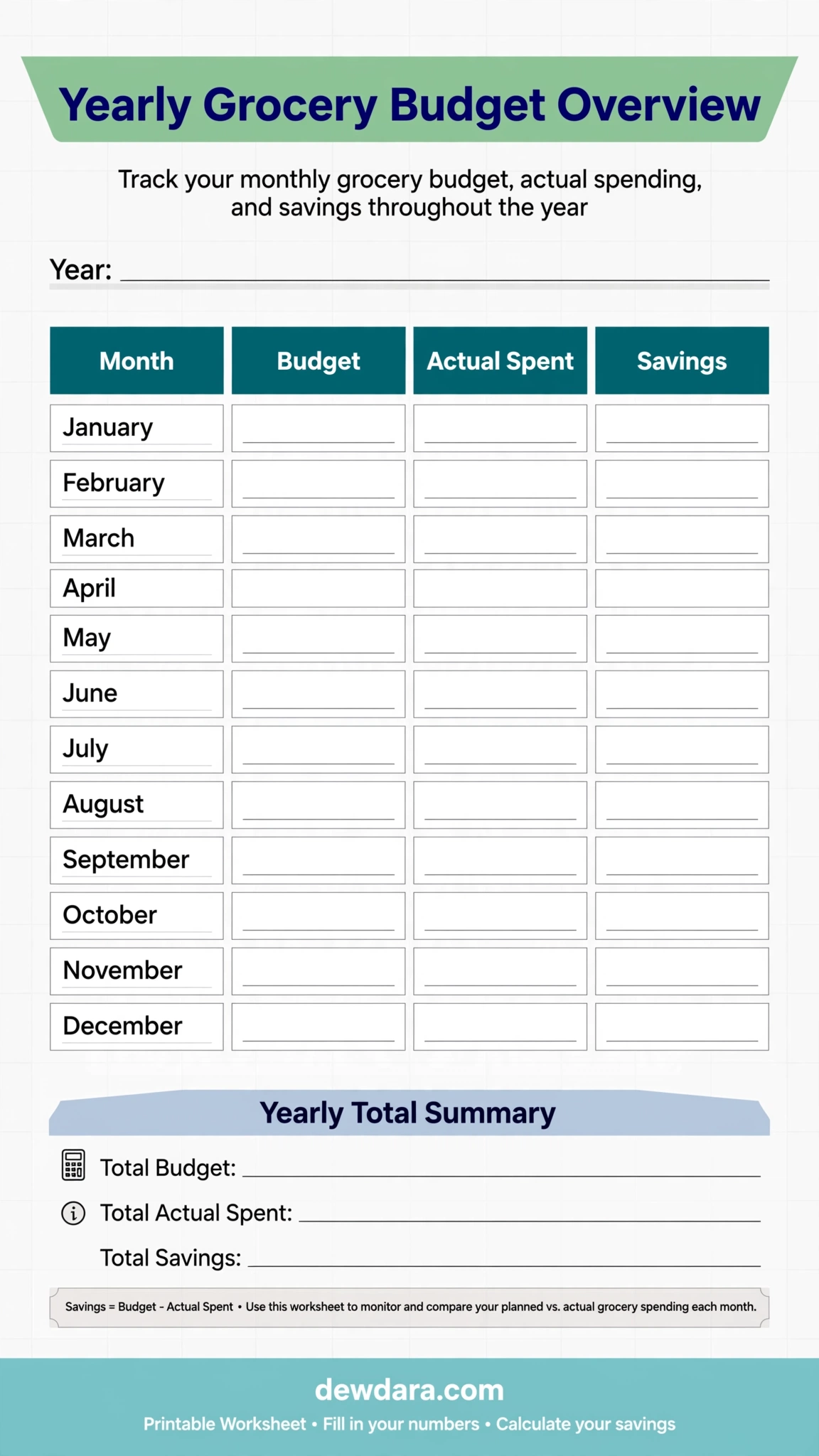
What it is: A 12-month overview with Month, Budget, Actual Spent, and Savings, plus a yearly total.
Why you need it: Yearly tracking reveals seasonal spending patterns — holidays, summer BBQs, back-to-school — and helps you plan ahead.
How to use it: At the end of each month, transfer your monthly total here. Set a yearly savings goal at the top.
Pro Tip: Use different colors for months you went over and under to visually spot your best months.
14. Cash Envelope Grocery Tracker
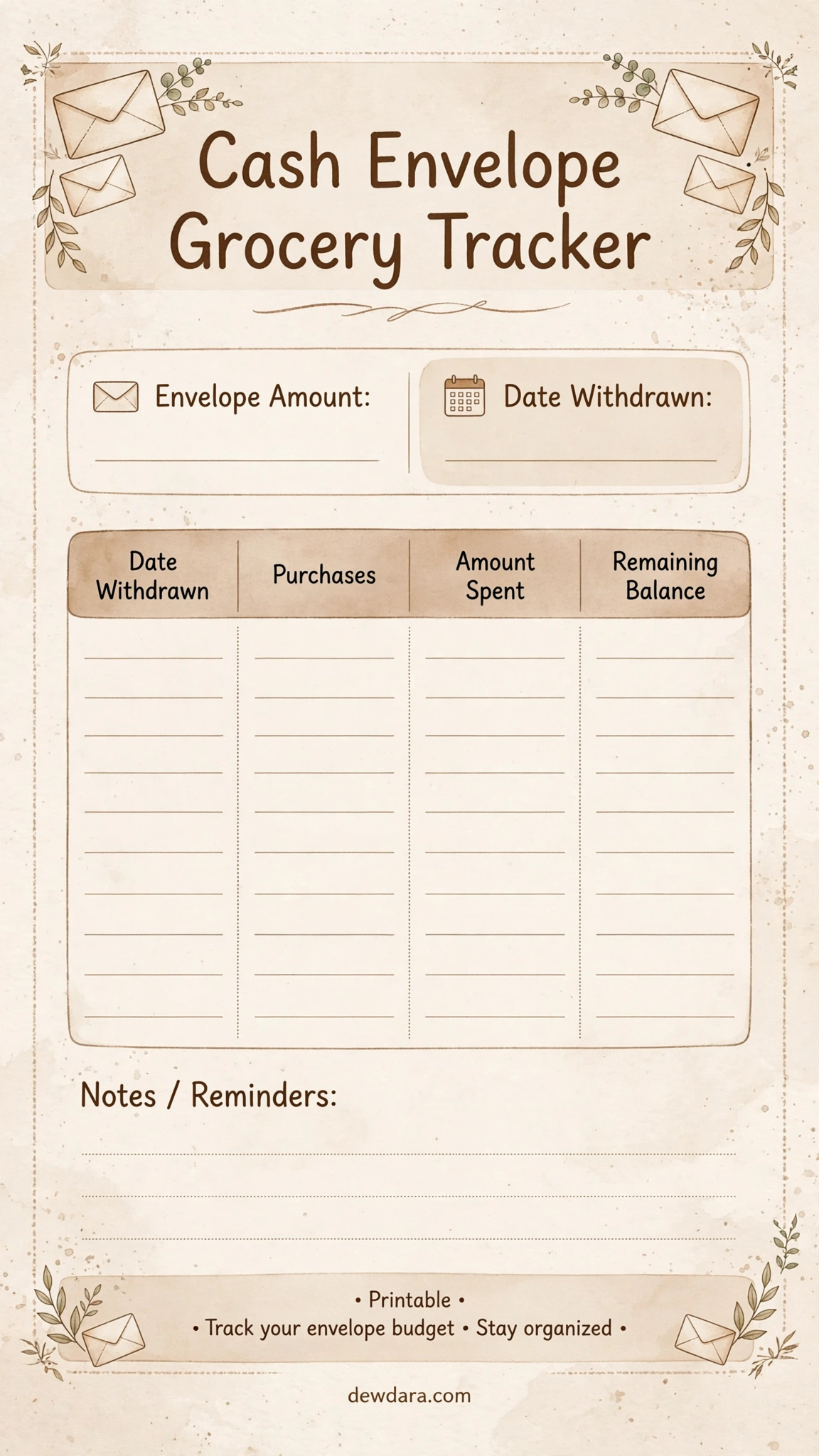
What it is: A tracker for the cash envelope system with Envelope Amount, Date Withdrawn, Purchases, and Remaining Balance.
Why you need it: Cash is the most powerful budgeting tool. When you physically see money leaving, you spend 20% less on average.
How to use it: Withdraw your weekly grocery budget in cash, put it in an envelope, and log every purchase until it’s gone. When it’s gone, you’re done.
Pro Tip: Keep a small coin pouch for change — coins add up faster than you think.
15. No-Spend Grocery Challenge
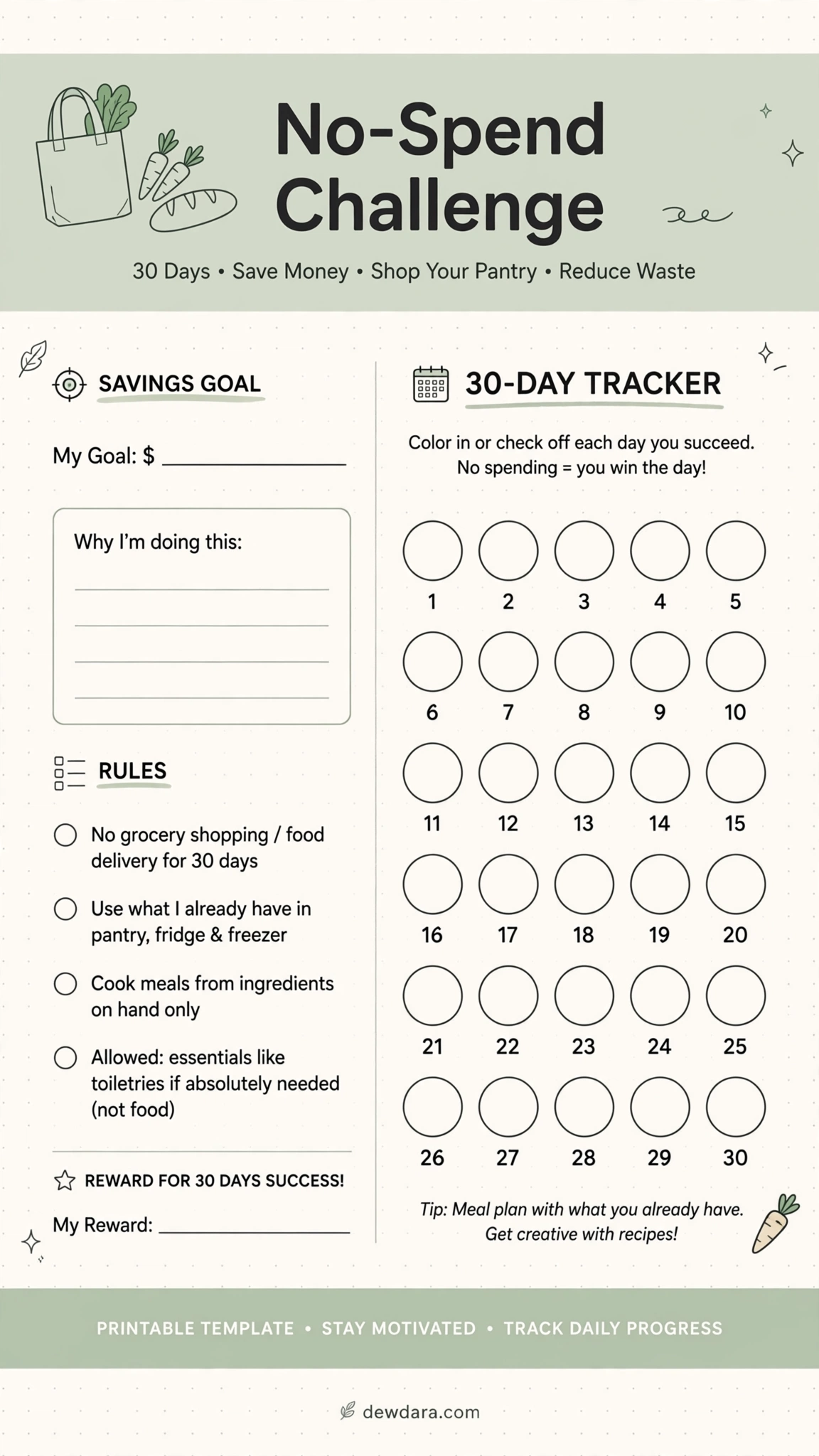
What it is: A gamified 30-day challenge tracker where you mark off no-spend days and track your savings goal.
Why you need it: This resets your habits. It forces you to use what you have and breaks the cycle of daily shopping trips.
How to use it: Choose 10-15 days in the month where you spend $0 on groceries. Use pantry inventory first.
Pro Tip: Do this with a friend or family member — accountability doubles your success rate.
Conclusion
Grocery budgeting doesn’t have to be restrictive or complicated. With the right tools, it becomes empowering. These 15 printables are designed to work together or individually — start with just one or two that fit your lifestyle right now.
Print your favorites, keep them on your fridge or in your planner, and watch how quickly small, consistent tracking leads to big savings. The goal isn’t perfection, it’s awareness. Every dollar you track is a dollar you control.
All templates are available as blank, printable PDFs from dewdara.com — designed to be clean, modern, and actually enjoyable to use.
Start today with the Weekly Planner and Spending Log, then add more as you build your routine. Your wallet — and your pantry — will thank you.