11 Financial Goals Worksheet Printable: Take Control of Your Money
Setting financial goals is easy. Sticking to them is the hard part. That’s where a good worksheet changes everything.
When you write your goals down, break them into actionable steps, and track your progress visually, you turn vague wishes like “save more money” into a clear plan you can actually follow. These printables are designed to help you do exactly that.
This collection of 11 Financial Goals Worksheets covers every major area of your financial life — from debt payoff and savings to income growth, investing, and net worth. Each worksheet is minimalist, clean, and designed to be practical, not overwhelming. They are all blank and fillable, so you can customize them to your own life, income, and dreams.
Print them all and create your own financial planner binder, or pick the 2-3 you need most right now and start there.
All worksheets are in 9:16 vertical format, perfect for A4 / Letter printing and for your planner.
1. Financial Goals Master List Worksheet
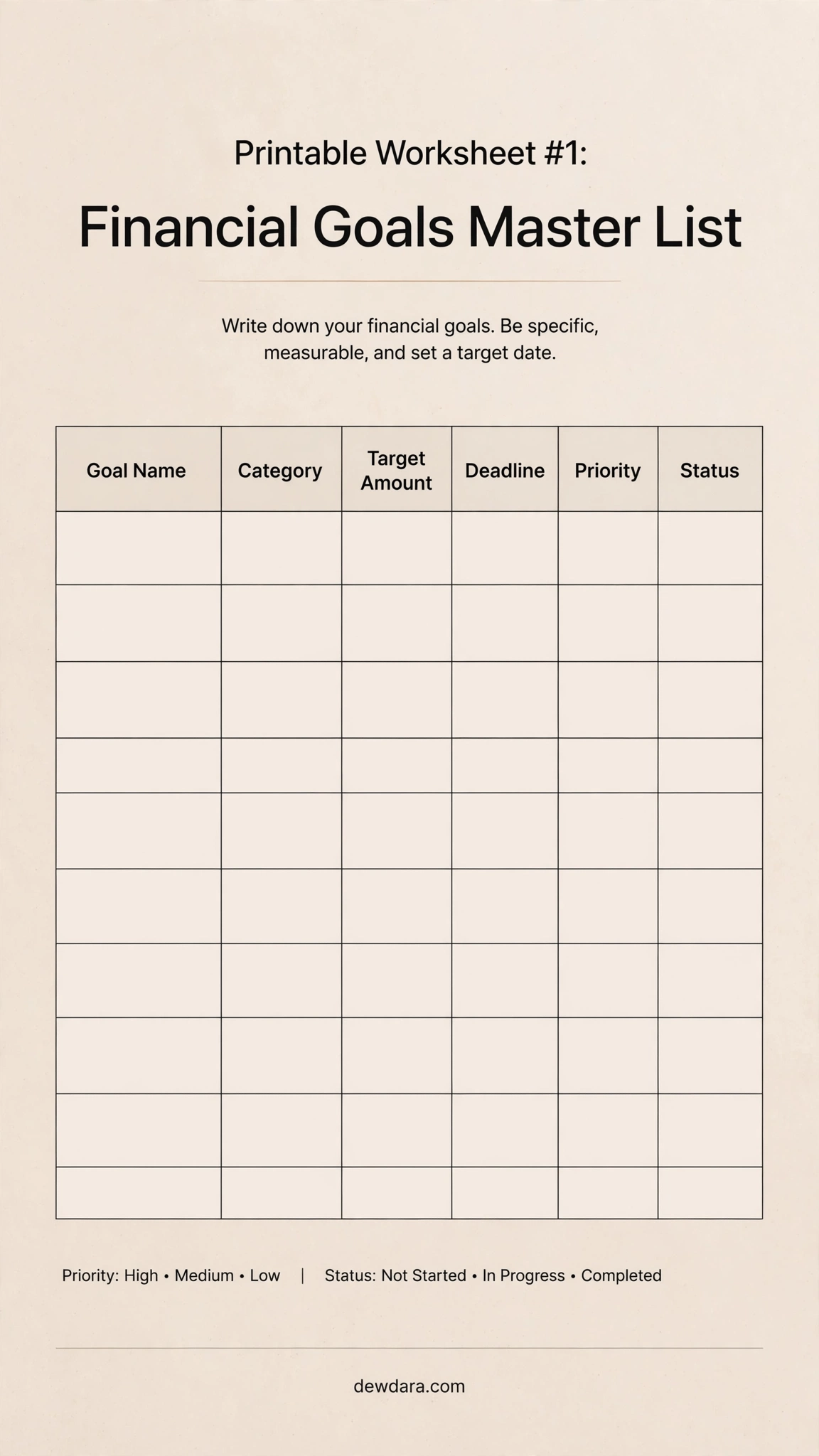
Your central dashboard for everything you want to achieve financially. This is where you brain-dump all your goals in one place before you organize them.
What it includes: Goal Name, Category, Target Amount, Deadline, Priority, and Status columns.
How to use it:
- List every financial goal you have — big and small. Examples: build emergency fund, pay off credit card, save for house down payment.
- Assign each goal a category: Saving, Debt, Investing, Income, Lifestyle.
- Set a realistic target amount and deadline to create urgency.
- Use the Priority column to mark what needs your attention first.
Best for: Getting clarity when you feel overwhelmed and don’t know where to start.
2. SMART Financial Goals Planner
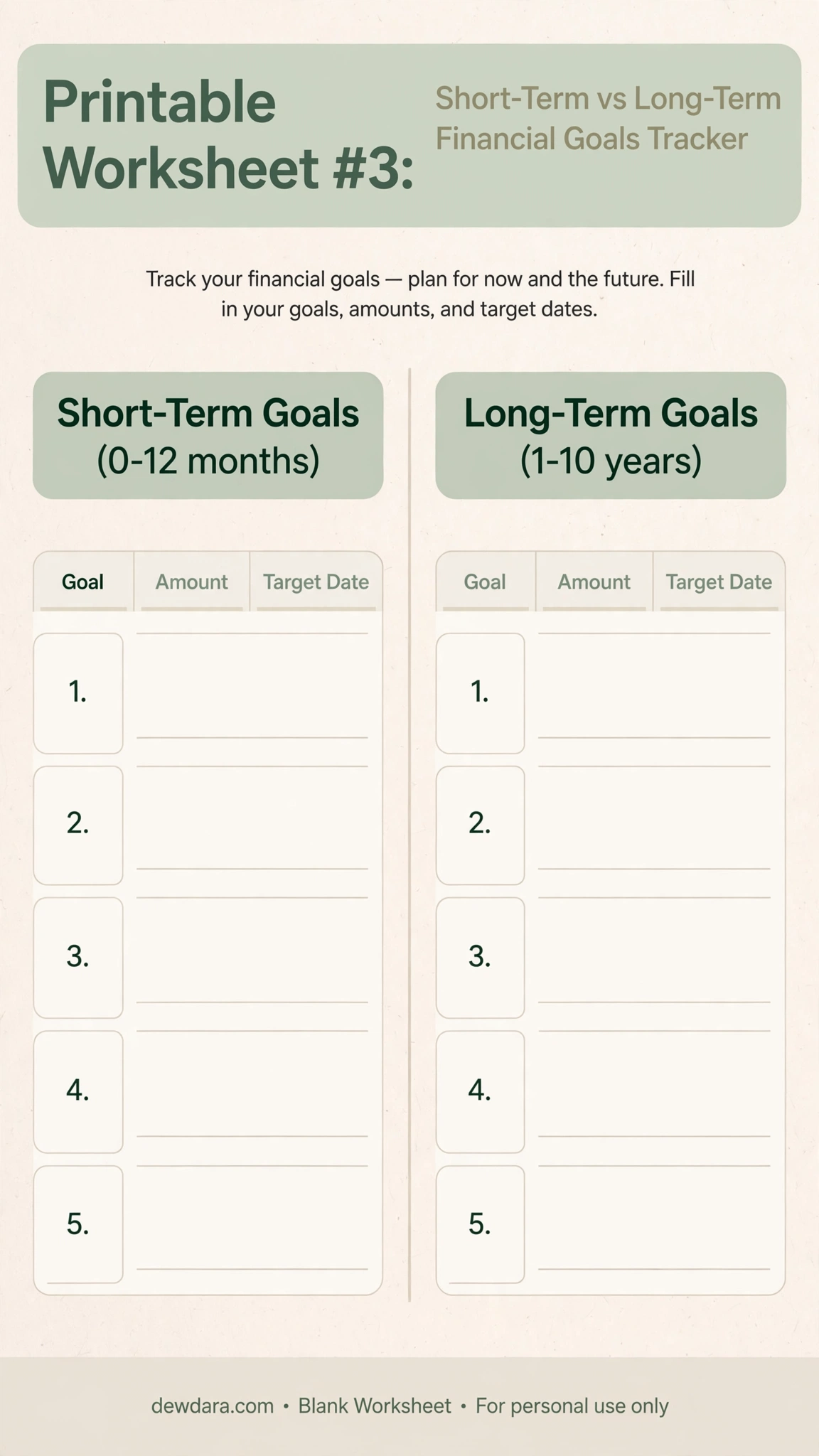
A vague goal never gets achieved. This worksheet forces you to make your goals SMART: Specific, Measurable, Achievable, Relevant, and Time-Bound.
What it includes: Dedicated writing space for each element of the SMART framework for one major goal.
How to use it:
- Pick ONE goal from your Master List.
- Write exactly what you want to achieve (Specific) and how much (Measurable).
- Check if it’s realistic with your current income and timeline (Achievable).
- Connect it to your bigger life vision (Relevant) and set a firm date (Time-Bound).
Best for: Turning “I want to save money” into “I will save $5,000 for an emergency fund by December 31st by saving $420 per month.”
3. Short-Term vs Long-Term Goals Tracker
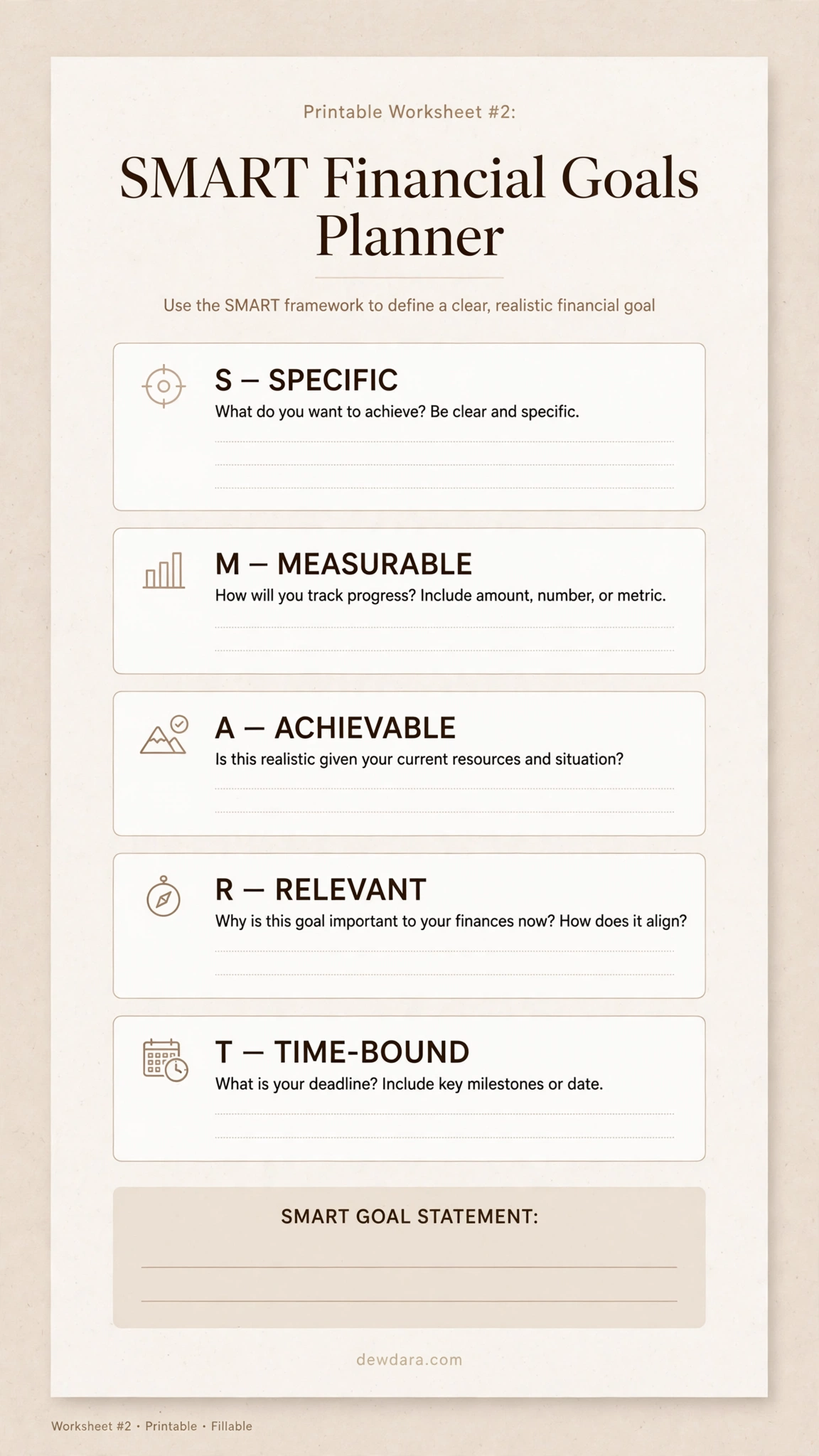
Not all goals have the same timeline. This sheet helps you balance quick wins with your big future dreams.
What it includes: Two distinct sections for Short-Term Goals (0-12 months) and Long-Term Goals (1-10+ years).
How to use it:
- Short-term examples: Pay off $500 debt, save $1,000, create a monthly budget.
- Long-term examples: Buy a house, achieve debt-free status, retire early.
- Tracking both keeps you motivated — short-term wins fuel long-term consistency.
Best for: Avoiding burnout and seeing the full picture of your financial journey.
4. Monthly Financial Goals Checklist
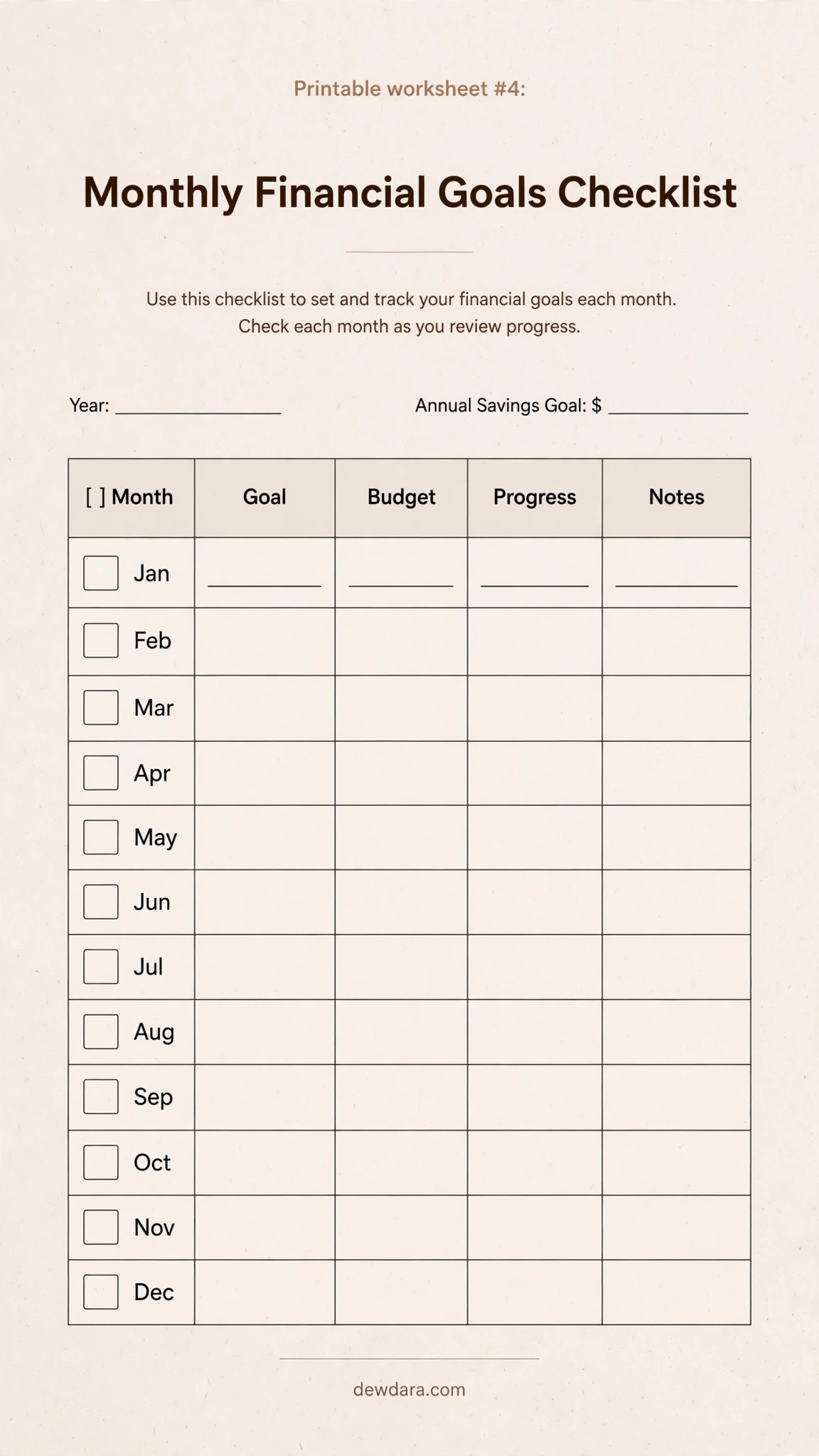
Financial success is built month by month. This checklist keeps you accountable all year long.
What it includes: 12-month layout with spaces for Goal, Budget, Progress, and Notes.
How to use it:
- At the start of each month, set 1-3 financial goals.
- Write your planned budget for each goal and check it off as you complete it.
- Use the Notes section to reflect on what worked and what didn’t.
- Review at month-end and carry lessons into next month.
Best for: People who need consistent monthly structure and accountability.
5. Annual Financial Goals Roadmap
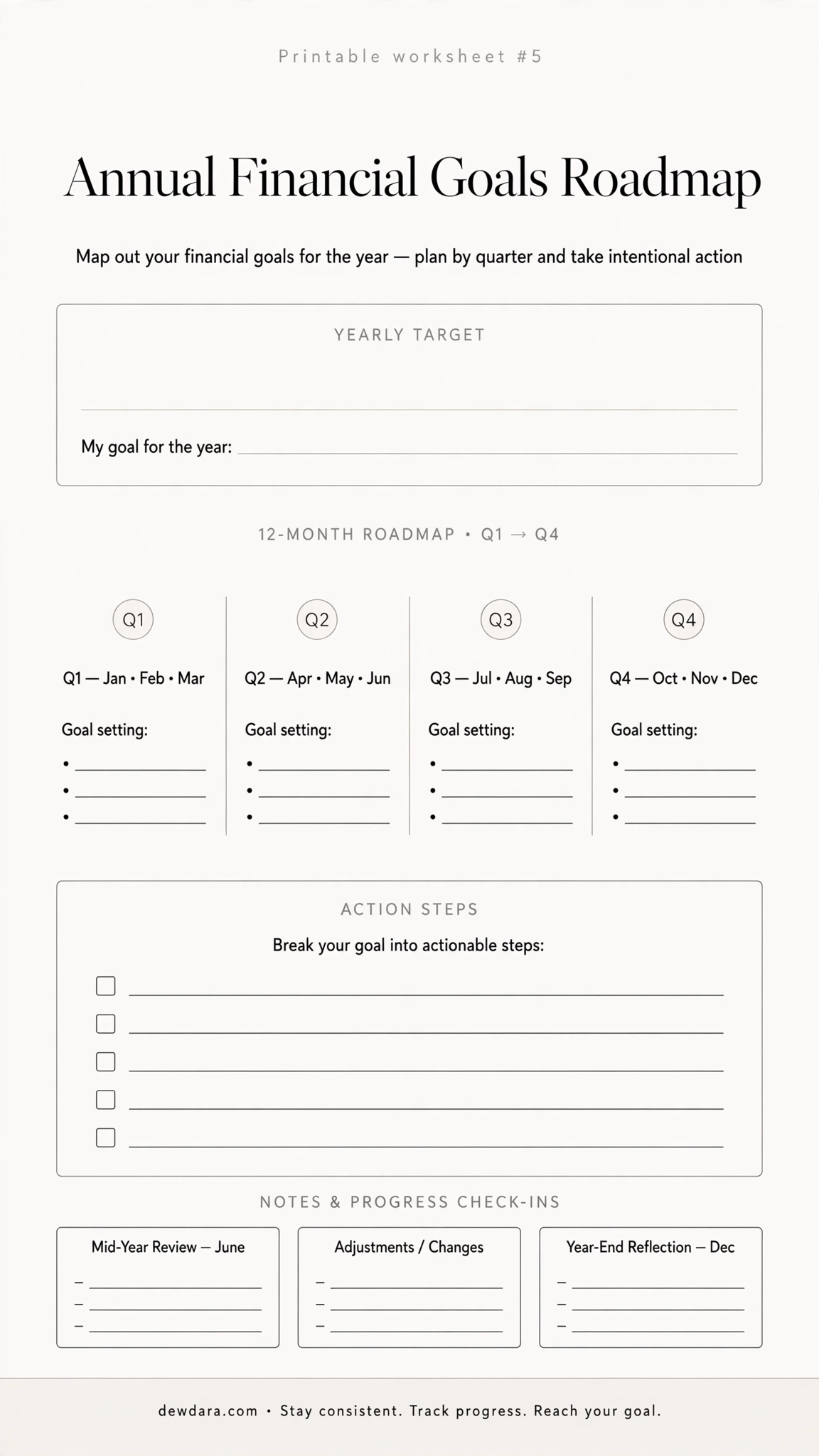
Think of this as your year-at-a-glance financial map. It breaks your year into quarters so big goals feel manageable.
What it includes: Q1, Q2, Q3, Q4 planning blocks, yearly target, and action steps.
How to use it:
- Write your main yearly target at the top (e.g., Save $12,000).
- Divide it into quarterly milestones (e.g., $3,000 per quarter).
- List specific action steps for each quarter.
- Hang it where you can see it daily.
Best for: Visual planners who love to see progress over a full year.
6. Debt Payoff Goals Worksheet
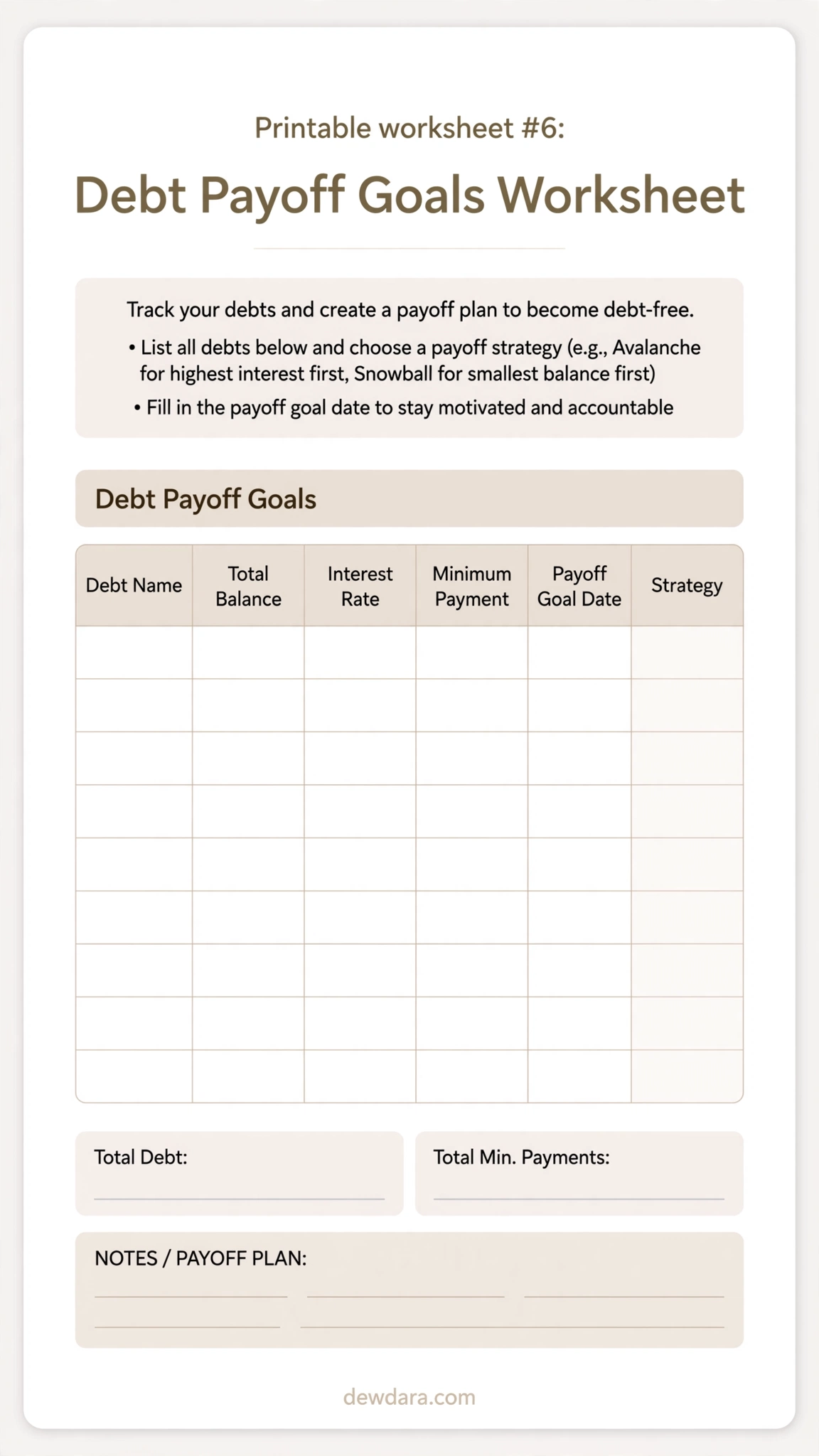
Debt can feel heavy until you have a clear payoff strategy. This worksheet brings it all into the light.
What it includes: Columns for Debt Name, Total Balance, Interest Rate, Minimum Payment, Payoff Goal Date, and Strategy.
How to use it:
- List all debts: credit cards, student loans, car loans, etc.
- Note interest rates to decide whether to use the Avalanche (highest interest first) or Snowball (smallest balance first) method.
- Set a target payoff date for each debt to stay motivated.
- Update balances monthly as you pay them down.
Best for: Anyone working towards becoming debt-free.
7. Savings Goals Tracker
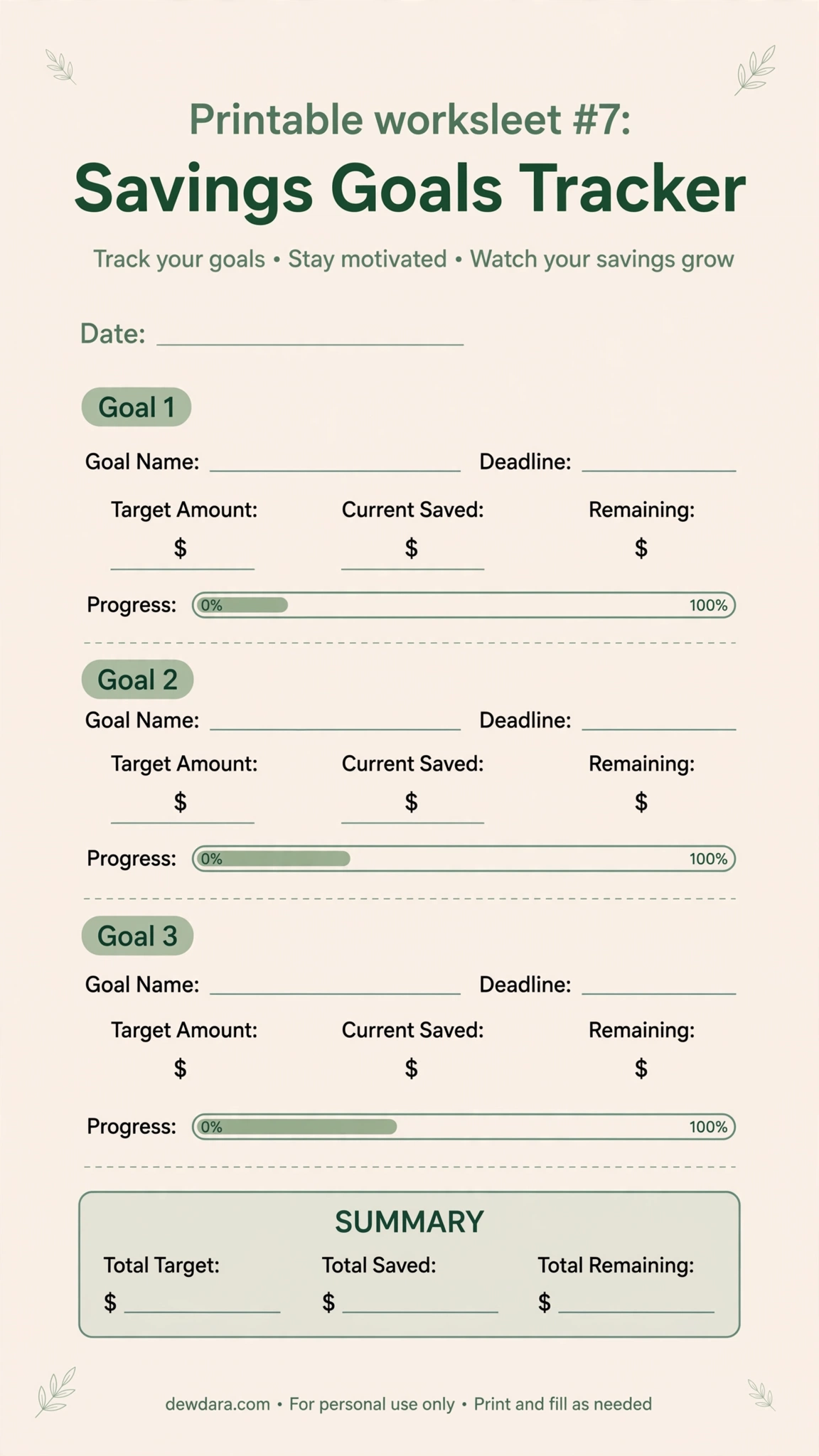
Whether it’s a vacation, new car, or house down payment — this tracker makes saving visual and satisfying.
What it includes: Goal name, target amount, current saved, amount remaining, deadline, and a visual progress bar.
How to use it:
- Create a separate row for each savings goal.
- Color in the progress bar every time you save — it’s incredibly motivating.
- Keep it on your fridge or desk for daily motivation.
Best for: Savers who need visual motivation to avoid spending temptations.
8. Income Growth Goals Planner
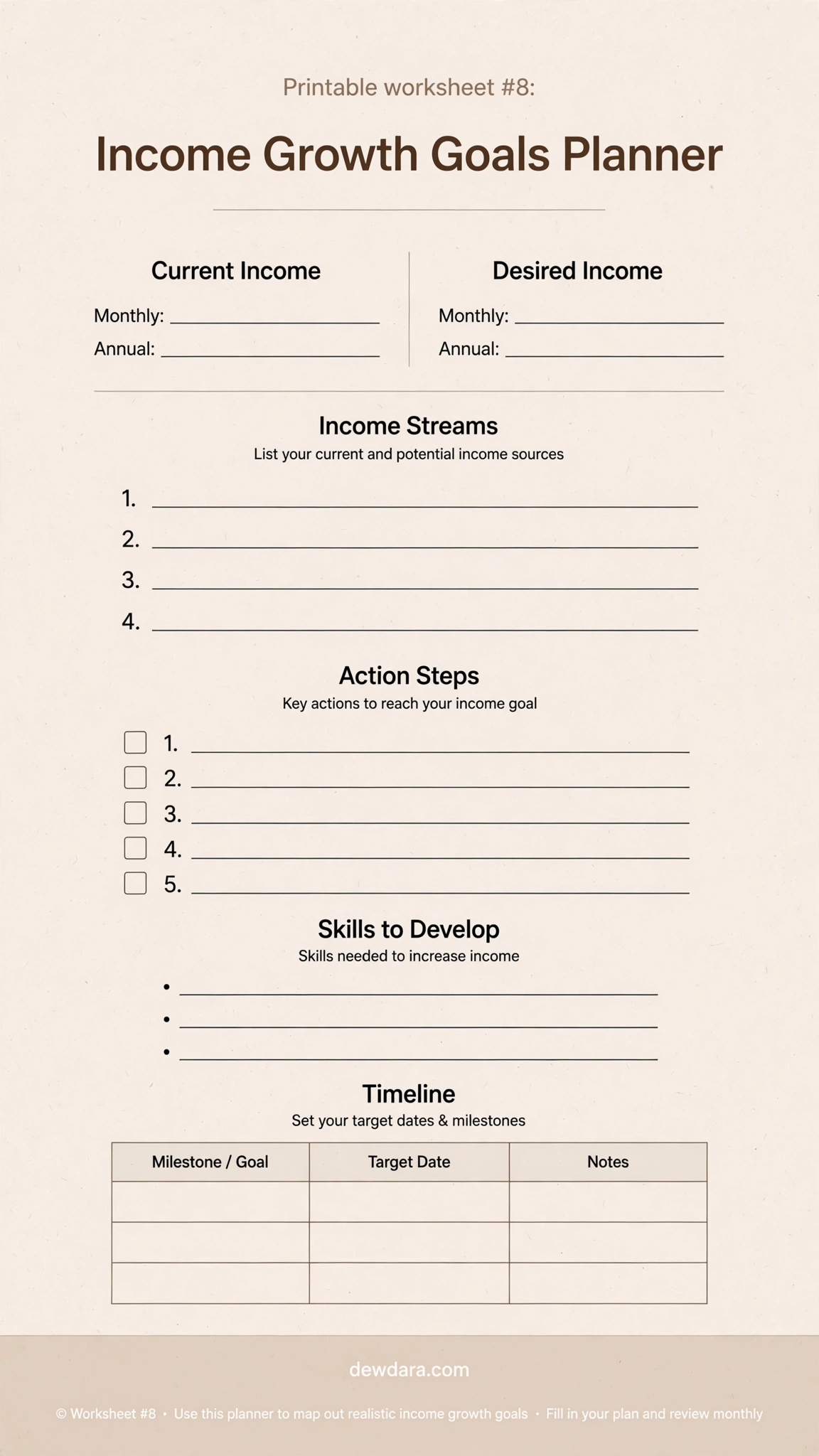
You can’t just cut your way to wealth — you have to grow your income too. This planner focuses on expansion.
What it includes: Current vs Desired Income, Income Streams list, Action Steps checklist, Skills to Develop, and Timeline.
How to use it:
- Write your current monthly and annual income vs your desired income.
- Brainstorm potential income streams: side hustle, freelancing, passive income, promotion.
- List 5 concrete action steps and the skills you need to learn to get there.
Best for: Entrepreneurs, freelancers, and anyone wanting a raise or new income source.
9. Investment Goals Worksheet
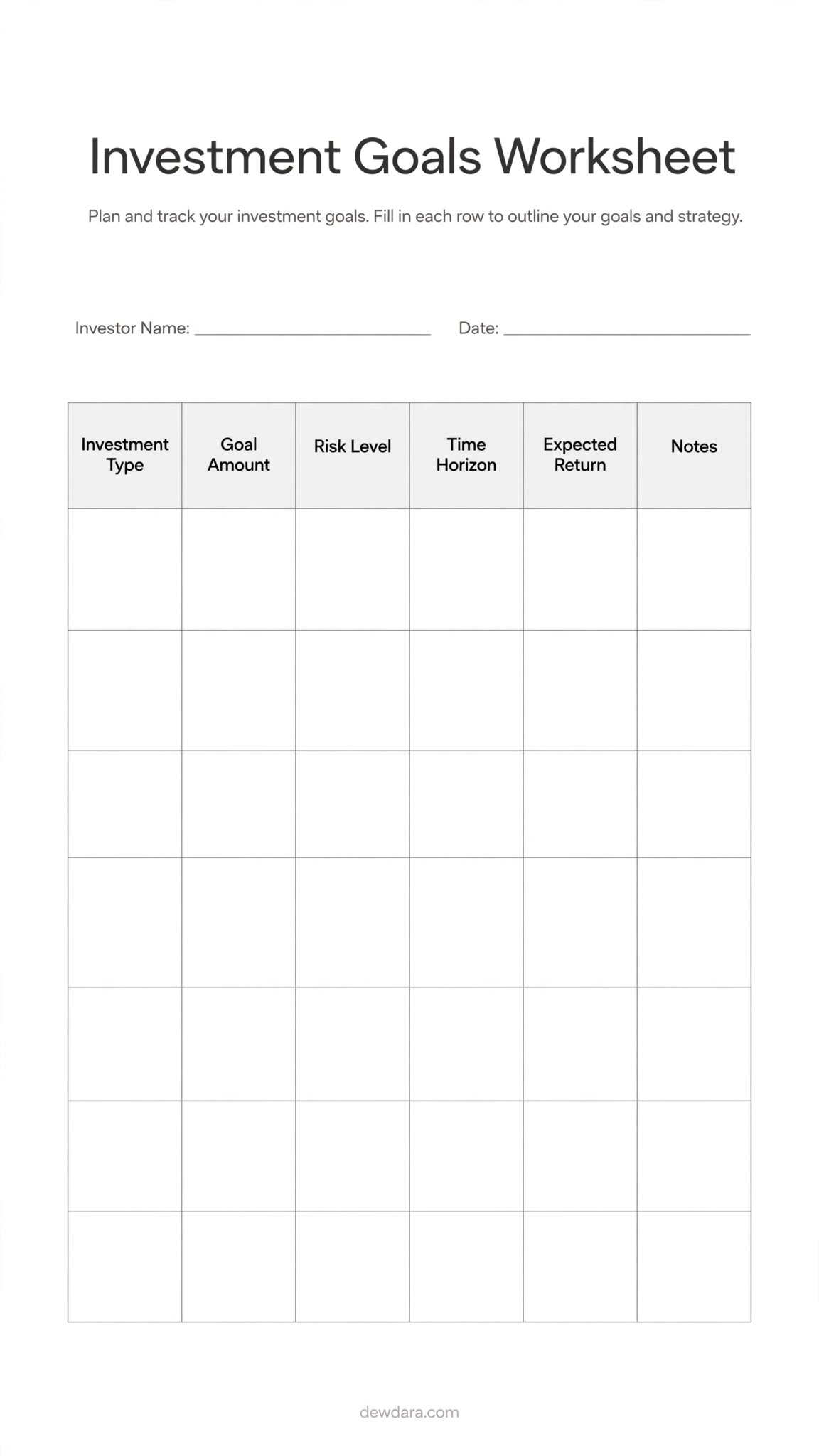
Investing without a goal is just gambling. This worksheet aligns your investments with your life goals.
What it includes: Investment Type, Goal Amount, Risk Level, Time Horizon, Expected Return, and Notes.
How to use it:
- List each investment goal separately: retirement, child’s education, wealth building.
- Match the risk level and time horizon — long-term goals can handle more risk.
- Track your expected return to see if you’re on pace.
Best for: Beginner to intermediate investors who want to invest with intention.
10. Emergency Fund Goals Tracker
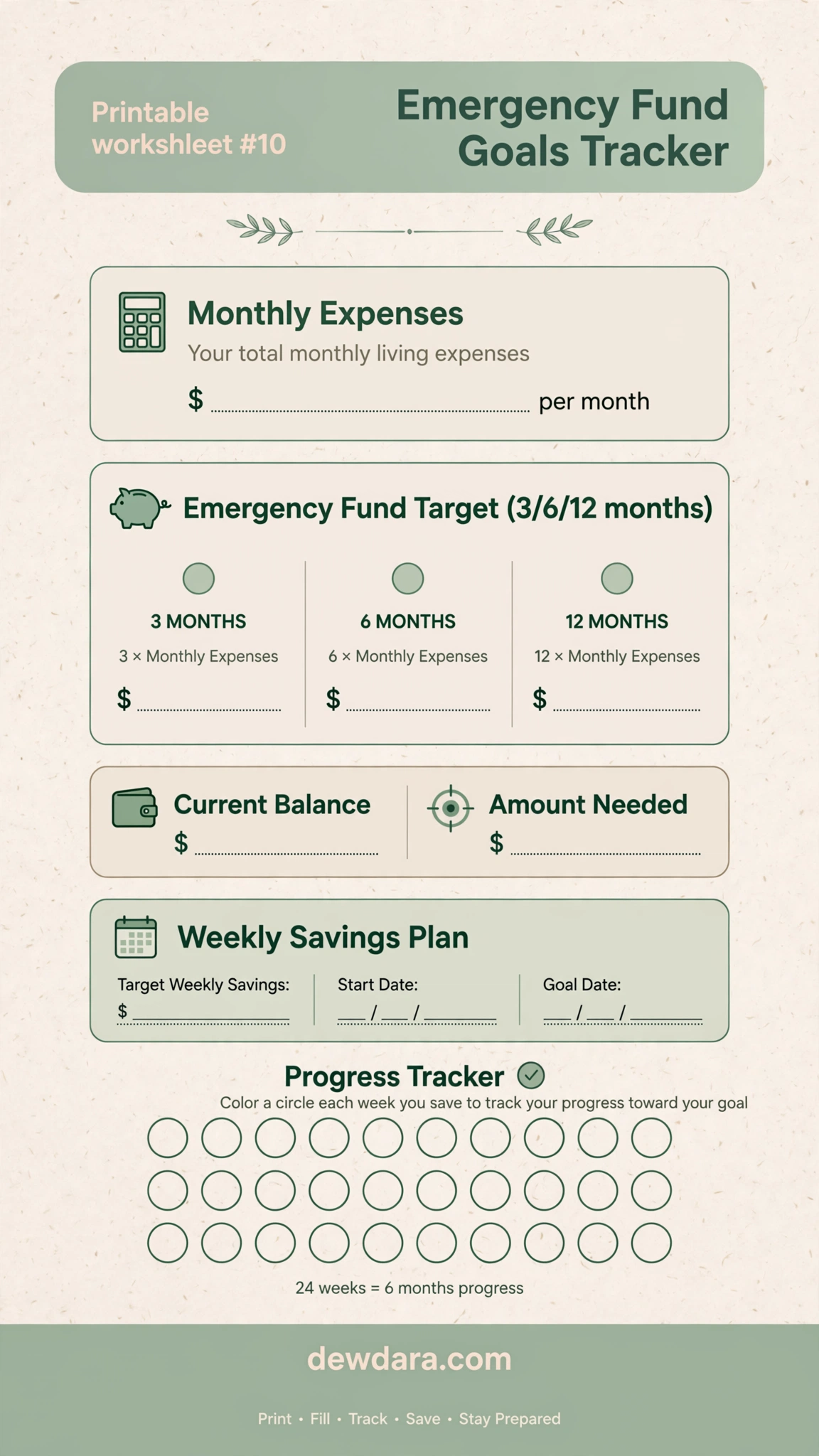
Your emergency fund is your financial safety net. This worksheet helps you build it fast.
What it includes: Monthly expenses calculation, 3/6/12 month fund targets, current balance, amount needed, and weekly savings plan.
How to use it:
- Calculate your total monthly essential expenses.
- Multiply by 3, 6, or 12 to set your fund target. Start with 1 month, then build to 6.
- Break it down into a weekly savings plan to make it less intimidating.
Best for: Creating financial security and peace of mind.
11. Net Worth Goals Worksheet
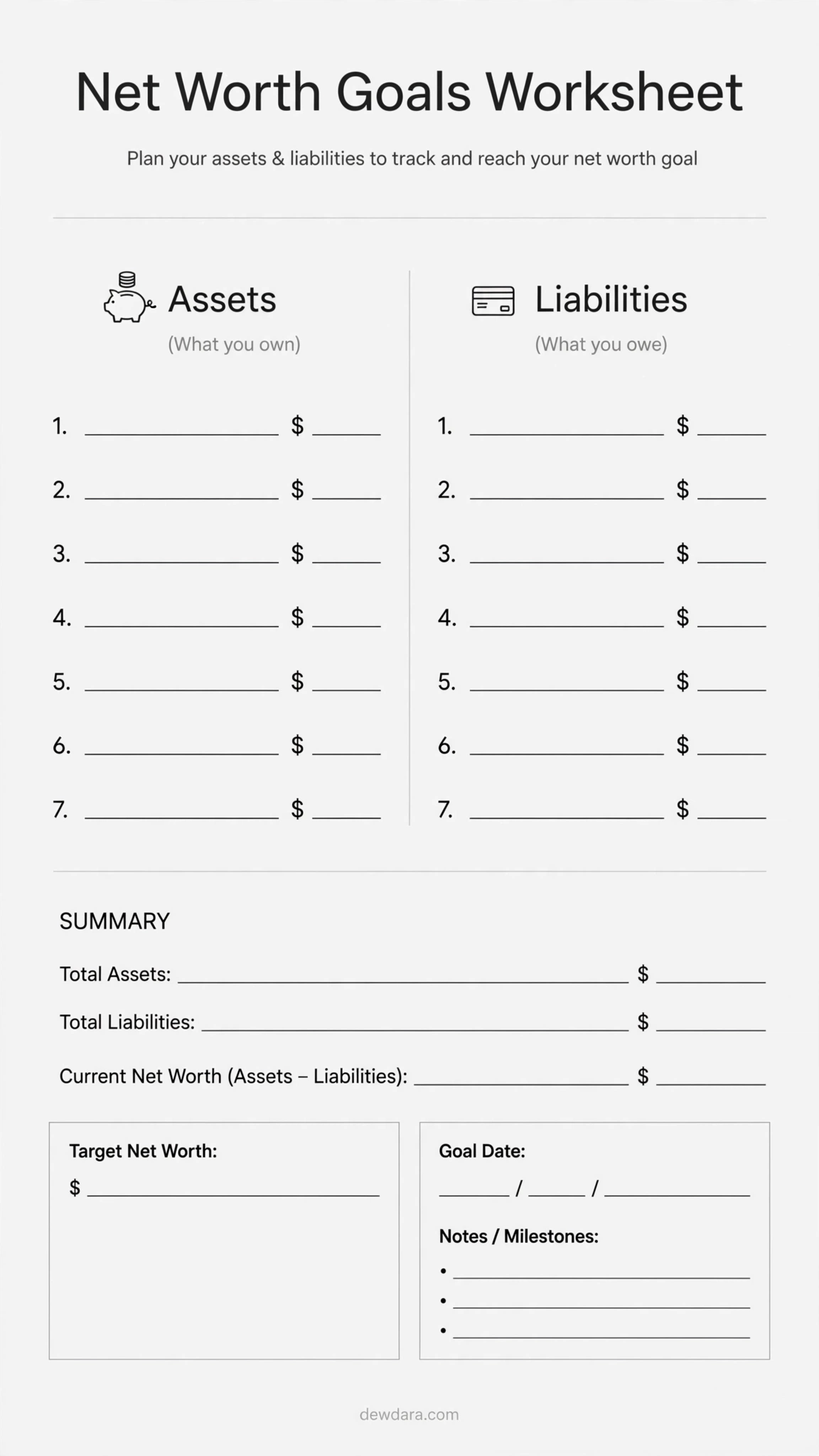
Net worth is the ultimate scorecard of your financial health. This sheet helps you track it and grow it.
What it includes: Assets (what you own) and Liabilities (what you owe) lists, Summary calculations, Target Net Worth, and Goal Date.
How to use it:
- List all assets: cash, savings, investments, property, valuables.
- List all liabilities: all debts, loans, credit cards.
- Calculate: Total Assets – Total Liabilities = Current Net Worth.
- Set a target net worth and a date to achieve it. Track every 3-6 months.
Best for: Seeing your big-picture financial growth over time.
Conclusion
Financial freedom doesn’t happen by accident — it happens by design. You don’t need a complicated system, you just need a clear plan and a consistent way to track it.
These 11 worksheets give you that system. Start with the Master List to get clarity, pick the 2-3 worksheets that match your current priority (debt, savings, or income), and commit to filling them out this week.
Print your set, grab a pen, and give yourself 30 minutes to map out your money goals. That small step today can completely change where you are a year from now.
All printables are created by dewdara.com and are free for personal use. Print, plan, and start building the financial life you deserve.