11 Grocery List Printable Templates to Simplify Your Shopping
A well-organized grocery list is the difference between a stressful, expensive shopping trip and a calm, efficient one. Without a plan, it’s easy to forget essentials, buy duplicates, and overspend on impulse items.
These 11 printable grocery list templates were designed to solve different shopping problems — from weekly meal planning and budget tracking to pantry inventory and quick trips. All templates are blank, clean, and printer-friendly, so you can print them as many times as you need. Just print, fill in, and shop smarter.
1. Minimalist Weekly Grocery List
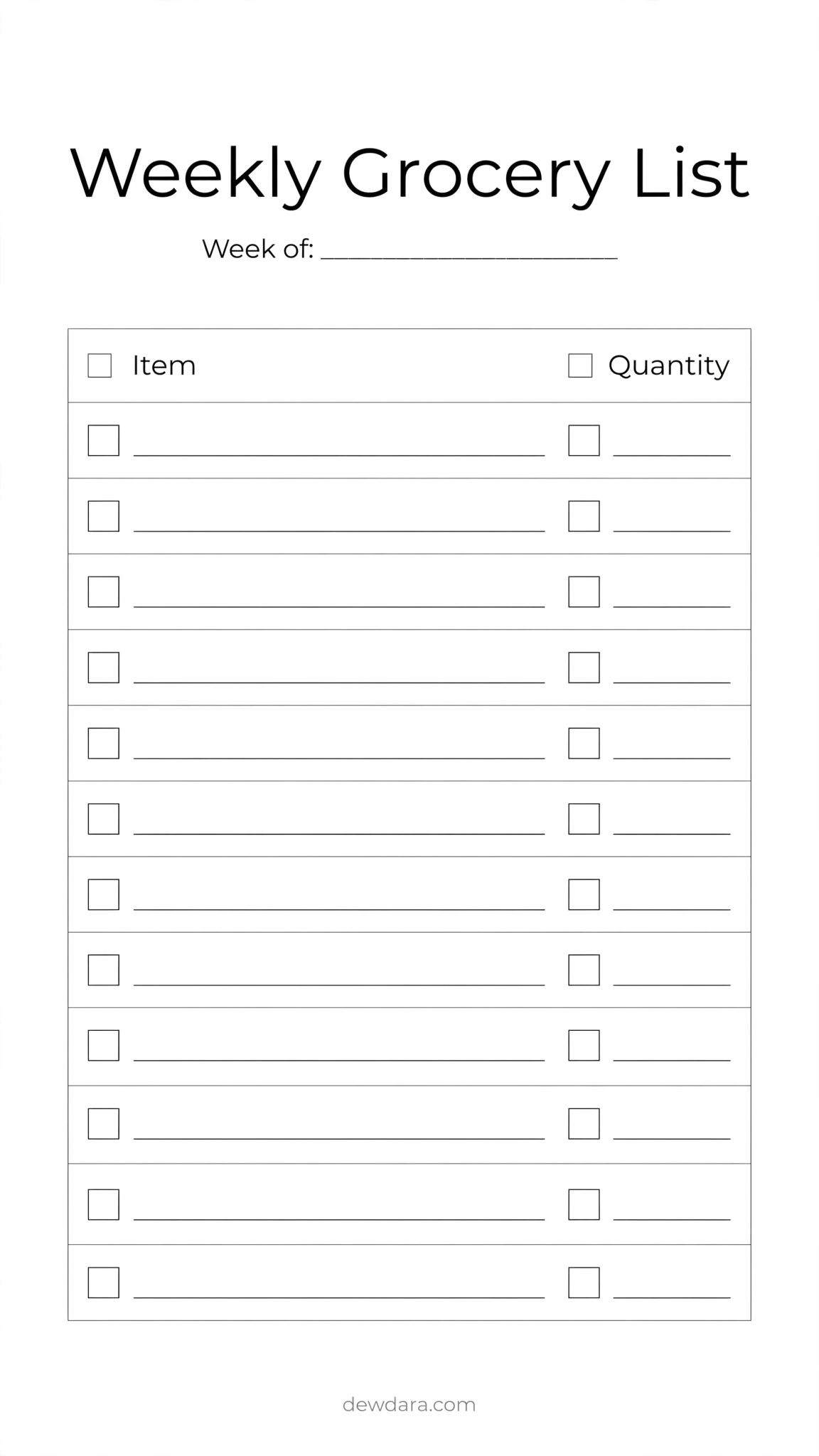
This is your everyday essential. The Minimalist Weekly Grocery List is designed for clarity and speed. With a simple layout of Item and Quantity columns and clean checkboxes, it removes all distractions.
Best for: Individuals and couples who do one main shop per week.
Why it works: The generous white space makes it easy to write quickly and read while walking through the store. It forces you to focus only on what you actually need.
How to use it: On Sunday, take 10 minutes to check your fridge and write down what you need for the week ahead. Keep it on your fridge with a magnet.
2. Categorized Grocery List by Department
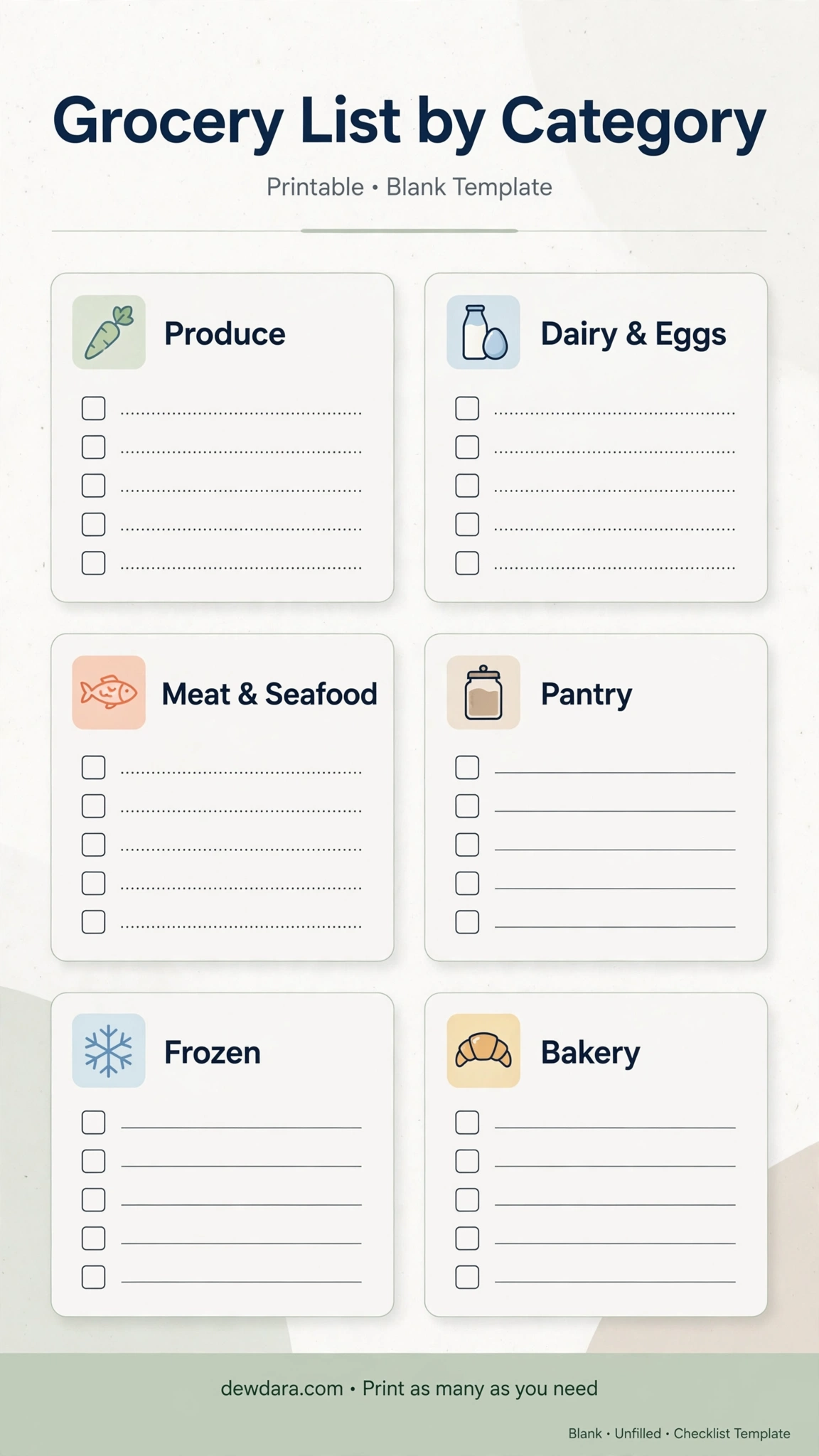
Stop zigzagging across the supermarket. This template is pre-divided by store departments: Produce, Dairy & Eggs, Meat & Seafood, Pantry, Frozen, and Bakery.
Best for: Big weekly shops at large supermarkets.
Why it works: Grouping items by aisle saves you up to 40% of your time in the store and prevents you from forgetting items from a section you already passed.
How to use it: As you think of items during the week, add them directly under the right category. When you shop, you can complete one category at a time.
3. Fridge Inventory + Shopping List Combo
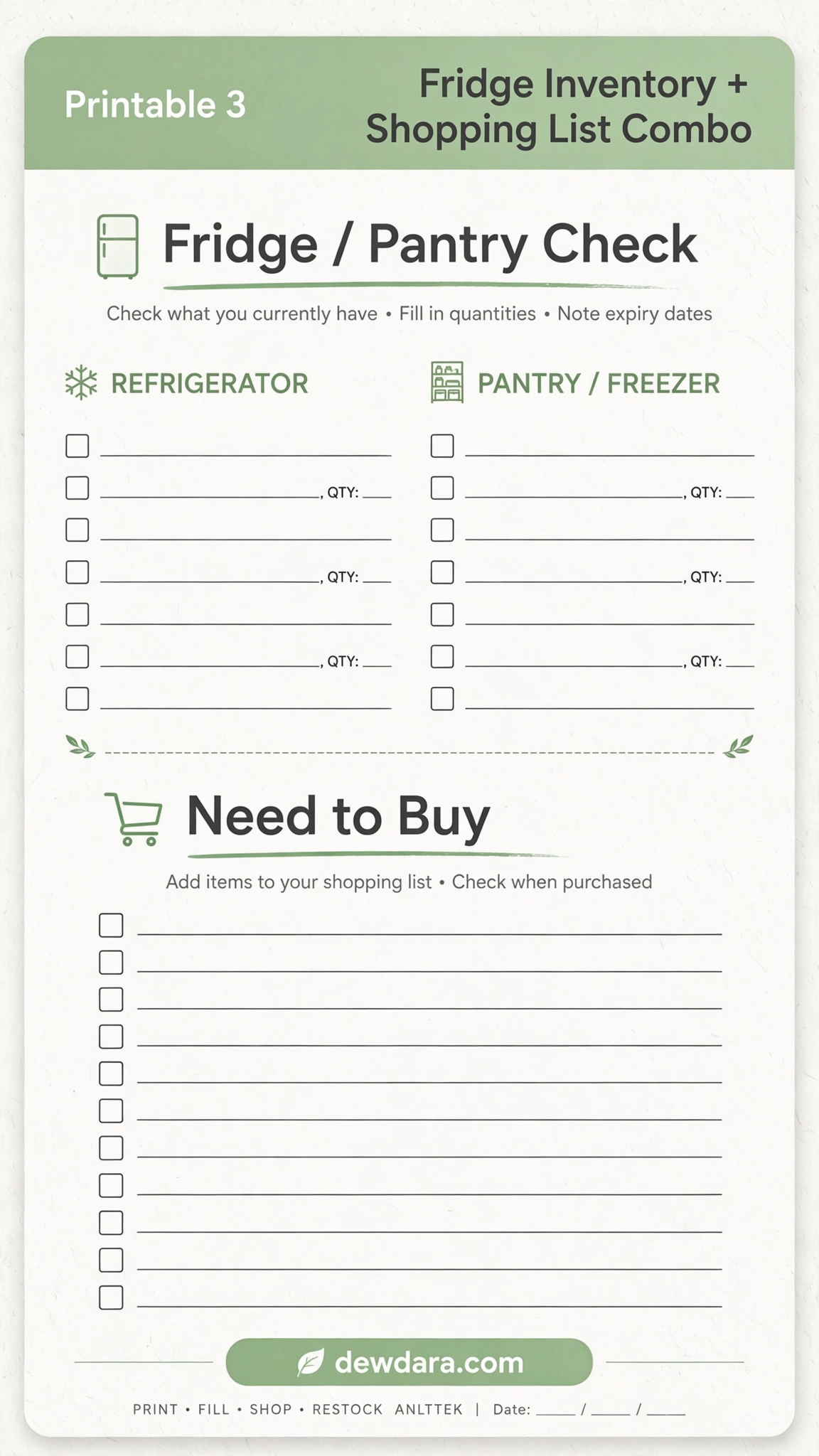
The smartest way to avoid food waste. This 2-in-1 printable lets you audit what you have before you buy more.
Best for: Anyone who wants to reduce food waste and save money.
Why it works: The top section is for checking your Refrigerator and Pantry/Freezer — including quantity fields. The bottom “Need to Buy” section is your actual shopping list, created only after you know what you have.
How to use it: Before shopping, open your fridge and pantry and quickly list what you have. Then, only transfer what’s missing or low to the shopping list.
4. Budget-Friendly Grocery List with Price Column
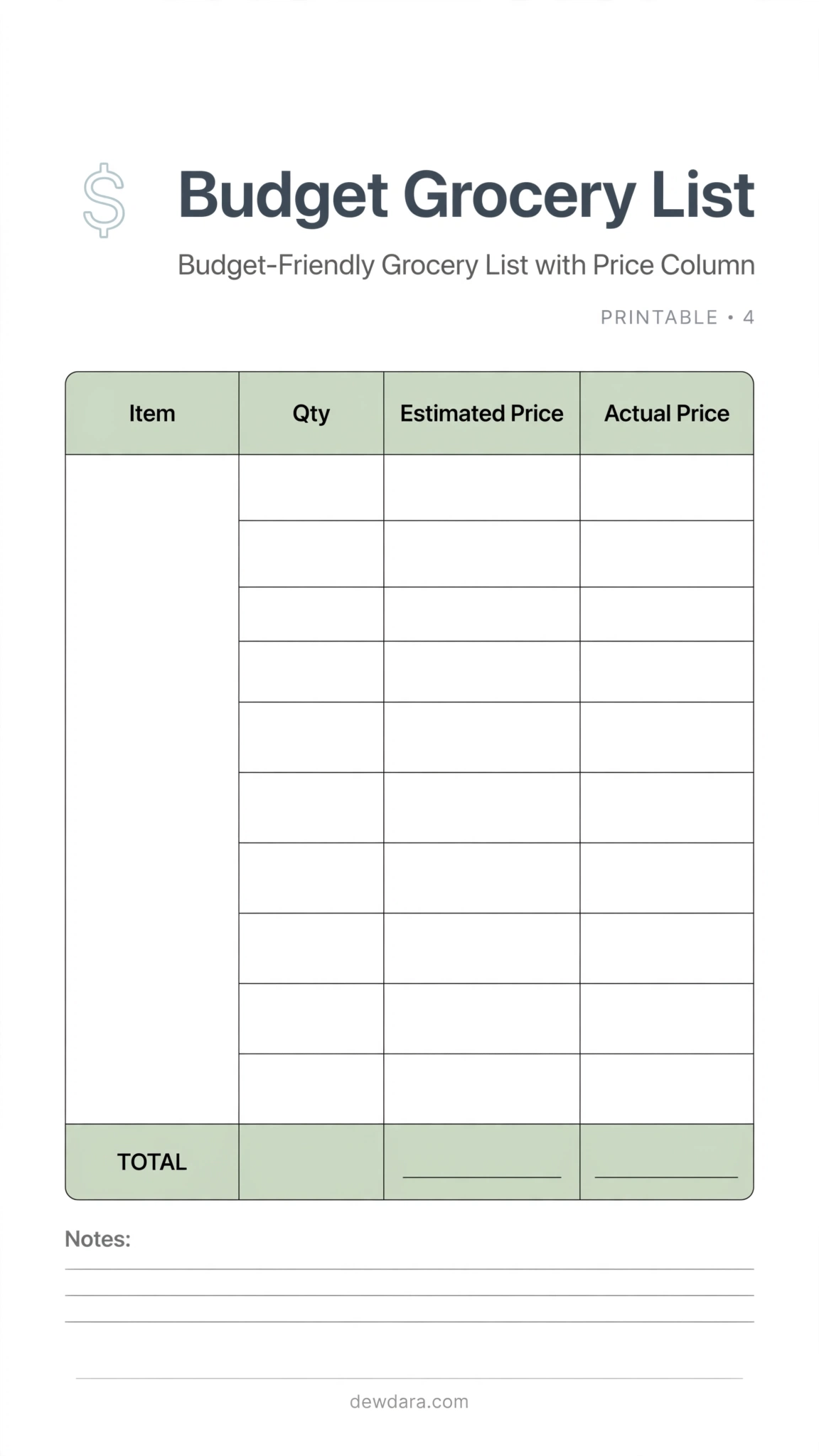
Take control of your grocery budget with this finance-focused template. It includes columns for Item, Quantity, Estimated Price, and Actual Price, plus a total at the bottom.
Best for: Families on a budget, students, and anyone tracking expenses.
Why it works: Writing an estimated price before you shop creates spending awareness. Comparing estimated vs. actual price helps you become a better price-aware shopper over time.
How to use it: Set a budget for the week at the top. As you shop, write the actual price. If you’re going over budget, you can make real-time decisions.
5. Meal Planning Grocery List
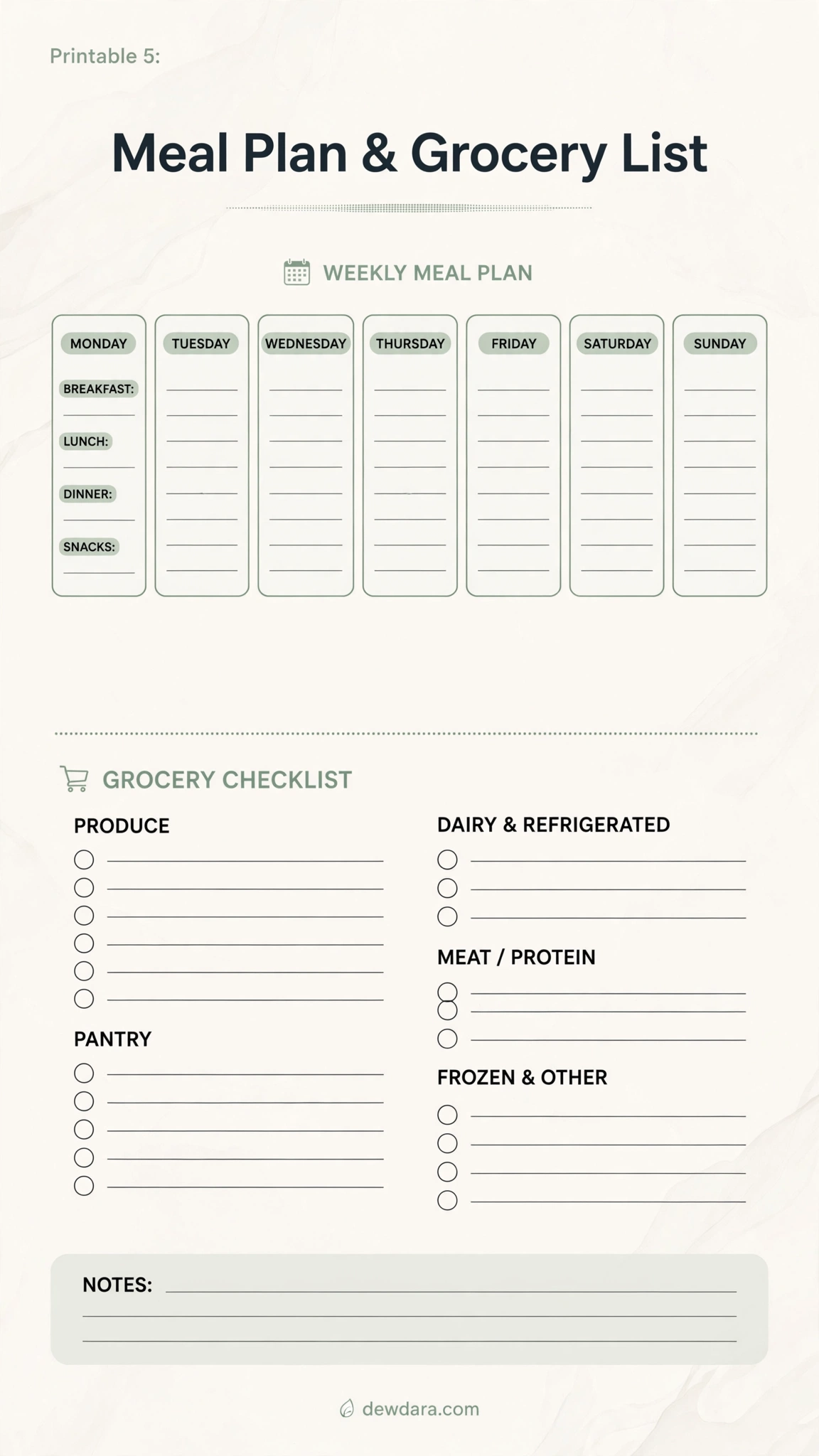
This template connects your meals directly to your shopping. The top half is a Monday-to-Sunday meal planner, and the bottom half is a consolidated grocery checklist.
Best for: Meal preppers, busy families, and healthy eaters.
Why it works: It eliminates the question “What are we going to eat?” By planning meals first, your grocery list becomes intentional, not random.
How to use it: Plan your 7 dinners first. Then look at your recipes and write all the ingredients you need in the grocery section. Cross-check your pantry to remove duplicates.
6. Aesthetic Pastel Grocery Checklist
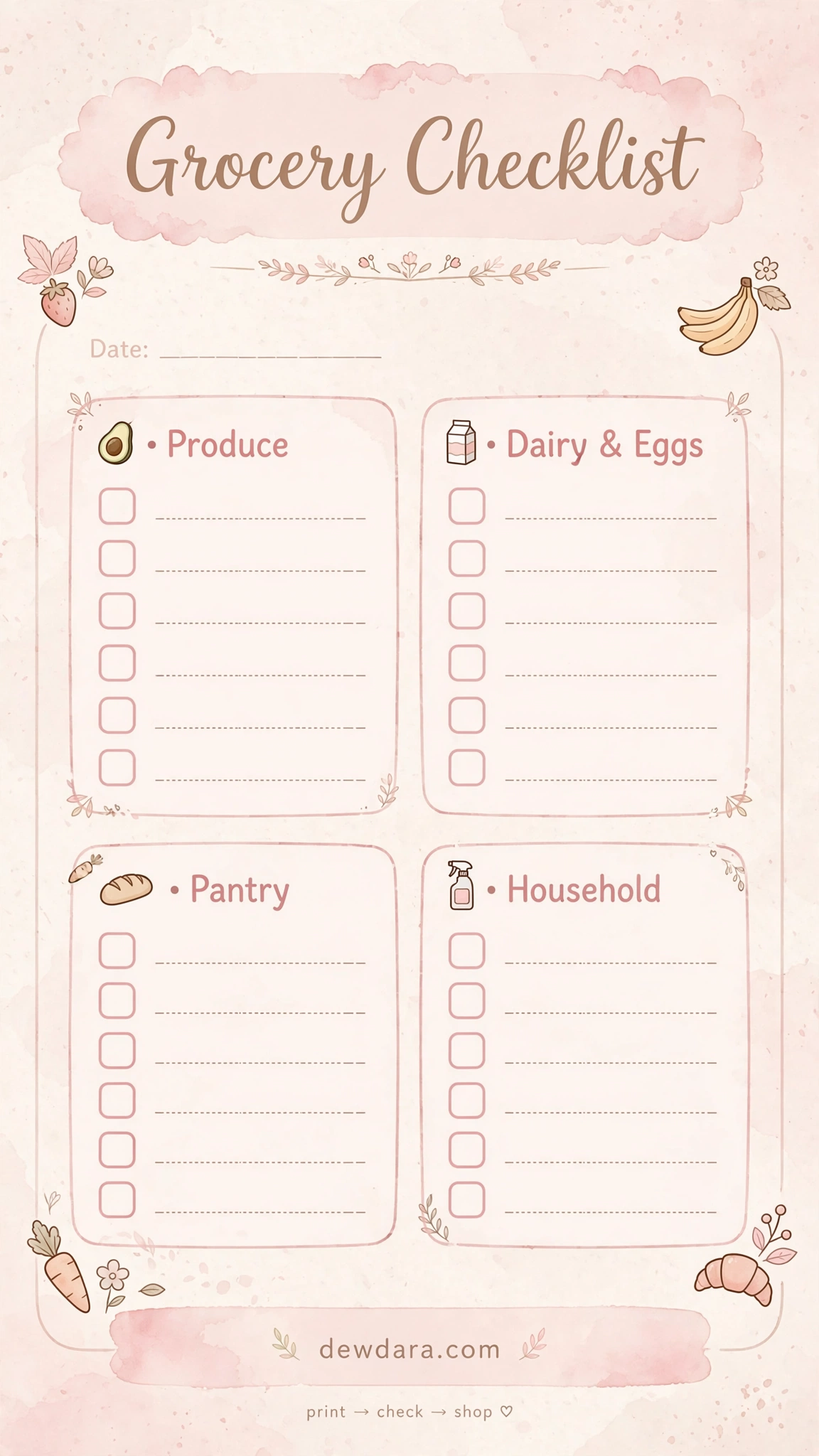
Functional can be beautiful. This pastel checklist features soft, calming colors, rounded checkboxes, and delicate illustrations that make planning feel enjoyable.
Best for: Those who love aesthetic organization and journaling.
Why it works: When your tools are beautiful, you’re more likely to use them consistently. The soft design is also easy on the eyes and printer ink.
How to use it: Use colorful pens to match the aesthetic. This one is perfect to keep in your planner or on a clipboard in the kitchen.
7. Healthy & Organic Grocery List
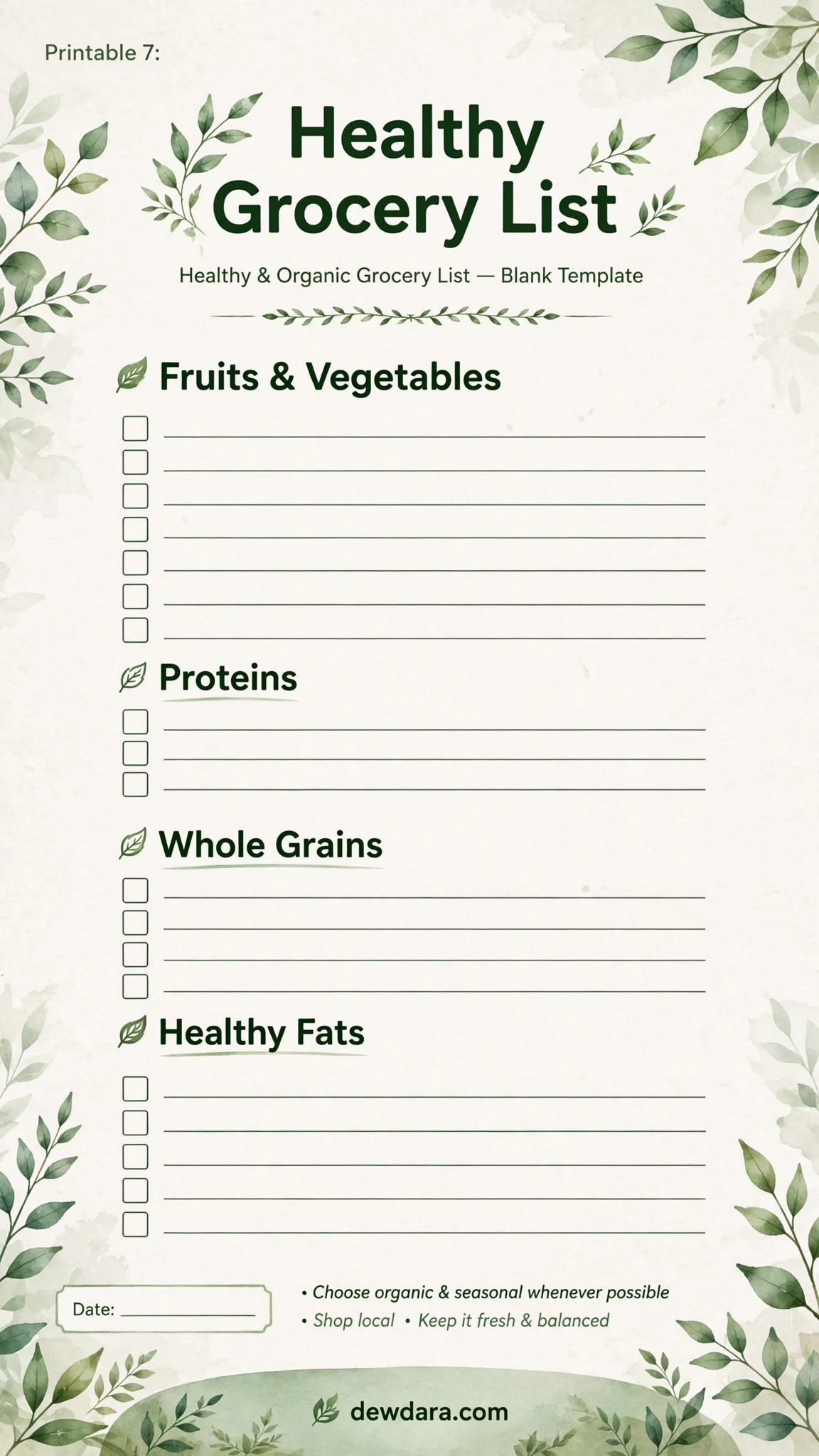
Designed for mindful eating, this list is categorized by nutrition: Fruits & Vegetables, Proteins, Whole Grains, and Healthy Fats.
Best for: Health-focused shoppers, fitness enthusiasts, and organic shoppers.
Why it works: Instead of organizing by store aisle, it organizes by nutritional goal, helping you build a balanced cart. It naturally guides you toward whole foods.
How to use it: Use it to ensure you have a balanced selection. Aim to fill the Fruits & Vegetables and Proteins sections first before adding anything else.
8. Master Family Grocery List
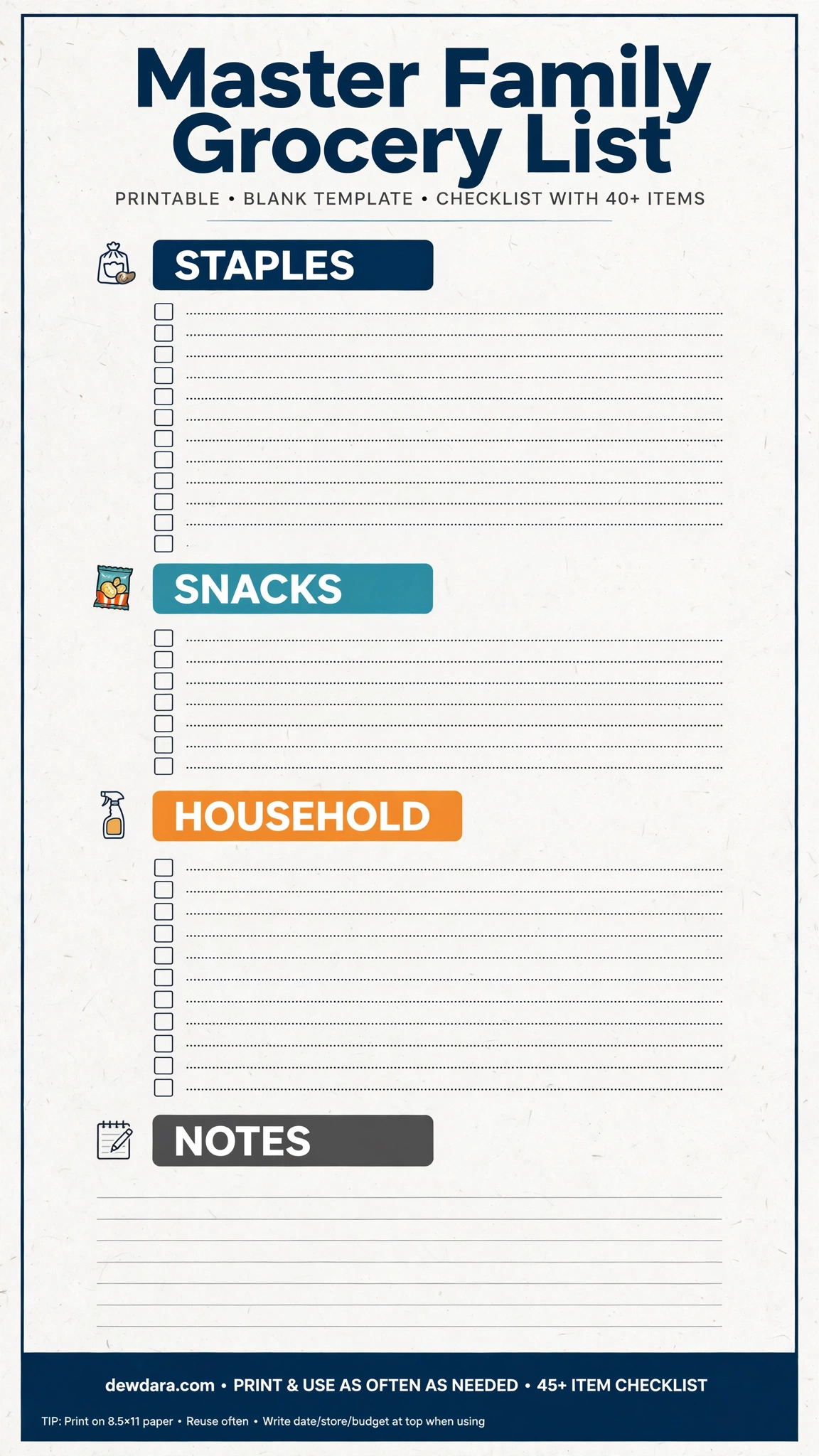
When you shop for a household of 3 or more, you need more space. This master list has over 40 blank lines divided into Staples, Snacks, and Household, plus a large notes section.
Best for: Large families and monthly bulk shopping.
Why it works: One list covers food and household essentials. The high capacity means you won’t need a second sheet, and the notes area is perfect for store names or coupons.
How to use it: Keep this as a master running list on your fridge all week. Let family members add items as they run out.
9. Black & White Ink-Saving Printable
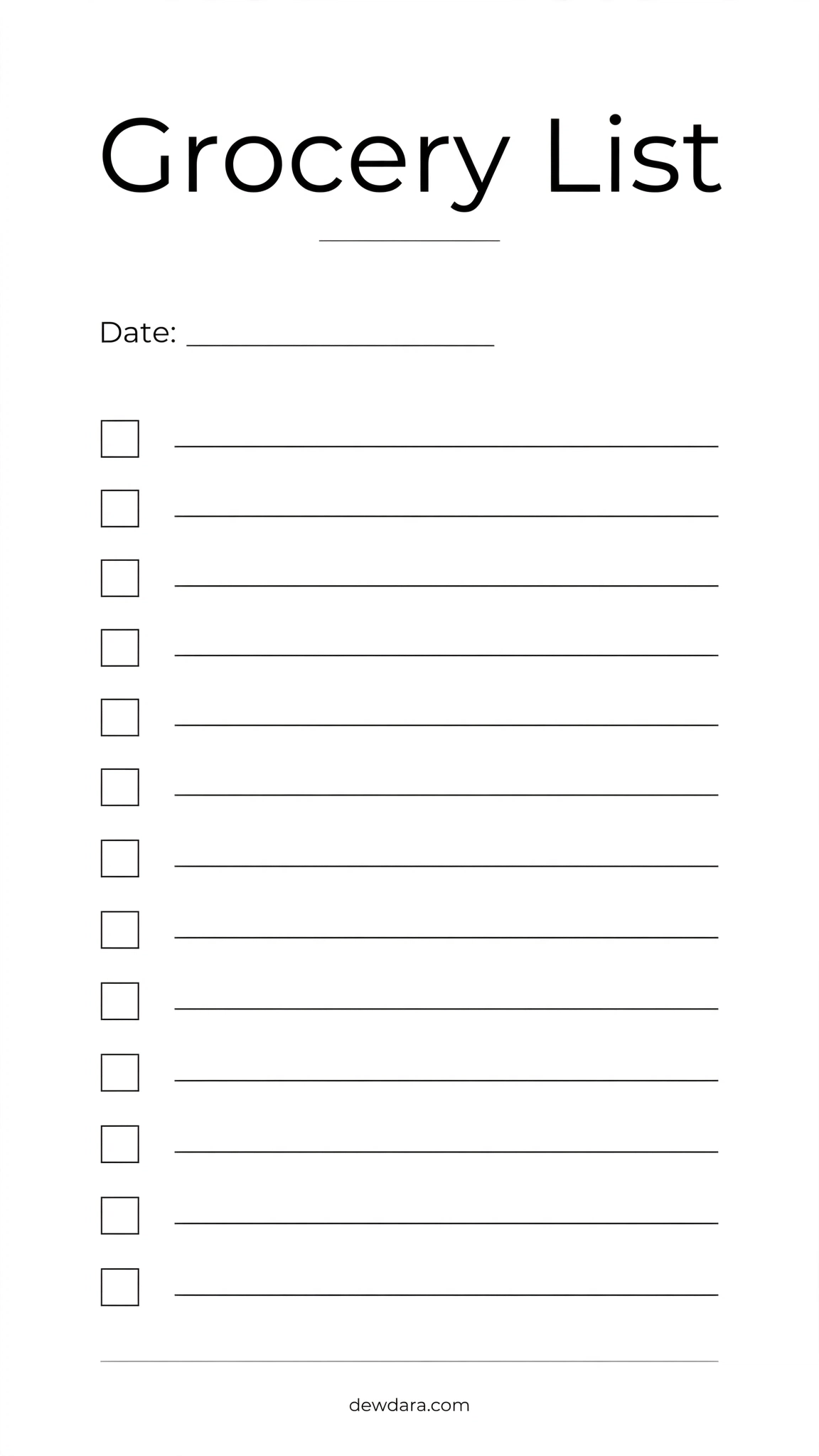
A ultra-minimal, printer-friendly design using only black ink on white paper. No colors, no heavy graphics — just clean lines and square checkboxes.
Best for: Anyone who prints frequently and wants to save ink.
Why it works: It’s the most economical and most legible option. The high contrast makes it easy to read under harsh supermarket lighting.
How to use it: Print a stack of 20 at once and keep them in a drawer. This is your workhorse, everyday list.
10. Pantry Restock Checklist
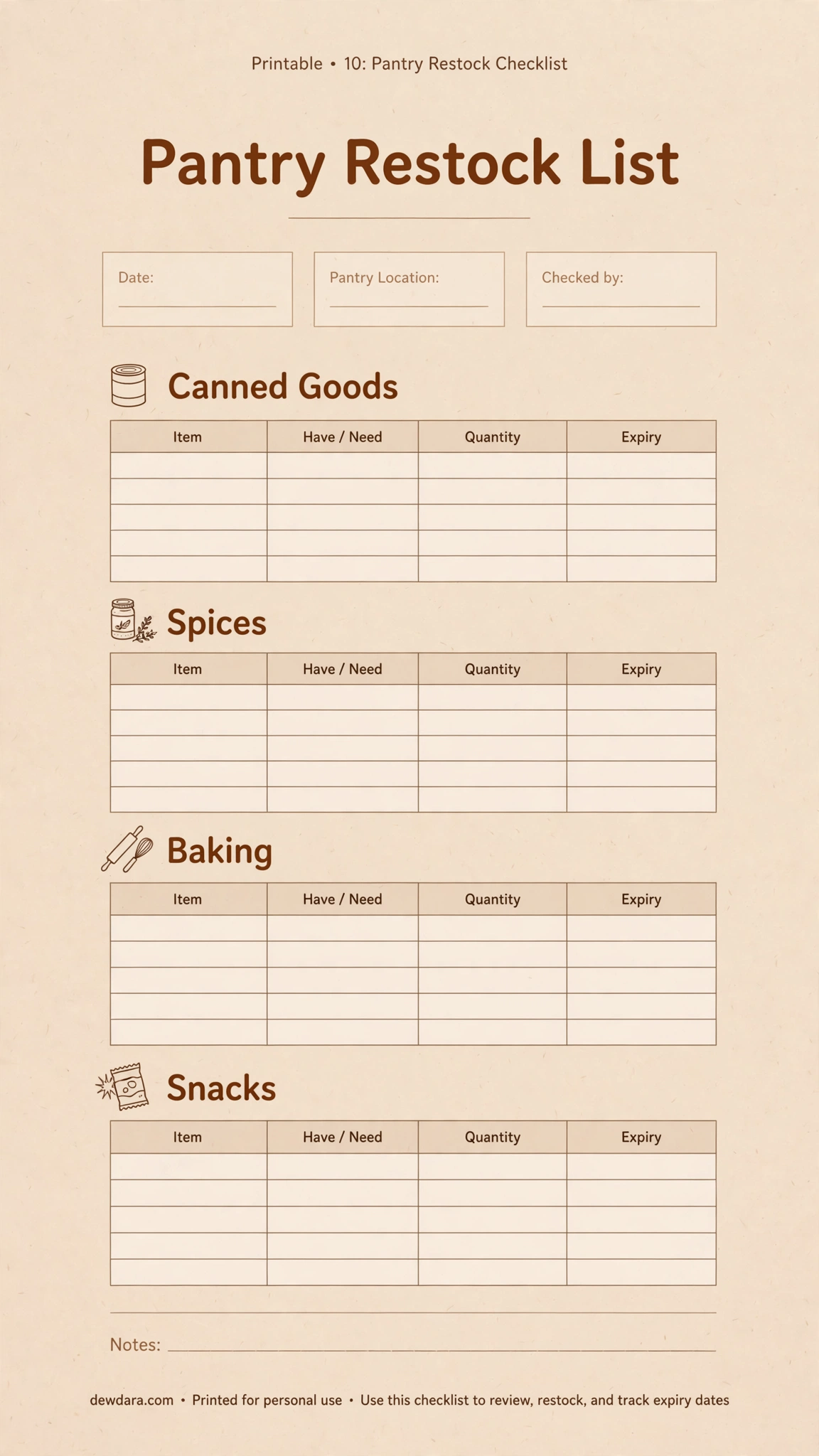
This is an inventory management tool, not just a shopping list. With columns for Item, Have/Need, Quantity, and Expiry, plus categories like Canned Goods, Spices, Baking, and Snacks.
Best for: Organized pantries, monthly restocks, and emergency preparedness.
Why it works: It helps you track what you have, what you need, and when it expires. It turns pantry chaos into a clear system.
How to use it: Do a full pantry audit once a month. Fill this sheet completely, then create your shopping list from only the “Need” items. Check expiry dates as you go.
11. Compact Quick Trip List
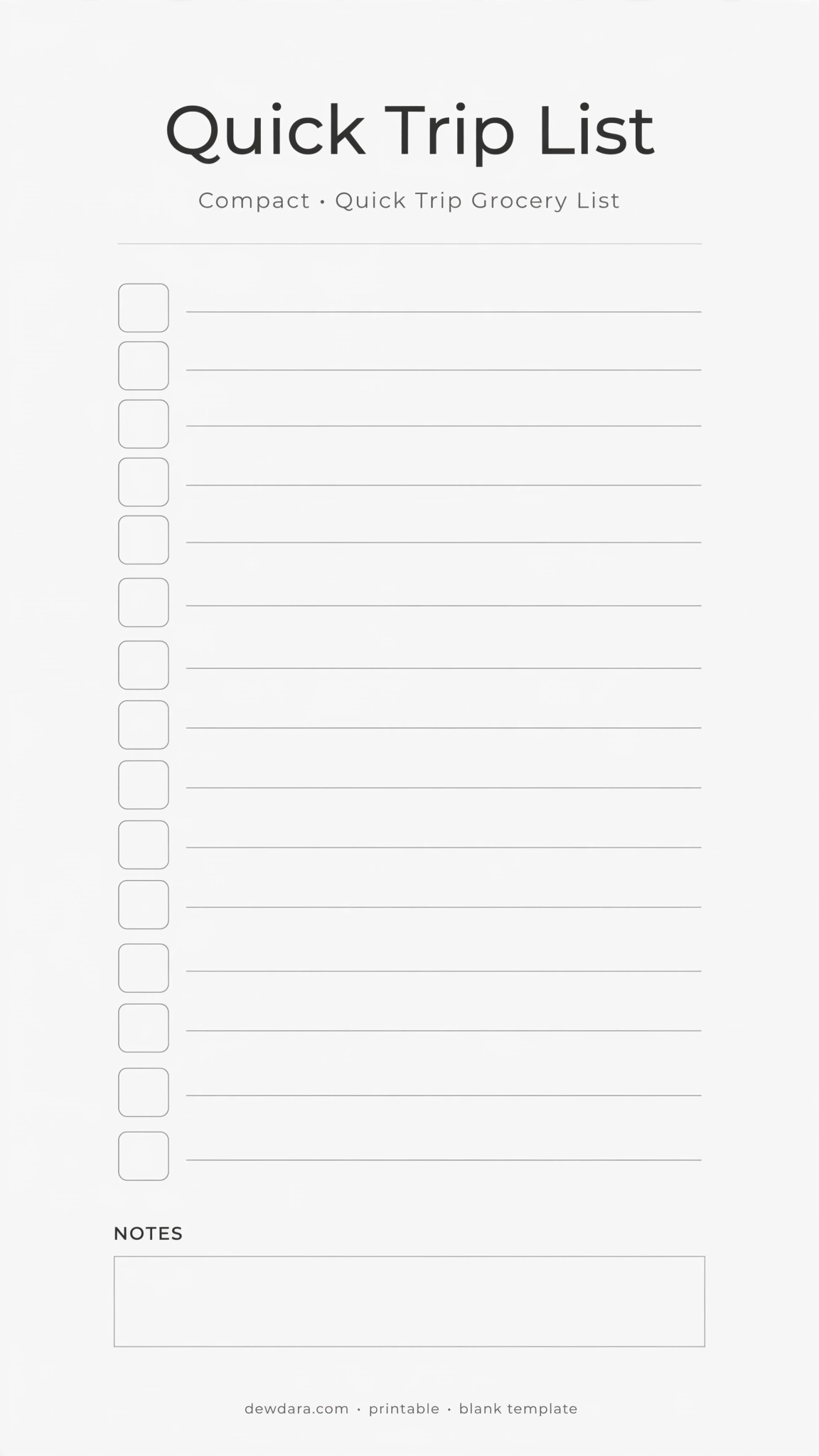
For those times you just need 10-15 items fast. This small, compact list has large checkboxes and a tiny notes box — designed to be folded and taken quickly.
Best for: Mid-week top-ups, quick errands, and minimalists.
Why it works: A full-size list is overwhelming for a 10-minute trip. This one keeps you focused so you get in and out without impulse buys.
How to use it: Keep a few folded in your wallet or car. Perfect for when you get a text that says “Can you grab milk and bread?”
Conclusion
The right grocery list does more than remind you to buy milk — it saves you time, money, and mental energy. Whether you need the structure of a categorized list, the financial control of a budget tracker, or the beauty of an aesthetic checklist, there is a template here for every shopping style.
All 11 templates are blank, free to print, and branded with dewdara.com for your personal use. Print your favorites on standard 8.5×11″ or A4 paper, and start your most organized shopping week yet.
Which printable will you try first?