13 Kitchen Conversion Chart Printable – The Only Charts You Need On Your Kitchen Wall
Every great recipe depends on one thing: accurate measurements. Whether you’re converting cups to grams, Fahrenheit to Celsius, or trying to remember how many tablespoons are in a stick of butter, a quick reference chart saves time, prevents mistakes, and makes cooking stress-free.
These 13 printable kitchen conversion charts were designed to be clean, minimal, and truly printable-friendly. Print them at home, laminate them, stick them inside your cabinet door, or hang them on your kitchen wall. All charts are in high-resolution 9:16 vertical format and include dewdara.com branding for your personal use.
Let’s dive into each essential chart.
1. Cups to Tablespoons & Teaspoons Conversion Chart
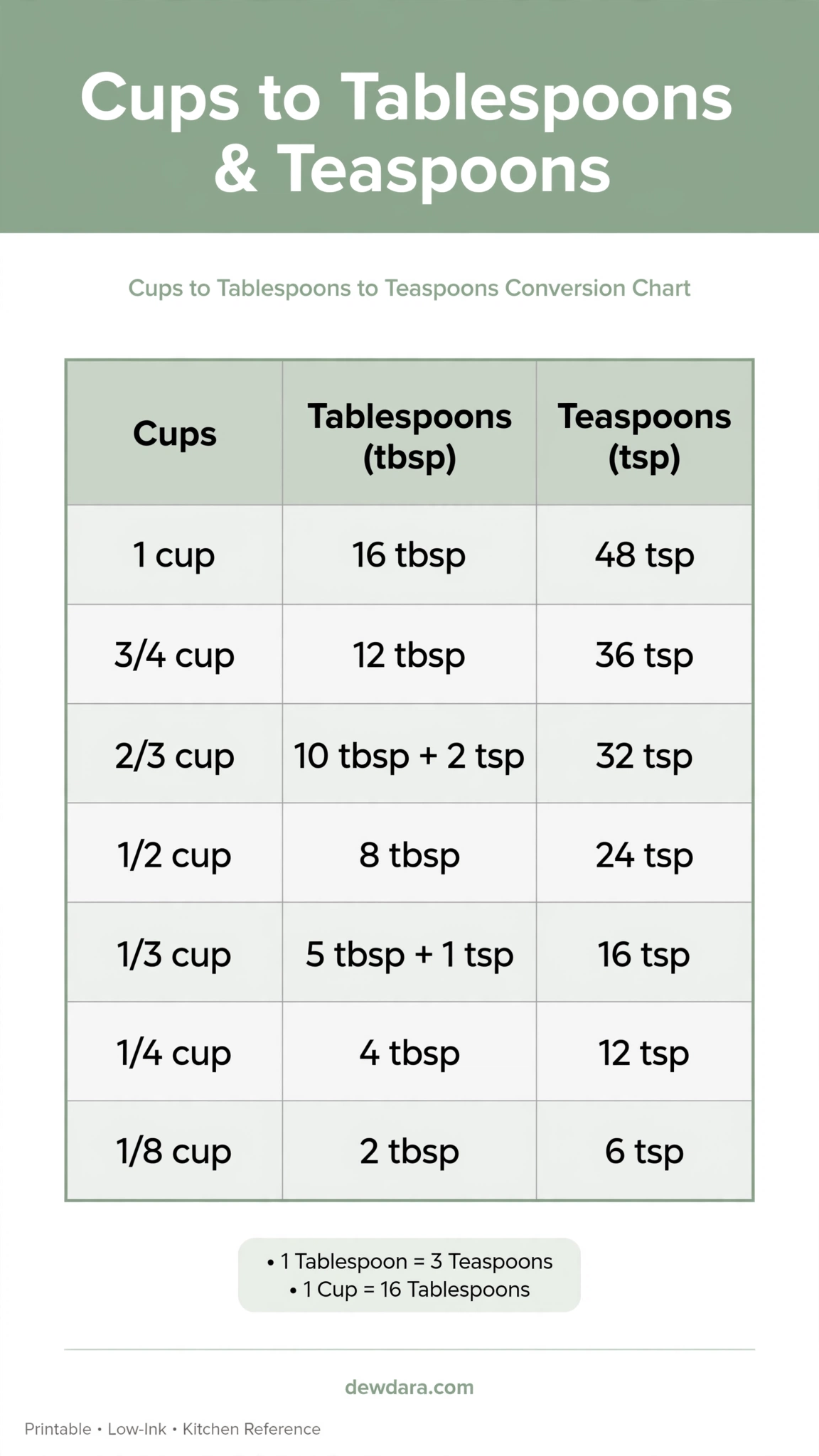
This is the most-used chart in any kitchen. When you don’t want to wash another measuring cup, this chart is a lifesaver. It breaks down the basics: 1 cup equals 16 tablespoons and 48 teaspoons, along with all the common fractions like 3/4, 2/3, 1/2, 1/3, and 1/4 cup.
How to use it: Keep it at eye level. If a recipe calls for 1/2 cup but you only have a tablespoon measure, you’ll instantly know you need 8 tablespoons. Perfect for scaling recipes up or down without guessing.
2. Liquid Volume Conversion Chart
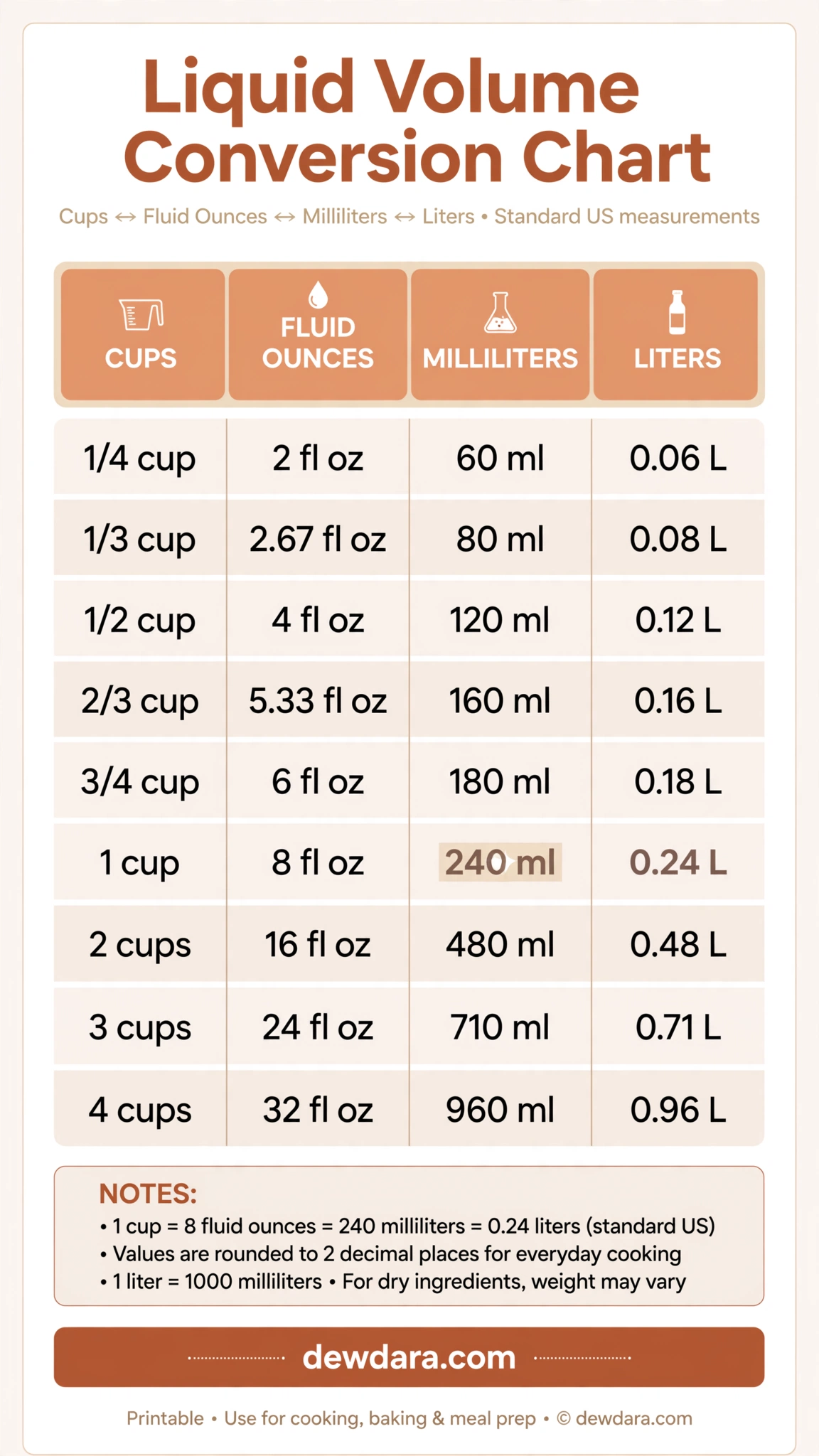
Liquid measurements can be confusing because recipes use cups, fluid ounces, milliliters, and liters interchangeably. This chart standardizes everything to the universal kitchen standard of 1 cup = 8 fl oz = 240 ml.
Why you need it: Essential for international recipes, baking with liquid ingredients, and using both US and metric measuring jugs. It eliminates the need to google conversions while your hands are covered in dough.
3. Kitchen Weight Conversion Chart
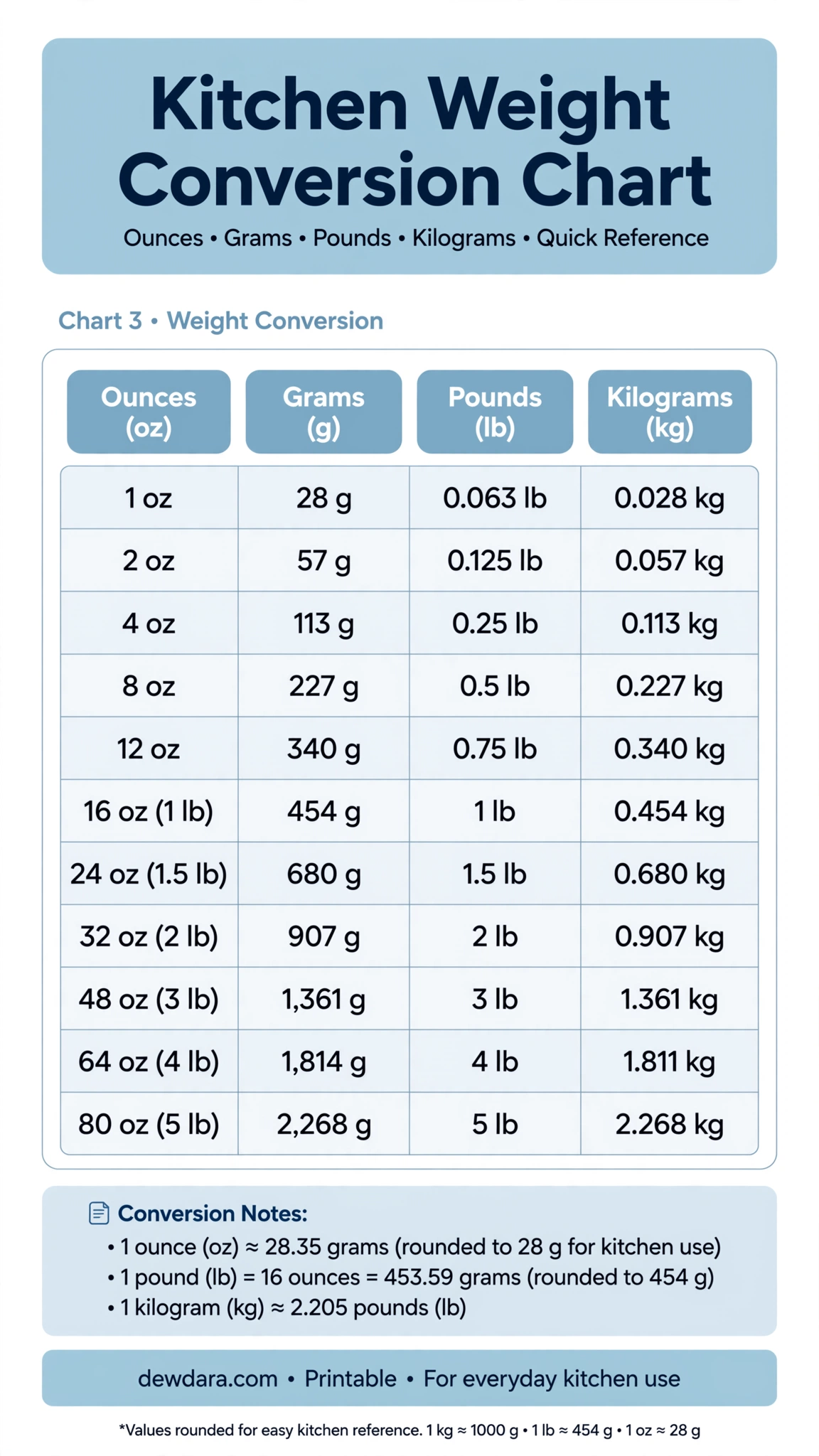
Weight is more accurate than volume, especially for baking. This chart converts ounces to grams to pounds to kilograms in a clean table from 1 oz to 80 oz (5 lb).
How to use it: Use it when your kitchen scale is set to a different unit than your recipe. Pro tip: For baking, always prefer grams. 1 oz = 28.35g, rounded to 28g for kitchen ease, and 1 lb = 454g.
4. Butter Measurement Conversion Chart
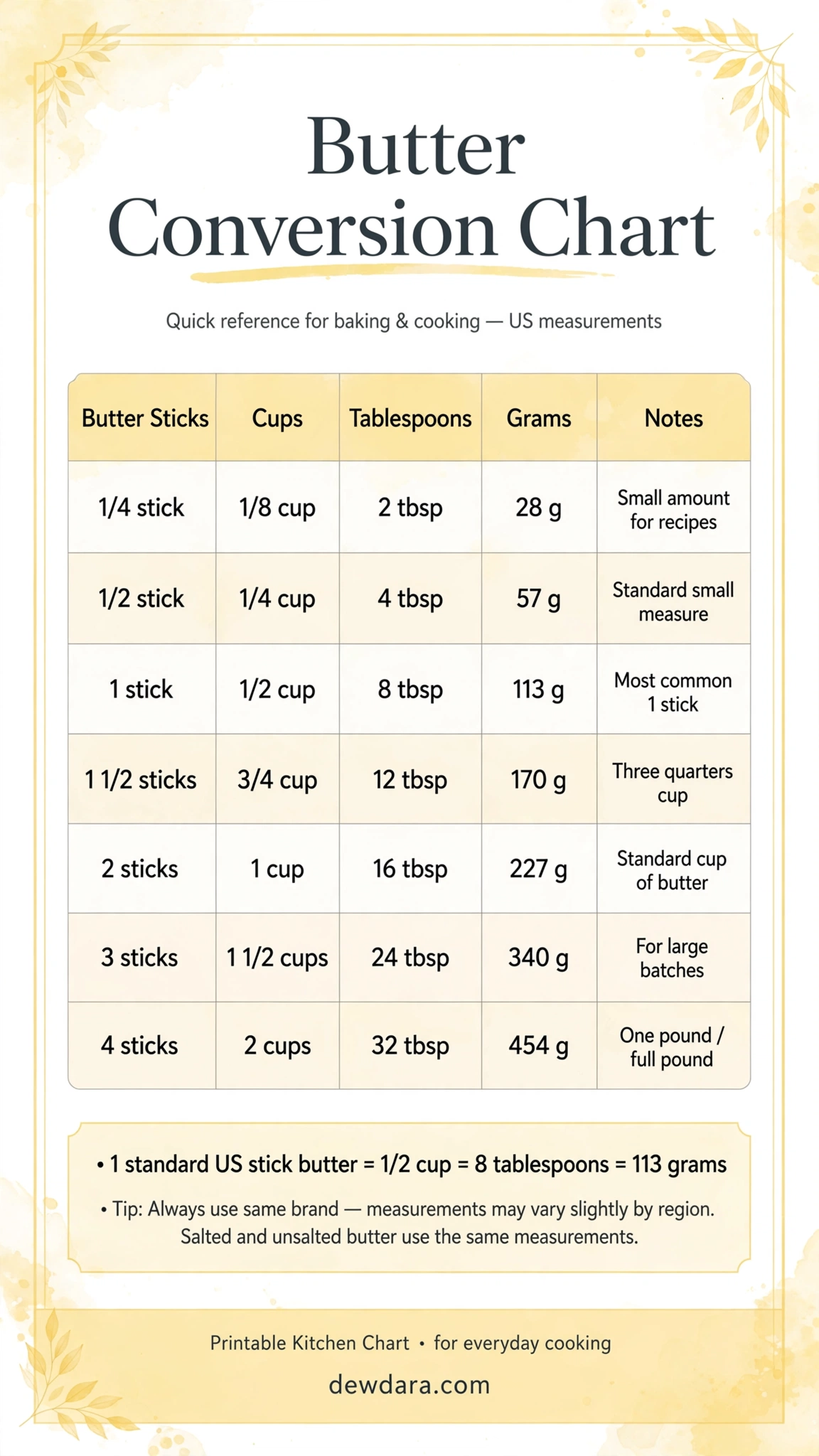
Butter is measured differently around the world – sticks, cups, tablespoons, and grams. This chart decodes it all at a glance.
How to use it: 1 stick of butter is the standard in the US, which equals 1/2 cup, 8 tablespoons, or 113 grams. Whether you are creaming butter for cookies or melting it for a sauce, you’ll never have to cut a stick unevenly again.
5. Oven Temperature Conversion Chart
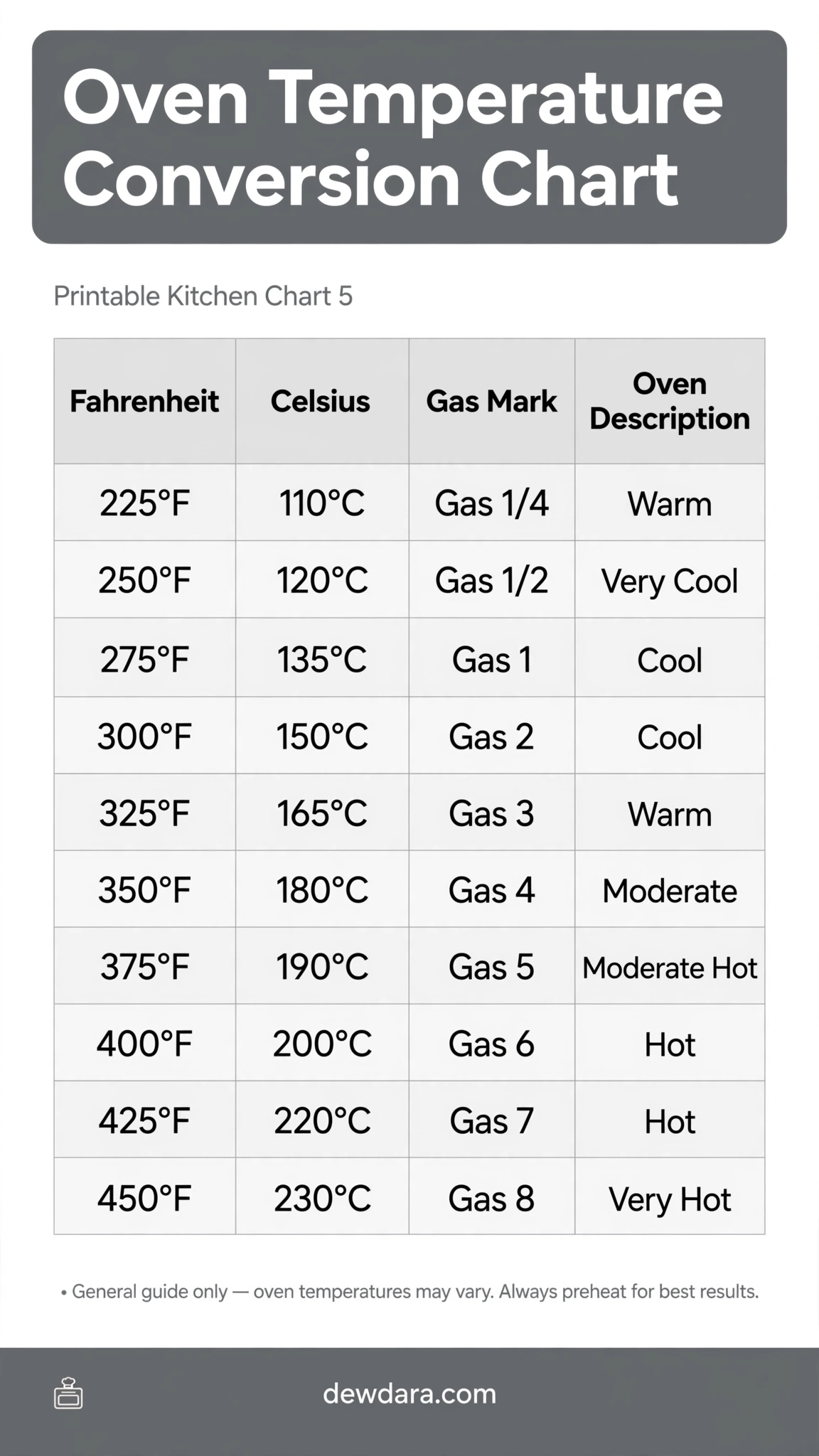
One of the most critical charts for perfect baking. This converts Fahrenheit to Celsius to Gas Mark, plus descriptive heat levels like Slow, Moderate, and Hot.
Why you need it: A 25-degree difference can ruin a cake. If a British recipe says Gas Mark 4, you’ll know it’s 350°F / 180°C / Moderate oven. Tape this one right next to your oven.
6. Baking Ingredients Weight Chart
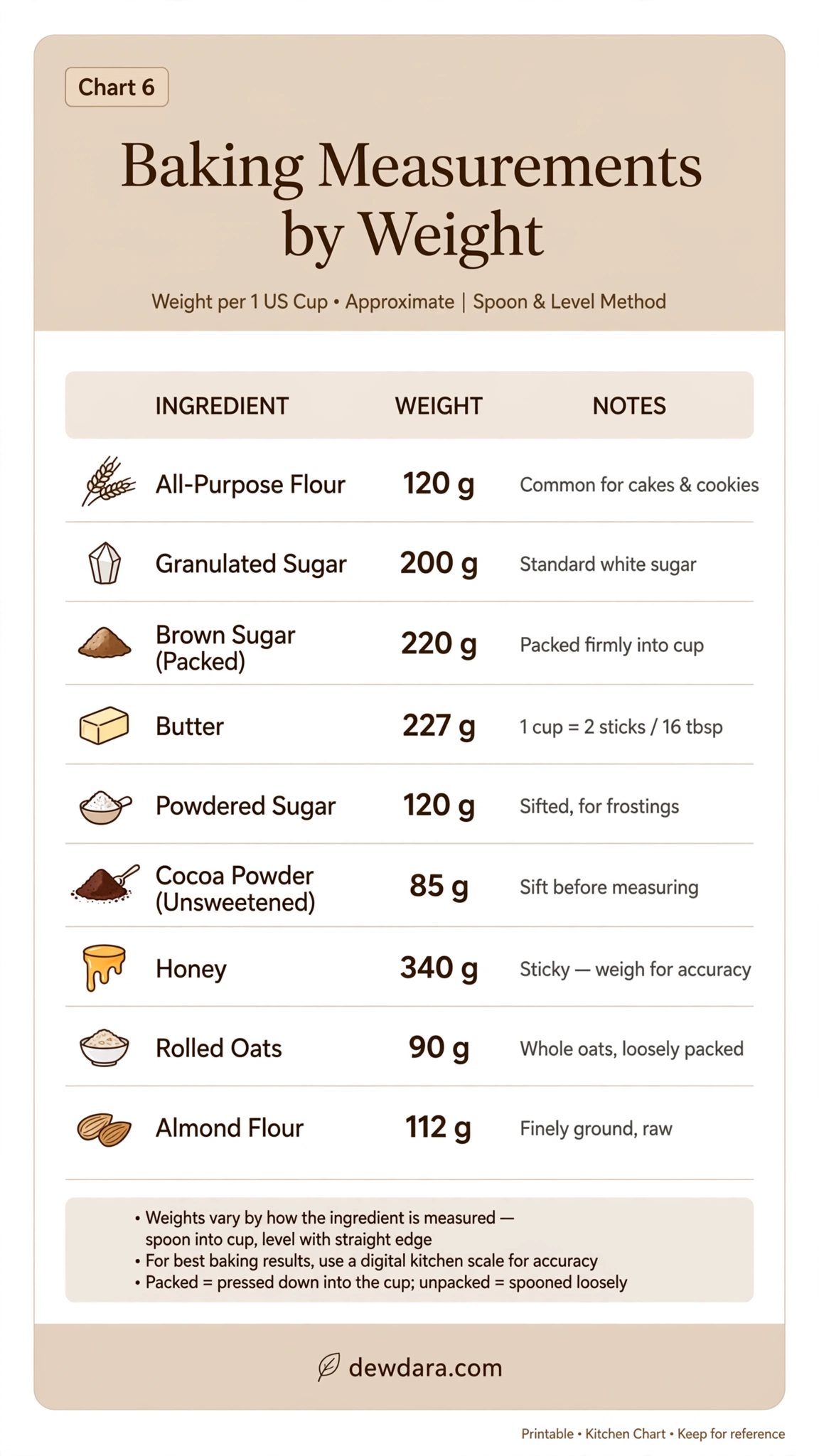
One cup of flour does not weigh the same as one cup of sugar. This chart gives the true weight per cup for common baking ingredients.
How to use it: For example, 1 cup all-purpose flour = 120g, while 1 cup granulated sugar = 200g. Using this chart instead of scooping cups will make your cakes lighter, chewier, and consistently perfect every time.
7. Metric to Imperial Conversion Chart
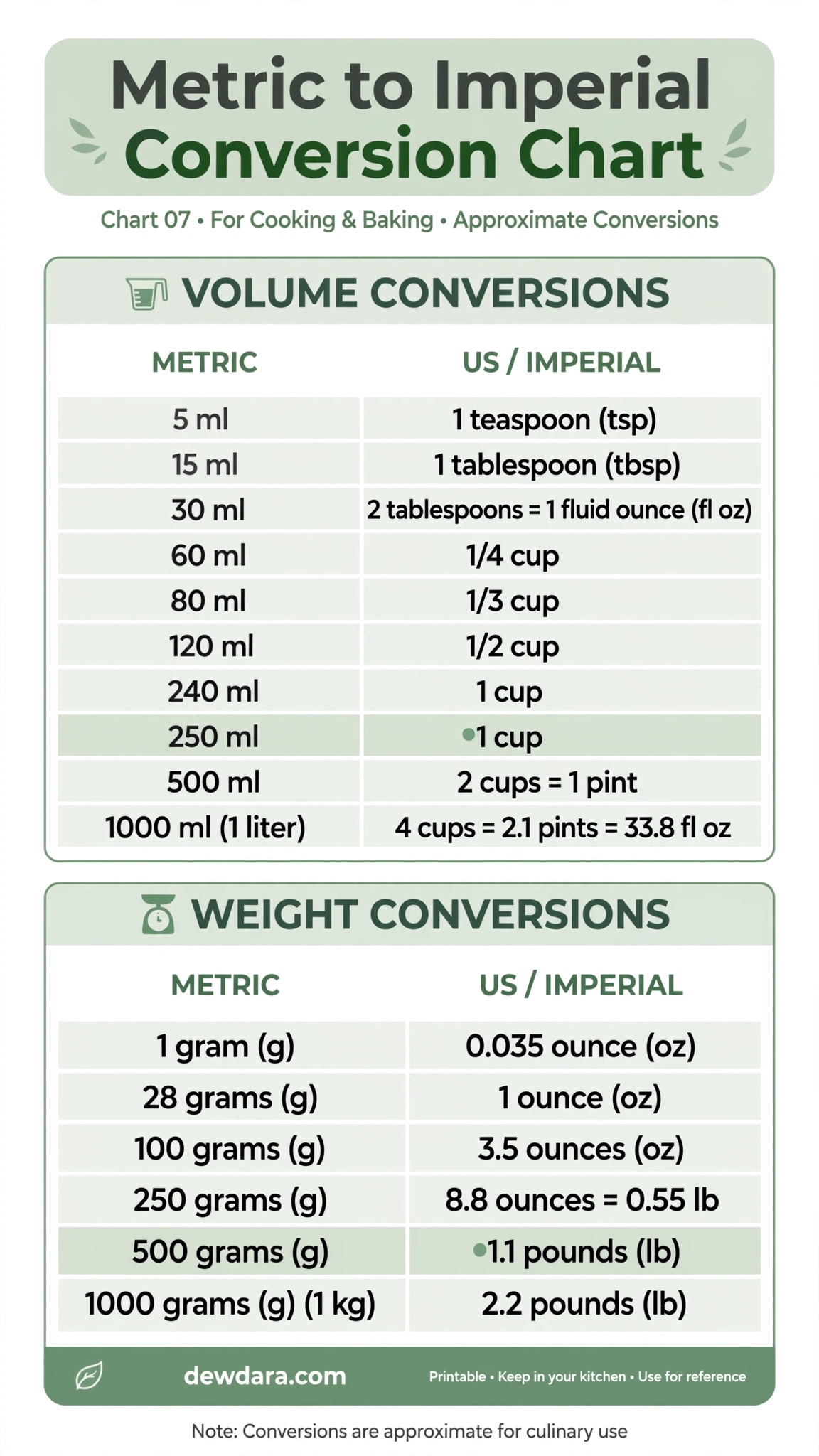
If you love recipes from different countries, you need this bridge chart. It translates metric (ml, grams) to US Imperial (cups, ounces, pounds) instantly.
Why you need it: Ideal for when you find a recipe online that says 250ml milk or 500g flour and your tools are in cups. No math, just a quick glance.
8. Small Spoon Measurements Chart
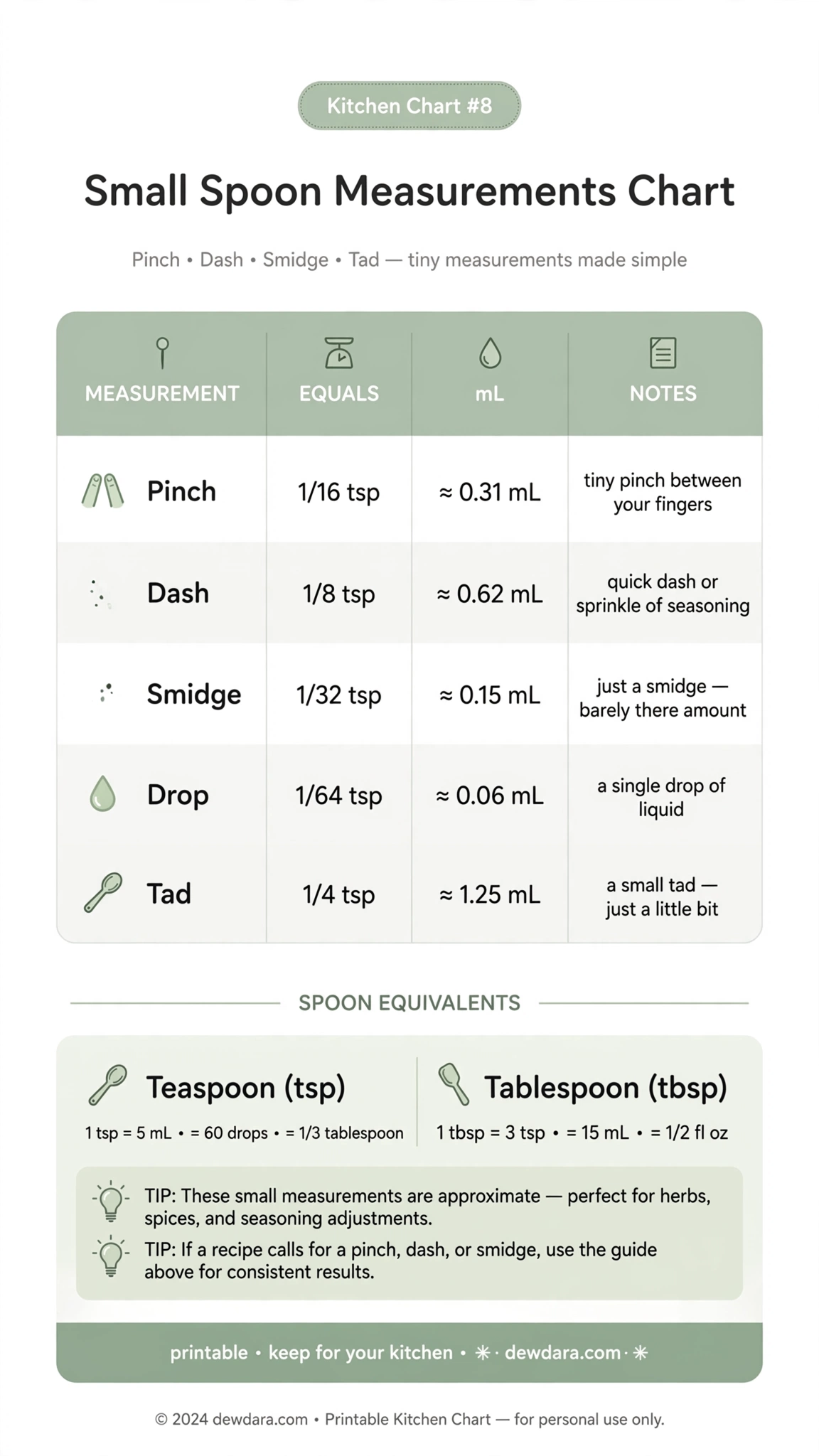
What exactly is a pinch, a dash, or a smidgen? This charming but highly practical chart defines those tiny, vague measurements.
How to use it: A Pinch = 1/16 tsp, a Dash = 1/8 tsp, a Tad = 1/4 tsp. Perfect for seasoning, spices, baking powder, and salt where small amounts make a big difference.
9. Gallons to Cups Conversion Chart
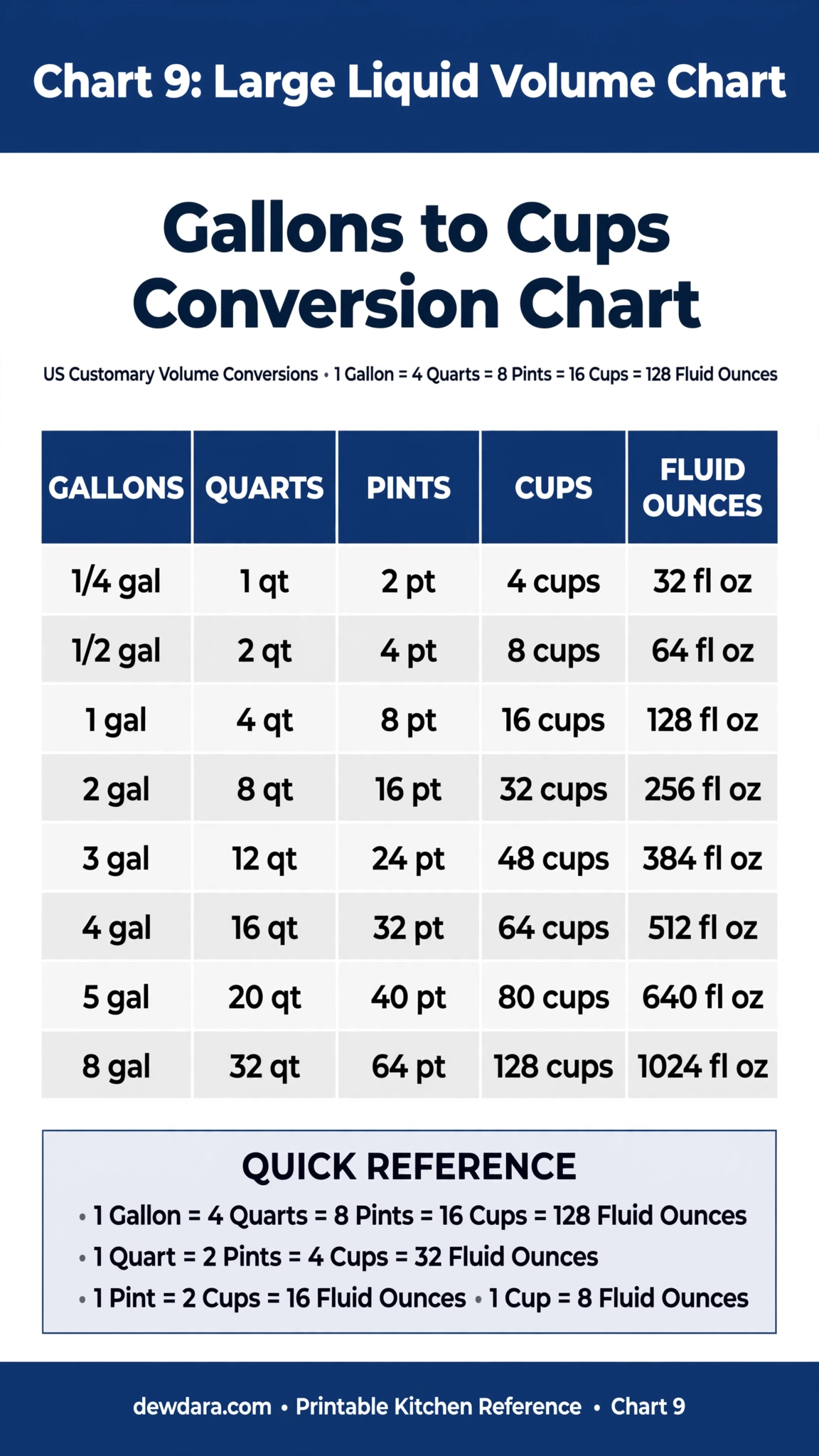
For big-batch cooking, meal prep, and drinks. This chart shows the full hierarchy: Gallons, Quarts, Pints, Cups, and Fluid Ounces.
How to use it: Remember this flow: 1 Gallon = 4 Quarts = 8 Pints = 16 Cups = 128 fl oz. Great for brines, soups, lemonades, and canning season.
10. Sugar Conversion Chart
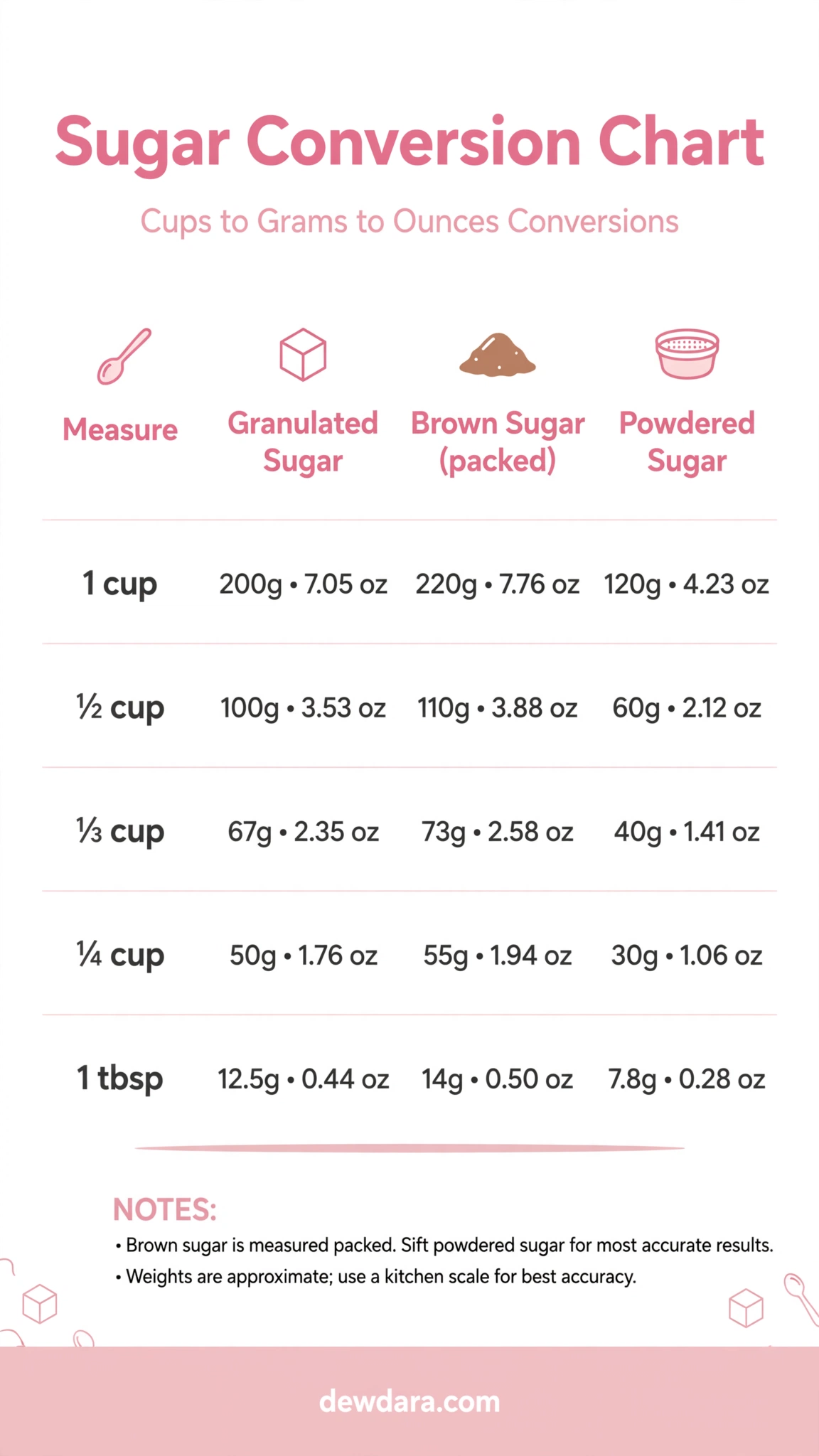
Sugar is not one-size-fits-all. Granulated, brown, and powdered sugar all have different densities and weights per cup.
How to use it: 1 cup granulated sugar is 200g, but 1 cup powdered sugar is only 120g. This chart prevents overly sweet or dense desserts by giving you the exact gram equivalent for each type of sugar.
11. Flour Weight Conversion Chart
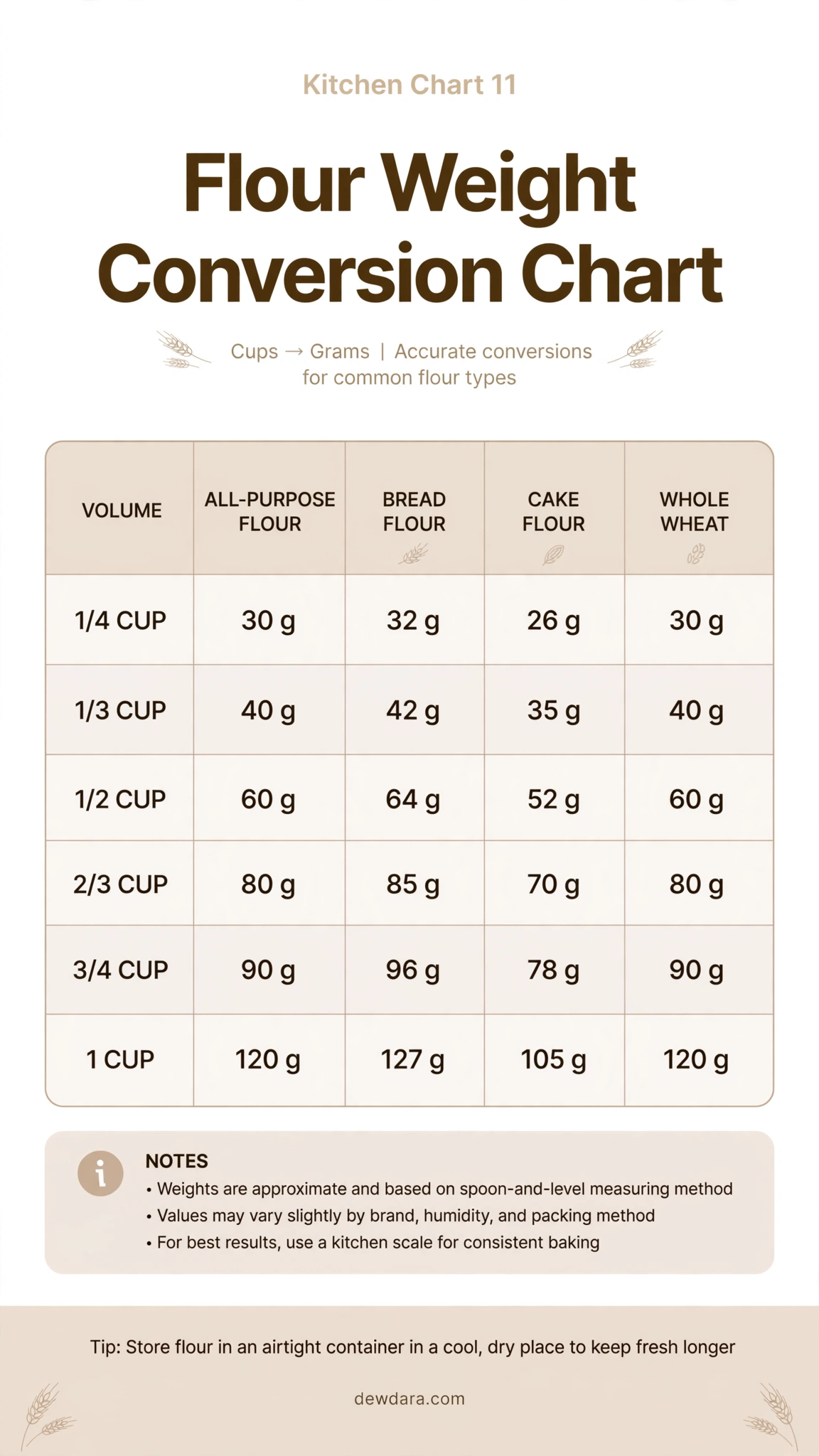
Flour is where most bakers go wrong. All-purpose, bread, cake, and whole wheat flour all weigh differently per cup.
How to use it: For example, 1 cup cake flour is lighter (114g) than 1 cup whole wheat (130g). Use this chart with a kitchen scale for bakery-level accuracy.
12. Liquid Ingredients Conversion Chart
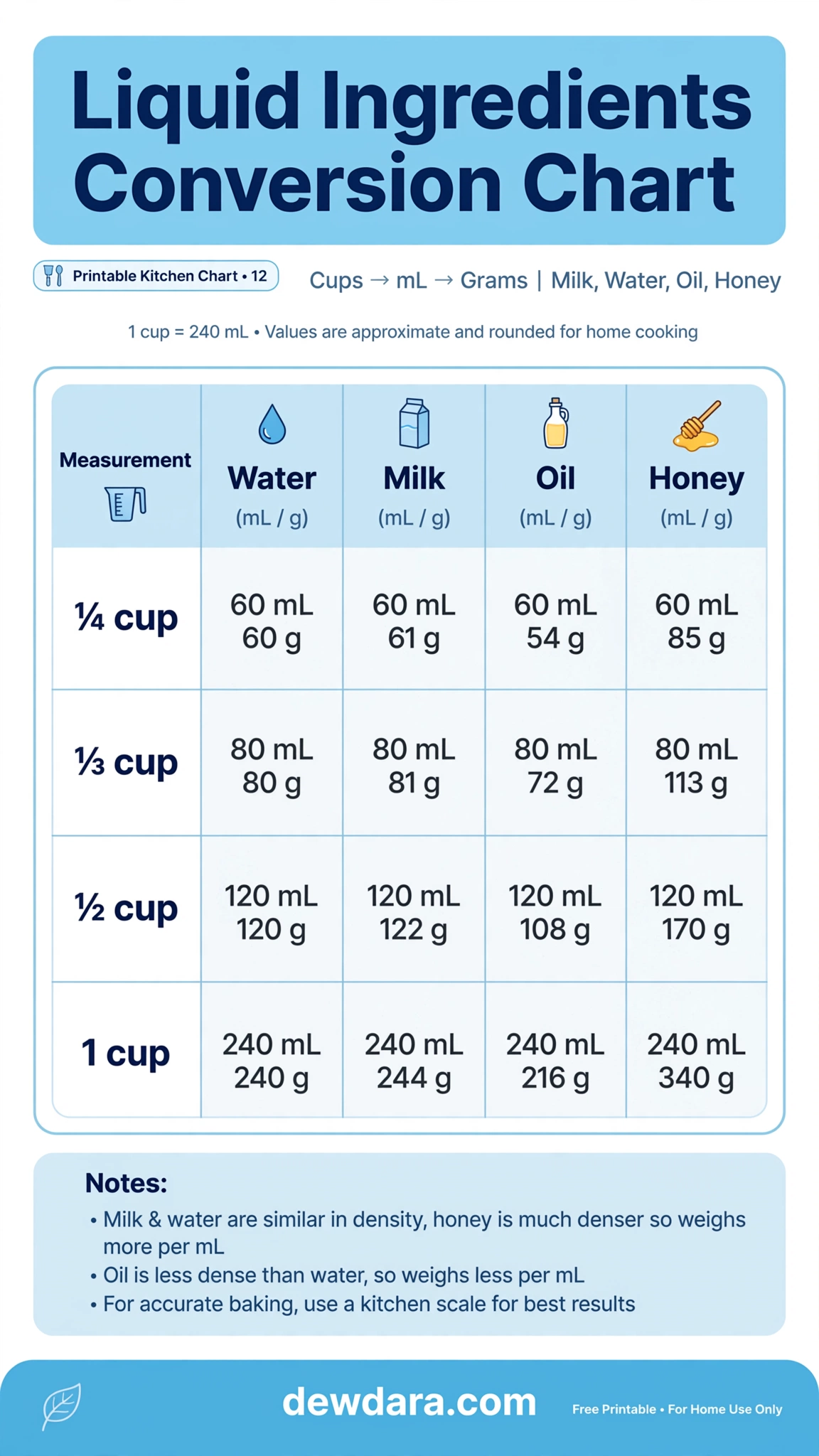
Water, milk, oil, and honey may have the same volume but different weights. This chart gives you cups to milliliters to grams for common liquid ingredients.
Why you need it: Essential for recipes that list liquids by weight, like professional bread and pastry recipes where 1 cup honey = 340g.
13. Ultimate All-in-One Kitchen Conversion Chart
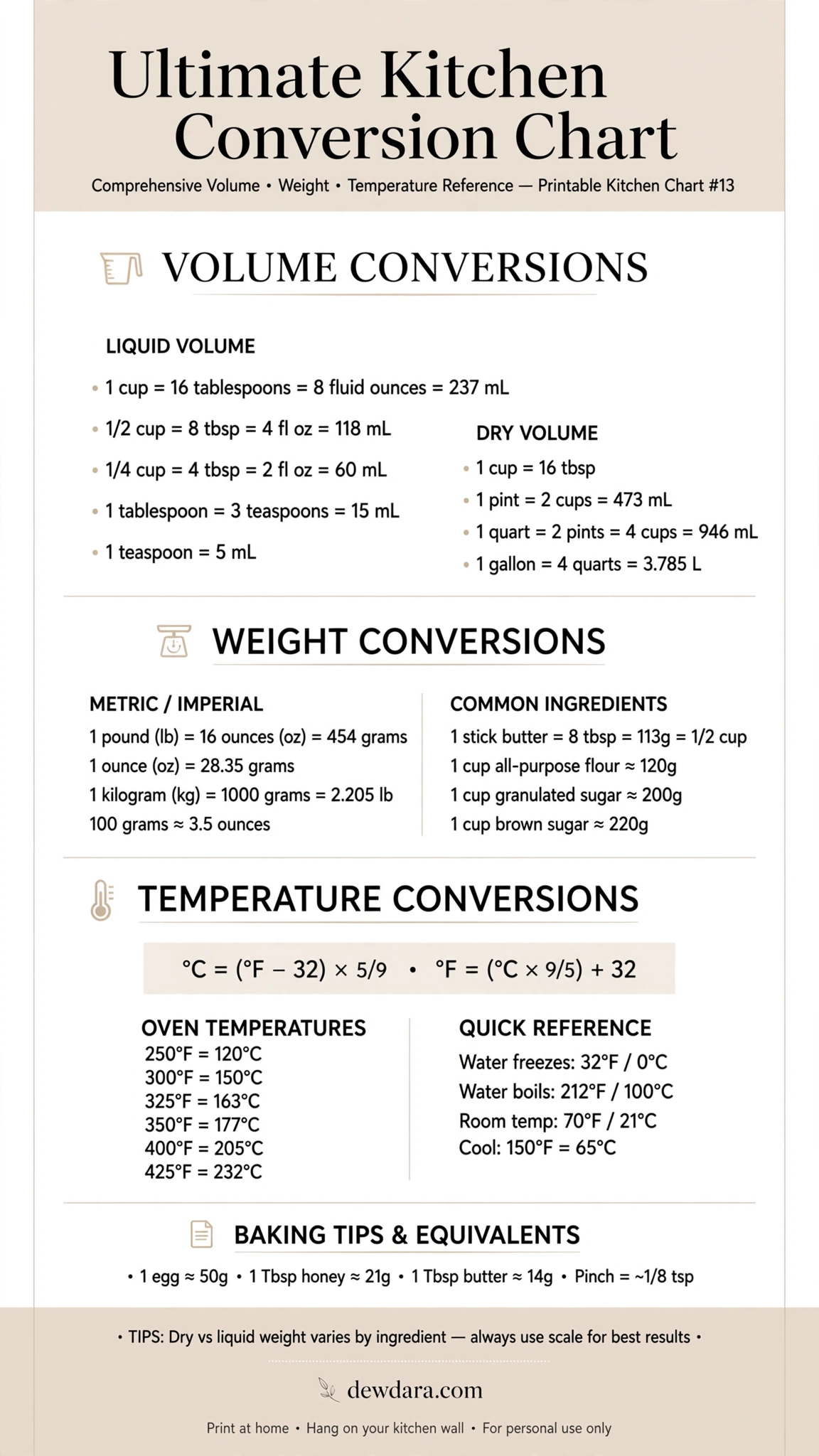
Your final kitchen command center. This ultimate chart combines volume, weight, temperature formulas, oven temperatures, common ingredients, and quick baking tips on one poster.
How to use it: If you only print one chart from this list, make it this one. It covers 90% of daily conversions. Frame it, laminate it, and it will become the most-used paper in your kitchen.
Conclusion
Having these 13 kitchen conversion charts on hand means no more stopping mid-recipe to search conversions, no more failed bakes, and no more wasted ingredients. They are designed to be minimal, beautiful, and highly functional – perfect to print at home on A4 or Letter size.
Print your favorites, keep them in a binder, or create a beautiful gallery wall in your kitchen. For more organized home and kitchen printables, visit dewdara.com.
All printables are for personal use. Happy cooking!