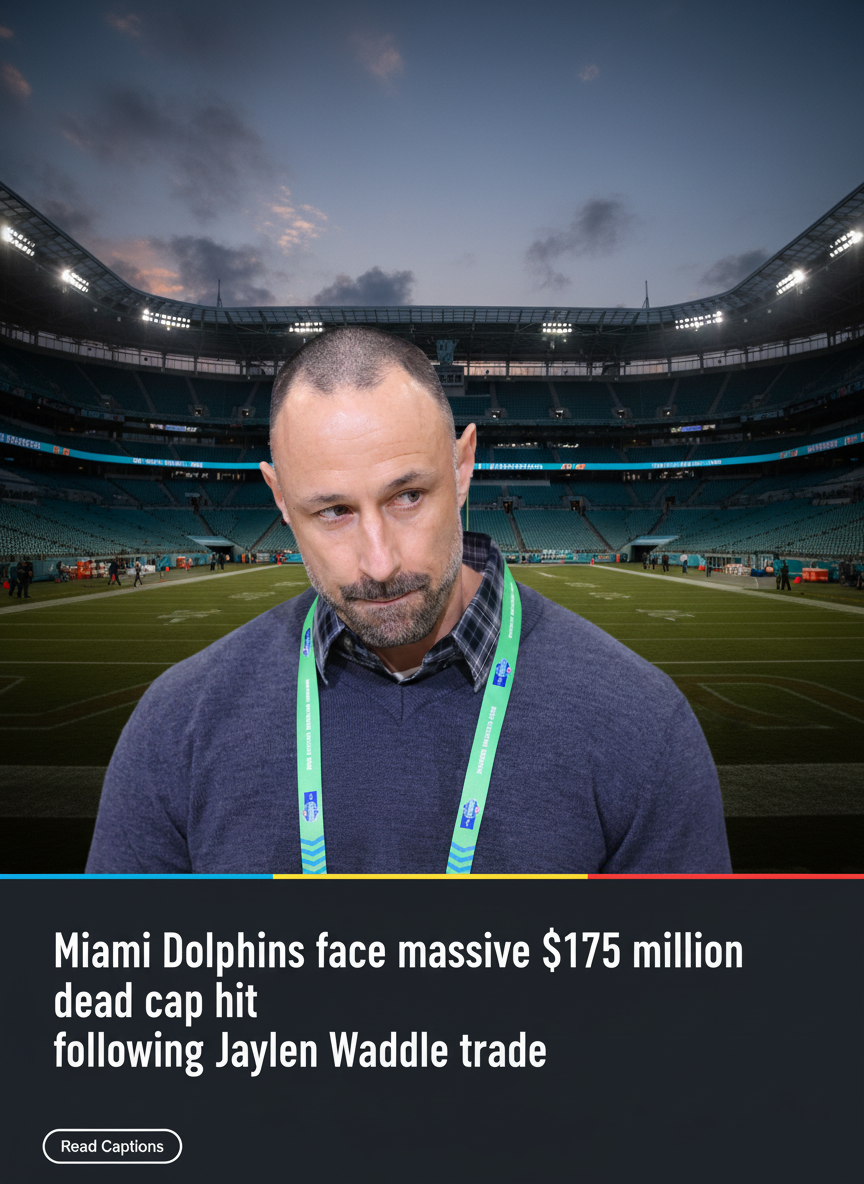
Dolphins Dive into Financial Abyss: Record-Breaking $175 Million Dead Cap Hit Follows Jaylen Waddle Trade
By Sports Desk | Published March 17, 2026
The Miami Dolphins have officially entered a period of unprecedented financial austerity. Following the bombshell trade of star wide receiver Jaylen Waddle, the franchise is facing a staggering $175 million in dead cap charges for the 2026 season. The move, while signaling a total scorched-earth rebuild, has left league analysts and fans alike questioning how a modern NFL roster can function under such extreme budgetary constraints.
A Heavy Price for a Fresh Start
The trade of Jaylen Waddle, a cornerstone of the Dolphins’ offense since 2021, marks the end of an era in South Florida. While the specific draft compensation received for the Pro Bowl receiver offers hope for the future, the immediate cost is a fiscal nightmare. By moving Waddle, Miami was forced to accelerate the remaining prorated signing bonuses and guaranteed salary structures from his previous contract extension directly onto the 2026 books.
Dead cap—money paid to players no longer on the roster—is a common tool in NFL accounting, but the scale of Miami’s current situation is historic. At $175 million, the Dolphins are essentially dedicating more than half of their total salary cap to players who will not suit up for them this season. To put this in perspective, the figure surpasses the previous record for dead cap in a single season by a significant margin.
The “Venmo on Lockdown” Era
With so much capital tied up in “ghost” players, the Dolphins’ front office will be operating with a metaphorical “Venmo account on lockdown.” General Manager Chris Grier and the coaching staff now face the impossible task of filling a 53-man roster with what remains of their available funds. This likely means a reliance on league-minimum contracts, undrafted free agents, and an influx of rookie-scale deals.
Industry insiders suggest that this “reset” was a calculated, albeit painful, decision. By swallowing the entirety of their bad contracts and trade-related hits in a single calendar year, the Dolphins are attempting to clear their books entirely for 2027 and 2028. However, the 2026 season projects to be a “bridge year” that could see the team struggle to remain competitive against AFC East rivals who are spending at full capacity.
League-Wide Implications
The Dolphins’ situation serves as a cautionary tale for the “all-in” philosophy that has permeated the NFL over the last few seasons. Miami’s aggressive spending during the early 2020s—including high-priced extensions for Waddle, Tyreek Hill, and Tua Tagovailoa—has finally come due. When a roster fails to achieve its championship aspirations, the subsequent dismantling often leads to the kind of “cap hell” currently witnessed in Miami.
Rival executives are watching closely to see if the Dolphins can navigate this period without a total collapse in locker room morale. With star players being shipped out and the team unable to pursue top-tier free agents, the burden falls on the coaching staff to develop young talent at an accelerated rate.
Conclusion: A Long Road to Recovery
The $175 million dead cap hit is a bitter pill for Dolphins fans to swallow. While the Jaylen Waddle trade provides the draft assets necessary to build a new foundation, the 2026 season will be defined by what Miami *cannot* afford to do. For now, the franchise is prioritizing long-term survival over short-term success, turning the page on a high-spending era that ultimately fell short of the Super Bowl.
As the NFL world reacts to these eye-watering numbers, one thing is certain: the Miami Dolphins have set a new benchmark for the cost of starting over.