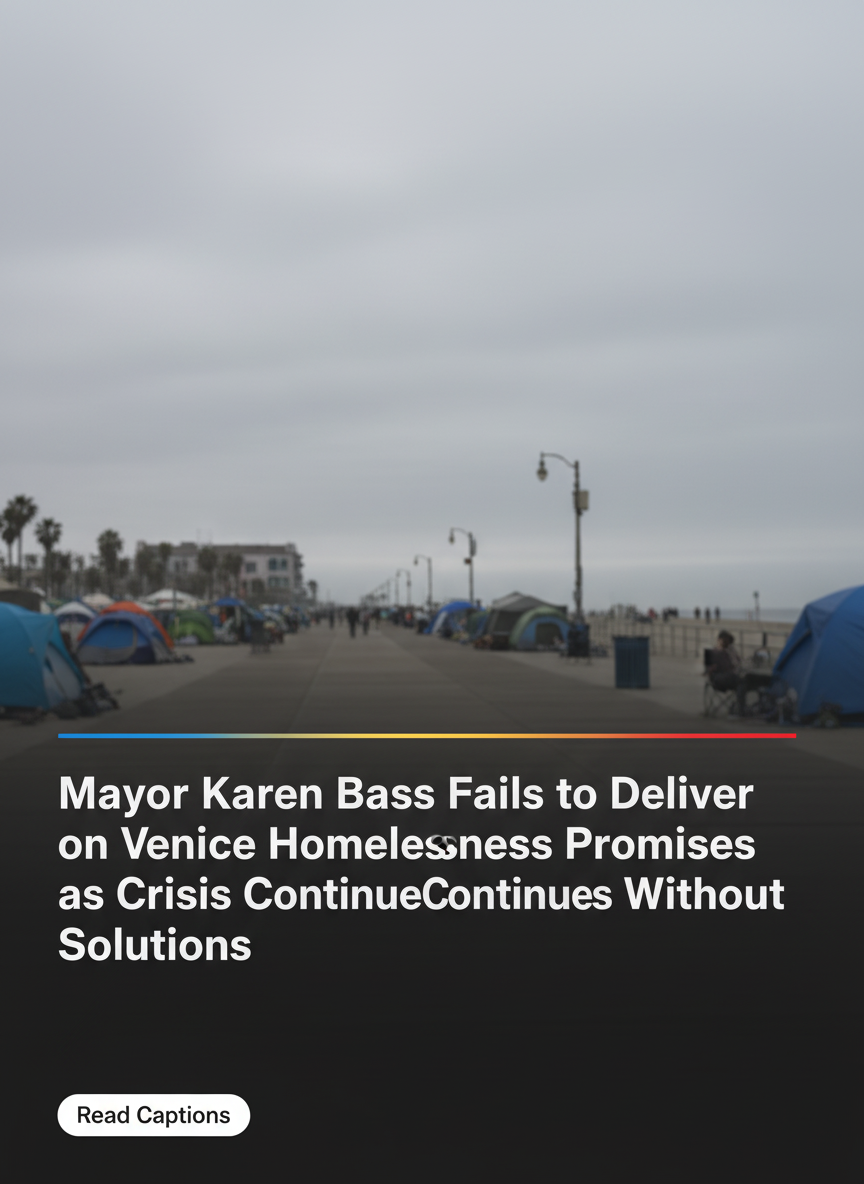
Venice at a Breaking Point: Residents Demand Action as Mayor Bass’s Homelessness Pledges Falter
LOS ANGELES — When Mayor Karen Bass took office, she staked her legacy on a singular, urgent mission: ending the homelessness crisis that has come to define the landscape of Los Angeles. However, years into her administration, the seaside community of Venice has become a glaring symbol of what critics are calling a trail of broken promises and ineffective policy.
Despite the high-profile launch of the “Inside Safe” initiative and a declared state of emergency, the streets of Venice remain lined with encampments. For local residents and business owners, the initial optimism that greeted Bass’s inauguration has soured into a mixture of frustration and desperation as the “root causes” of the crisis remain largely unaddressed.
The Promise vs. The Reality
During her campaign and early months in office, Mayor Bass promised a compassionate but firm approach to clearing encampments. The strategy was simple: move individuals from the streets into temporary motels and eventually into permanent housing. In Venice, a neighborhood that has long struggled with the intersection of tourism and extreme poverty, these promises were met with a sense of relief.
However, recent reports suggest a “revolving door” phenomenon. While some encampments are cleared with significant fanfare, new ones often emerge just blocks away or return to the same locations within weeks. Critics argue that the administration’s focus on temporary visibility—moving tents out of sight—has come at the expense of long-term stability and enforcement.
Failing to Address Root Causes
The core of the criticism leveled against the Bass administration involves its handling of the underlying drivers of homelessness: severe mental illness and substance abuse. While “Inside Safe” provides a roof, it has been scrutinized for failing to provide the intensive, often mandatory, clinical interventions required to keep the most vulnerable populations off the streets.
“We are seeing a policy that prioritizes a temporary bed over a permanent cure,” says one local advocate. “Without addressing the drug epidemic and the mental health collapse happening on our sidewalks, the Mayor is simply rearranging the furniture in a house that is on fire.”
A Call for Drastic Action
As the situation in Venice stagnates, the political pressure on City Hall is mounting. Residents are no longer asking for incremental shifts; they are demanding drastic action. This includes the stricter enforcement of anti-camping ordinances (such as Municipal Code 41.18) and a pivot toward more robust, service-led enforcement that requires individuals to accept help or move from public spaces.
The sentiment among Venice stakeholders is that the city needs “stronger leadership” that is willing to make difficult, potentially unpopular decisions to reclaim public right-of-ways. The argument is that compassion for the unhoused must be balanced with the rights of the tax-paying public to have safe, clean, and accessible streets.
The Road Ahead for the Bass Administration
Mayor Bass now finds herself at a critical juncture. With her initial “honeymoon period” long over, the persistence of the Venice encampments serves as a daily reminder of the complexities of the crisis. To regain the trust of the electorate, the administration may need to move beyond rhetoric and demonstrate measurable, permanent reductions in street homelessness.
As the 2026 calendar progresses, the eyes of the city—and the nation—remain on Venice. Whether the Mayor can pivot her strategy to address the systemic failures of the current model remains to be seen. For now, the residents of Venice continue to wait for the version of Los Angeles they were promised: one where the beach is for everyone, and the sidewalks are clear once again.
Reporting by City Desk. Based on editorial analysis of local homelessness policy and resident feedback.