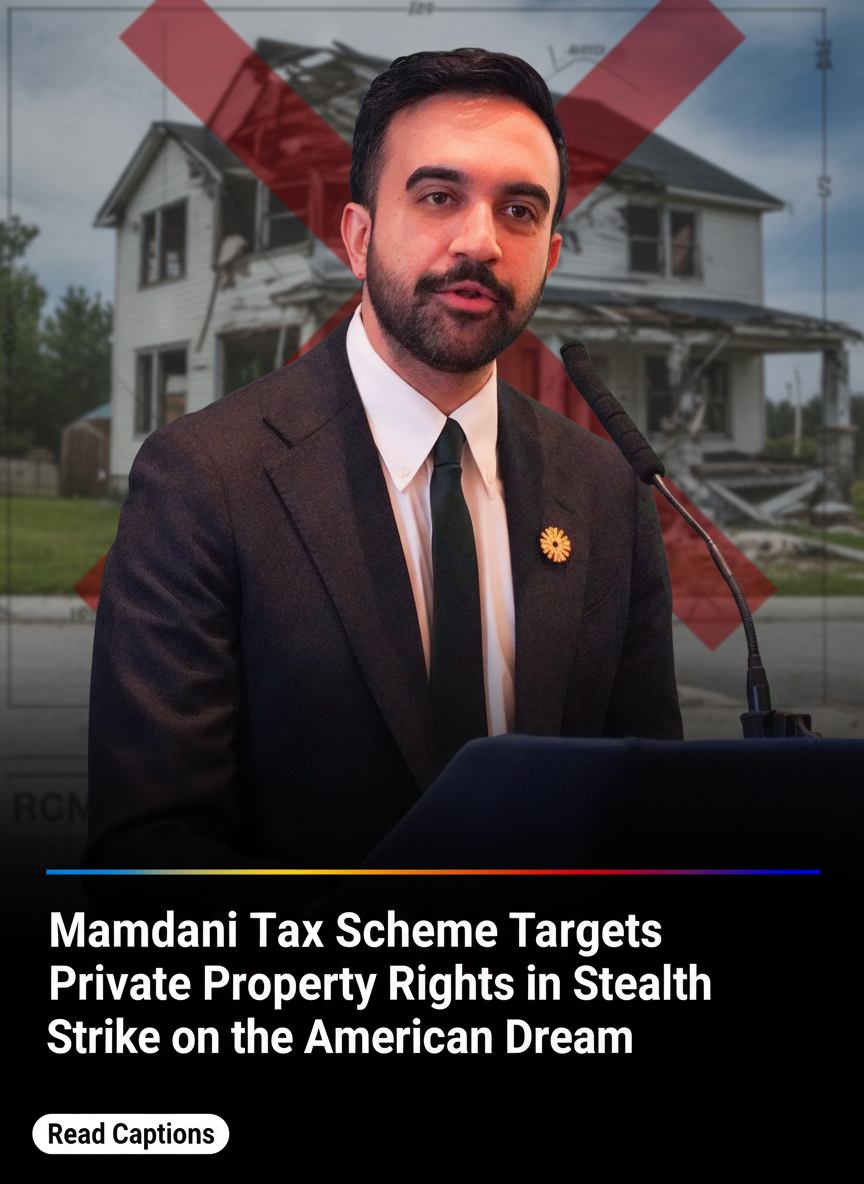
Critics Sound Alarm as Mamdani Proposes New Tax Measures, Labeled a ‘Stealth Strike’ on Private Property
ALBANY, NY — A heated legislative battle is brewing in the New York State Capital as Assemblyman Zohran Mamdani and his allies within the Democratic Socialists of America (DSA) face intensifying scrutiny over a series of new tax proposals. Critics are labeling the initiatives as a “stealth strike” on the American Dream, arguing that the measures go far beyond fiscal policy and represent a fundamental assault on private property rights.
The “Stealth Strike” Allegations
The controversy centers on a suite of legislative proposals aimed at redistributing wealth through aggressive tax reforms. While proponents argue these measures are necessary to fund public services and bridge the state’s widening inequality gap, opponents see a more radical agenda at play. According to a scathing critique highlighted by fiscal watchdogs, the true intent behind these policies is not just revenue collection, but the systematic erosion of private ownership.
Observers suggest that the timing of these proposals is strategic, attempting to bypass traditional public debate by embedding complex tax changes within broader legislative frameworks. This “stealth” approach has drawn the ire of homeowners and small business owners who fear their hard-earned assets are being targeted under the guise of “social equity.”
A Clash of Ideologies
At the heart of the debate is Assemblyman Mamdani, a prominent figure in the DSA who has never shied away from challenging the capitalist status quo. His critics, however, contend that his latest maneuvers reveal an underlying opposition to the very concept of private property. “Truth is, Mamdani and his DSA allies in the state legislature oppose private property and will use any pretext to confiscate it,” a recent editorial warned, echoing the sentiments of many in the real estate and financial sectors.
For the DSA faction, the goal is to shift the tax burden onto “the 1%” and corporations to fund ambitious projects like universal healthcare and socialized housing. However, many economists warn that such confiscatory policies could lead to a massive exodus of capital from New York, further straining the state’s budget and punishing middle-class families who have invested their life savings into their homes.
Impact on the American Dream
The “American Dream”—traditionally defined by the ability to own property, build a business, and pass wealth to the next generation—is now the primary casualty in this legislative tug-of-war. Real estate experts argue that the proposed tax schemes would make it increasingly difficult for New Yorkers to maintain property ownership, effectively turning the state into a landlord-dominated or state-controlled landscape.
“When you make the cost of owning property prohibitive, you aren’t just taxing the rich; you’re pulling the ladder up for everyone else,” said one local policy analyst. “If the goal is to eliminate private property as a concept, then these tax schemes are the perfect tool to achieve that without ever having to pass a single law that says ‘private property is illegal.'”
Political Fallout in Albany
The push by Mamdani and the DSA has created a rift within the Democratic party in Albany. While more moderate members are wary of alienating suburban voters and the business community, the progressive wing continues to gain momentum. As budget negotiations continue, the fate of these tax proposals remains a central point of contention.
Opponents are calling for greater transparency and a rejection of what they term “ideological experimentation” with the state’s economy. As the debate moves forward, the primary question remains: will New York remain a bastion of private enterprise, or will it follow the path of radical redistribution championed by the DSA?
Conclusion
As the legislative session progresses, the eyes of the nation are on New York. The outcome of this struggle will likely serve as a bellwether for similar movements across the country. For now, the “stealth strike” on the American Dream remains a rallying cry for those determined to protect the principles of private property and economic independence against an increasingly bold socialist movement.