
9 Small Business Planner Printables to Organize, Grow, and Scale With Confidence
Running a small business means wearing every hat at once — CEO, marketer, accountant, customer service, and inventory manager. Without a clear system, important details slip through the cracks and growth starts to feel chaotic.
That’s why successful business owners rely on simple, repeatable planning systems. A well-designed printable planner gives you clarity, focus, and a place to track what truly moves your business forward.
In this guide, I’ve created 9 essential small business planner printables. Each one is designed in a clean, minimalist aesthetic, completely blank and ready to print, and branded for you by dewdara.com. Use them together as a complete business management kit or print only what you need right now.
All templates are in 9:16 vertical format, perfect for printing on A4 / US Letter, using on your iPad, or saving in your business binder.
1. Business Vision & Mission Planner
The foundation of every strong business is clarity. This planner helps you define why your business exists and where it’s headed.
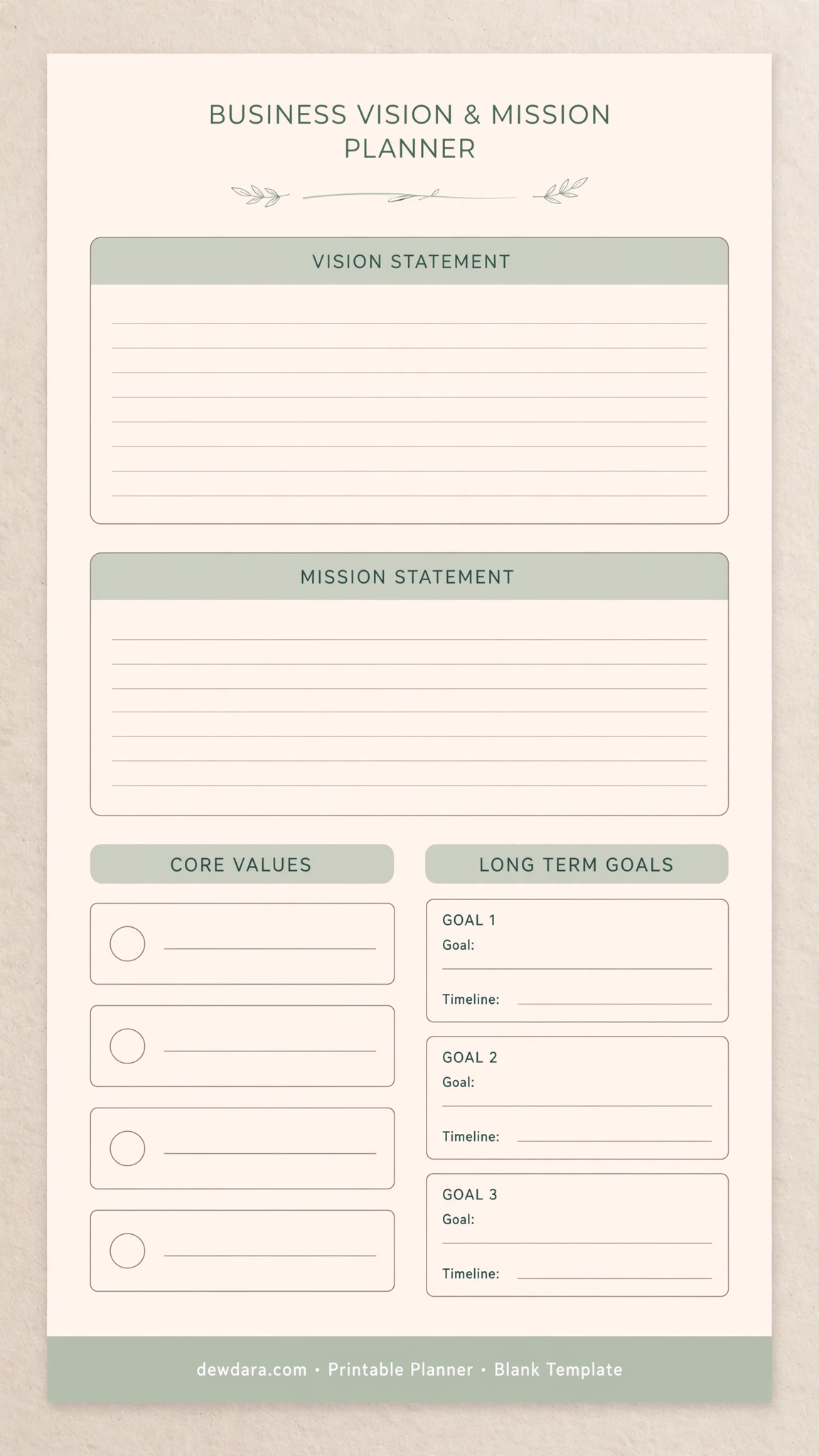
What it includes: Vision Statement, Mission Statement, Core Values, Long-Term Goals.
How to use it: Fill this out once per quarter. Before you set any monthly goals, re-read your vision. Every decision — from pricing to content — should align with what you write here. This one page keeps you from getting distracted by trends that don’t serve your bigger picture.
Pro tip: Keep it pinned above your desk. It’s your business compass.
2. Monthly Goals & Priorities Planner
Big goals happen when broken into monthly actions. This is your monthly reset page.
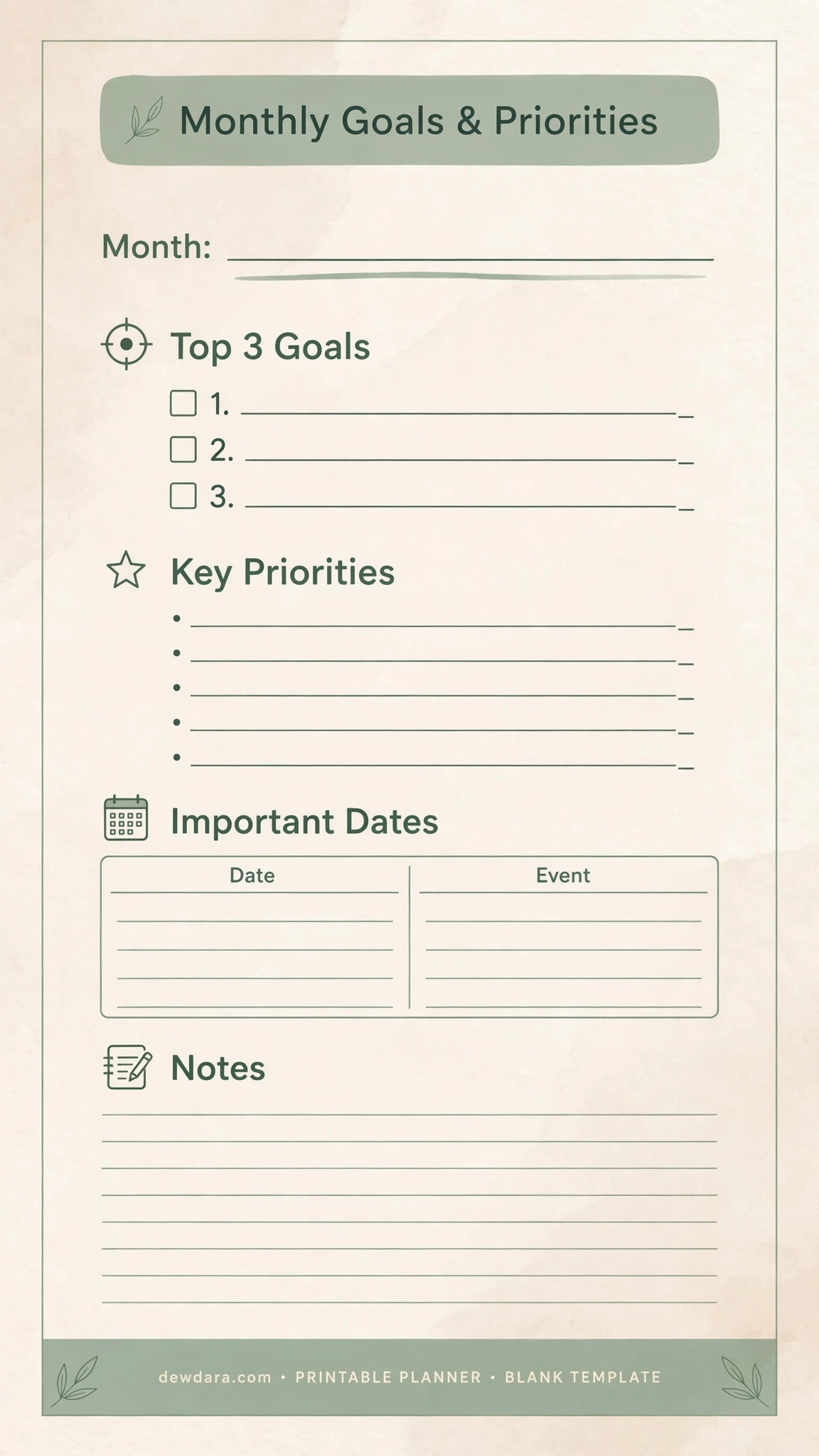
What it includes: Month focus, Top 3 Goals, Key Priorities, Important Dates, Notes section.
How to use it: At the start of each month, write only 3 main goals. Not 10. Three. Then list the priorities that directly support those goals. Use the Important Dates section for launches, tax deadlines, or market events. This stops overwhelm and forces you to focus on revenue-driving tasks.
3. Weekly Task Planner
Your monthly goals mean nothing without weekly execution.
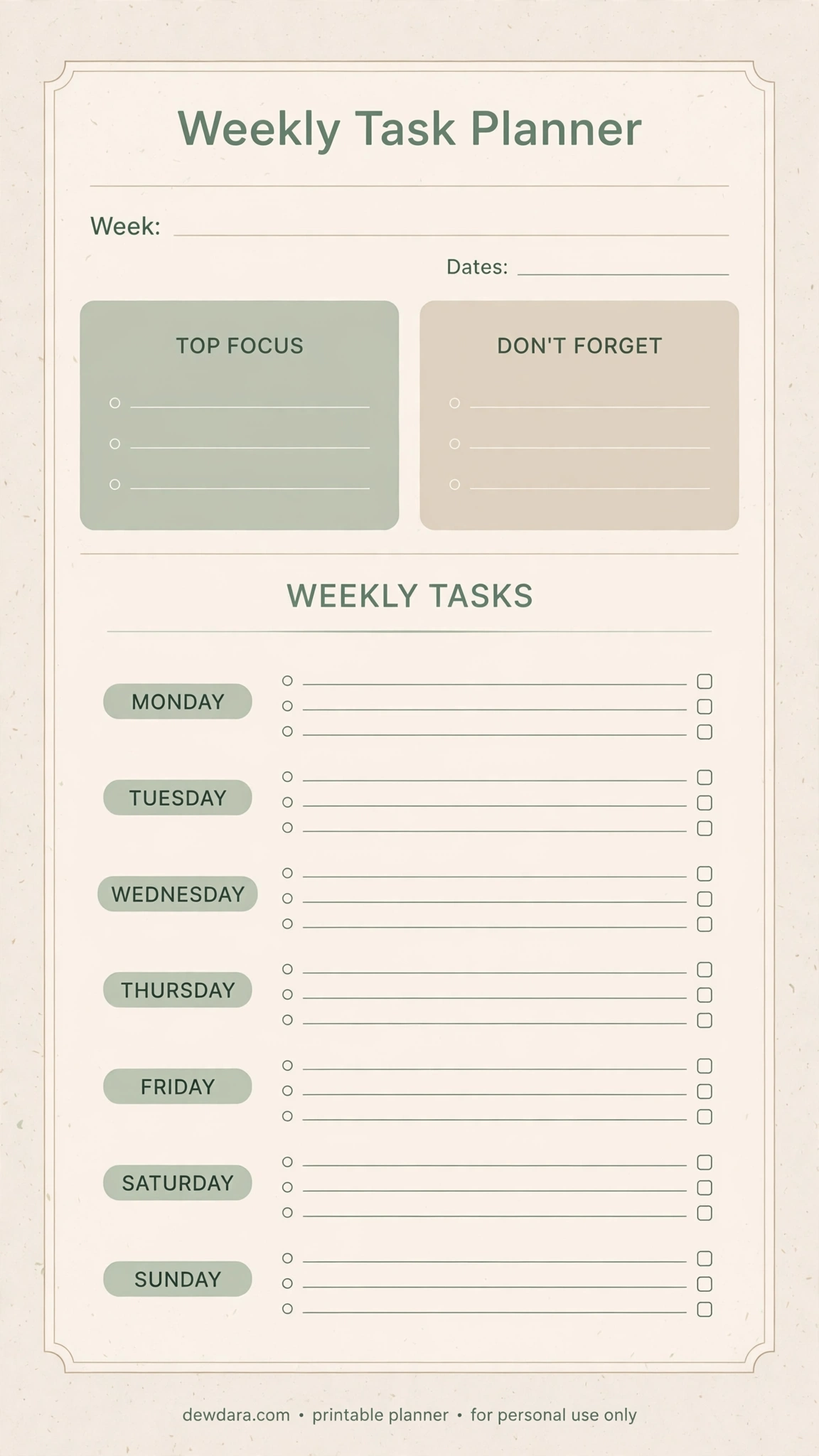
What it includes: Monday to Sunday task breakdown, Top Focus of the Week, Don’t Forget list.
How to use it: Every Sunday evening, map your week. Assign your 3 monthly goals to specific days. The “Top Focus” box should have one outcome that would make the week a success. The “Don’t Forget” section is for personal reminders, so your business tasks stay clean and actionable.
4. Product / Service Pricing Sheet
Most small businesses undercharge because they never calculate their real numbers.
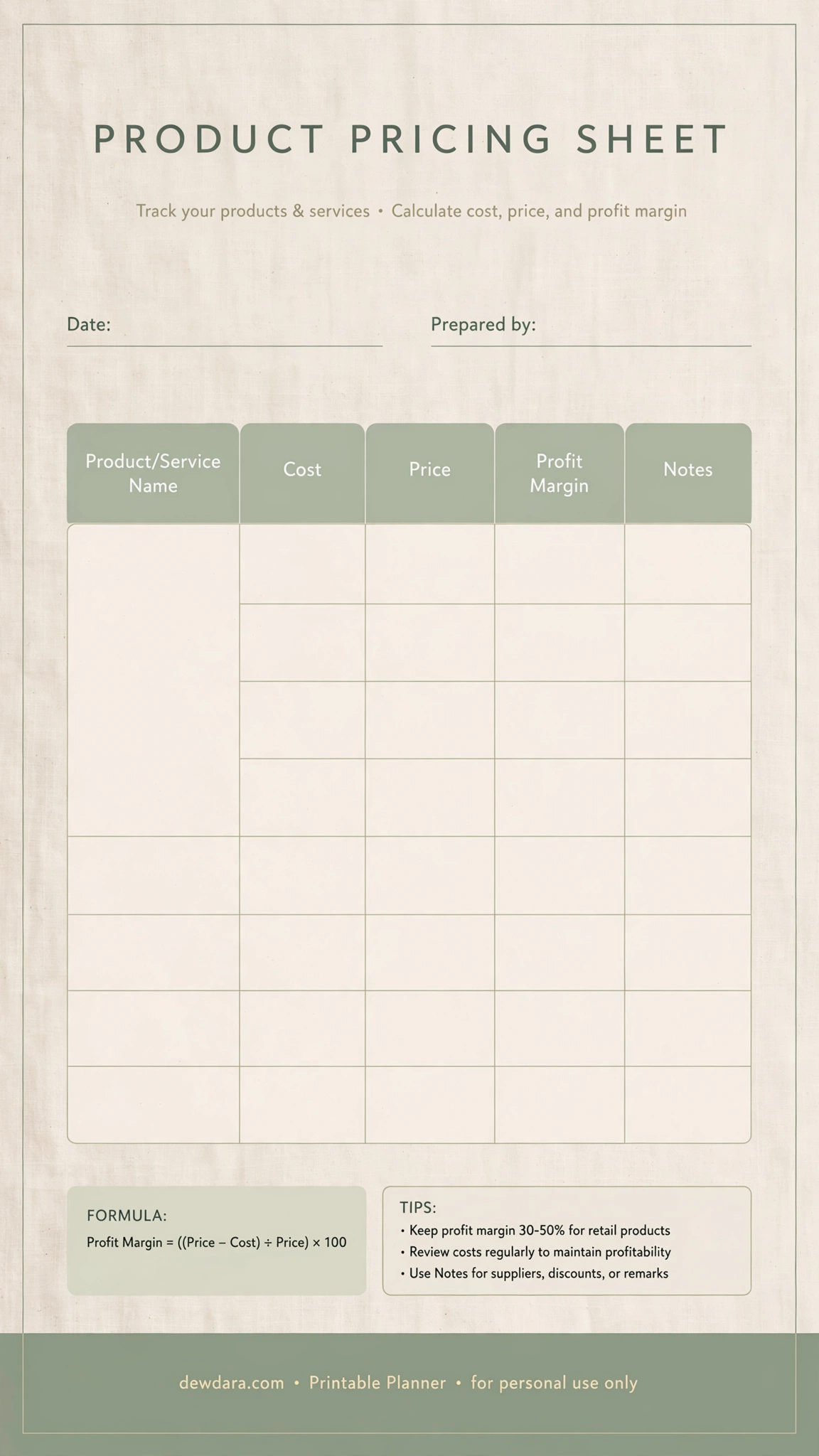
What it includes: Product/Service Name, Cost, Selling Price, Profit Margin, Notes.
How to use it: List every offer you have. Be honest about your true cost — materials, time, shipping, platform fees. Then set a price that gives you a healthy profit margin. This sheet is essential for spotting which products are profitable and which are draining you.
5. Income & Expense Tracker
Cash flow is the heartbeat of your business. If you don’t track it, you can’t grow it.
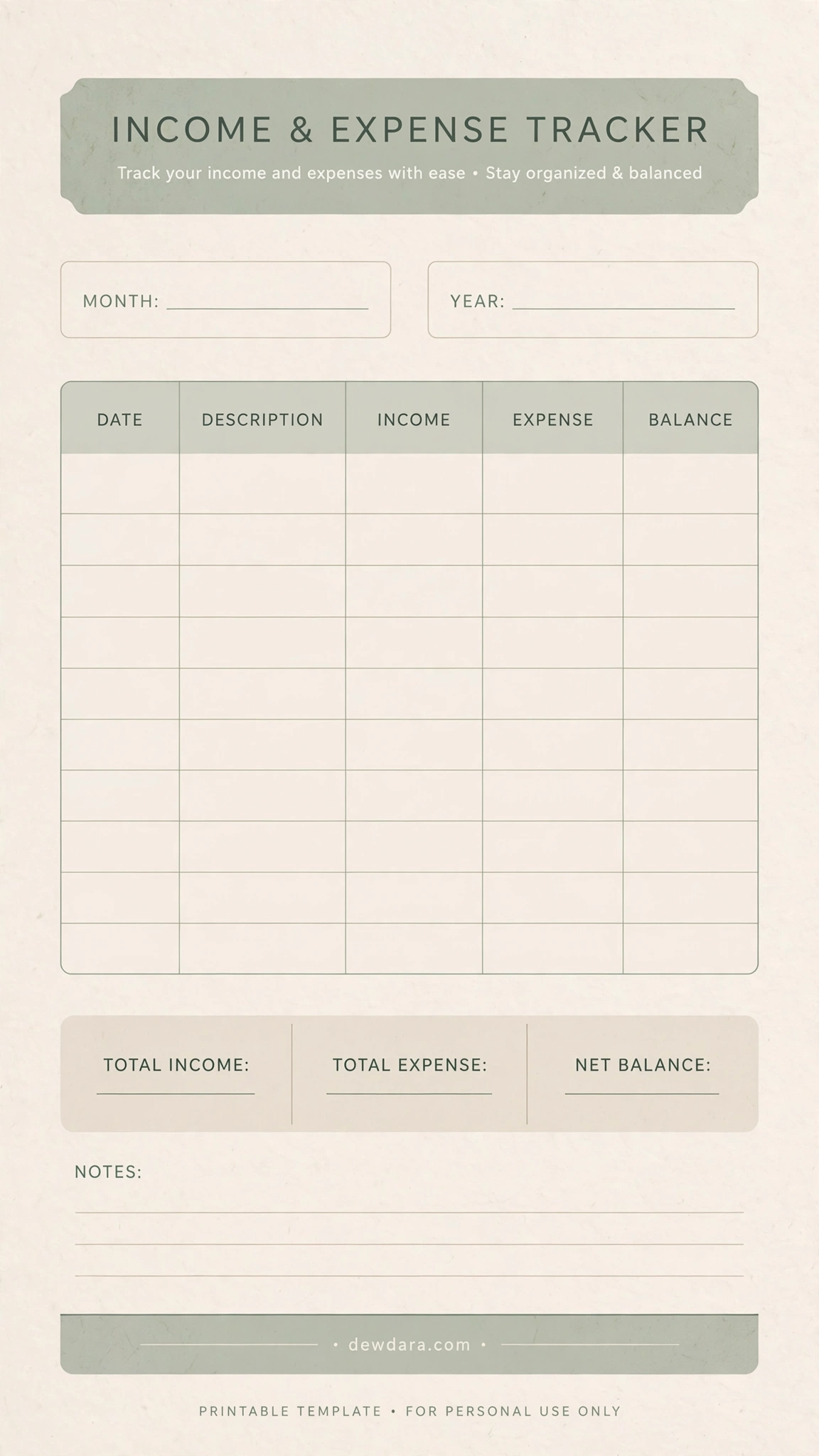
What it includes: Date, Description, Income, Expense, Balance, Monthly summary.
How to use it: Print one for each month. Record income and expenses daily or twice a week. At the end of the month, total both columns. This printable makes tax season effortless and helps you see spending patterns instantly.
6. Marketing Content Calendar
Consistency beats virality. This calendar turns chaotic posting into a strategic plan.
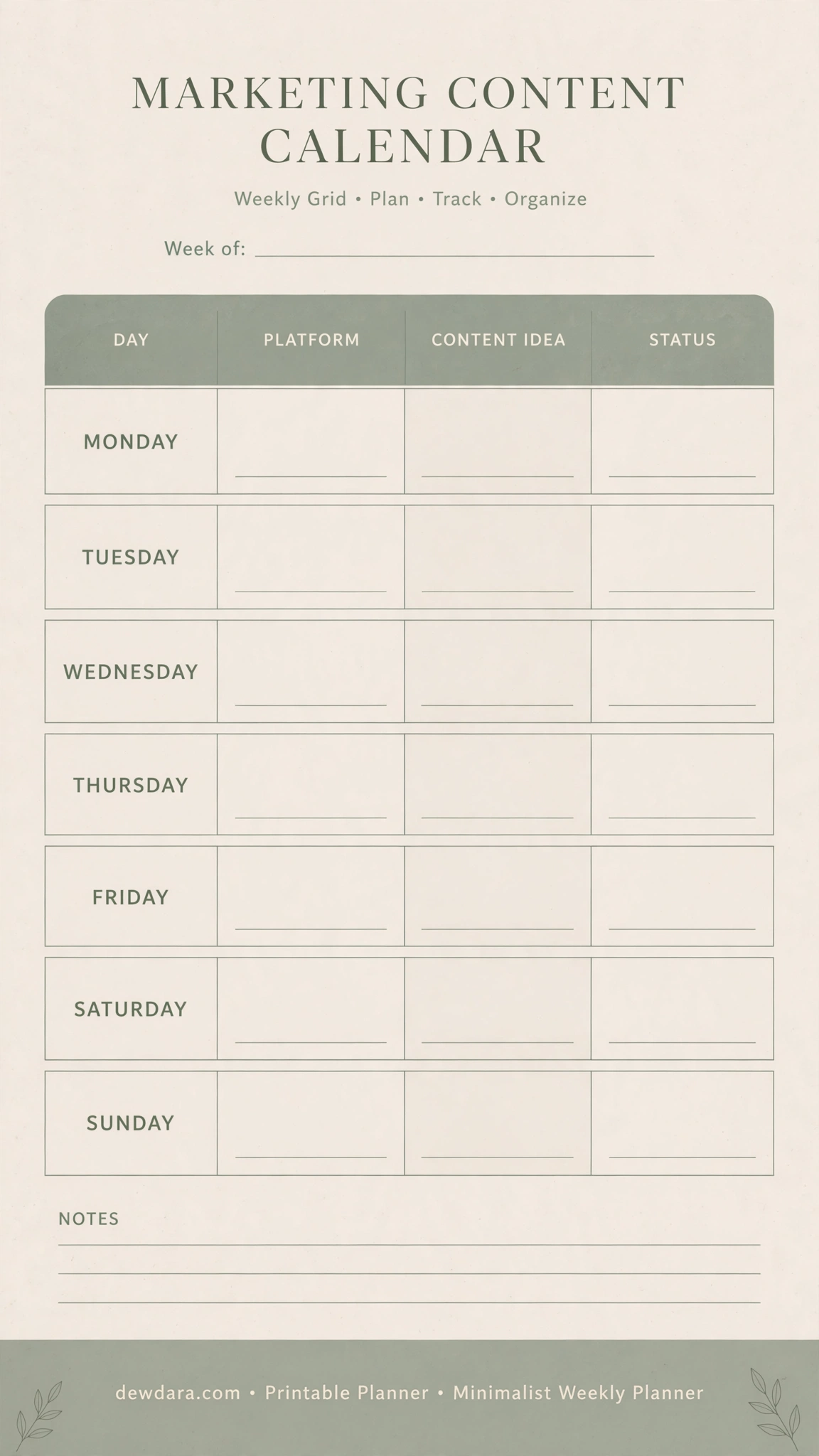
What it includes: Days of the week, Platform, Content Idea, Status, Call-to-Action.
How to use it: Plan your content one week in advance. Decide what you’ll post, where, and why. Check off the status as Draft, Scheduled, or Posted. When you batch-plan your content, you save hours and your marketing actually starts converting followers into customers.
7. Client / Customer Tracker
Happy clients become repeat clients — but only if you stay organized.
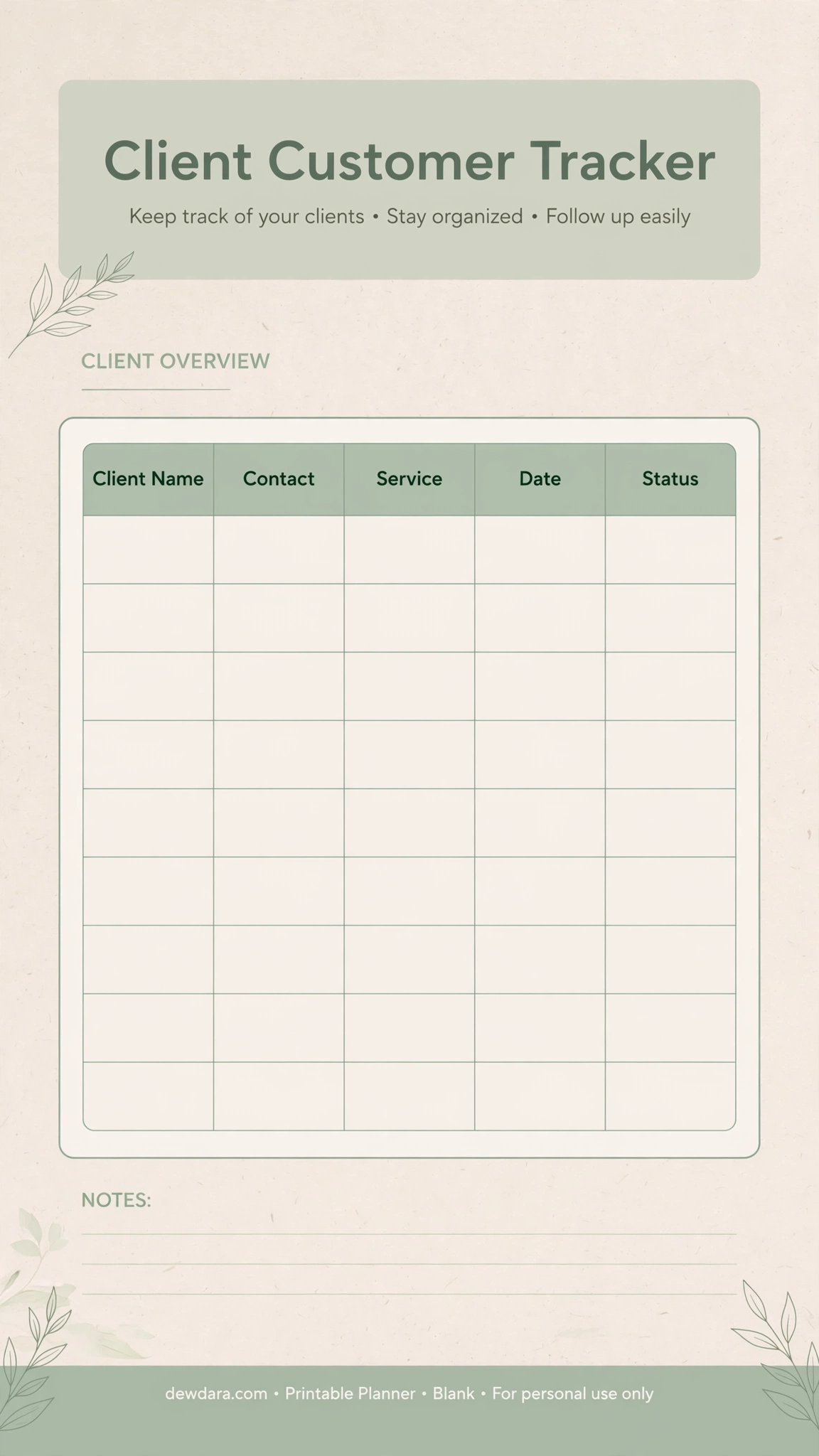
What it includes: Client Name, Contact Info, Service/Product, Date, Status, Follow-up Notes.
How to use it: Use this for service-based businesses, custom orders, or wholesale clients. Log every interaction. Note when to follow up, delivery dates, and client preferences. This single sheet improves your professionalism and customer retention dramatically.
8. Inventory & Orders Log
Never miss a sale because you ran out of stock, or lose money on dead inventory.
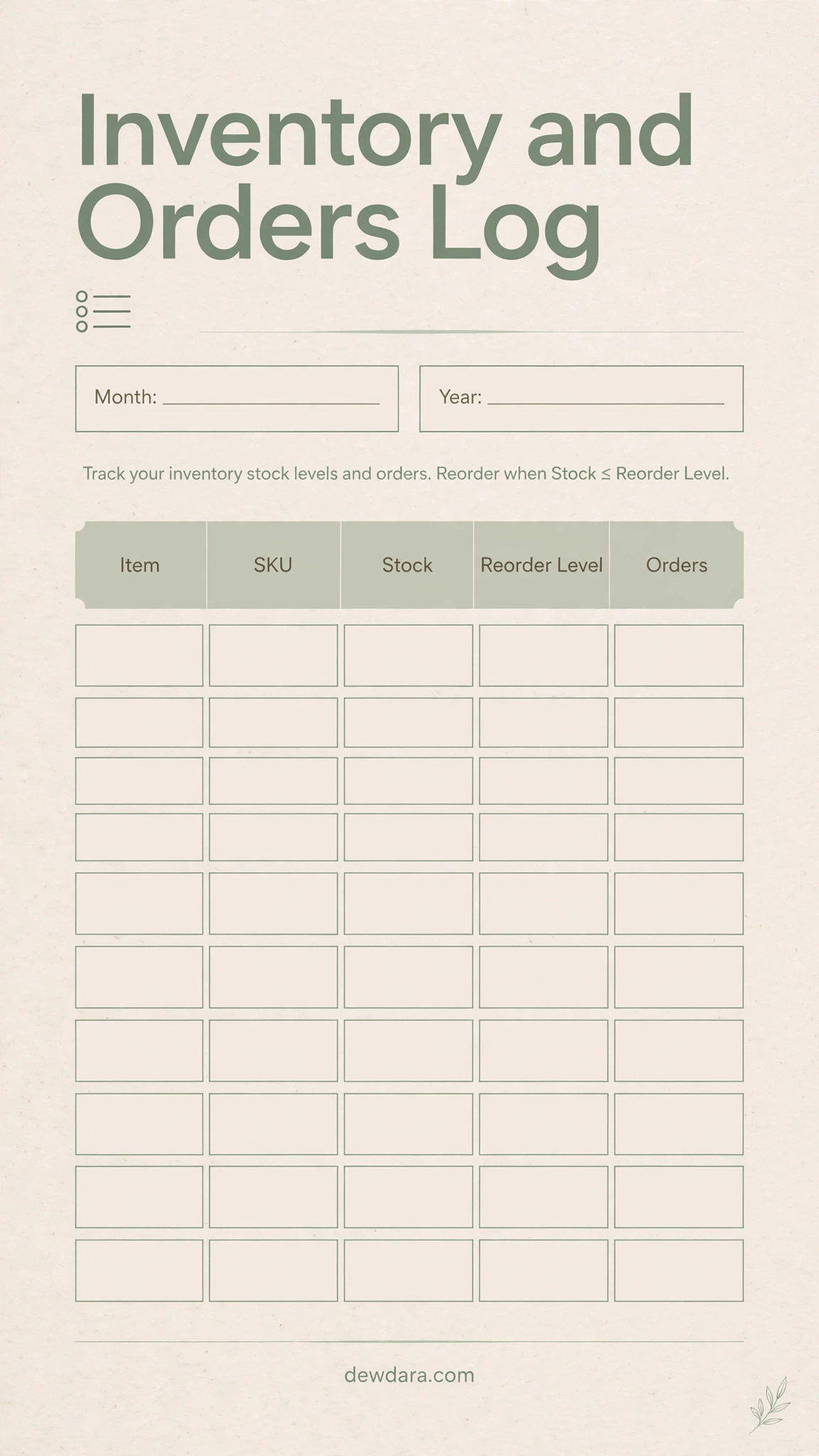
What it includes: Item Name, SKU, Current Stock, Reorder Level, Orders Received, Notes.
How to use it: Update this weekly. When your Stock hits your Reorder Level, it’s time to reorder. This is critical for product-based businesses, Etsy sellers, and boutiques. It also helps you identify your best-sellers at a glance.
9. Business Review & Reflection Planner
Growth requires reflection. The most successful entrepreneurs review what worked and what didn’t.
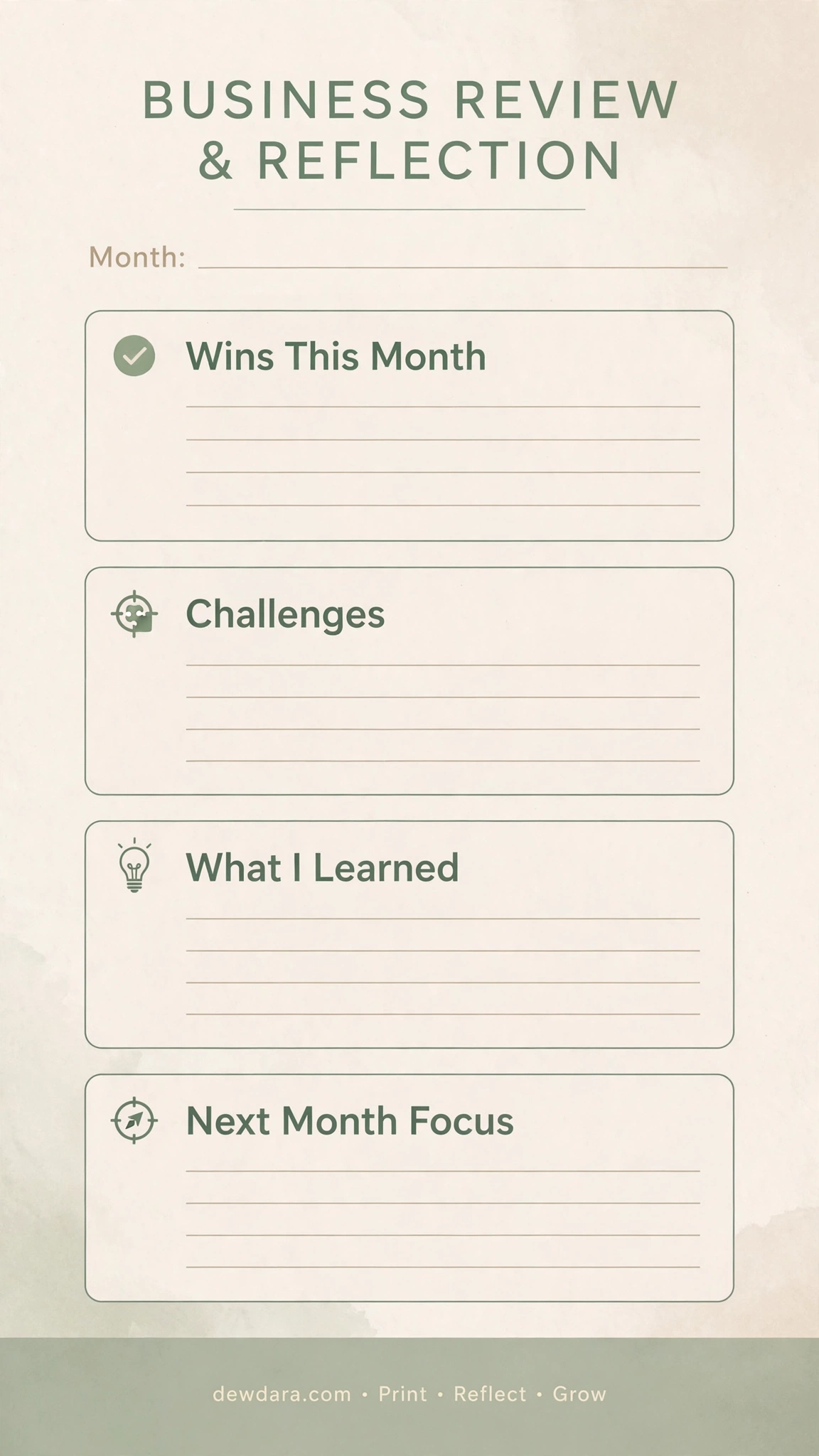
What it includes: Wins This Month, Challenges Faced, What I Learned, Next Month Focus.
How to use it: Fill this at the end of every month. Celebrate your wins — no matter how small. Be honest about challenges without judgment. Write one key lesson and one clear focus for next month. This habit alone will double your progress over a year.
Conclusion
You don’t need a complicated software system to run a successful small business. You need clear systems that you will actually use.
These 9 Small Business Planner Printables give you that system — from vision to daily tasks, from money to marketing, from inventory to growth.
Print your full set, place them in a binder or clipboard, and commit to using them for the next 30 days. You’ll notice less stress, more clarity, and more time to focus on what you love: growing your business.
All printables are designed by dewdara.com — blank, minimalist, and ready for your story.
Download them, print them, and start building the organized, profitable business you’ve been dreaming of.