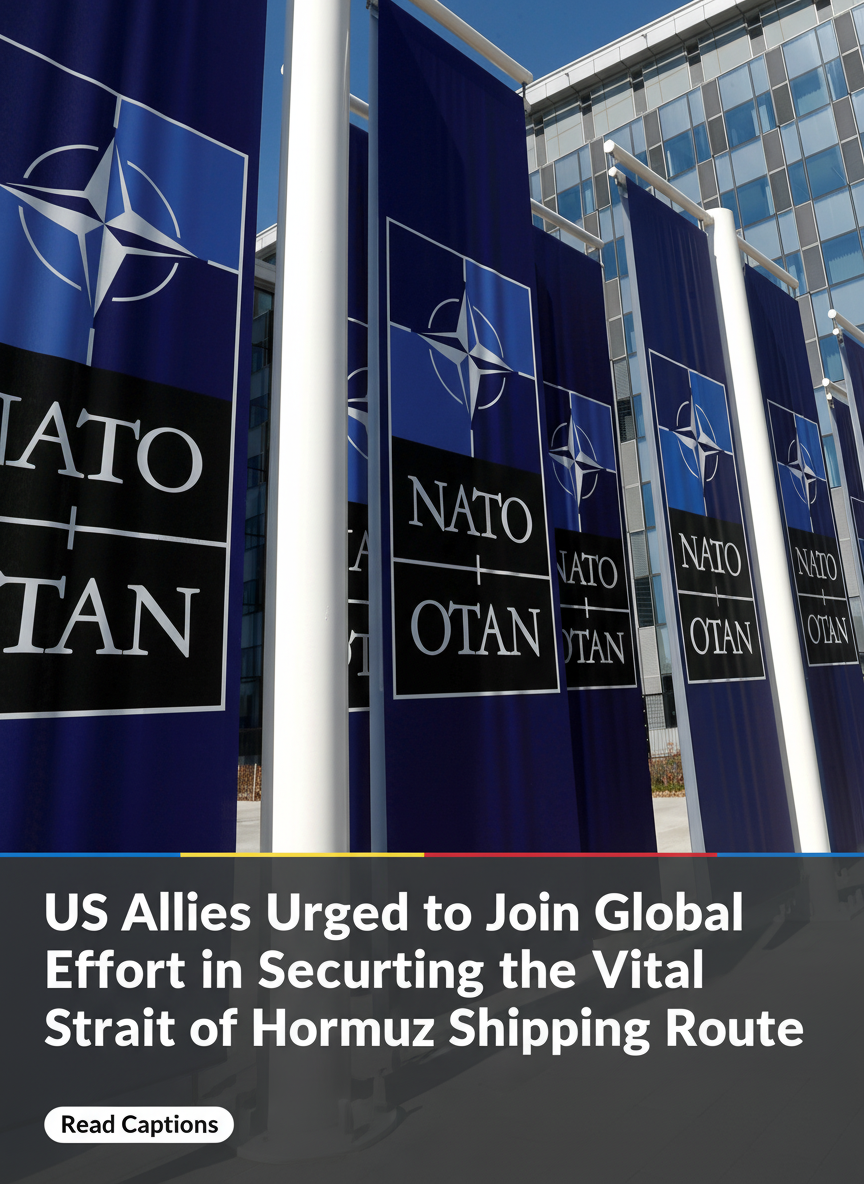
Crisis in the Strait: Pressure Mounts on US Allies to Join Maritime Security Coalition
WASHINGTON D.C. — As tensions in the Middle East reach a fever pitch, a growing chorus of defense experts and political analysts are calling for a “global response to a global crisis.” With the Strait of Hormuz—the world’s most vital energy artery—facing unprecedented threats to navigation, the United States is increasingly signaling that it cannot, and should not, bear the burden of maritime security alone.
A Choke Point Under Pressure
The Strait of Hormuz, a narrow waterway through which roughly one-fifth of the world’s oil consumption passes daily, has become a geopolitical flashpoint. Recent disruptions have sent shockwaves through global energy markets, threatening to destabilize an already fragile post-pandemic recovery. While the U.S. Navy’s Fifth Fleet has historically served as the primary guarantor of passage in the region, the scale of the current threat has outpaced the capacity of any single nation to manage it indefinitely.
The “Free Rider” Debate Re-emerges
The central tension lies in the perceived inaction of key U.S. allies, specifically Germany and the United Kingdom. Critics argue that while European economies are among the most vulnerable to spikes in energy prices and supply chain disruptions, their military and logistical contributions to securing the Strait have remained disproportionately low.
“This is a global problem, if ever there was one,” noted a recent editorial highlighting the disparity in maritime responsibility. The sentiment in Washington suggests that the era of “strategic patience” regarding allied contributions is coming to an end. For the U.S., the expectation is clear: if the benefits of open sea lanes are shared globally, the costs of defending them must be shared as well.
Economic Implications of Inaction
The stakes extend far beyond military posturing. Economists warn that a prolonged closure or significant restriction of the Strait could lead to a catastrophic surge in oil prices, potentially exceeding $150 per barrel. Such a scenario would trigger localized inflation across Europe and Asia, hitting manufacturing hubs in Germany and consumer markets in the UK particularly hard.
By failing to provide naval escorts or minesweeping capabilities, allies are effectively “gambling with their own economic sovereignty,” according to regional analysts. The U.S. is now pushing for a formal coalition—Operation Sentinel 2.0—to ensure that commercial vessels can navigate the waterway without fear of seizure or attack.
A Call for Global Solidarity
Military leaders emphasize that “stepping up” does not necessarily mean a full-scale deployment of carrier strike groups. Instead, it involves a coordinated effort of intelligence sharing, logistical support, and the presence of frigates and destroyers from a diverse array of nations. This international presence would serve as a powerful deterrent against regional aggressors looking to weaponize energy flows.
Conclusion: A Decisive Moment for NATO and Beyond
The situation in the Strait of Hormuz is a litmus test for the modern international order. As the U.S. continues to pivot its strategic focus toward the Indo-Pacific, the reliance on traditional allies to maintain stability in the Middle East has never been greater. The message from Washington is increasingly blunt: it is time for the UK, Germany, and other global stakeholders to “get a grip” on the reality of the threat and contribute to a unified maritime front. The alternative—a fractured response—may leave the world’s economy at the mercy of those who seek to use the Strait as a tool of extortion.