The Complete System to Plan, Track & Achieve
Every successful business starts with clarity. Not just big ideas, but clear, written goals that turn vision into action.
If you’ve ever felt overwhelmed by everything you need to do, you’re not alone. Most entrepreneurs know what they want – more revenue, more customers, more freedom – but struggle to organize it into a plan that actually gets done.
This printable bundle of 9 Business Goals Worksheets was designed to solve exactly that. It’s a complete goal-setting system that takes you from your big annual vision down to your daily priorities, with dedicated space for money, marketing, products, and reflection.
All worksheets are blank, unfilled, and ready to print in high-quality 9:16 vertical format. Each one is branded for dewdara.com and designed with a clean, minimalist aesthetic that keeps you focused.
Let’s walk through each worksheet and how to use it.
1. The Master 9 Business Goals Worksheet
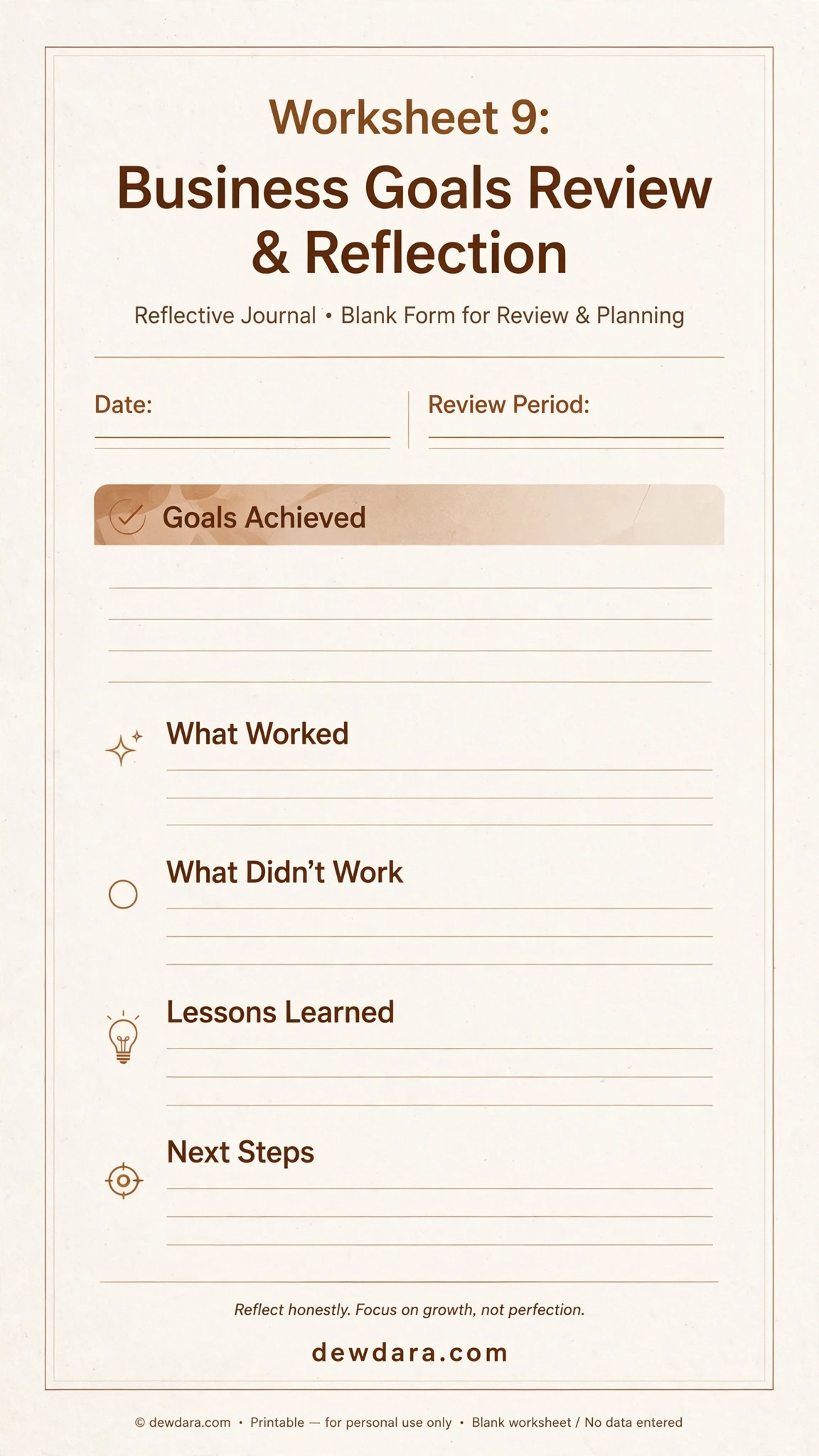
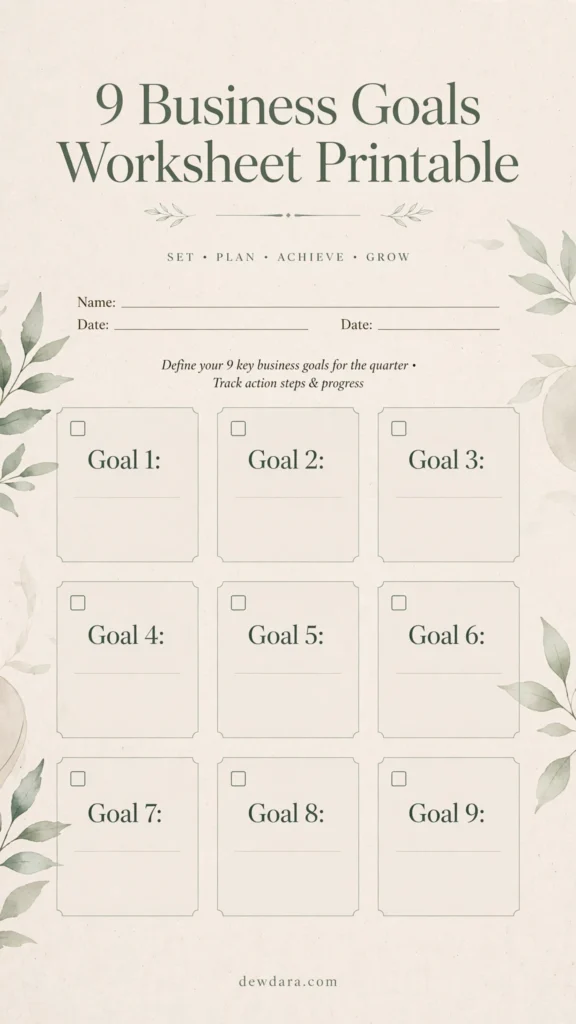
This is your central dashboard. This worksheet gives you 9 clean, dedicated boxes to define your 9 most important business goals for the quarter or year.
How to use it: Don’t try to fill all 9 at once with random tasks. Think in categories: 2-3 revenue goals, 2-3 growth goals, 2-3 operational goals, and 1-2 personal development goals as a CEO. Write each goal as a clear outcome, not a to-do. For example, instead of “post more on Instagram,” write “Grow Instagram audience to 10K engaged followers by Q2.” Use the checkboxes to track completion and review it weekly on your desk or wall.
2. Annual Business Vision & Goals
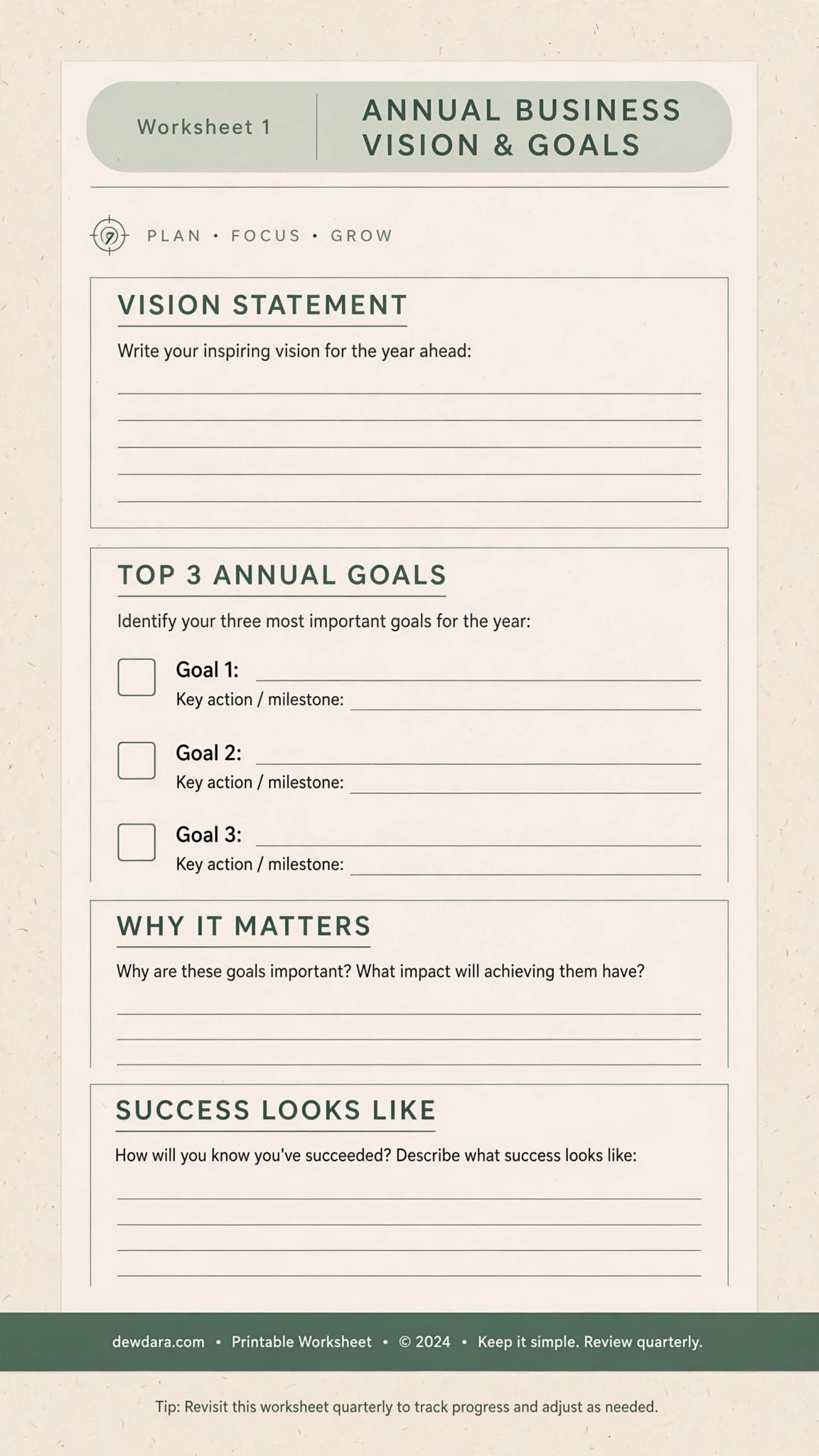
Before you set goals, you need vision. This worksheet forces you to zoom out and define what success actually looks like in the next 12 months.
How to use it: Start with the Vision Statement at the top – one powerful sentence describing your business in 12 months. Then list your Top 3 Annual Goals. The two most important prompts are “Why It Matters” and “Success Looks Like” – this is where motivation and measurement live. Be brutally honest. If you can’t articulate why a goal matters, it’s not the right goal. Keep this sheet visible all year.
3. SMART Goals Framework
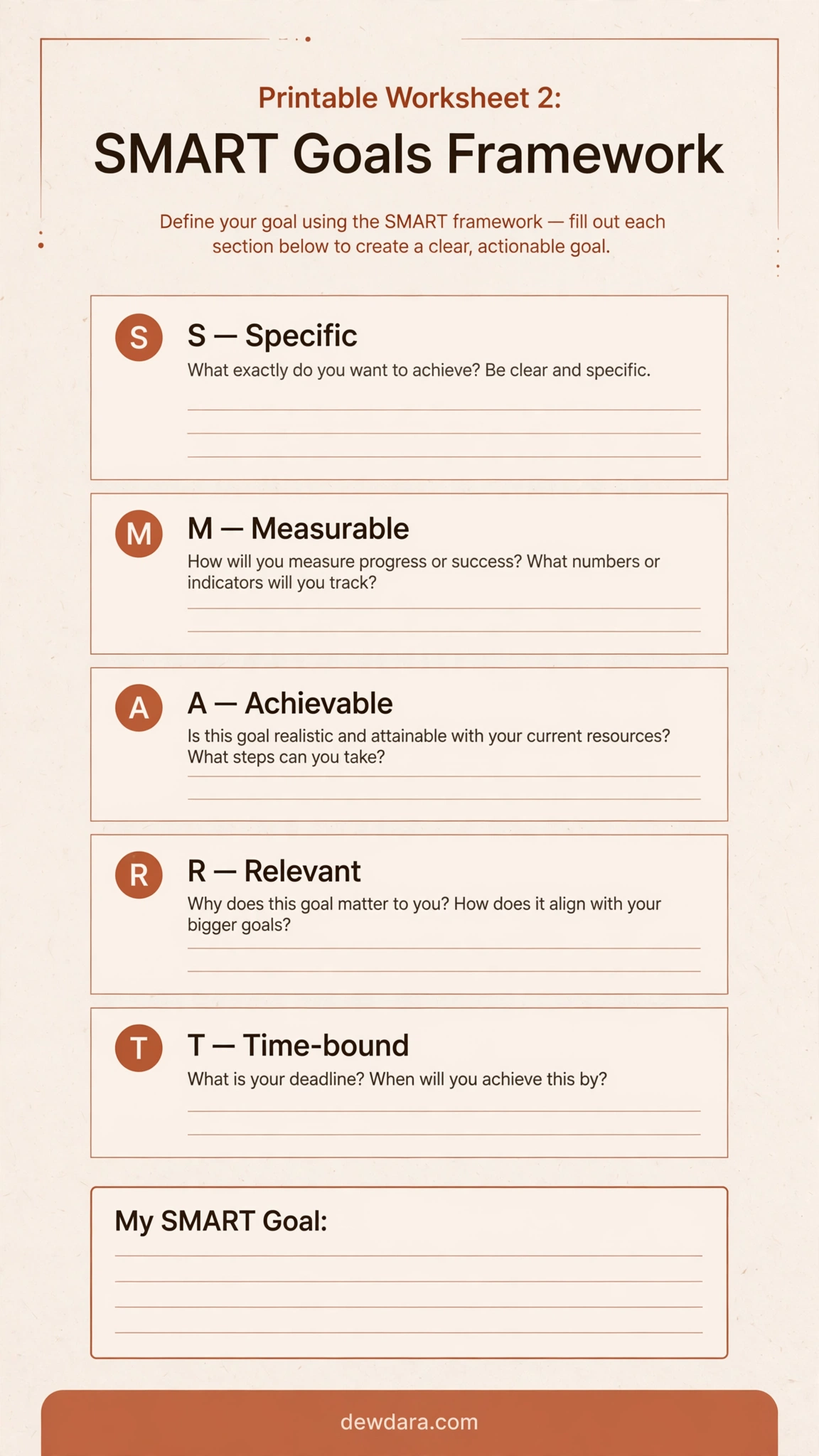
A goal without a structure is just a wish. The SMART framework is the gold standard for making goals achievable.
How to use it: Take one big goal from Worksheet 1 and run it through this filter. Specific: What exactly will you do? Measurable: What number will prove you did it? Achievable: Is this realistic with your current resources? Relevant: Does this align with your annual vision? Time-bound: What is the exact deadline? If a goal fails any of these five checks, rewrite it until it passes. Use one sheet per major goal.
4. Quarterly Goal Breakdown
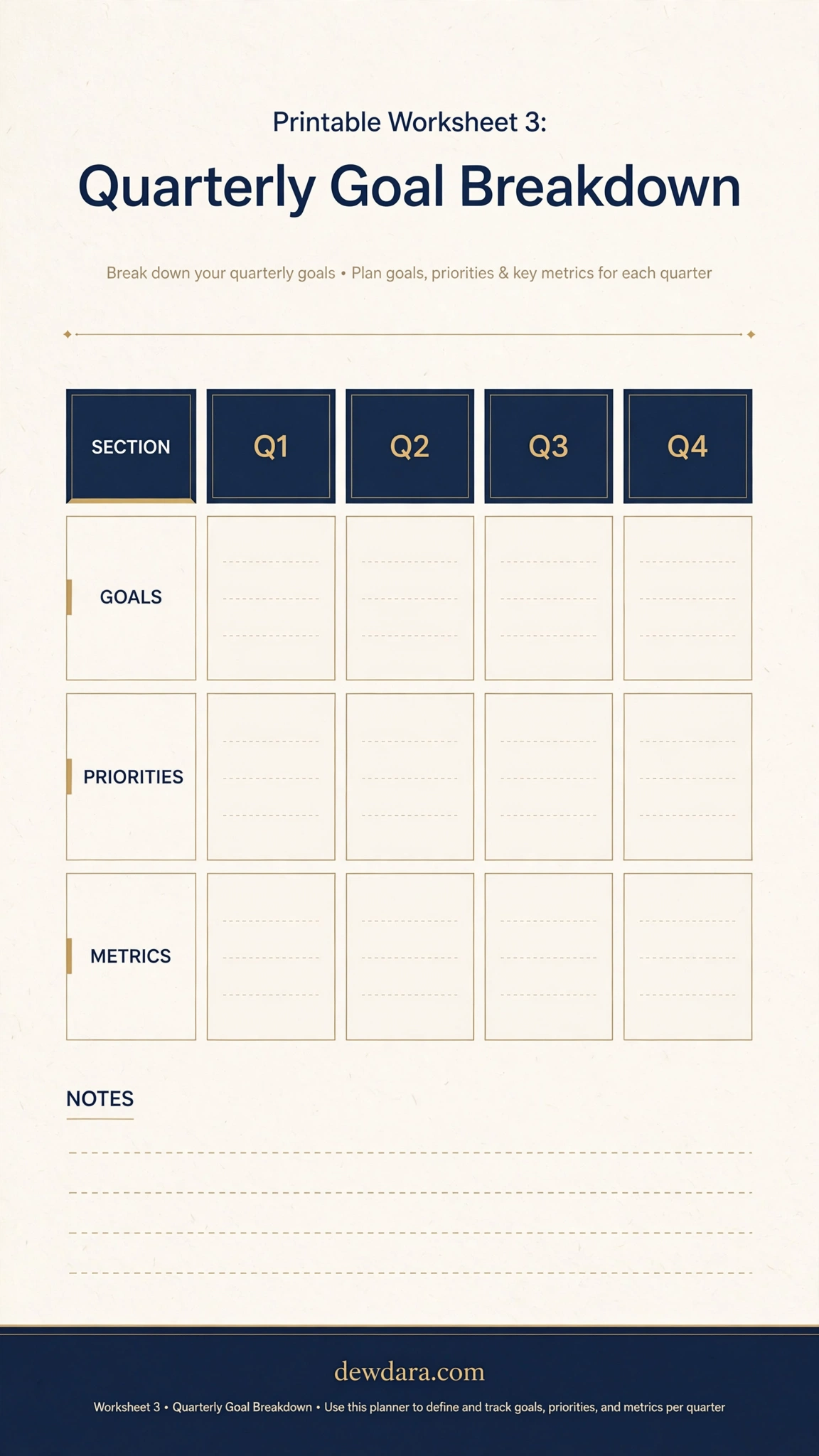
Annual goals fail because the timeline is too long. Quarterly planning creates urgency and focus.
How to use it: This table layout is built for strategic pacing. Map out your four quarters at once. Under GOALS, write your primary objective for Q1, Q2, Q3, and Q4. Under PRIORITIES, list the 2-3 things you must focus on to achieve that goal. Under METRICS, define the KPI you will track. This worksheet prevents you from trying to do everything in Q1 and gives you a realistic 90-day roadmap.
5. Monthly Action Plan
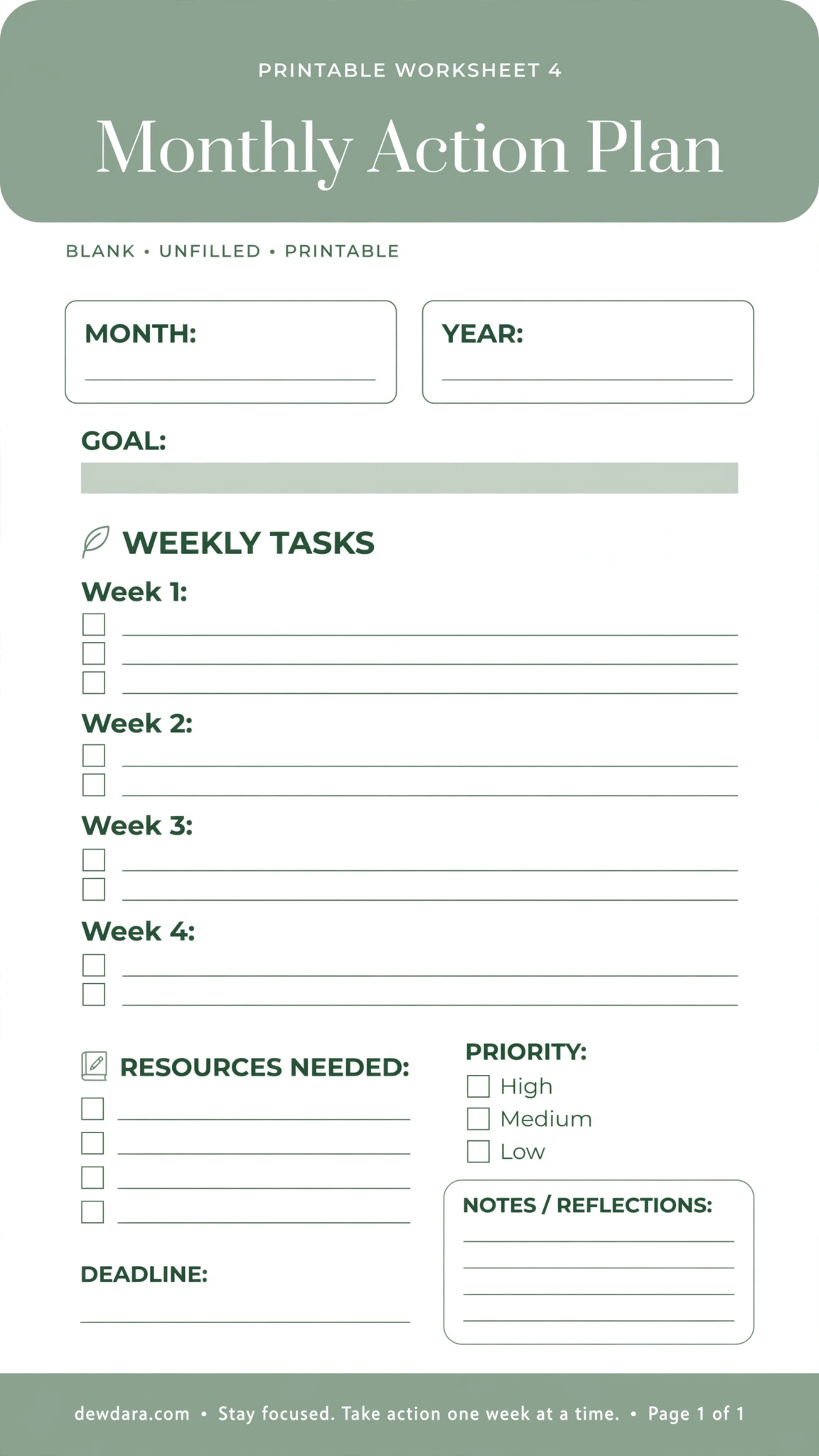
This is where strategy becomes execution. A monthly plan bridges the gap between quarterly goals and weekly tasks.
How to use it: At the start of each month, pick ONE primary goal from your quarterly sheet. Break it into four weekly sprints. The Weekly Tasks section is intentionally small – only 3 tasks per week – to force prioritization. Fill out Resources Needed (tools, budget, people), set your Priority level, and lock in a hard Deadline. This is your accountability contract for the month.
6. Weekly Focus Goals
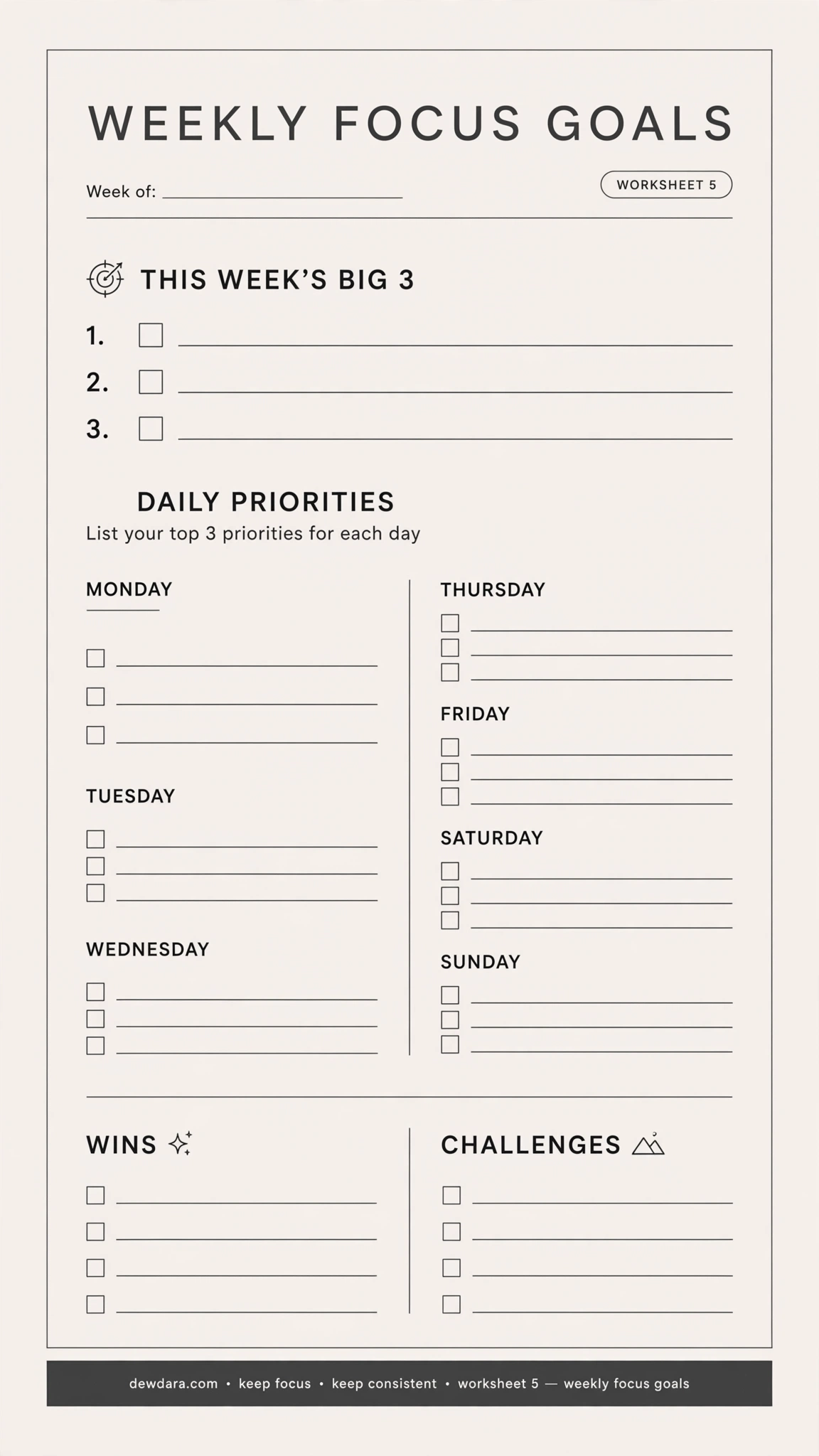
Productivity isn’t about doing more. It’s about doing the right 3 things each week.
How to use it: Every Monday morning, use this sheet. Write down This Week’s Big 3 – if you only accomplished these three things, the week would still be a win. Then distribute supporting tasks across Monday to Sunday. The bottom section for Wins and Challenges is critical; it builds momentum and helps you spot patterns in what’s blocking you. Print 52 of these for the whole year.
7. Revenue & Profit Goals
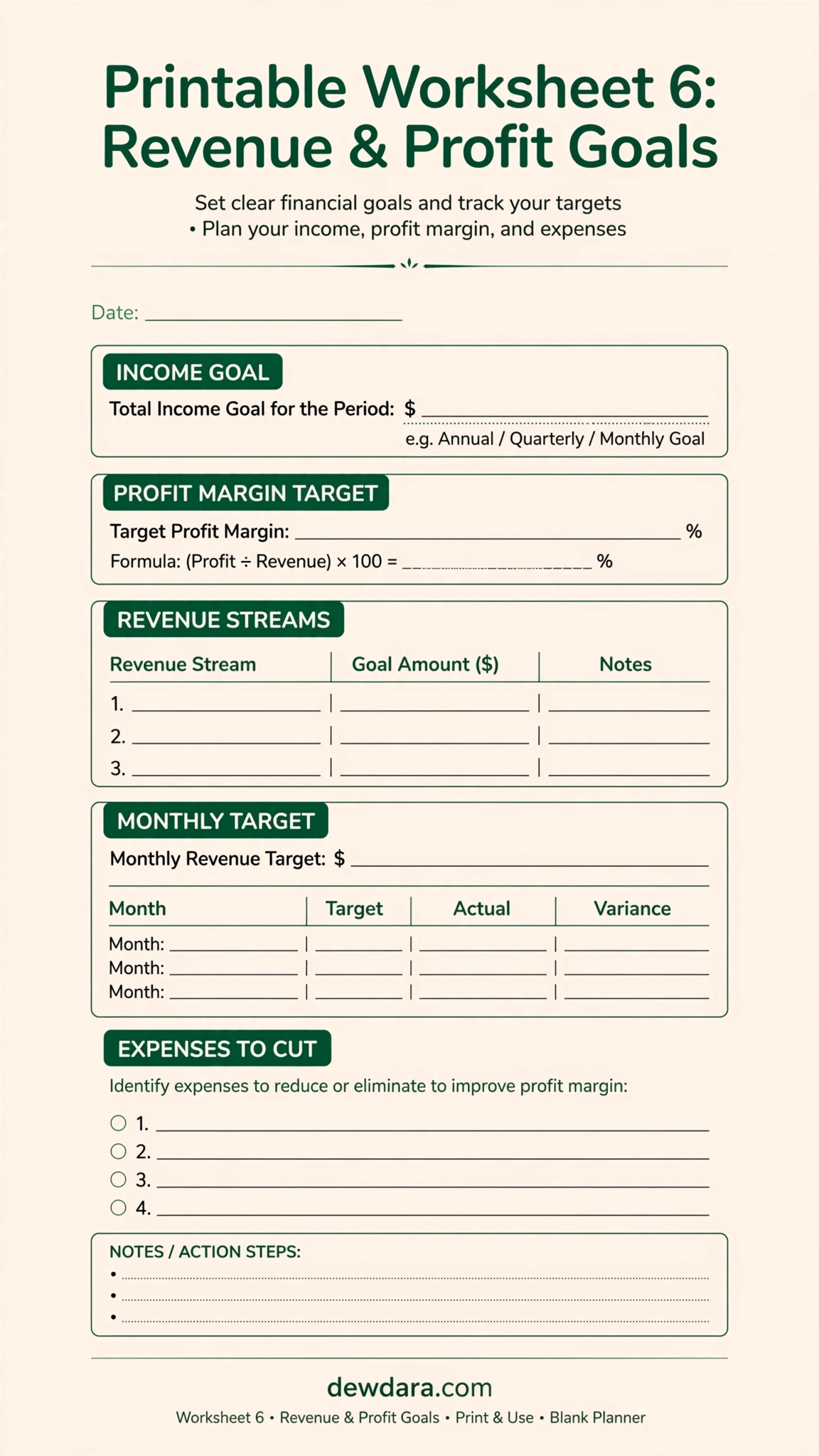
Loving your business is important, but your business must also love you back financially.
How to use it: This worksheet gets specific about money. Define your Income Goal and your desired Profit Margin Target – not just revenue. List every Revenue Stream you currently have or plan to create. Break it down into a Monthly Target so the big number feels less scary. The Expenses to Cut section is powerful; growth isn’t just about earning more, it’s about keeping more. Review this with your bookkeeping every month.
8. Marketing & Growth Goals
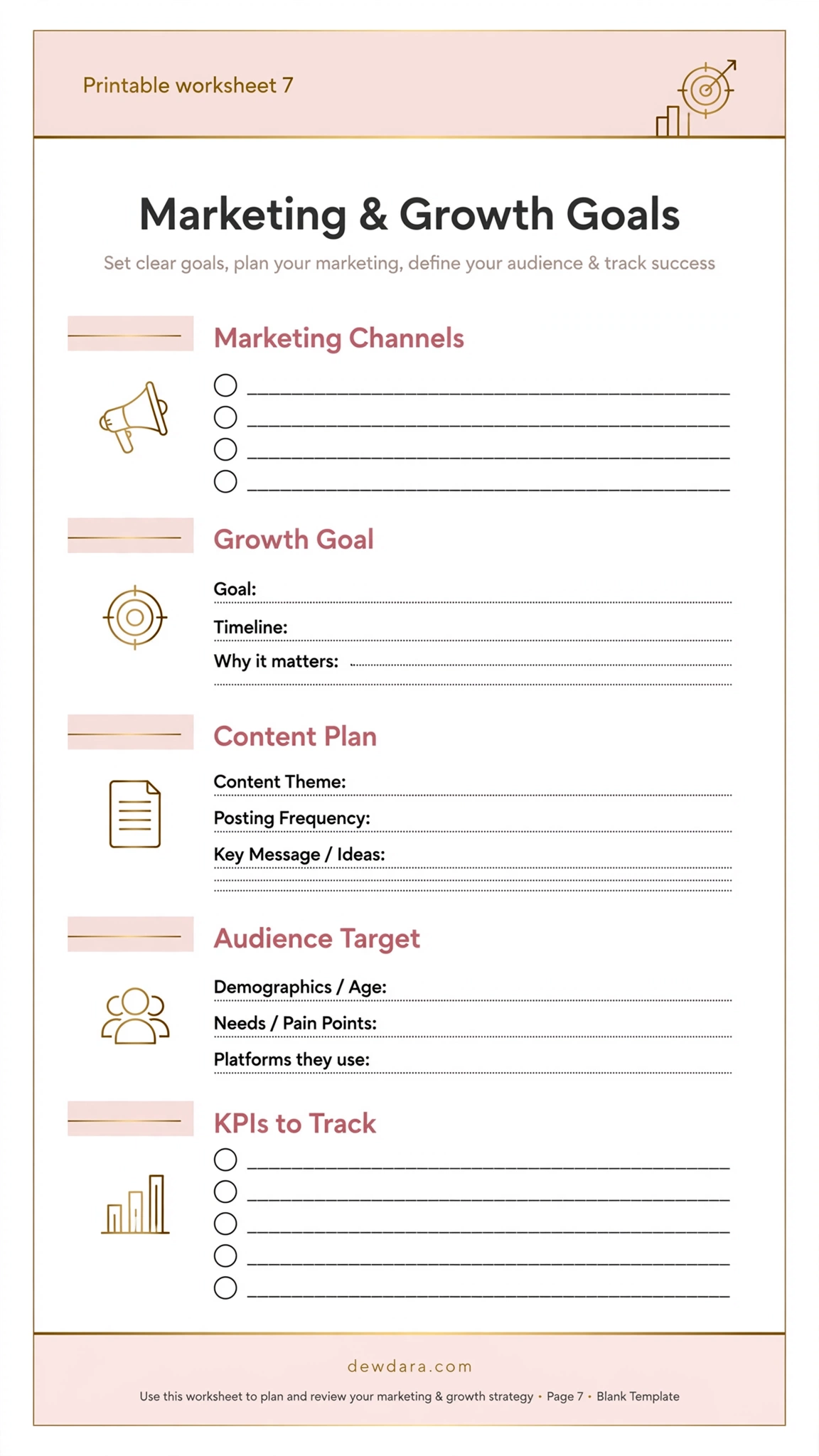
No marketing, no business. This sheet turns vague ideas like “get more visible” into a measurable growth engine.
How to use it: Identify 2-3 Marketing Channels you will actually commit to – don’t try to be everywhere. Define one clear Growth Goal (e.g., 500 email subscribers, 30% increase in website traffic). Outline your Content Plan for the month, your specific Audience Target, and the KPIs to Track (CTR, conversion rate, engagement rate). This stops random posting and starts intentional growth.
9. Product / Service Goals
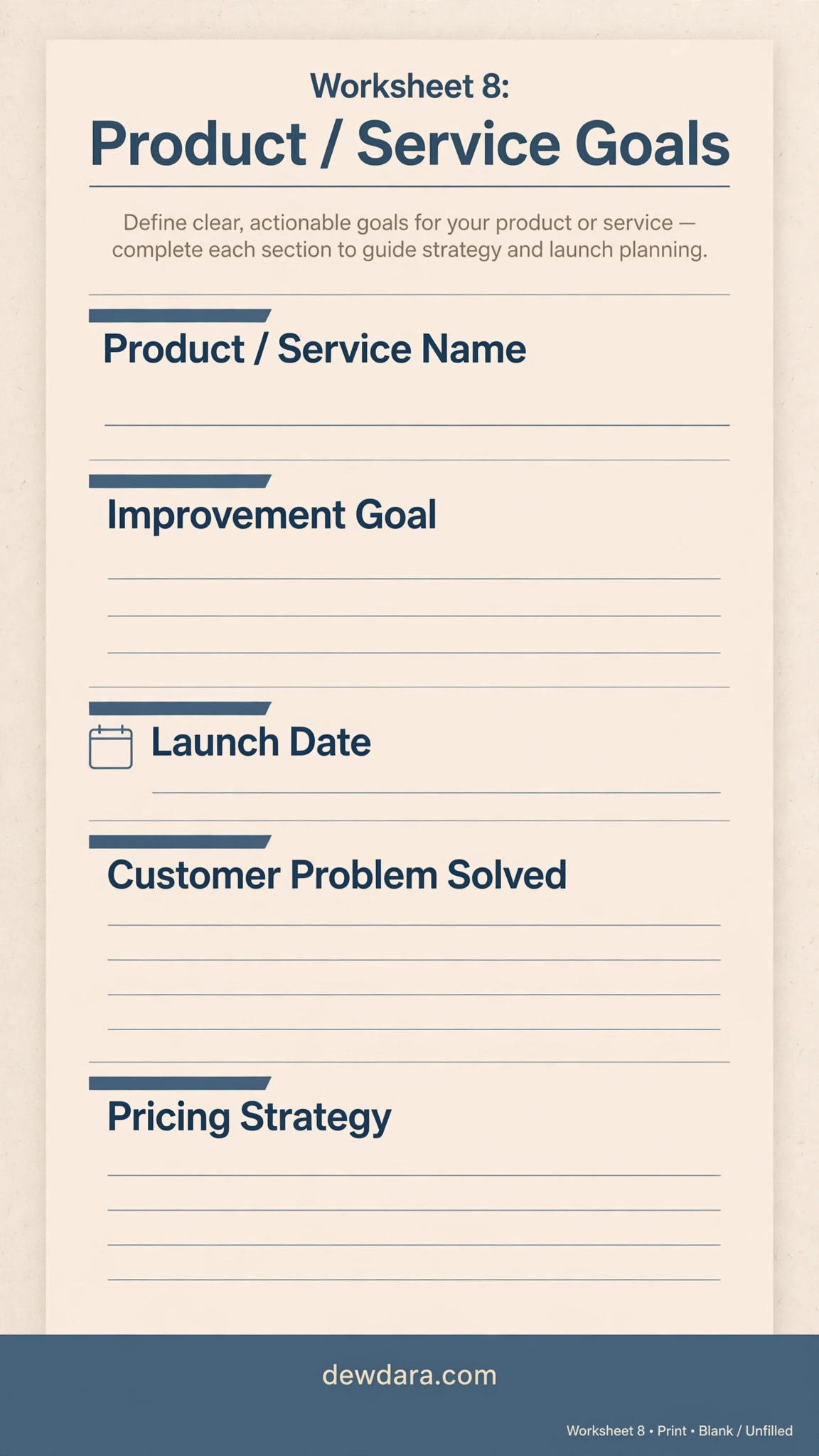
Your offer is the heart of your business. It needs its own goals for improvement and innovation.
How to use it: Use one sheet per product or service. What is the Improvement Goal? Is it to raise quality, lower delivery time, increase testimonials, or update pricing? Define the Launch Date if it’s new, articulate the Customer Problem Solved in one clear sentence, and finalize your Pricing Strategy. This worksheet is perfect before any launch, rebrand, or price increase.
Conclusion: How to Use Your Complete System
You don’t need 100 planners. You need one clear system that you actually use.
Here is the recommended flow:
Once a year: Start with Worksheet 2 (Annual Vision)
Each quarter: Fill Worksheet 4 (Quarterly Breakdown) + Worksheet 1 (Master 9 Goals)
For each major goal: Use Worksheet 3 (SMART) to validate it
Each month: Use Worksheet 5 (Monthly Action), 7 (Revenue), 8 (Marketing), and 9 (Product)
Each week: Use Worksheet 6 (Weekly Focus) every Monday
Print the entire bundle, hole-punch it, and put it in a binder or clipboard. Keep it on your desk, not in a drawer. The act of writing by hand creates commitment that digital tools can’t replicate.
All worksheets are designed to be ink-friendly, minimalist, and completely blank – ready for your vision.
You can download, print, and reuse them as many times as you need.
Designed by dewdara.com – Set. Plan. Achieve. Grow.