11 Travel Budget Printables to Plan Your Dream Trip Without Stress
Travel should feel exciting, not overwhelming. The biggest source of travel stress isn’t packing or planning itineraries – it’s money. Without a clear budget, costs sneak up fast and leave you anxious mid-trip.
These 11 minimalist travel budget printables are designed to give you total control over your finances before, during, and after your trip. Each sheet focuses on one specific part of your travel spending, so you can estimate accurately, track in real-time, and come home without debt or regret.
All printables are clean, aesthetic, and printer-friendly. They are intentionally left blank so you can reuse them for every destination. Save them, print them, or use them digitally on your tablet.
Let’s break down exactly how to use each one.
1. Overall Trip Budget Planner
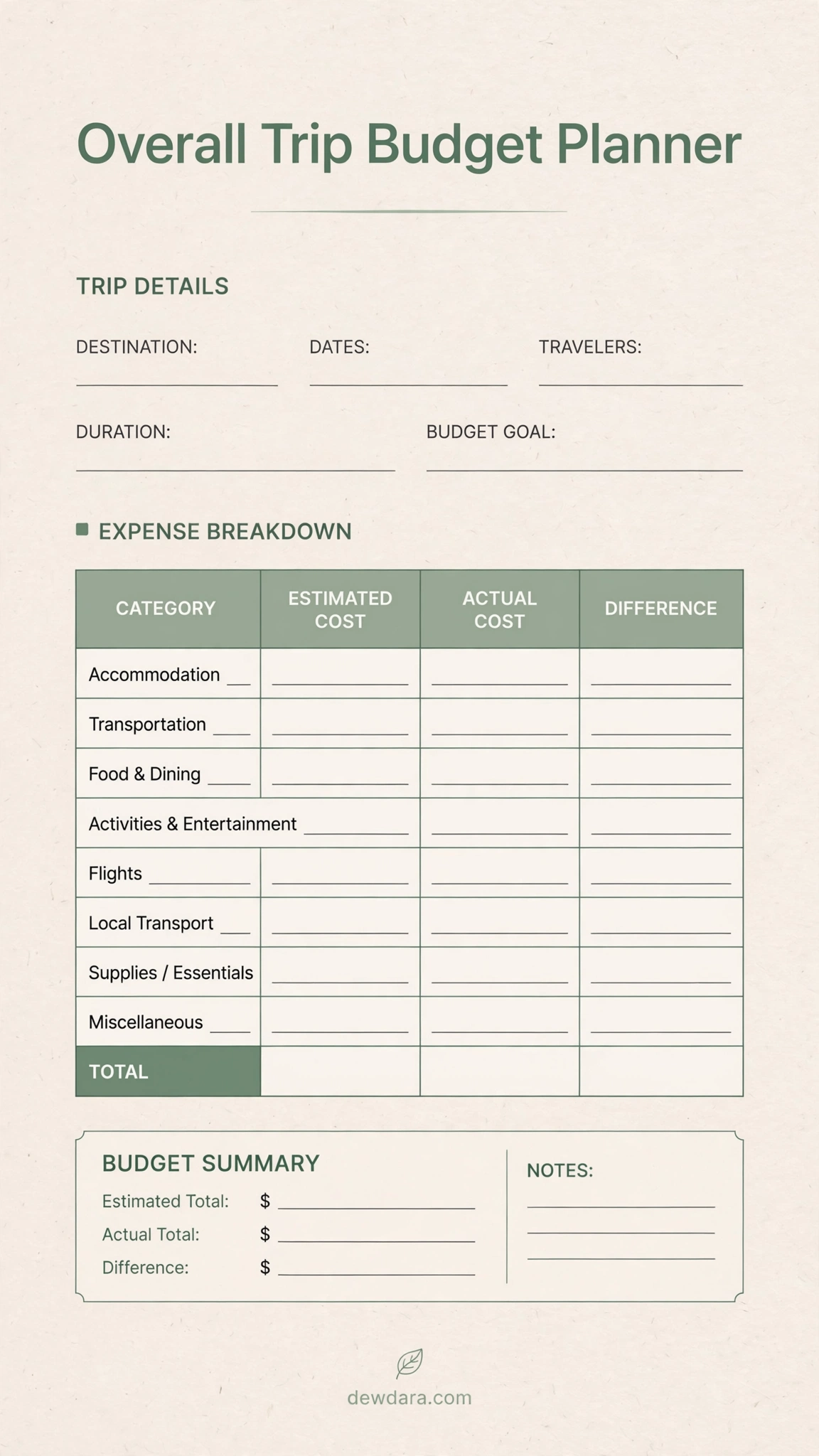
This is your master control sheet. Think of it as the bird’s-eye view of your entire trip finances.
What it includes: Categories like Transportation, Accommodation, Food, Activities, Shopping, and Emergency Fund with columns for Estimated Cost, Actual Cost, and Difference.
Why you need it: It prevents you from under-budgeting one category and over-spending in another. You can see instantly where your money is going.
How to use it: Start here. Fill in your estimated total budget at the top, then allocate amounts to each category. As you book and spend, fill in the Actual Cost. The Difference column tells you if you are saving or overspending, allowing you to adjust in real-time.
2. Daily Expense Tracker
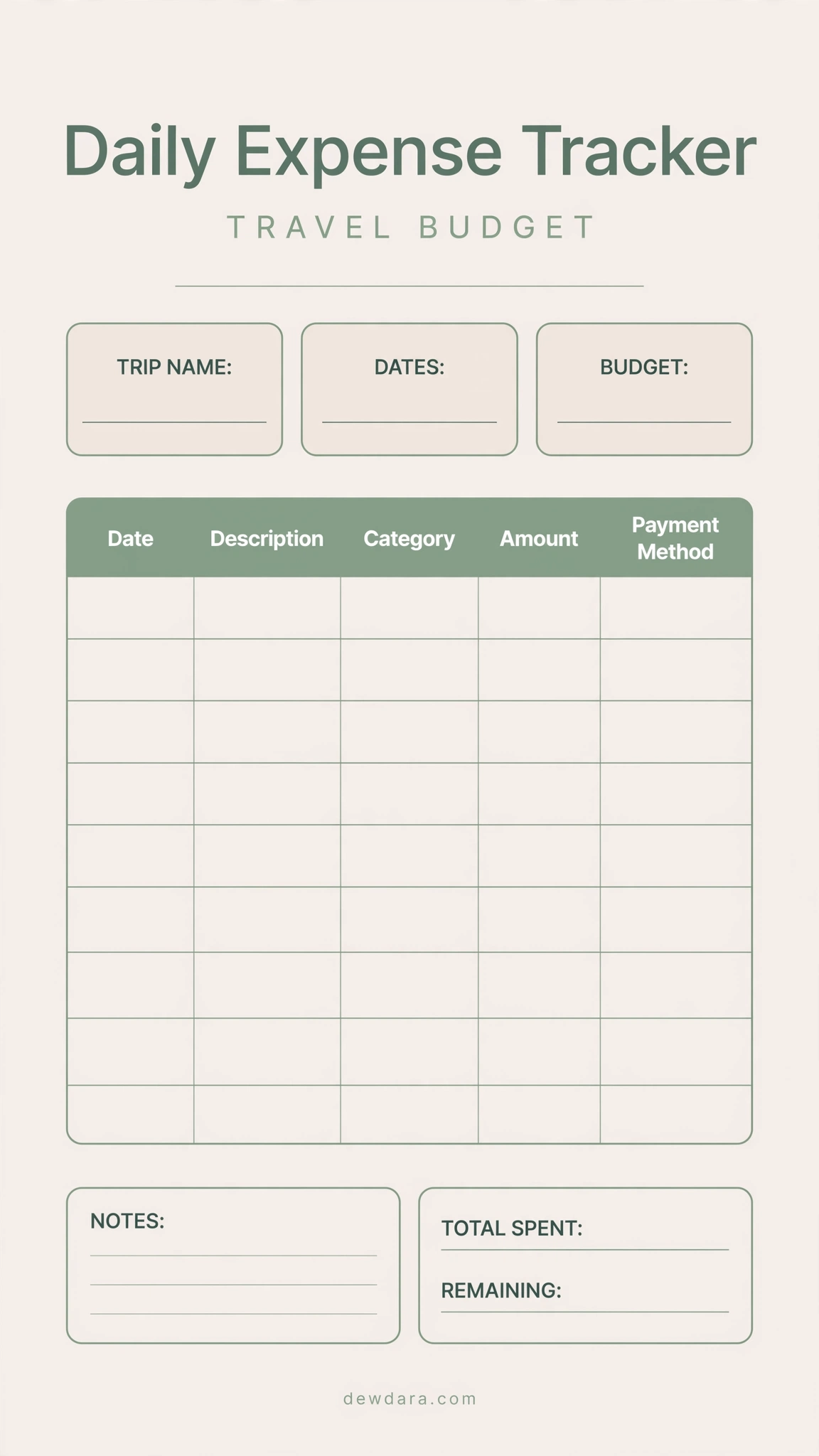
The daily tracker is where your budget stays honest. Big plans fail without daily discipline.
What it includes: Date, Description, Category, Amount Spent, and Payment Method.
Why you need it: Most travelers forget small expenses – a coffee, a metro ticket, a tip. These add up to hundreds.
How to use it: Carry this sheet with you or keep it on your phone. At the end of each day, spend 5 minutes logging everything. Use different colors for categories to spot spending patterns quickly. This habit alone can save you 20-30% of your trip budget.
3. Accommodation Budget Sheet
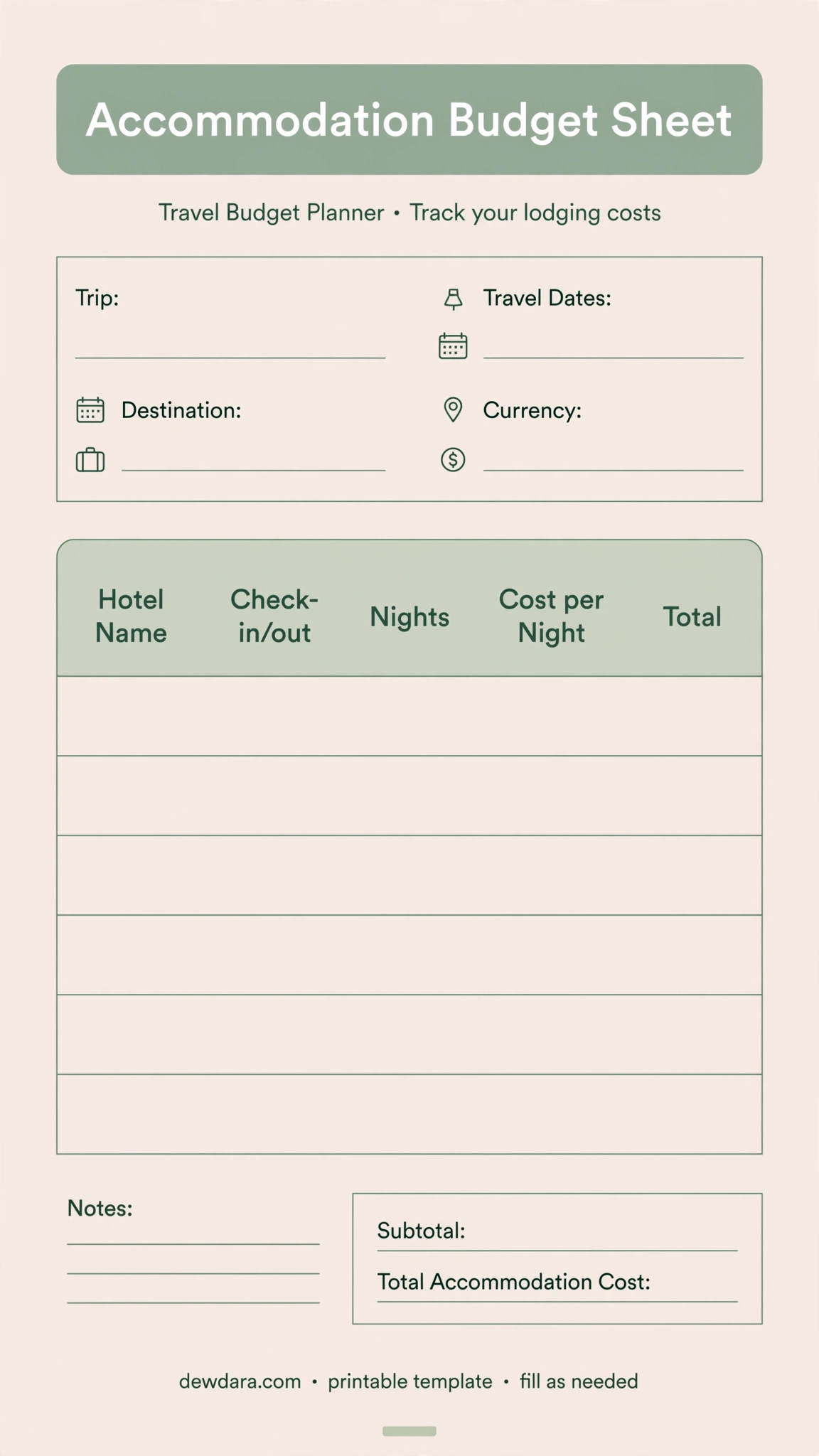
Accommodation is usually your second-largest expense after flights.
What it includes: Hotel/Hostel Name, Check-in/Check-out Dates, Number of Nights, Cost Per Night, Total Cost, and Booking Confirmation.
Why you need it: It helps you compare options side-by-side and avoid hidden fees like cleaning charges, taxes, or deposits.
How to use it: List all potential stays for your itinerary. Include taxes and fees in your per-night calculation. This sheet also becomes your confirmation organizer so you are not scrambling for addresses at the airport.
4. Transportation Budget Planner
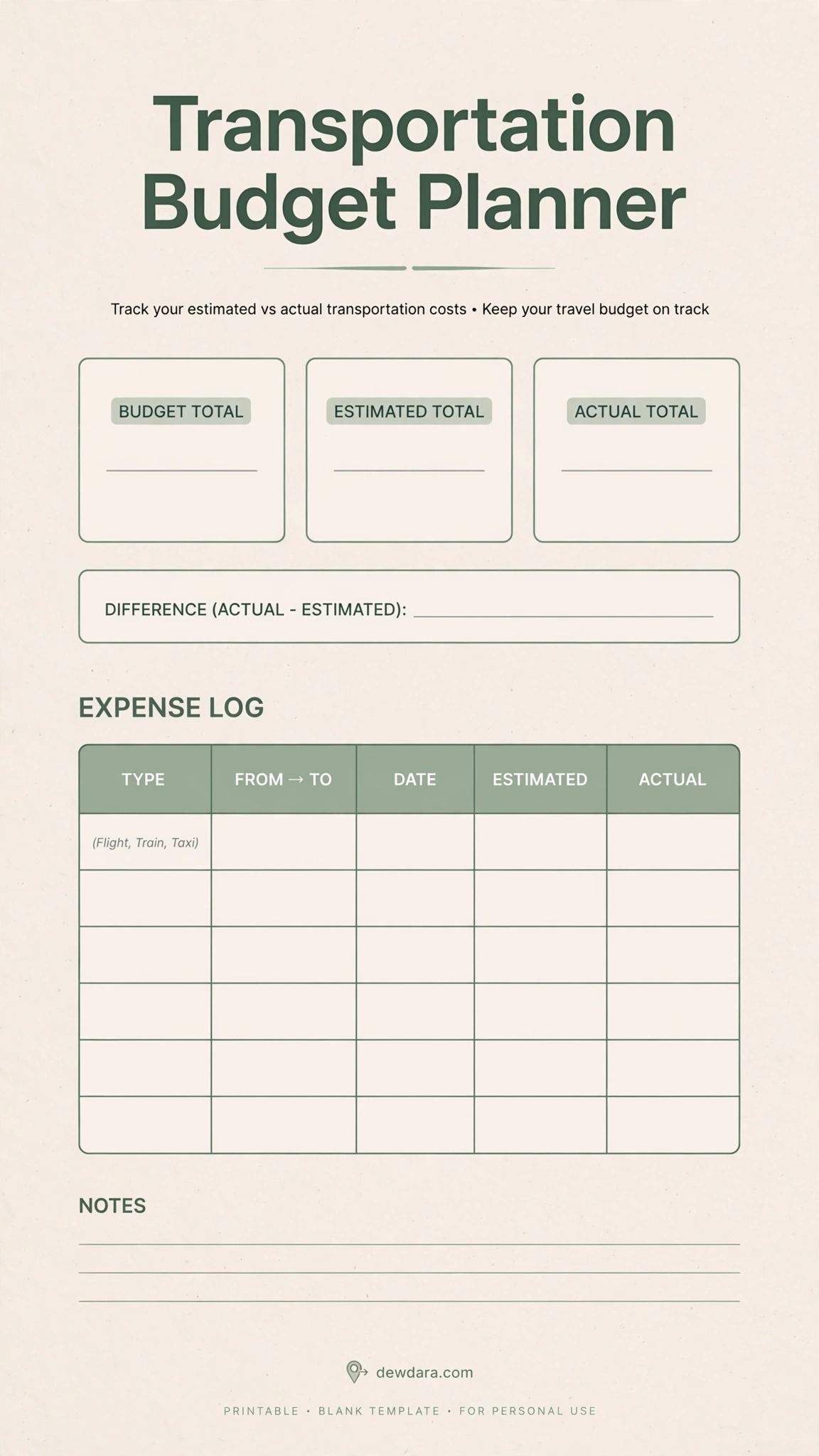
From flights to tuk-tuks, transportation costs are fragmented and easy to miscalculate.
What it includes: Type of transport (Flight, Train, Bus, Taxi, Rental), Route From-To, Date, Estimated and Actual Cost.
Why you need it: You will see whether a rail pass, rental car, or budget flights actually save money for your specific route.
How to use it: Map your entire route first. Research prices for each leg and log them. Leave a 10% buffer for local transport you haven’t planned yet, like last-minute taxis or ferries.
5. Food & Dining Budget
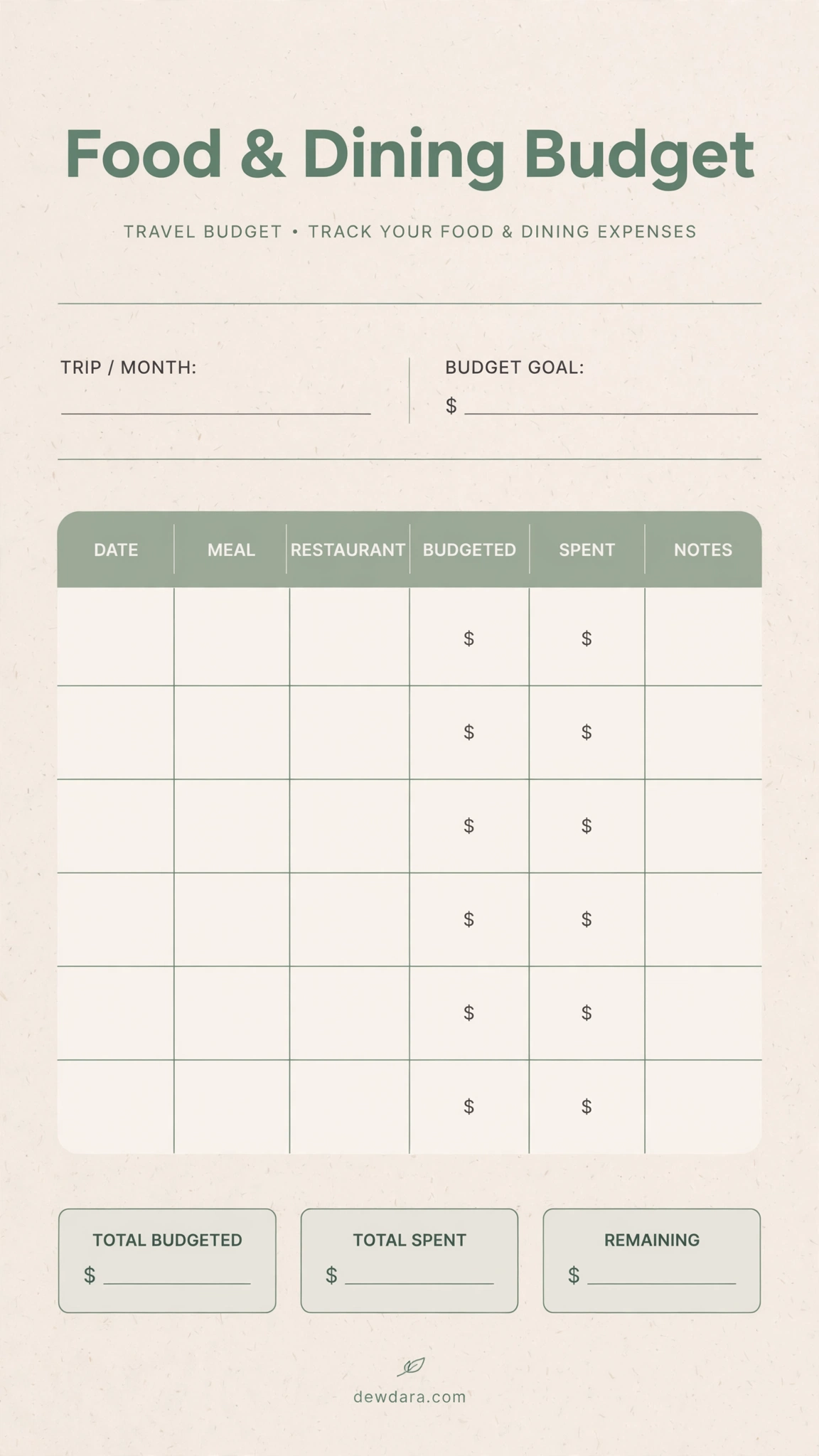
Food is where budgets disappear fastest, but it’s also the best part of travel.
What it includes: Date, Meal (Breakfast/Lunch/Dinner/Snack), Restaurant/Location, Budgeted Amount, Spent, and Notes.
Why you need it: It balances street food experiences with nice dinners without guilt.
How to use it: Set a realistic daily food allowance based on your destination. For example, $40/day in Thailand vs $90/day in Switzerland. Use the Notes column to record favorite dishes or restaurants you want to remember.
6. Activities & Excursions Budget
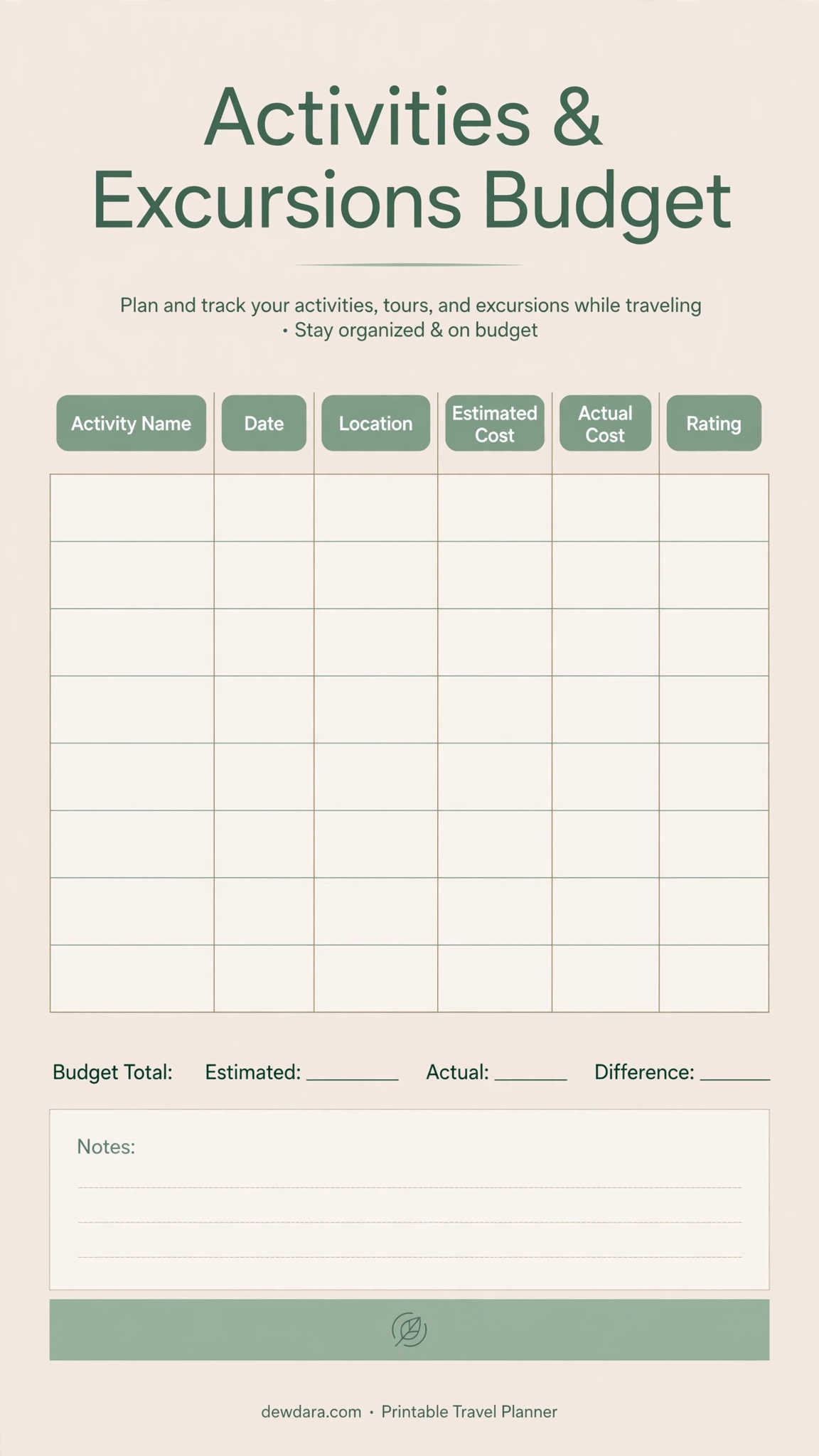
Tours and entry fees can double your spending if not planned.
What it includes: Activity Name, Date, Location, Estimated Cost, Actual Cost, and a rating section.
Why you need it: It forces you to prioritize. Instead of booking everything, you choose experiences that matter most.
How to use it: List every activity you dream of doing. Research prices in advance, then highlight your top 3 must-dos. Book those early (they’re often cheaper online) and leave the rest as optional.
7. Packing List with Budget
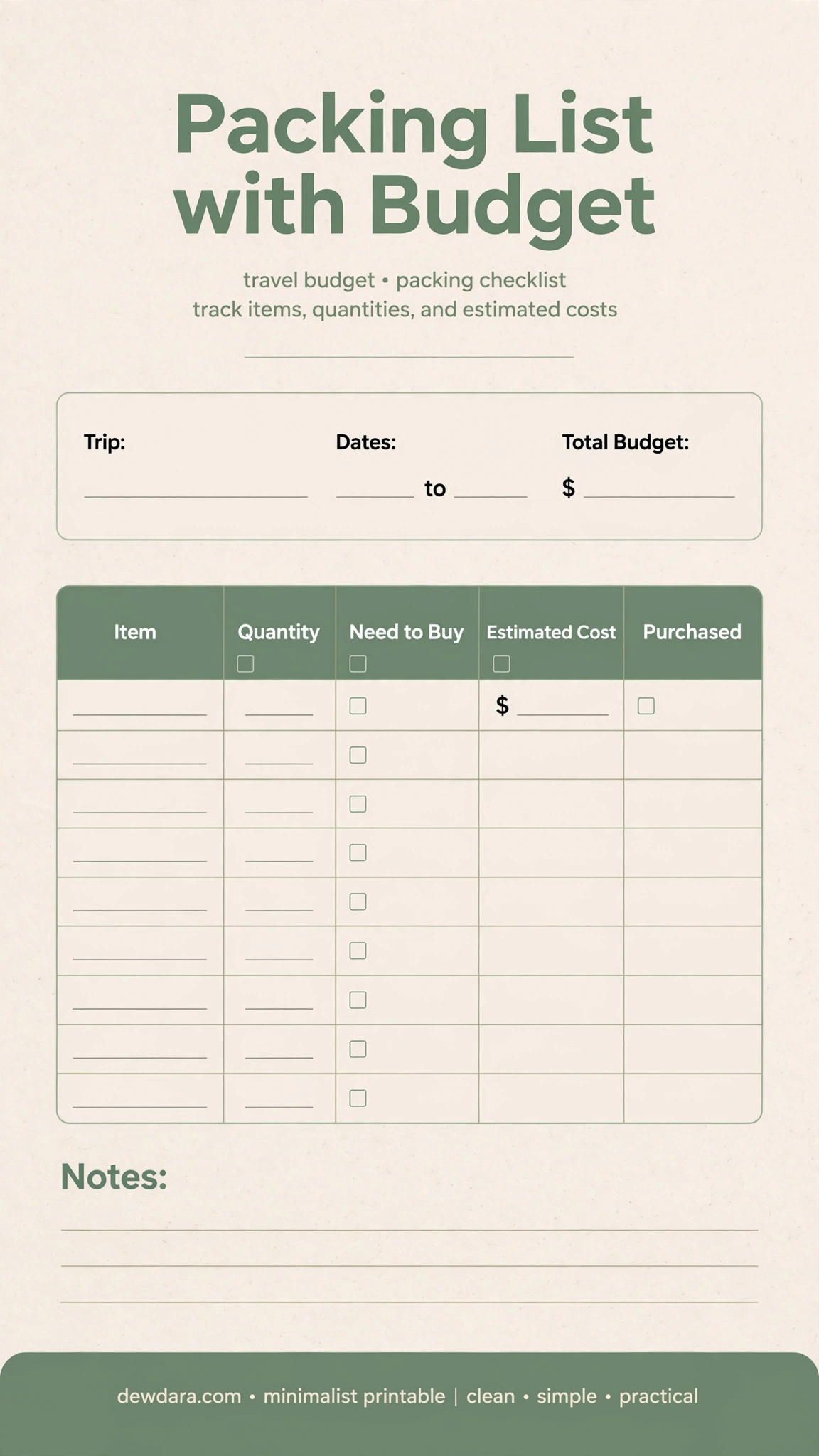
Packing and budgeting are connected. Forgetting something means buying it at airport prices.
What it includes: Item, Quantity, Need to Buy checkbox, Estimated Cost, and Purchased checkbox.
Why you need it: It prevents last-minute panic shopping and duplicate purchases.
How to use it: Do a full closet check before your trip. Anything you need to buy, add its cost to this sheet and also to your Overall Trip Budget under Shopping. This keeps your pre-trip spending visible.
8. Travel Savings Goal Tracker
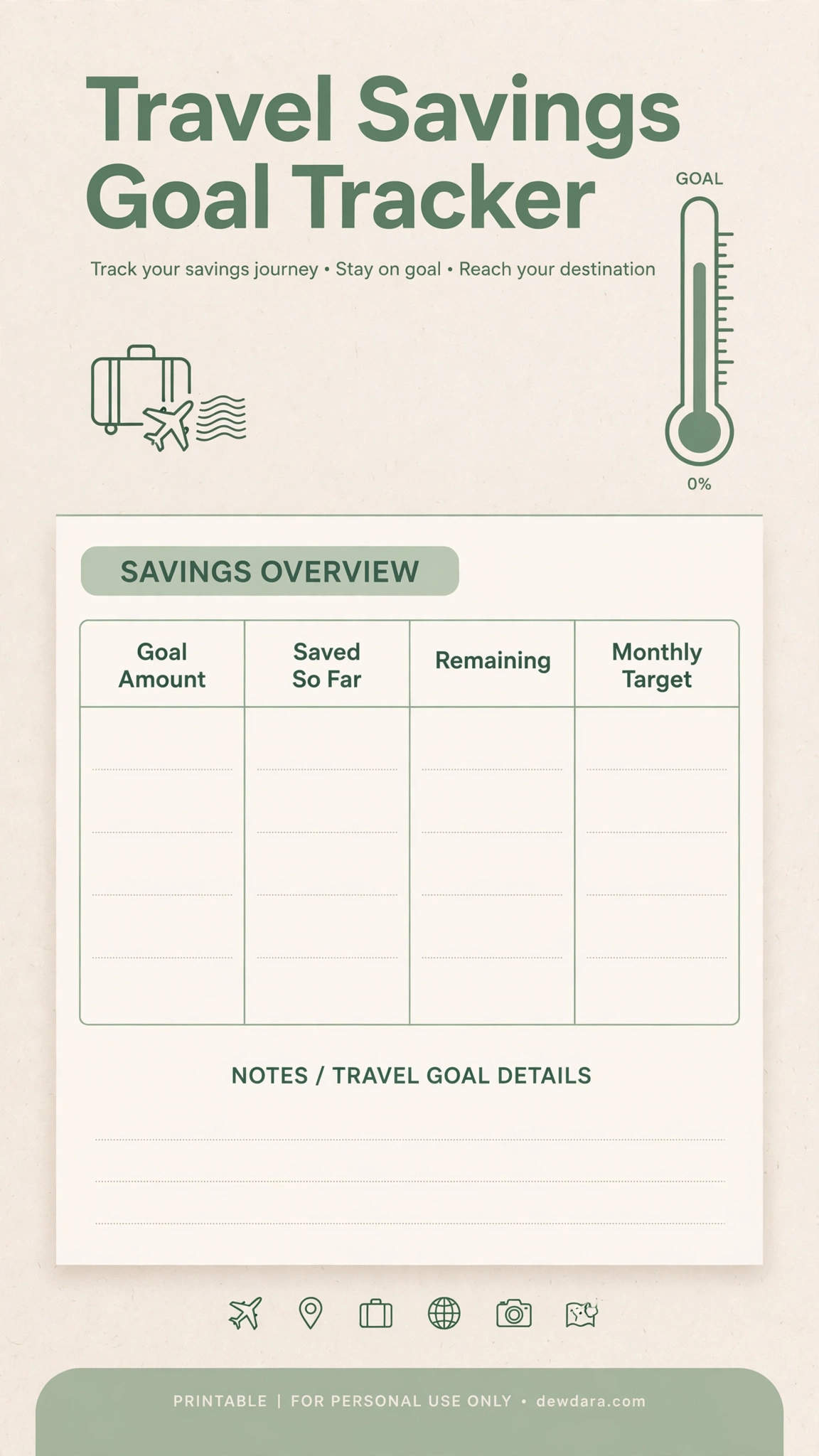
This is your motivation sheet, designed to be placed where you see it daily.
What it includes: A visual savings thermometer, Goal Amount, Amount Saved, Remaining Amount, and Monthly Target.
Why you need it: Saving for travel feels abstract. Seeing progress visually keeps you consistent.
How to use it: Set your total trip goal. Divide it by the months left until departure to get your monthly target. Color in the thermometer every time you transfer money to your travel fund. Perfect for planning 3-12 months ahead.
9. Currency Conversion & Exchange Tracker
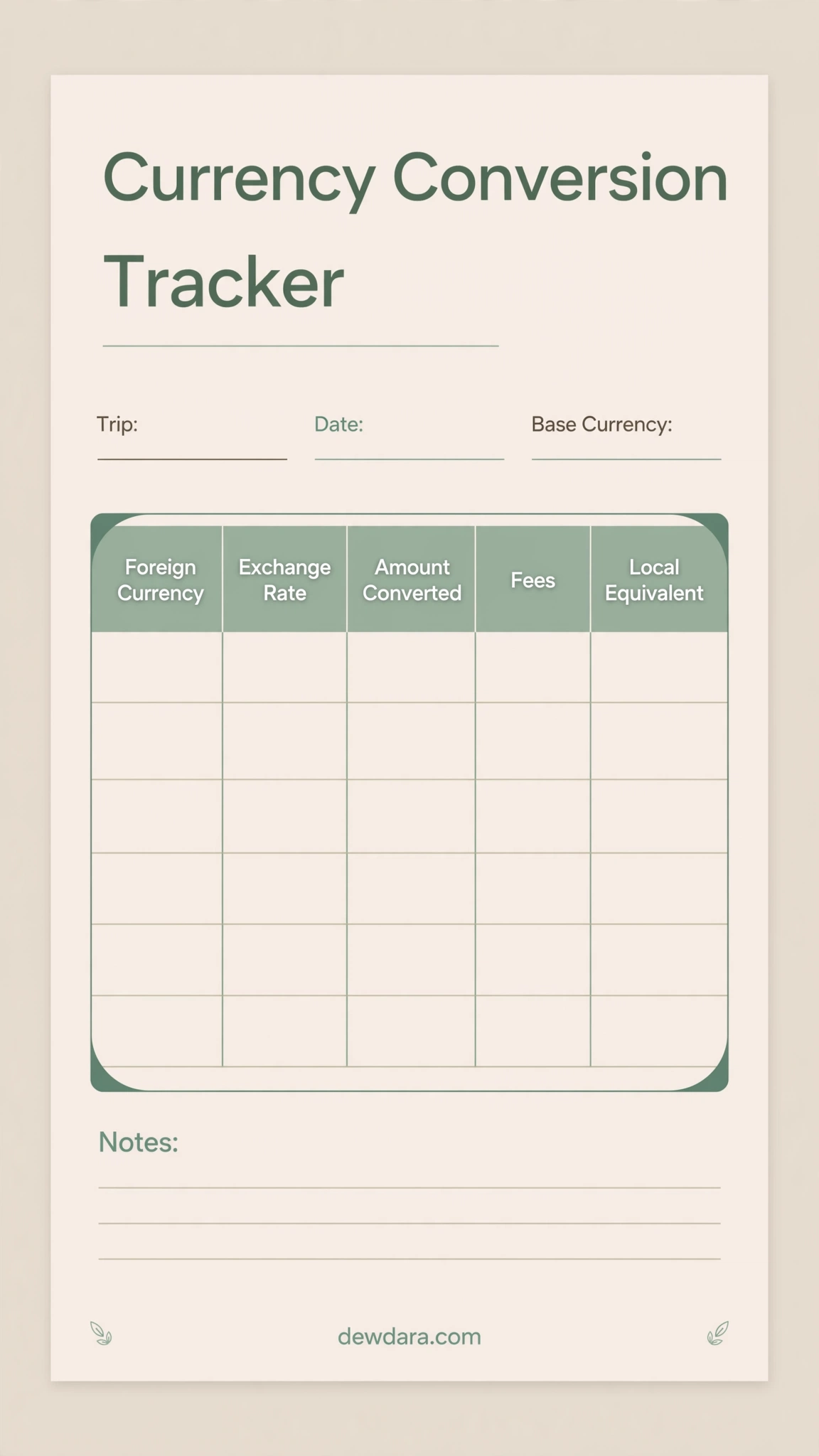
If you are traveling internationally, exchange rates and ATM fees can quietly eat your budget.
What it includes: Foreign Currency Amount, Exchange Rate, Conversion Fees, and Final Local Equivalent.
Why you need it: It helps you know if you are getting a fair rate and keeps all conversions in one place for accurate expense tracking.
How to use it: Log every exchange, whether at an airport kiosk, bank, or ATM withdrawal. Always note the fee separately. After a few entries, you will instantly know the best place to exchange money in that country.
10. Pre-Trip Shopping Budget
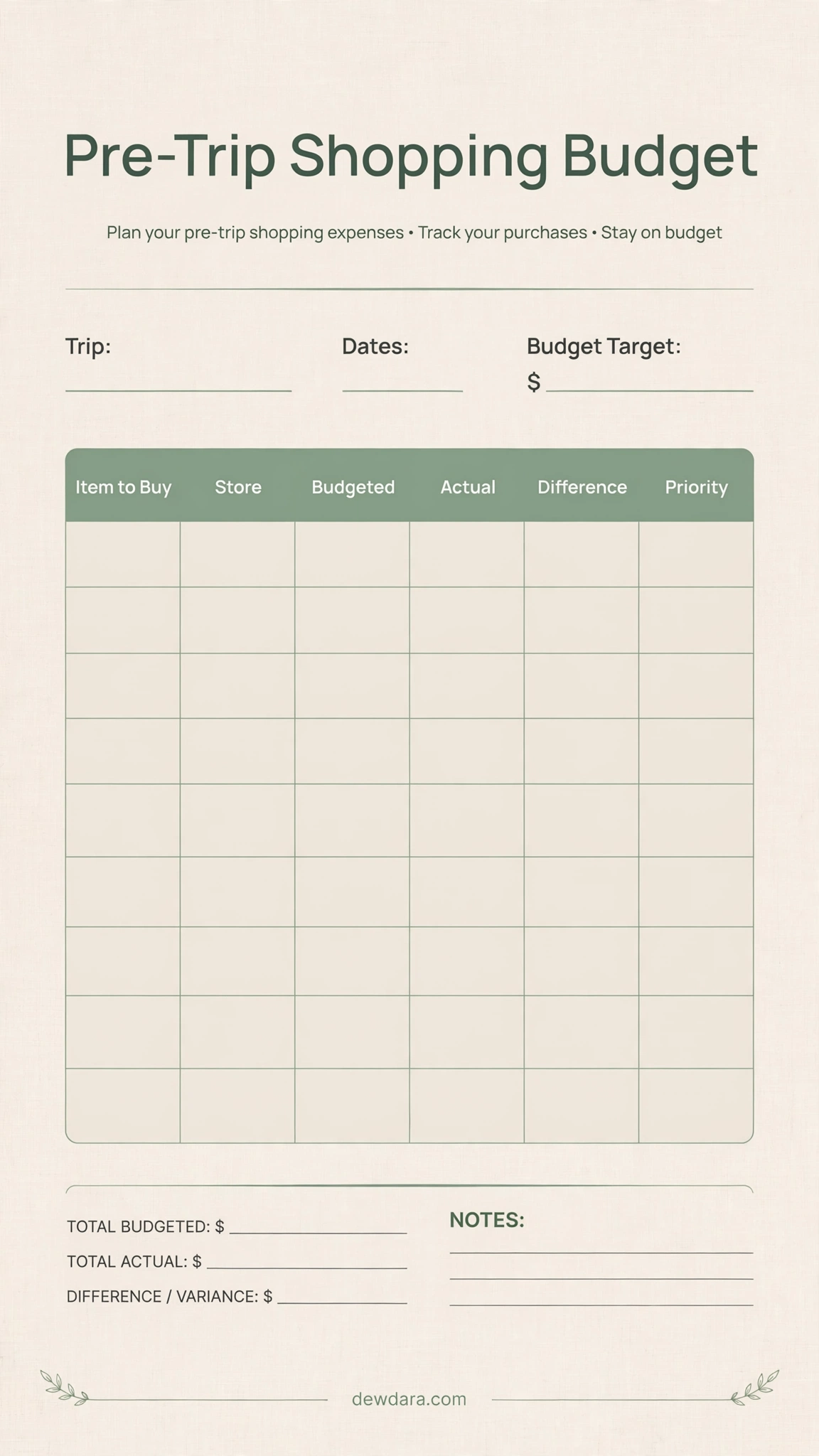
Luggage, adapters, toiletries, and travel insurance – these costs happen before you even leave.
What it includes: Item to Buy, Store/Website, Budgeted Cost, Actual Cost, Difference, and Priority.
Why you need it: It stops pre-trip spending from spiraling and keeps it separate from your actual trip funds.
How to use it: Two weeks before departure, list everything you need to buy. Assign a priority (High/Medium/Low). Buy High priority first. If you go over budget, cut from Low priority items.
11. Post-Trip Expense Summary
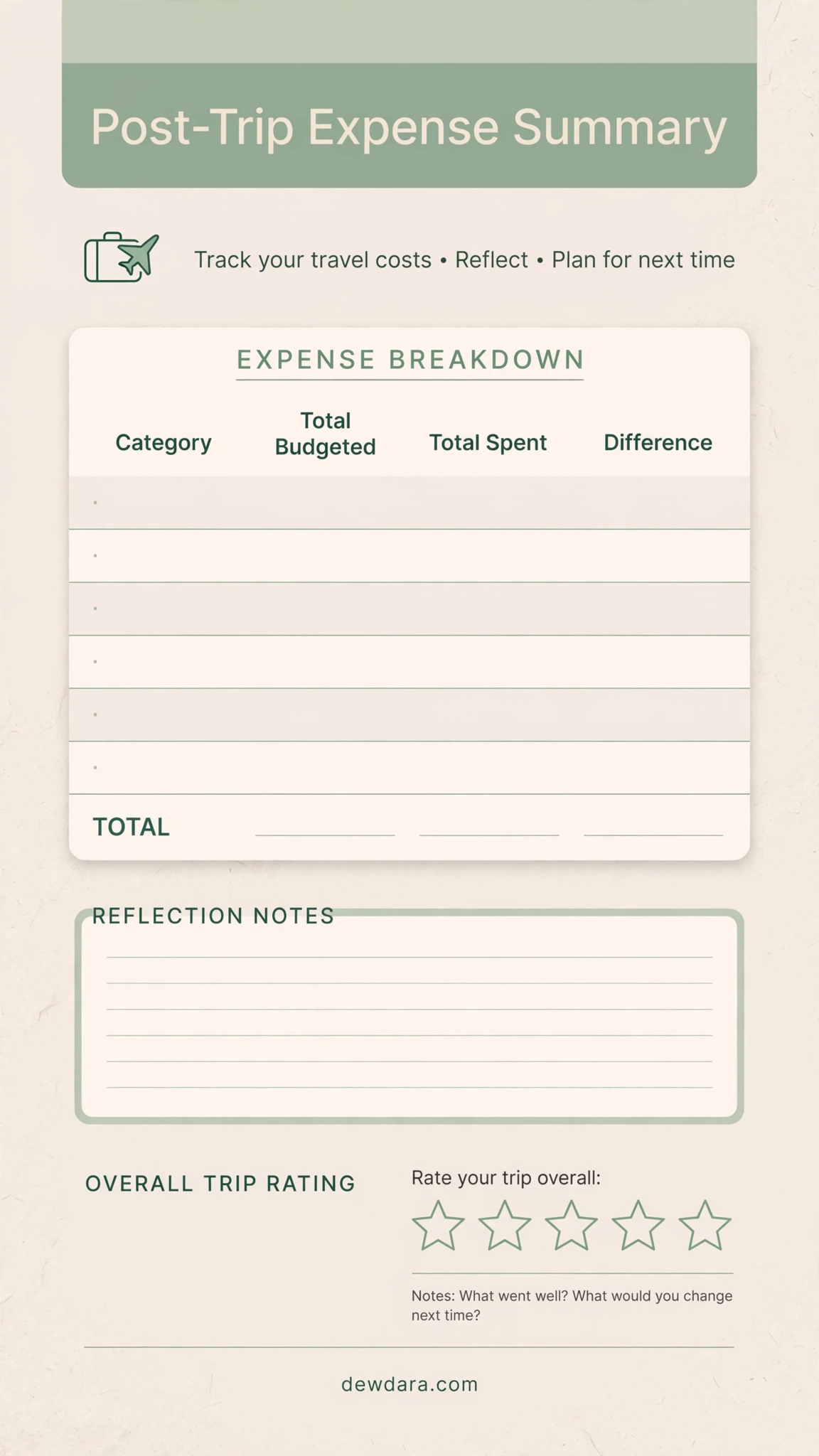
The most powerful printable for becoming a better traveler.
What it includes: Final Expense Breakdown by Category (Budgeted vs. Spent vs. Difference), Reflection Notes, and Overall Trip Rating.
Why you need it: Most people never review their spending. This sheet turns every trip into a lesson for the next one, making you more accurate and financially smarter each time.
How to use it: Within 3 days of returning home, while receipts are still fresh, fill this out. Be honest about overspending. In the Reflection section, write down what went well, what was a waste, and what you would do differently. Store it with your trip photos.
Conclusion
A well-planned travel budget doesn’t restrict you – it frees you. When you know your numbers are covered, you can say yes to that sunset boat tour, that local cooking class, or that extra night in your favorite city without anxiety.
These 11 printables from dewdara.com work as a complete system: start with the Overall Planner and Savings Tracker, use the specialized sheets to plan details, track daily during your trip, and close with the Post-Trip Summary to learn and improve.
Print the full set, staple them into a travel binder, or upload them to your iPad. Your dream trip is not just about where you go, but how peacefully you get there.
Download all sheets in 9:16 format for easy printing and mobile use. For more minimal, aesthetic planners and travel organization tools, visit dewdara.com.
All images are blank and branded with dewdara.com, ready for your audience to fill and reuse.