‘Near-Death Experience’: Houston Mother Sues Tesla After Cybertruck Autopilot Nearly Plunges Over Overpass
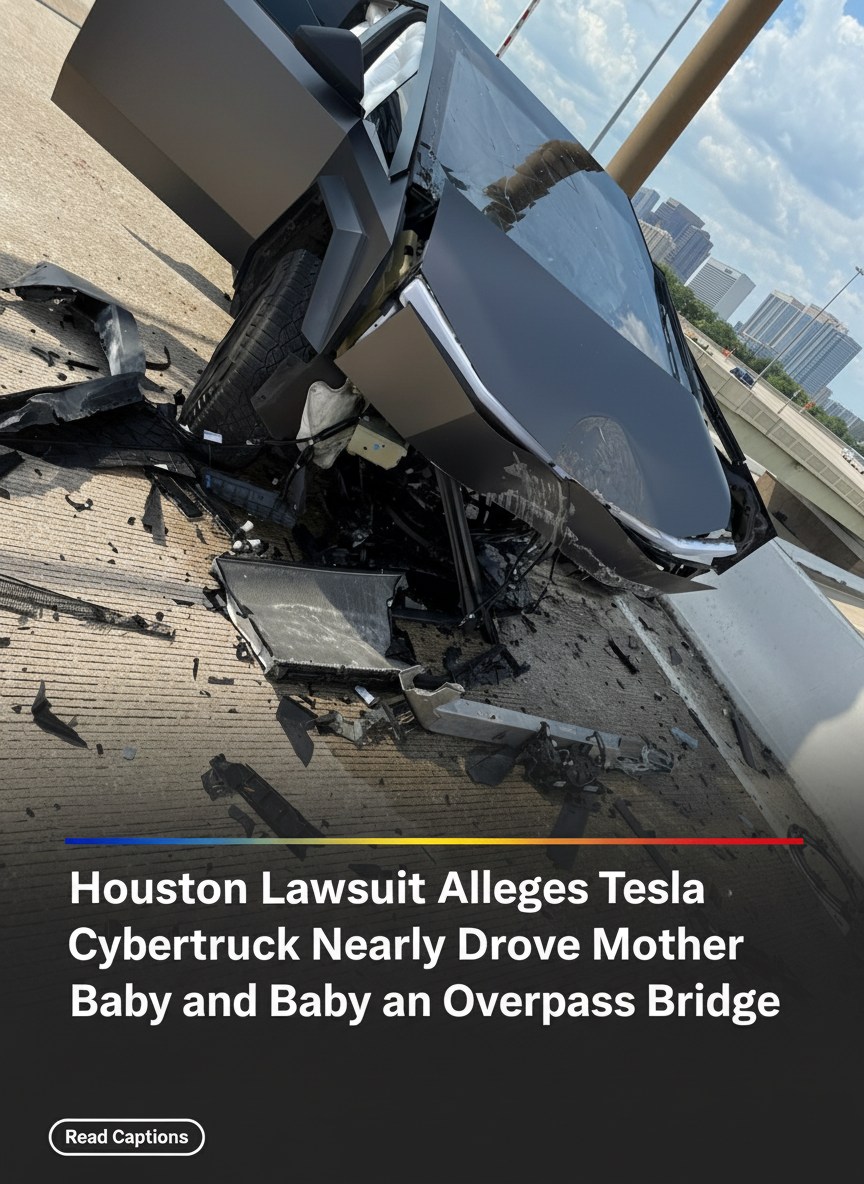
HOUSTON — A Texas mother has filed a high-stakes lawsuit against Tesla, alleging that a terrifying malfunction in the company’s “Autopilot” system nearly sent her and her infant child plummeting off a Houston highway overpass. The incident, which was reportedly captured on the vehicle’s own integrated cameras, culminated in a violent collision with a concrete barrier that has sparked fresh concerns over the safety of the controversial electric truck.
The lawsuit, filed in Harris County last month, details a harrowing afternoon drive that turned into a life-threatening ordeal. According to the legal filing, the plaintiff was traveling on a Houston overpass with her infant in the backseat when her 2024 Cybertruck, operating on Autopilot, suddenly veered toward the edge of the bridge. The woman claims the vehicle failed to recognize the road’s curvature, nearly driving off the elevated structure before slamming into a safety barrier.
“This was a near-death experience that no mother should ever have to endure,” the plaintiff’s legal team stated in a press release. “The video evidence clearly shows a vehicle that is out of control, making a catastrophic error that could have resulted in a multi-story fall. We are lucky we aren’t dealing with a double fatality.”
Video Evidence at the Center of the Case
Central to the lawsuit is the onboard dashcam footage recorded by the Cybertruck. The plaintiff’s attorneys allege the video shows the steering wheel jerking sharply toward the guardrail without warning or driver input. While Tesla’s driver-assistance systems are marketed as requiring “active driver supervision,” the lawsuit argues that the system’s failure was so sudden and erratic that human intervention was insufficient to prevent the crash.
The impact with the overpass barrier caused significant damage to the Cybertruck’s stainless-steel exterior and deployed multiple airbags. While both the mother and child survived, the lawsuit seeks damages for physical injuries, severe emotional distress, and the alleged negligence of the automaker in releasing “untested and dangerous” software to the public.
A Pattern of Scrutiny for Tesla
This incident adds to a growing list of legal and regulatory challenges facing Tesla regarding its Autopilot and “Full Self-Driving” (FSD) capabilities. While CEO Elon Musk has long championed the technology as a cornerstone of the company’s future, federal regulators have intensified their scrutiny following a series of high-profile accidents involving the software.
Safety advocates have frequently criticized the Cybertruck’s design, citing concerns about its weight and rigid frame in the event of a collision. However, this Houston case shifts the focus back to the software’s ability to navigate complex urban infrastructure, such as elevated interchanges and overpasses.
Tesla’s Response and Future Implications
Tesla has not yet issued a formal response to the specific allegations in the Houston lawsuit. Historically, the company has defended its Autopilot system by pointing to data suggesting that vehicles using the software have lower accident rates than those operated solely by humans. Tesla also typically emphasizes that drivers sign an agreement acknowledging they must keep their hands on the wheel and remain ready to take control at any moment.
As the legal proceedings move forward, the Houston case could set a significant precedent for how software malfunctions are litigated in the age of semi-autonomous transport. For now, the plaintiff is calling for a formal investigation into the Cybertruck’s Autopilot performance on elevated roadways, hoping to prevent a similar—or more tragic—incident from occurring in the future.
The case is currently pending in the Harris County District Court.