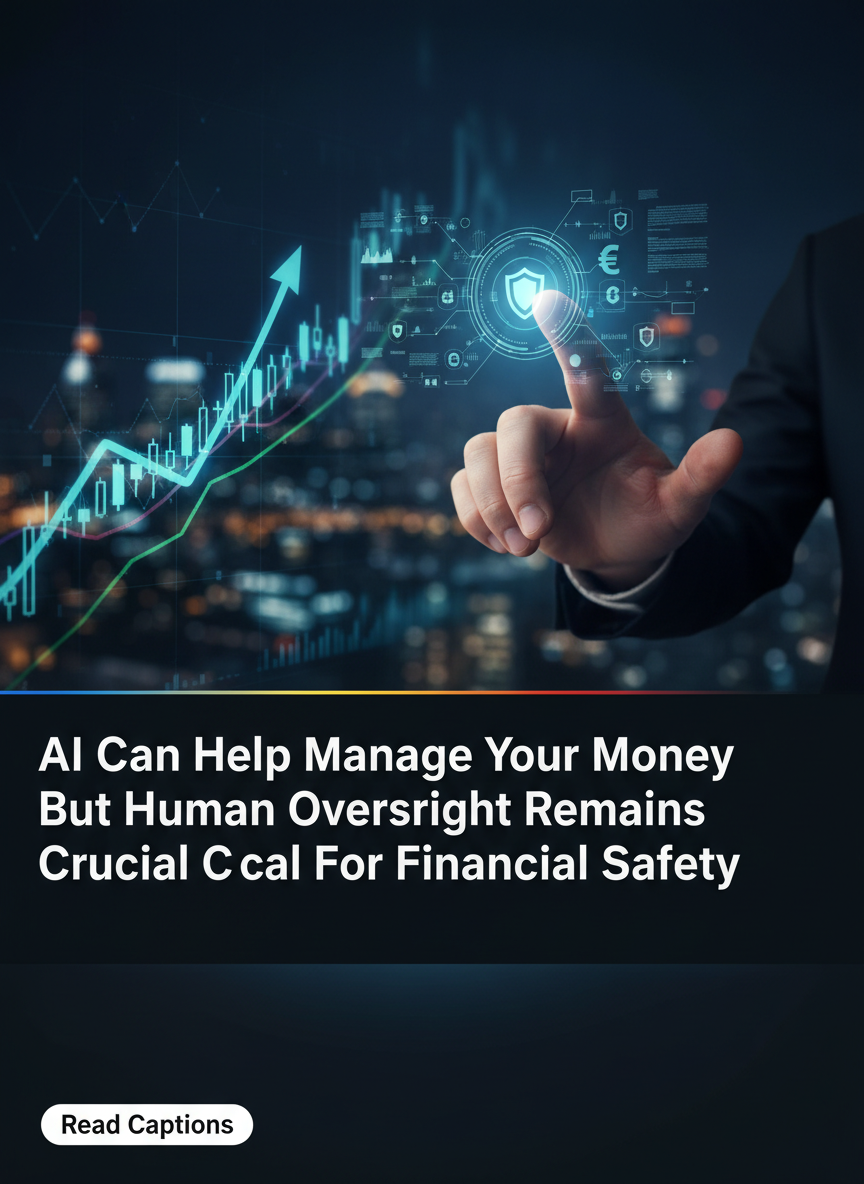
The Rise of the Robo-Advisor: Navigating the Risks and Rewards of AI Financial Advice
In the last year, artificial intelligence has migrated from the realm of science fiction to a staple of the kitchen table. We use it to write emails, plan vacations, and even generate recipes. Now, a growing number of consumers are turning to AI models like ChatGPT, Claude, and Gemini to answer one of life’s most stressful questions: “What should I do with my money?”
While AI offers unprecedented access to financial literacy and organization, experts warn that treating a chatbot like a certified financial planner could lead to costly mistakes. As the technology evolves, the consensus among financial professionals is clear: AI is a powerful tool, but it should be the start of your financial journey, not the destination.
The Digital Advantage: Efficiency and Accessibility
The primary draw of AI in the financial sector is its ability to democratize information. For those who cannot afford the fees of a traditional human advisor, AI provides a low-barrier entry point into the world of investing and budgeting. These tools excel at distilling complex financial concepts—like the difference between a Roth IRA and a 401(k)—into plain English.
Beyond education, AI is a powerhouse for data organization. It can help users track spending patterns, suggest realistic monthly budgets based on income, and even simulate various savings scenarios for long-term goals like home ownership or retirement. By removing the “intimidation factor” of spreadsheets and jargon, AI is helping a new generation engage with their personal finances more proactively.
The “Hallucination” Hazard: When AI Gets the Numbers Wrong
Despite its brilliance, AI has a well-documented flaw known as “hallucination.” Large language models are designed to predict the next logical word in a sentence, not necessarily to provide factual accuracy. When it comes to financial advice, the stakes of a hallucination are significantly higher than a typo in an email.
Financial laws, tax codes, and market conditions change rapidly. An AI model may provide advice based on outdated data or, worse, fabricate a financial regulation that doesn’t exist. Furthermore, AI lacks a “fiduciary duty”—the legal obligation to act in a client’s best interest. Unlike a human advisor who can be held liable for bad advice, a chatbot offers no such protection if its suggestions lead to a massive tax bill or a portfolio collapse.
Why the Human Element Still Matters
Money management is rarely just about math; it is deeply emotional. Human advisors provide a level of nuance that algorithms currently cannot replicate. A human professional understands the anxiety of a market crash, the complexities of family dynamics in estate planning, and the subtle shifts in a client’s risk tolerance.
“AI can tell you the historical average return of the S&P 500, but it can’t sit across from you and help you navigate the fear of a looming recession,” says one industry analyst. “It lacks the empathy and the holistic view of a person’s life that is required for truly personalized planning.”
Safe Practices: How to Use AI Responsibly
If you plan to integrate AI into your financial routine, experts suggest following these essential safety guidelines:
- Protect Your Privacy: Never input sensitive information like bank account numbers, Social Security numbers, or specific passwords into an AI prompt. Treat the chat as a public forum.
- Verify Everything: Treat AI-generated advice as a “draft.” Cross-reference any tax or legal advice with official government websites (like the IRS) or a qualified professional.
- Be Specific, But Skeptical: The more context you give an AI, the better its output will be. However, always ask the AI to “cite its sources” to see where it is pulling its information from.
- Use it for Synthesis, Not Strategy: Use AI to summarize long financial reports or to explain concepts, but leave the final decision-making and high-level strategy to yourself or a human expert.
The Verdict
We are entering an era where AI will undoubtedly play a role in how we manage our wealth. However, the golden rule of personal finance remains unchanged: due diligence is non-negotiable. By viewing AI as a sophisticated research assistant rather than an infallible oracle, consumers can harness the benefits of technology without falling prey to its digital delusions. In the world of money, the best intelligence is still a combination of the artificial and the human.