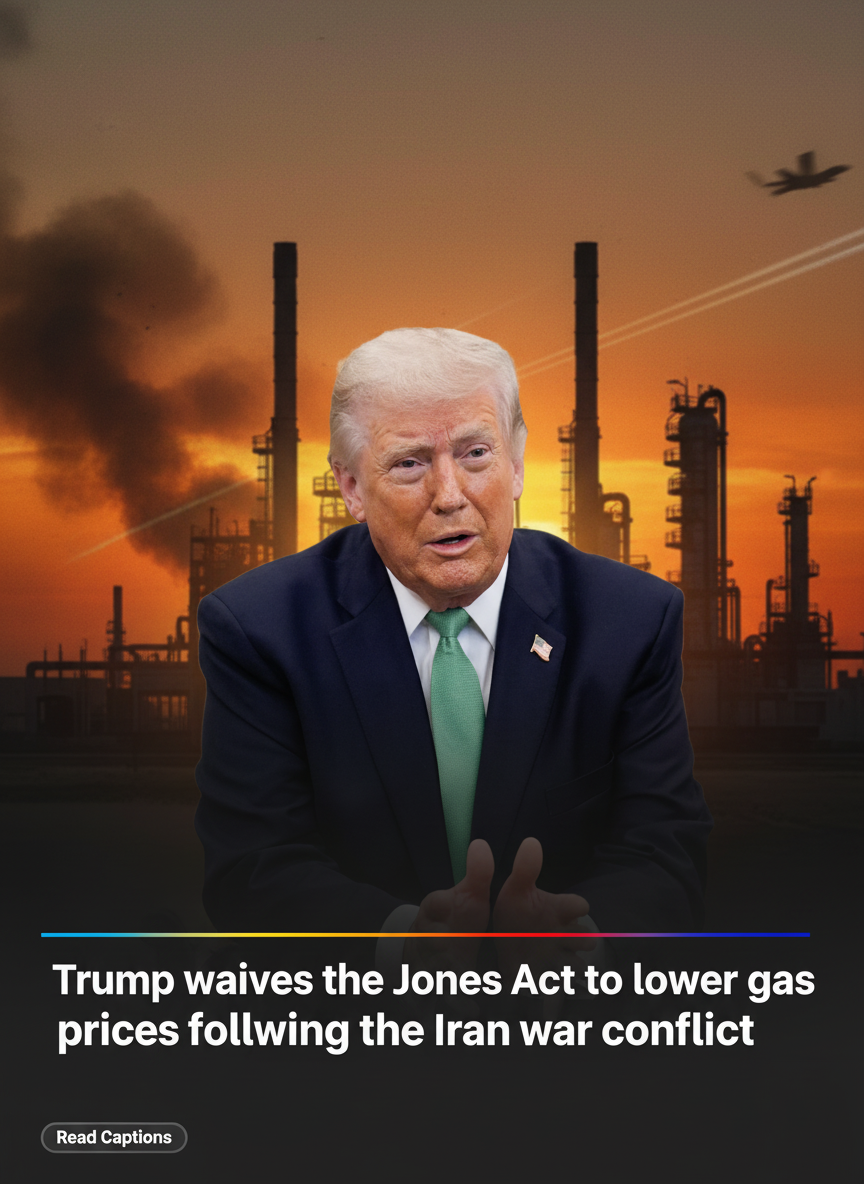
Trump Waives Jones Act to Combat Soaring Gas Prices as Conflict with Iran Escalates
By Political Correspondent | March 18, 2026
WASHINGTON — In a sweeping move to stabilize a volatile domestic energy market, President Donald Trump signed an emergency executive order on Wednesday to waive the Merchant Marine Act of 1920, commonly known as the Jones Act. The decision comes as the United States grapples with a sudden and dramatic surge in gasoline prices triggered by the intensifying military conflict with Iran.
The waiver is designed to ease the logistical bottlenecks currently preventing the efficient movement of fuel across the United States. Under normal circumstances, the Jones Act mandates that all goods shipped between U.S. ports must be transported on vessels that are U.S.-built, U.S.-owned, and U.S.-crewed. By suspending these requirements, the administration aims to allow a fleet of foreign-flagged tankers to supplement domestic capacity, ensuring that fuel from Gulf Coast refineries can reach the high-demand corridors of the East and West Coasts.
A Response to the “War Tax” at the Pump
The national average for a gallon of regular gasoline has skyrocketed in the last 72 hours, with some regions seeing prices climb by more than 80 cents overnight. The volatility is a direct result of the deteriorating situation in the Middle East, where hostilities with Iran have disrupted global oil supply chains and threatened the stability of the Strait of Hormuz.
Speaking from the Oval Office, President Trump characterized the price spikes as a “national security concern” and a “war tax” on the American worker. “We have the energy, we have the refineries, but we need to get the product to the people,” the President stated. “By waiving the Jones Act, we are breaking the gridlock and making sure that American families aren’t being punished for a conflict thousands of miles away.”
Breaking the Transport Bottleneck
Energy analysts have long pointed to the Jones Act as a constraint during times of crisis. While the law is intended to protect the domestic shipbuilding industry and ensure a merchant marine capable of supporting the military, it often results in a shortage of available tankers during supply shocks. Current U.S.-flagged vessels are reportedly operating at near-maximum capacity, leaving millions of barrels of refined gasoline stranded in Texas and Louisiana while prices soar in New York and California.
“This is a necessary lever to pull,” said Harold Simmons, a senior energy analyst. “The domestic fleet simply isn’t large enough to handle the sudden shift in demand patterns caused by the disruption of foreign imports. Opening the trade to international tankers should provide almost immediate relief to the supply chain, even if global crude prices remain high.”
Political Fallout and Industry Reaction
The move has been met with a mix of praise and scrutiny. While consumer advocacy groups and energy-intensive industries welcomed the relief, maritime labor unions expressed concern over the precedent. Critics argue that frequent waivers undermine the long-term viability of the American maritime industry, which is vital for national defense.
Administration officials clarified that the waiver is intended to be temporary, with an initial duration of 90 days, subject to review based on the status of the conflict with Iran. White House spokespeople emphasized that the priority remains “maximum pressure” on foreign adversaries while “minimal impact” is felt by domestic consumers.
Looking Ahead
As the first foreign-flagged tankers are expected to begin loading domestic fuel as early as Friday, the administration is also considering further measures to curb inflation, including potential releases from the Strategic Petroleum Reserve. For now, all eyes are on the Middle East, as the duration of this energy crisis remains tethered to the outcome of the military engagement with Tehran.
For the average American, the impact of today’s order may be felt at the pump within the week, as increased supply begins to flow toward the nation’s largest metropolitan hubs.