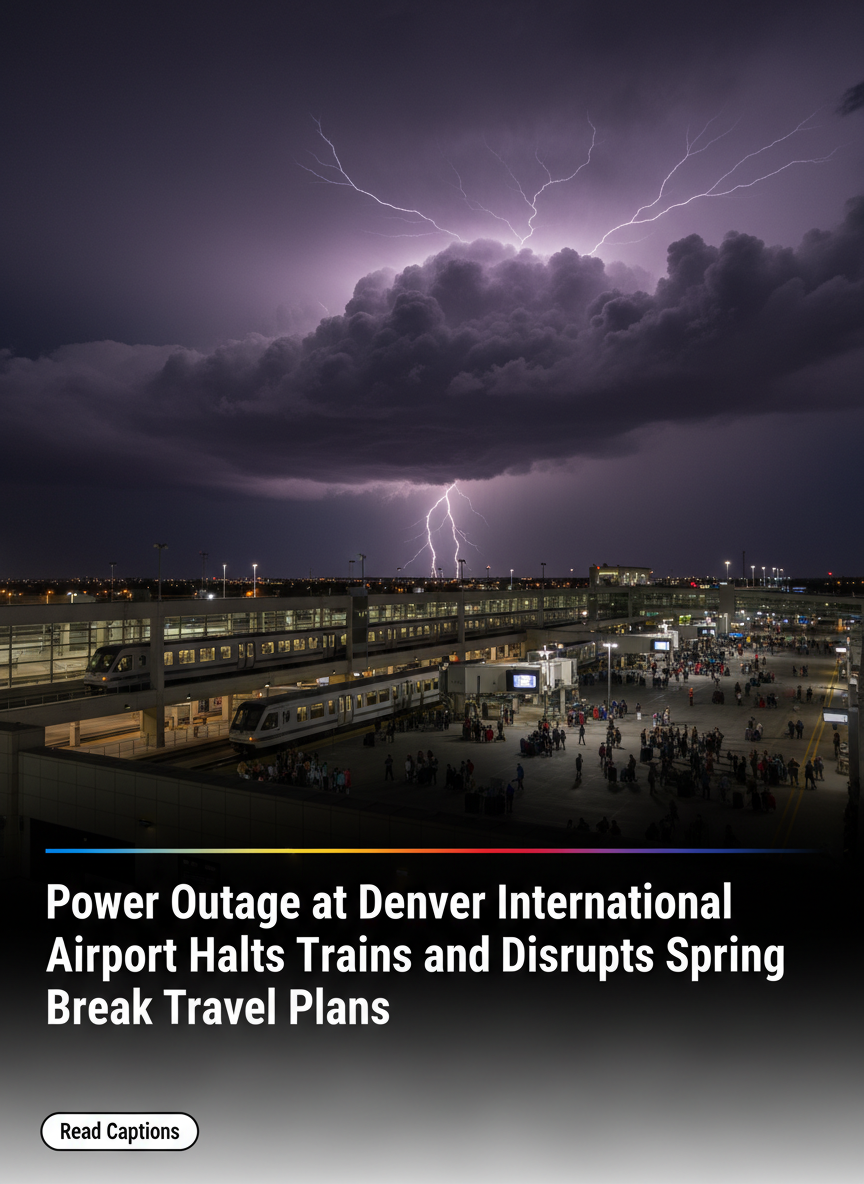
Chaos at Mile High: Power Outage Paralyzes Denver International Airport Trains Amid Spring Break Rush
DENVER — Thousands of travelers found themselves caught in a logistical nightmare on Tuesday as a significant power outage struck Denver International Airport (DEN), bringing the facility’s critical underground train system to a grinding halt. The outage, occurring during the height of the busy spring break travel season, led to a temporary ground stop and massive crowds that stretched deep into the terminal hallways.
A System at a Standstill
The technical failure began late Tuesday morning, specifically impacting the Automated Guideway Transit System (AGTS). This train system is the primary artery of the airport, transporting passengers from the main Jeppesen Terminal to Concourses A, B, and C. Without the trains, passengers were unable to reach their gates or return to baggage claim, causing an immediate bottleneck at security checkpoints.
According to airport officials, the power disruption also affected several systems within the concourses themselves. At approximately 11:00 a.m. MT, the Federal Aviation Administration (FAA) issued a ground stop for flights bound for Denver, citing the inability to move passengers through the terminal to their respective aircraft.
Spring Break Surge Compounds the Crisis
The timing of the outage could hardly have been worse. Denver International Airport is currently navigating its peak spring break period, with daily passenger volumes recently hitting record highs. For many families and vacationers, the outage turned a routine travel day into a test of patience.
Social media quickly became flooded with images and videos showing “gridlock” conditions. Passengers reported waiting in lines for over two hours just to move from the check-in counters toward the concourse entries. While the pedestrian bridge to Concourse A remained an option for some, those traveling out of the more distant Concourses B and C were left with no alternative but to wait for the system to be restored.
Response and Restoration Efforts
Denver International Airport crews worked frantically alongside local utility providers to identify the root cause of the failure. Airport spokespeople confirmed that while back-up generators were available for some critical safety systems, the power load required to operate the multi-car train system is substantial.
“We are working as quickly as possible to restore power to the train system,” the airport stated in an official social media update. “We apologize to our passengers for the inconvenience and urge everyone to check their flight status with their airlines before heading to the airport.”
By early afternoon, limited service began to resume on the train lines, though airport officials warned that “significant residual delays” would persist throughout the evening. The ground stop was eventually lifted, but the ripple effect of delayed departures and missed connections is expected to impact flight schedules across the country for the remainder of the day.
What Travelers Need to Know
As the airport works to return to normal operations, travelers are advised to take the following steps:
- Check Flight Status: Major carriers including United, Southwest, and Frontier have reported delays. Use airline apps for the most real-time information.
- Arrive Early: Even as trains resume, the backlog of passengers at security is expected to take hours to clear.
- Use the Bridge: If your flight departs from Concourse A, utilize the pedestrian bridge located at the north end of the terminal to bypass the train system entirely.
Conclusion
The incident highlights the vulnerability of major transit hubs to infrastructure failures, especially during high-traffic periods. As one of the busiest airports in the world, Denver International Airport serves as a major connection point for domestic and international travel. While power is being restored, the “mile-high” headache for travelers is a stark reminder of the complexities involved in modern air travel. An investigation into the cause of the outage is ongoing.