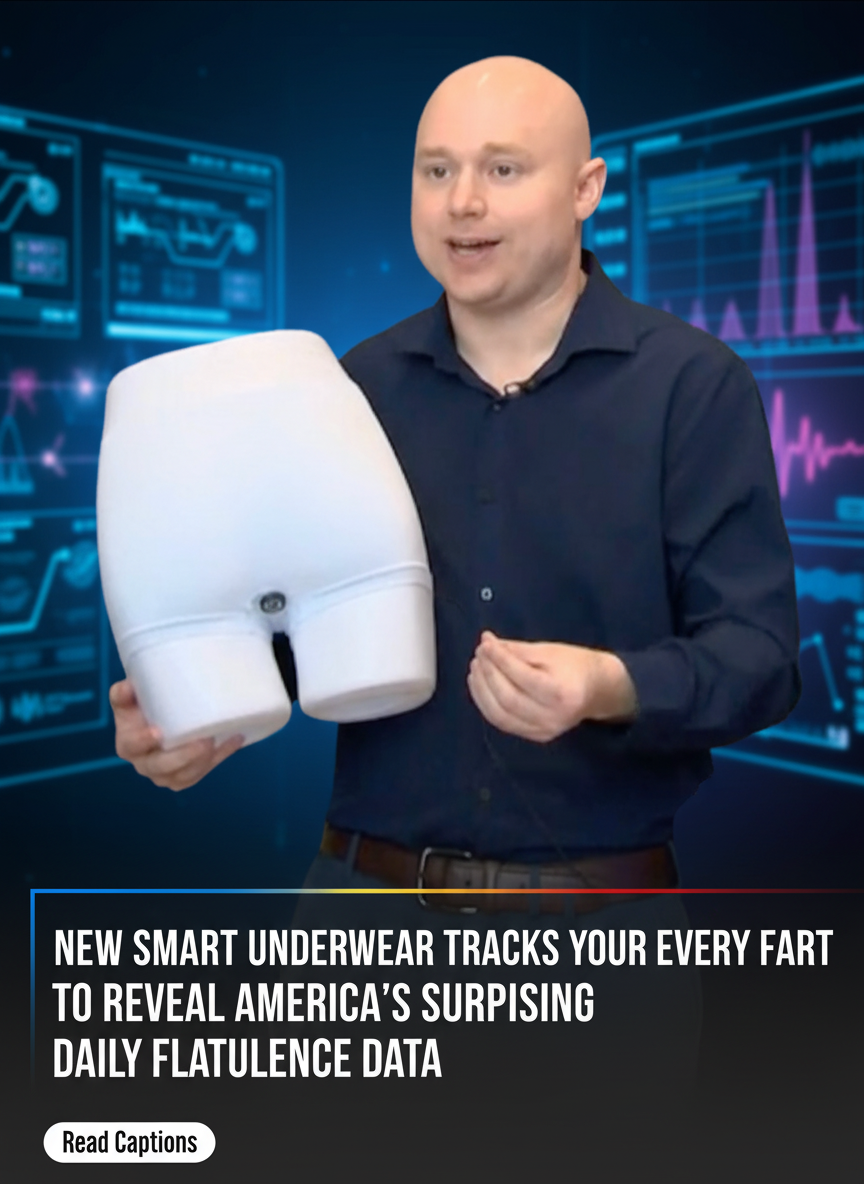
Breaking Wind: Cheeky New ‘Smart Underwear’ Tracks America’s Flatulence for Science
NEW YORK — In a move that brings a whole new meaning to the term “wearable tech,” a groundbreaking research initiative is looking into the most private of human habits. A new line of “smart underwear” equipped with high-tech sensors has begun tracking America’s flatulence, aiming to map out the nation’s digestive health one “toot” at a time.
The Science of the “Scent”
While it may sound like the setup for a punchline, the project is serious business for gastrointestinal researchers. The garments are embedded with microscopic gas sensors and acoustic monitors capable of detecting the frequency, duration, and chemical composition of flatulence. By analyzing the levels of methane, hydrogen, and carbon dioxide emitted, researchers hope to gain unprecedented insights into the human microbiome.
“We spend millions tracking our steps, our heart rate, and our sleep,” said Dr. Julian Putter, a lead researcher on the project. “But our digestive output is one of the most direct indicators of gut health. Until now, we’ve relied on self-reporting, which is notoriously inaccurate because, frankly, people are embarrassed to count.”
Astonishing Daily Totals
The preliminary data collected from the first wave of “beta-farters” has already yielded surprising results. According to the research summary, the average person “cuts the cheese” an astonishing amount of times per day—far exceeding previous medical estimates.
While traditional medical literature often cited 10 to 14 instances as the daily norm, the smart underwear data suggests the real number for the average American is closer to 20 or even 25. The study found that factors such as sedentary office work and the increasing consumption of plant-based protein alternatives have contributed to a “gassier” national profile than ever before.
Beyond the Smell: Why It Matters
For those suffering from irritable bowel syndrome (IBS), Small Intestinal Bacterial Overgrowth (SIBO), or food intolerances, this “cheeky” technology could be a life-changer. Instead of keeping a manual food and symptom diary, patients can simply wear the device and sync it to an app. The AI-driven software then correlates “gas events” with the user’s diet to identify specific triggers.
“It’s about pattern recognition,” says tech analyst Sarah Jenkins. “If the underwear detects a spike in methane every time you eat a specific brand of yogurt, the data speaks for itself. It takes the guesswork out of gastroenterology.”
Privacy Concerns and the Future of Wearables
Of course, the idea of “internet-connected underpants” has raised eyebrows regarding data privacy. Critics wonder where exactly this data is stored and who has access to a digital map of their digestive rhythm. The manufacturers insist that all data is encrypted and anonymized, emphasizing that the goal is collective research rather than individual surveillance.
As the project expands nationwide, the team behind the smart underwear is calling for more volunteers. They believe that by destigmatizing flatulence and treating it as a vital health metric, they can lead a revolution in preventative care.
Conclusion
Whether Americans are ready to have their every “blast” logged in the cloud remains to be seen. However, as the data continues to pour in, one thing is clear: we are a much windier nation than we ever dared to admit. In the world of modern health research, it seems the truth doesn’t just hurt—sometimes, it stinks.