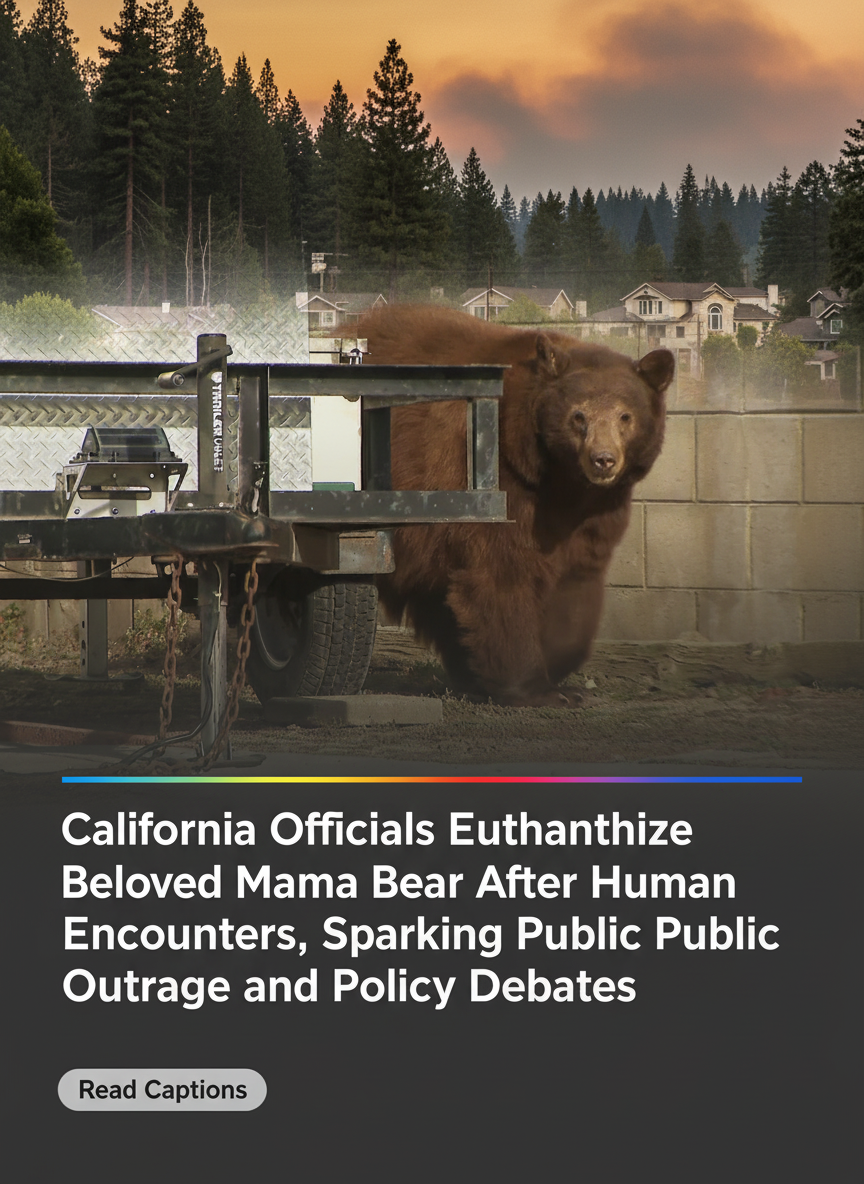
Conflict, Cubs, and Tough Choices: Why Wildlife Officials Euthanized a California Black Bear
By Staff Writer
In the quiet, tree-lined foothills of Monrovia, California, the delicate balance between suburban life and the wild has been shattered. The California Department of Fish and Wildlife (CDFW) recently confirmed the euthanization of a well-known local black bear, sparking a wave of grief and fierce debate over how the state manages human-wildlife conflict.
The End of “Blondie”
To many residents in the San Gabriel Valley, she was known affectionately as “Blondie,” a light-furred mama bear who had become a fixture of the community. For years, she was seen roaming backyards and raising her cubs in the shadows of the San Gabriel Mountains. However, to state wildlife officials, she had become a “public safety threat” after two separate violent encounters with humans in a short period.
The decision to put the bear down followed an investigation into two attacks. In one instance, a man walking his dog was lunged at and injured; in another, a woman was cornered and scratched in her own backyard. Under California state law and CDFW policy, any bear that makes physical contact with a human in an unprovoked attack is categorized as a level of risk that necessitates lethal removal.
Why Not Relocation?
As news of the bear’s death spread, social media erupted with criticism. Thousands of residents and wildlife advocates questioned why Blondie could not have been tranquilized and relocated to a remote forest area, far from the manicured lawns of Monrovia.
Wildlife experts, however, argue that the “relocation” solution is often a myth. “Once a bear loses its natural fear of humans and associates residential areas with easy food sources—or worse, begins to see humans as obstacles to be cleared—relocation rarely works,” a CDFW spokesperson explained. Bears possess a powerful homing instinct and often travel hundreds of miles to return to their original territory. Furthermore, dumping a “problem bear” into another bear’s established territory often results in a violent, fatal struggle between animals.
The Human Factor
The tragedy of Blondie highlights a growing problem in California’s wildland-urban interface. As humans encroach further into natural habitats, bears are becoming “habituated”—losing their wariness of people due to easy access to unsecured trash, pet food, and fallen fruit.
Blondie had reportedly been living under a home in the area, a sign that she had become fully integrated into the suburban environment. While residents viewed her presence as a charming quirk of mountain living, wildlife biologists saw a recipe for disaster. When a bear stops acting like a bear and starts acting like a neighbor, the risk of a tragic misunderstanding increases exponentially.
A Future for the Cubs
While the story of the mother bear ended in tragedy, there is a glimmer of hope for her offspring. Blondie was traveling with two young cubs at the time of her capture. Following the euthanization of the mother, the cubs were safely trapped by wildlife biologists.
The CDFW confirmed that the cubs have been transported to a specialized wildlife rehabilitation facility. There, they will be raised with minimal human contact in the hopes that they can be rewilded and eventually released back into the mountains—this time, hopefully, far away from the temptations of suburban trash cans and backyard decks.
A Community in Mourning
The loss of Blondie serves as a somber reminder of the responsibilities that come with living in “bear country.” For the people of Monrovia, the empty space where a local icon once roamed is a painful sight. For wildlife officials, it is a reminder of the “no-win” situations they face when public safety and animal conservation collide.
As the community heals, officials are urging residents to double down on “Bear Aware” practices: using bear-resistant trash cans, removing bird feeders, and ensuring that no food sources are left out to lure another wild animal into a fatal encounter with civilization.