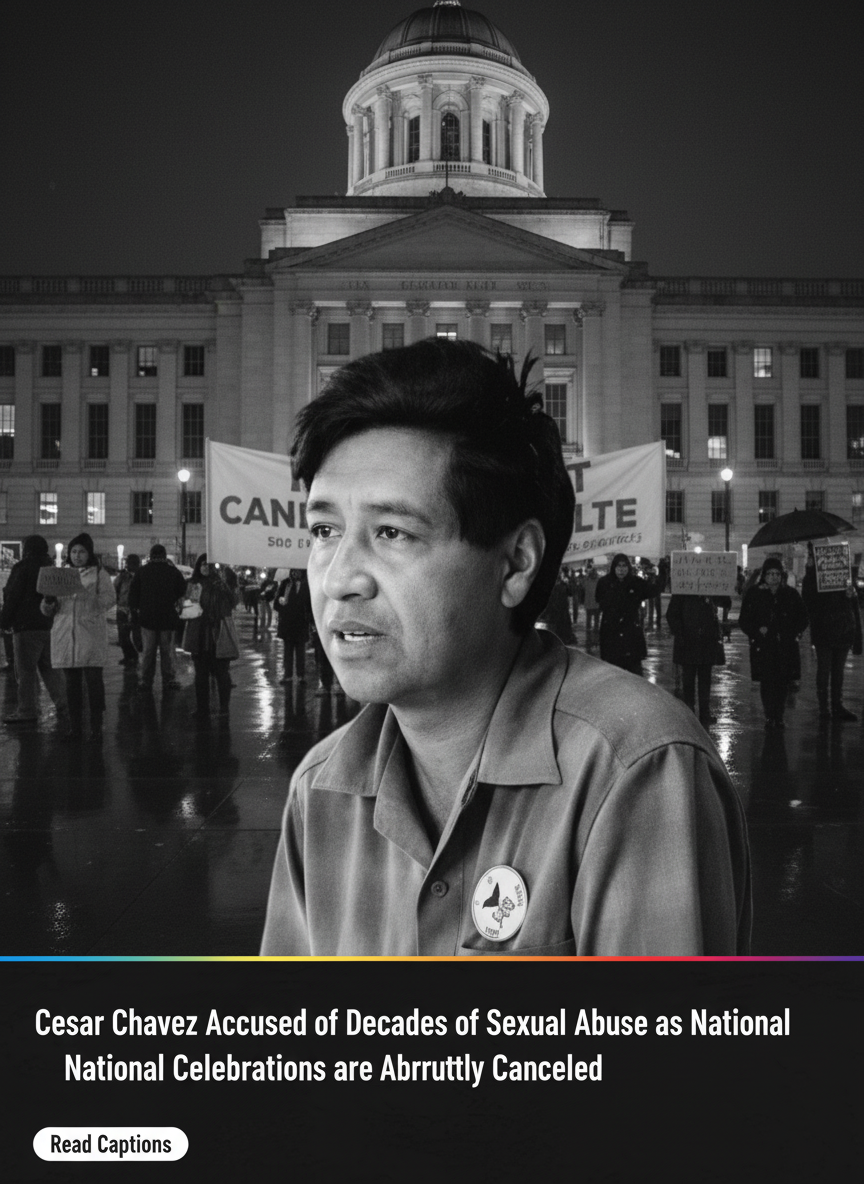
Legacy Shattered: Nationwide Cesar Chavez Day Celebrations Canceled Amid Decades of Sexual Abuse Allegations
LOS ANGELES — In a stunning reversal of historical legacy that has sent shockwaves through the American labor movement and the Latino community, cities and organizations across the United States have announced the immediate cancellation of annual Cesar Chavez Day celebrations. The move comes following a series of explosive allegations detailing decades of sexual abuse and misconduct attributed to the late United Farm Workers (UFW) co-founder.
A Titan Under Scrutiny
For decades, Cesar Chavez has been revered as a champion of civil rights and a “saint-like” figure for the working class. However, a comprehensive investigative report released Tuesday—bolstered by the testimonies of over a dozen former union members and volunteers—paints a harrowing picture of a man who allegedly used his immense power to exploit vulnerable women within the movement from the late 1960s until his death in 1993.
The allegations, which include claims of sexual harassment, coerced encounters, and physical intimidation, suggest a pattern of behavior that was reportedly an “open secret” within the highest echelons of the UFW leadership for years. Victims, many of whom are now in their 70s and 80s, say they remained silent for decades out of fear of damaging the farmworkers’ cause or facing retribution from the charismatic leader’s fiercely loyal inner circle.
Nationwide Cancellations and Policy Shifts
The fallout was instantaneous. From California to Arizona and Texas, municipal governments have begun scrubbing Chavez’s name from upcoming events scheduled for March 31, a federal commemorative holiday. In Los Angeles, the traditional parade has been revoked, and school districts across several states are reconsidering curricula that center on Chavez as a moral paragon.
“We cannot ignore the bravery of the women who have come forward,” said a spokesperson for the California Governor’s Office. “While the work of the labor movement remains vital, we must separate the cause from the individual. In light of these credible and deeply disturbing accounts, the state will no longer sponsor official Cesar Chavez Day festivities this year.”
Trending: Dolores Huerta Breaks Her Silence
As the scandal unfolds, the name of Chavez’s longtime collaborator and UFW co-founder, Dolores Huerta, has trended globally on social media. Huerta, now 95, released a poignant statement late Tuesday night that has further fueled the national conversation.
“The labor movement was built on the backs of women who were often invisible,” Huerta’s statement read. “While we must never lose sight of the justice we won for farmworkers, we must also reckon with the pain inflicted on those within our ranks. I stand with the survivors. Justice is not justice if it excludes the safety and dignity of women.”
Huerta’s acknowledgment of the survivors has been seen by many as a turning point, signaling that the era of shielding Chavez’s personal conduct to protect his public image has come to an end.
The UFW in Crisis
The United Farm Workers organization, which continues to advocate for agricultural laborers today, finds itself in an existential crisis. In a brief press release, the union expressed “deep sadness” regarding the allegations and promised an internal review of historical records.
“We are devastated to hear these accounts,” the UFW stated. “The values of our union—dignity, respect, and non-violence—must apply to everyone, especially those at the top. We are listening to the survivors and seeking a path toward healing.”
A Movement in Mourning
For many who grew up with the “Si Se Puede” slogan as a rallying cry for social justice, the news is a bitter pill to swallow. Historians and activists are now grappling with how to preserve the legislative and social gains of the farmworkers’ movement while acknowledging the alleged predatory nature of its most famous architect.
As the country approaches March 31, the day will likely transition from a celebration of a man to a somber reflection on power, accountability, and the long-overdue voices of those who suffered in the shadows of an icon.