The “Grandfather” of Craters: NYC’s Oldest Pothole Continues to Plague The Bronx After a Decade
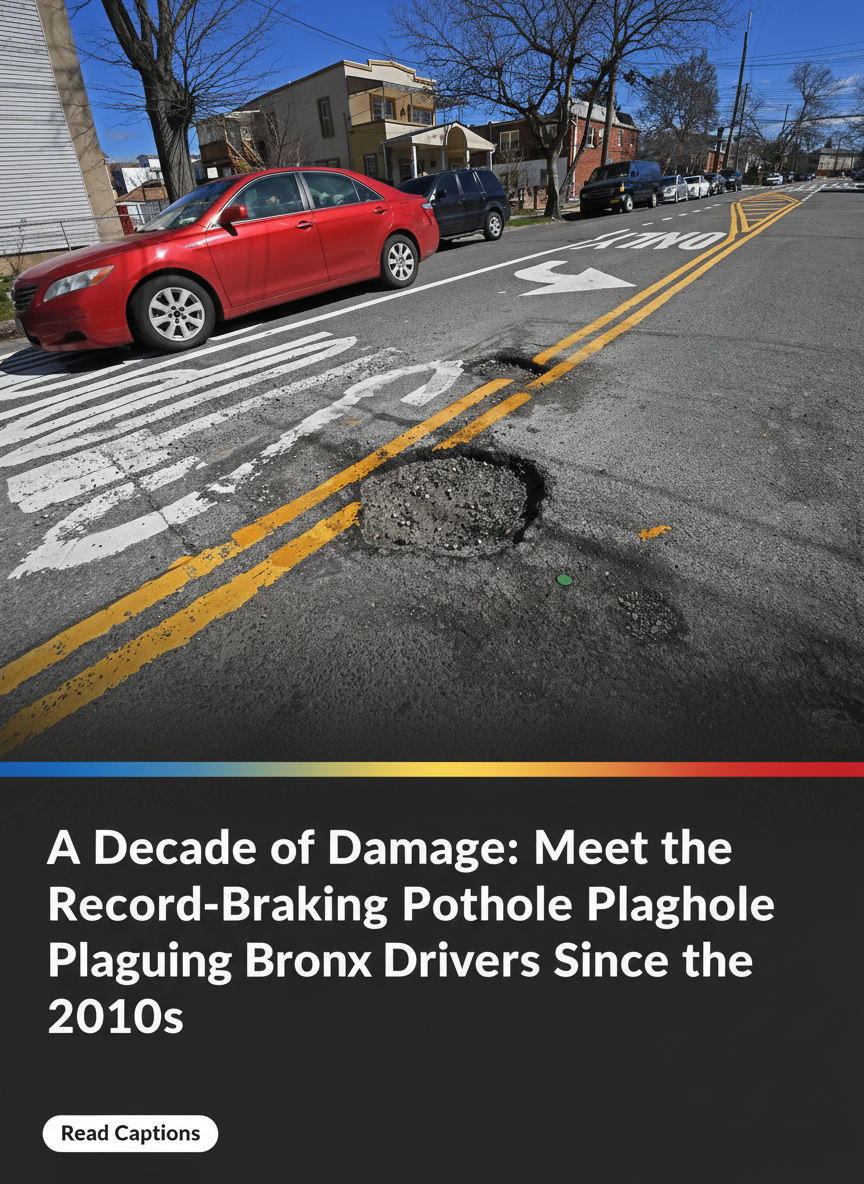
In a city known for its constant evolution and rapid-fire pace, one Bronx resident has managed to stay remarkably stationary for over ten years. It doesn’t pay rent, it doesn’t have a lease, and it has caused thousands of dollars in property damage. It is the pothole at the intersection of Adee and Bouck avenues, and it officially holds the dubious title of the oldest recorded pothole in New York City.
An “Ancient” Roadway Landmark
Located in the Allerton section of the Bronx, this four-inch-deep crater has become a permanent fixture of the local landscape. According to city records and frustrated neighbors, the hole has persisted for more than a decade—making it “old enough to drive,” as some locals jokingly (and bitterly) remark. While most potholes are the result of a harsh winter and are filled within a few weeks, this particular fissure has defied the Department of Transportation’s (DOT) repair crews for years.
The crater has grown from a minor nuisance into a formidable roadway hazard. Measuring several feet across and plunging four inches into the asphalt, it has become a “car killer” for those unfamiliar with the neighborhood’s treacherous terrain.
A Decade of Destruction
For the residents of Allerton, the sound of the pothole is as familiar as a morning alarm. The rhythmic “thud-clack” of tires hitting the cavity echoes through the streets daily, often followed by the hiss of a popped tire or the metallic scrape of a damaged rim.
“You hear it all night long,” said one local resident whose window faces the intersection. “It’s not just a hole anymore; it’s a landmark. We’ve seen people lose hubcaps, blow out suspensions, and swerve into the opposite lane just to avoid it. It’s dangerous, but after ten years, you almost get used to the city ignoring it.”
Bureaucracy and the Infrastructure Gap
The longevity of the Adee Avenue crater highlights a significant gap in the city’s infrastructure maintenance. Despite being logged in city records as the oldest active pothole complaint, the site remains unpaved. The DOT typically prides itself on a “pothole blitz” during the spring months, yet this specific location has somehow slipped through the bureaucratic cracks year after year.
Experts suggest that the persistence of such a crater may point to underlying issues, such as a failing sub-base or recurring water leaks that wash away temporary “cold patch” repairs. However, for the taxpayers in the Bronx, the technical reasons matter less than the tangible results: a broken street and a mounting bill for auto repairs.
Community Call to Action
The “Grandfather of Potholes” has become a symbol of neglect for some community advocates. While Manhattan’s thoroughfares often receive priority paving, the residential side streets of the outer boroughs can languish for years. The notoriety of the Adee and Bouck crater has sparked a new wave of complaints to 311, with residents hoping that the “oldest pothole” title finally shames the city into taking permanent action.
Until then, the crater remains—a jagged, asphalt-eating testament to the endurance of New York City’s infrastructure woes. Drivers are advised to navigate the Allerton intersection with extreme caution, lest they become the next victim of the city’s most ancient roadway resident.
As of press time, the Department of Transportation has not provided a specific timeline for a permanent repaving of the intersection.